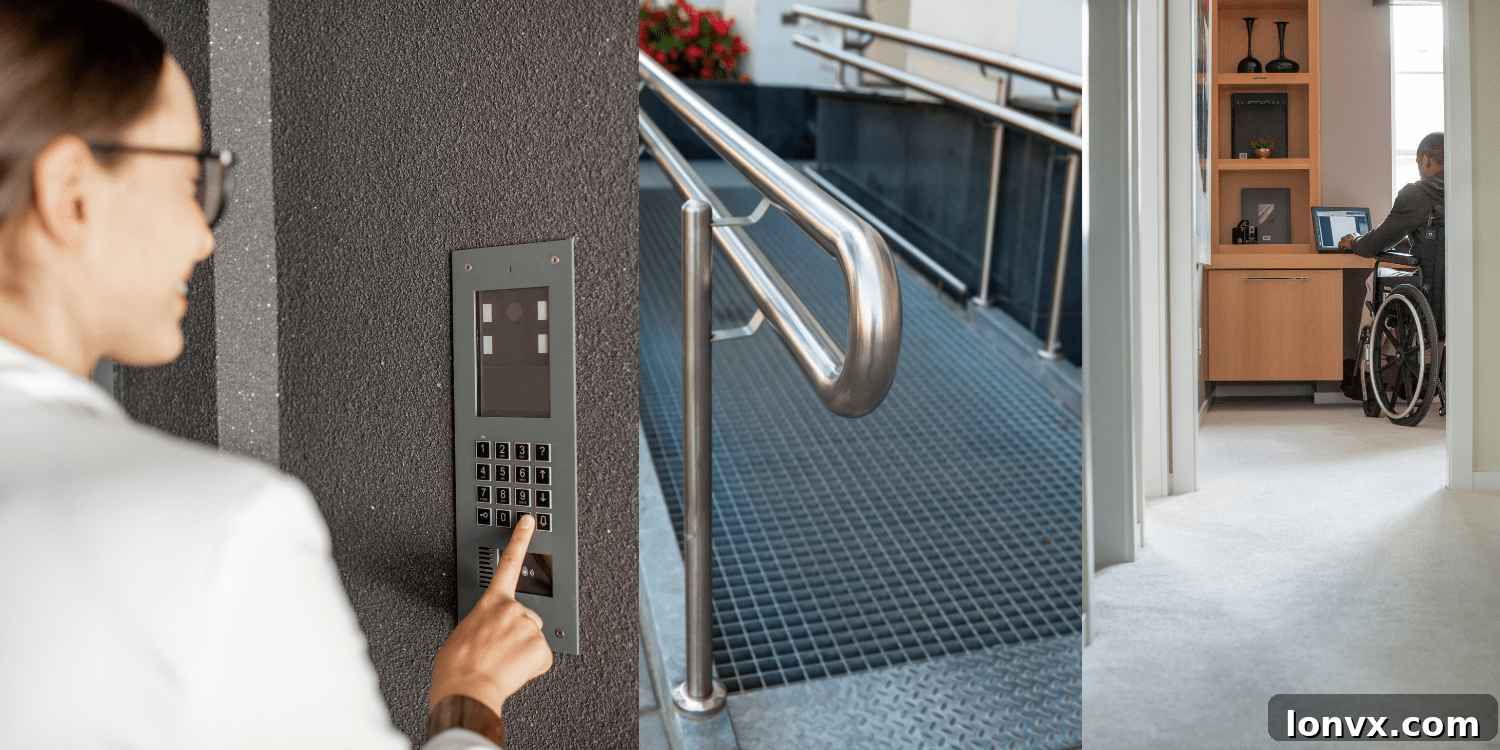
Unlocking the Potential: How Accessible Housing Transforms the Real Estate Market into a Golden Opportunity
Recent discussions within British Columbia’s real estate development sector have brought to the forefront concerns regarding significant amendments to the province’s building code. These new regulations mandate that all new large condominium and apartment complexes must incorporate 100% adaptable suites. Furthermore, first-floor units in smaller apartment buildings are now required to be easily modifiable, ensuring they can comfortably accommodate individuals with disabilities. While developers have voiced apprehension, citing potential increases in construction costs and, subsequently, higher prices for buyers, this article explores an alternative perspective: viewing these changes not as a burden, but as an unprecedented market opportunity.
The narrative often frames accessibility requirements as an additional expense or a regulatory hurdle. However, by shifting this perception, we uncover a vast, eager, and significantly underserved market segment that promises substantial economic returns and fosters truly inclusive communities. It’s time to re-evaluate the true cost and immense value of designing homes for everyone.
An Overlooked Economic Powerhouse: The Disability Market
Imagine a market segment comprising millions of individuals with substantial disposable income, eager for suitable housing options, yet largely ignored by developers. This is the reality of the disability market in Canada. With over eight million people living with disabilities (PWDs) – a figure that has grown by five percent since 2017 – this demographic represents nearly one in four Canadians. A staggering six out of ten PWDs, equating to 4.8 million people, regularly encounter significant barriers when attempting to access both indoor and outdoor public and private spaces. The most prevalent of these obstacles (affecting 56% of individuals) are directly related to physical environments, such as inconvenient entrances, unnavigable sidewalks, and non-adaptable living spaces.
The sheer scale of this market alone should be a compelling factor for any forward-thinking developer. However, the economic impact extends far beyond mere numbers. According to Abilities.ca, Canadians with disabilities collectively possess an estimated $47 billion in annual disposable income. This represents a formidable economic force that, when combined with the purchasing power of their families and friends—who often make choices based on accessibility for their loved ones—swells to an impressive 12 million individuals. This expanded network constitutes more than a third of the Canadian population, commanding an estimated disposable income exceeding $311 billion. This is unequivocally the opposite of a niche market; it is a mainstream consumer base desperate for suitable housing solutions.
Developers currently have an untapped, ready, and willing lucrative market at their fingertips, a market that, until now, has been largely overlooked or misunderstood. By aligning with these new accessibility standards, developers aren’t just meeting regulatory requirements; they are unlocking a massive economic opportunity and positioning themselves as leaders in a rapidly evolving societal landscape.
Beyond the undeniable economic benefits, it is crucial to remember that access to safe, appropriate, and inclusive housing is fundamentally a human right. Governments have a clear responsibility to ensure that integrated, high-quality housing is available for all citizens, irrespective of their abilities. The new building code standards in British Columbia are a vital step towards fulfilling this essential obligation.
The Negligible Cost of Accessibility: Dispelling Common Misconceptions
One of the primary arguments against enhanced accessibility standards revolves around the perceived increase in construction costs. However, comprehensive studies and expert analyses consistently debunk this notion, demonstrating that the cost increase is, in fact, negligible when accessibility features are integrated from the initial design phase. The United States Americans with Disabilities Act (ADA) National Network, a leading authority providing comprehensive information and guidance on ADA implementation, has unequivocally concluded that:
“The cost of incorporating accessibility features in new construction is less than one per cent of construction costs. This is a small price in relation to the economic benefits to be derived from full accessibility in the future, such as increased employment and consumer spending.”
Source: adata.org
This statistic is pivotal. It highlights that the upfront investment required to build accessible homes is minimal, especially when compared to the long-term economic and social benefits. Retrofitting existing structures to meet accessibility standards is significantly more expensive and complex than designing and building inclusively from the ground up. By embracing universal design principles from conception, developers can seamlessly integrate features like wider doorways, lever handles, curbless showers, reinforced bathroom walls for grab bars, and accessible kitchen layouts without adding substantial costs. These elements not only benefit individuals with permanent disabilities but also cater to a broader demographic, including seniors, parents with strollers, and individuals recovering from temporary injuries, thereby future-proofing properties and expanding their market appeal exponentially.
Beyond Compliance: Reframing Accessibility as a Strategic Investment
It is entirely understandable that developers’ initial reactions to new building code changes, particularly those perceived as cost-increasing, would focus on their potential impact on the bottom line. This perspective is often compounded by an outdated understanding of accessibility, which many companies unfortunately still relegate to a Corporate Social Responsibility (CSR) initiative or a “nice-to-have” gesture. Under this detrimental narrative, investments in accessibility are often pushed to the bottom of the budget list, categorized as discretionary expenses. This viewpoint is not only short-sighted but ultimately harmful to both businesses and the vast community of people with disabilities.
As someone who lost my sight at the age of 17, I have experienced life as both a sighted consumer and as an individual who is visually impaired. I have personally felt the sting of stigma and heard countless expressions of pity. Let me be clear: pity is not what this market segment seeks. We desire respect, autonomy, and equal access to products and services. My money holds the same value as anyone else’s. Conversely, when I enter an establishment—be it a store, a restaurant, or a residential building—and immediately perceive that genuine thought and effort have been invested in creating an environment or product that considers my needs, I instantly become a loyal customer. Imagine the immense goodwill and robust customer base a developer could cultivate by consistently demonstrating this level of respect and foresight to hundreds of thousands of consumers.
The time has come for a fundamental shift in perspective. Accessibility must transition from being perceived as a charitable act or a compliance checklist item to a powerful, strategic business driver. When framed as a direct pathway to expanded market share, enhanced brand reputation, and sustainable profitability, the changes in building policy are not just positive for people with disabilities; they are positive for everyone involved in the housing ecosystem.
Consumers, Not Causes: Building Inclusive Communities for Future Growth
A clear disconnect persists between the significant market potential of the disability community and many developers’ understanding of new building code changes as a genuine business opportunity. We urgently need to reframe the conversation around accessibility. It is not about charity; it is about providing high-quality, desirable products to potentially hundreds of thousands of new, eager buyers. Individuals with disabilities are discerning consumers with purchasing power, not merely “causes” to be supported. When reframed as a powerful profit driver, these essential building policy changes create a win-win scenario for everyone.
Furthermore, developing truly inclusive and universally designed communities is not merely a trend; it is the imperative way forward. Experts in the disability space frequently cite a compelling prediction: by the year 2040, the number of individuals living with disabilities is projected to rise to approximately 40% of the total population. This demographic shift, coupled with an aging population, makes the exclusion of such a significant segment from the buying audience an increasingly irrational business decision. Why would any developer willingly cut out nearly half of the Canadian population from their potential customer base?
If accessible housing is not yet considered an immediate necessity, it will undeniably become a critical requirement for a substantial portion of our population very soon. Developers who demonstrate foresight, proactively embrace these changes, and commit to intentional accessibility will gain a significant competitive advantage. They will be the first to access a burgeoning wave of eager, loyal consumers, securing their market position for decades to come.
Canada has articulated an ambitious and commendable goal: to become a “barrier-free society” by 2040. While legislative measures are crucial in driving inclusion, the government also bears a responsibility to educate corporate Canada on the profound business benefits and immense market opportunities that accessibility presents. This goes beyond mere compliance; it’s about fostering an environment where innovation thrives and social equity is inherent to economic growth.
Let us move beyond simply discussing legislation and viewing accessibility requirements as checkboxes on a form. Instead, let’s collectively aim to intentionally exceed expectations, designing innovative products and services that deliver a tangible return on investment. Accessibility does not have to be complicated, costly, or concerning. On the contrary, it can be incredibly empowering—an unparalleled opportunity to diversify customer bases, generate new revenue streams, and catalyze genuine innovation within the real estate industry.
Part of the lingering hesitation in fully embracing accessibility as a core business driver might stem from companies’ apprehension about potential internal and external resistance to such a label. However, if you were to ask any person with a disability (including myself), you would find a universal desire: we relish being treated as valued consumers, with our needs and preferences respected. This fundamental shift in perception is powerful and long overdue.
It is neither unscrupulous nor morally questionable to consider accessibility as a significant potential source of profit and growth. It is, in fact, astute business strategy. Furthermore, the market of persons with disabilities is unique in that anyone can join it at any given moment due to accident, illness, or the natural process of aging. Businesses that fail to recognize the immense positive potential that PWDs bring to their revenue streams do so at their peril, risking obsolescence in an increasingly inclusive and aware market.
Enjoying this article?
Get the latest REM articles in your inbox 3x week so you stay up to date on the latest in the Canadian real estate industry