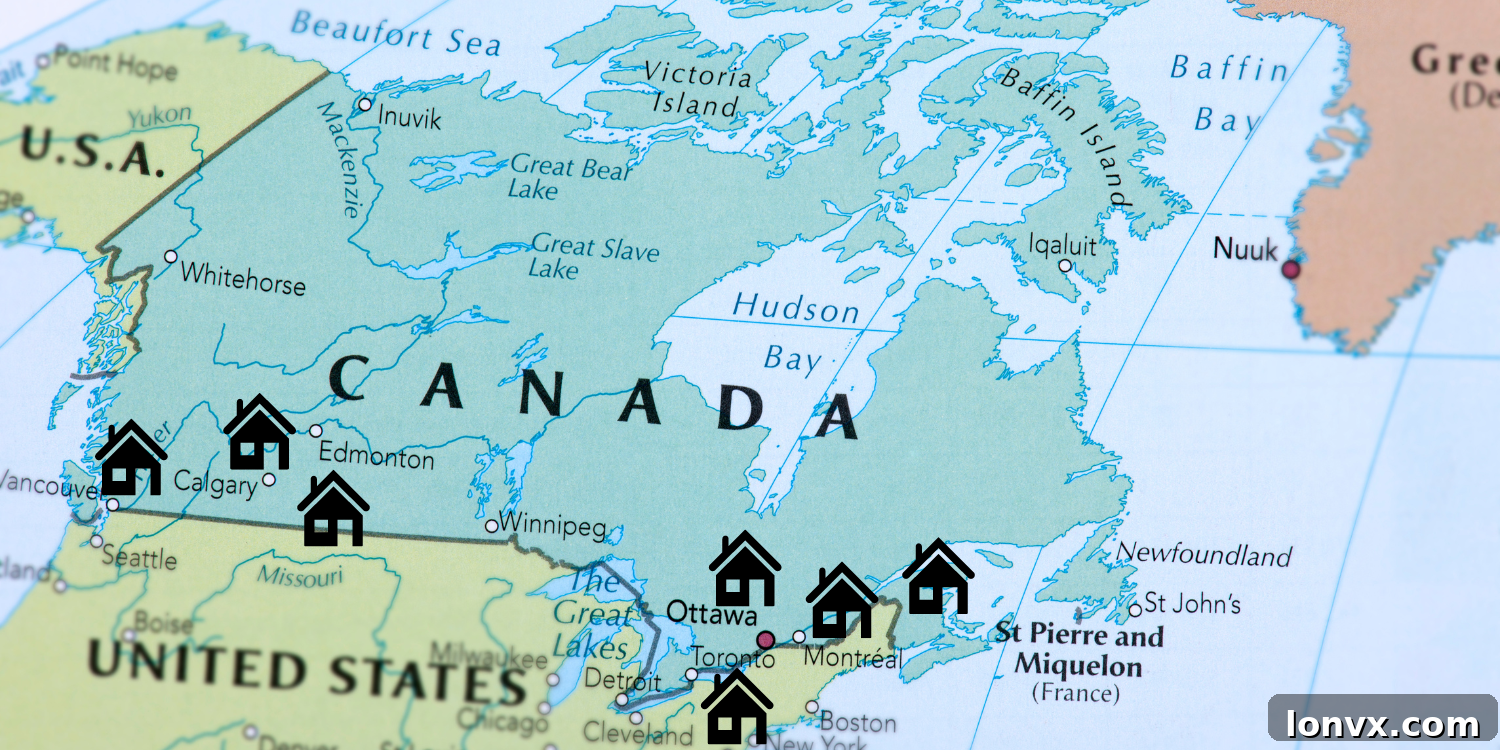
Canada’s Housing Market Awakens: Early Momentum Amidst Persistent Supply Challenges in 2024
The Canadian housing market has experienced an unexpectedly early surge, with the 2024 buying season kicking off with notable vigour. Hopeful homeowners across the country are keenly observing and participating in what appears to be the most opportune environment for real estate acquisition since the initial stages of the pandemic. This renewed optimism is largely fueled by the Bank of Canada’s consistent holding of interest rates and the growing anticipation of potential rate cuts in the months ahead.
This early activity has translated into a significant uptick in property viewings, an increase in purchase agreements, and even the re-emergence of bidding wars in various regions. Many prospective buyers, seemingly anticipating the Bank of Canada’s steadfast approach to rates, chose to enter the market proactively, eager to finally secure a home after a period of uncertainty and higher borrowing costs. This proactive engagement signals a crucial shift in buyer psychology, moving from a ‘wait and see’ approach to a more assertive stance.
The Early Bird Gets the Worm: An Unseasonably Active Start to 2024
Real estate cycles often follow predictable seasonal patterns, with activity typically slowing during the winter holidays and gradually picking up in late January or early February. However, 2024 has defied these conventional trends. Lindsie Tomlinson, a seasoned Re/Max Select Realty agent in Vancouver, eloquently describes this phenomenon: “I don’t know how else to describe it, but every year it seems someone flips a switch. We go from the slowness of the winter holiday season and then someone flips a switch, and it gets really active and busy. It usually happens later in January and into February or March.” This year, she notes, the switch was flipped “really early in January, even before the interest rate announcement.”
This early awakening of the market suggests a significant accumulation of pent-up demand. Many buyers who were sidelined by aggressive rate hikes throughout 2022 and 2023 now feel empowered by the stability of current rates and the prospect of future reductions. This newfound confidence, combined with a desire to secure homes before any potential price increases that might accompany rate cuts, has created a dynamic and competitive environment right from the start of the year. Tomlinson, like many of her peers, anticipates a considerably busier spring season, especially when compared to the muted activity of last year, with areas like Vancouver and its surrounding suburbs already experiencing intense buyer interest. Her observation underscores the readiness of a segment of the population that has been patiently waiting for the opportune moment to make their move.
The Enduring Challenge: Canada’s Persistent Housing Supply Crisis
Despite the palpable sense of optimism and increased market activity, a critical and overarching challenge continues to plague the Canadian housing landscape: a severe shortage of available inventory. This issue is not new; it was a significant factor throughout 2023, where limited supply constrained sales despite moderating demand. The consistency of this problem across diverse regions of Canada highlights its systemic nature and profound impact on market dynamics.
Simon Hunt of Simon Hunt Realty in Calgary articulates this sentiment: “There’s limited inventory. The market is going to be pretty tight.” He points out the paradox of 2023, where inventory was low, yet sales also declined, indicating that high interest rates deterred buyers despite the scarcity. Now, with buyer confidence returning, the impact of this tight supply is becoming acutely felt. Hunt, anticipating a robust season, observes brisk sales and the sporadic emergence of bidding wars—a clear indicator of demand outstripping supply.
This inventory crunch stems from several factors. Many homeowners with existing mortgages secured at lower interest rates are reluctant to sell, fearing that moving would mean taking on a new mortgage at a higher rate. This “rate lock-in” effect significantly reduces the number of properties entering the market. Furthermore, challenges in new construction, including labour shortages, supply chain issues, and regulatory hurdles, prevent the swift addition of new housing units. Meanwhile, Canada’s robust population growth continues to fuel demand, widening the gap between available homes and prospective buyers.
A Cross-Canada Snapshot: Regional Market Dynamics and Shared Realities
The supply problem isn’t isolated; it’s a nationwide phenomenon, albeit with varying degrees of intensity and regional nuances. From the bustling metropolitan areas to the more serene Atlantic provinces, the narrative remains largely consistent.
Western Canada: High Demand Meets Scarcity
In Alberta, for instance, the market mirrors Calgary’s tightness. Samantha Sajjad, an associate at MaxWell Devonshire Edmonton, reports a similar scenario: plenty of bids but limited options. “Our market seems to be doing extremely well along with Calgary,” she states. “Buyer confidence is high. We have lots of out-of-province buyers coming into Edmonton, either those who have been here for a bit and have been renting or those who are virtual.” This influx of inter-provincial buyers, often seeking more affordable alternatives to Vancouver or Toronto, further exacerbates the supply issue in the Prairies, proving that the opportunities for “deals” seen during the pandemic have largely evaporated.
Atlantic Canada: Acclimatization and Inventory Woes
Even in Nova Scotia, which experienced a significant housing boom during the pandemic, the story is much the same. Agent Brenda K Kielbratowski of Keller Williams observed a busier January in 2024 than in 2023, indicating that buyers and sellers have acclimated to the current economic environment. “We’ve acclimated to it now,” she says, referring to the past interest rate hikes. With the Bank of Canada holding rates, “buyers are back out there looking.” While Kielbratowski notes that the frenzied, wild bidding wars of previous years have subsided, the fundamental problem of insufficient options persists. “I don’t see the supply and demand balancing out. People aren’t selling their homes. It’s an inventory problem.” This struggle to balance the desires of an expanding populace with the available housing stock is a defining characteristic of the current market.
Central Canada: Ottawa and the GTA’s Competitive Landscape
In Ottawa, Chelsea Hamre of the Hamre Real Estate Team attests to a busy start to the year, with transactions beginning as early as January 1st. Her clients were prepared for the interest rate hold and eager to act. “The market has been really good for us, as a team, as a whole, with a great amount of sales,” Hamre reports. Despite the robust sales activity, the underlying issue remains: “Buyers are out buying, sellers are considering, but there is still an inventory crisis.” This highlights a market where demand is strong, but the choices for buyers are constrained, leading to quicker sales for well-priced properties.
The Greater Toronto Area (GTA), Canada’s largest and most competitive market, experiences all the opportunities and drawbacks seen elsewhere, magnified by its sheer size and population density. Increased activity is evident, yet limited inventory remains the critical bottleneck.
Navigating the Negotiation Landscape: Pricing and Bidding Wars in the Current Market
The consensus among real estate professionals across Canada is that most sales are now concluding at or just slightly above the list price. This marks a notable departure from the peak of the pandemic housing boom, where properties frequently sold for hundreds of thousands over asking with numerous conditions waived. While bidding wars still occur, their character has evolved.
Today’s bidding wars are generally less intense, involving fewer competing parties and resulting in more rational, albeit competitive, offers. The “padded offers” that once characterized the market, with buyers vastly overbidding, are far less common. This indicates a market that, while active, is also more balanced and measured. Buyers are demonstrating more caution and diligence, encouraged by stable interest rates, but also aware that overly aggressive offers are not always necessary in the current environment. Sellers, in turn, are becoming more strategic with their pricing, aiming to attract interest without setting unrealistic expectations, understanding that the days of guaranteed sky-high offers are largely behind them.
Interest Rate Anticipation vs. Reality: The Bank of Canada’s Influence
The Bank of Canada’s monetary policy plays a pivotal role in shaping market sentiment. With rates holding steady for the fourth consecutive time, the market is rife with speculation about impending cuts. This anticipation alone has been a significant catalyst for the early surge in buyer activity.
Re/Max agent Anuja Kumarasamy, primarily serving Durham and Scarborough in the GTA, observes this firsthand: “After the interest rate announcement, the market started to heat up a bit, and with the possibility of the Bank of Canada reducing the rate in March or April, I think (it) sparked buyers to get in.” She notes a clear increase in showings and offers, though without a significant bump in prices, which largely remain aligned with market value.
Kumarasamy raises an interesting point about the psychological impact of rate announcements versus their practical effect. She anticipates a further influx of buyers once rates officially decrease, but questions the true magnitude of such a change. “Some people are waiting for the announcement because they’re not confident enough yet,” she says. “Even if they drop it, it’ll be like 0.25 per cent. It isn’t really going to impact how much more you can qualify for.” This highlights that while a rate cut provides a psychological boost and formalizes a downward trend, a quarter-point reduction may not drastically alter affordability for most buyers. Its primary effect might be to build confidence and entice fence-sitters into action, rather than substantially increasing buying power.
Furthermore, other agents speculate that while interest rates may indeed decline later in the year, this could inadvertently lead to a slight ticking up of list prices. As borrowing costs ease, demand could intensify further, giving sellers more leverage and potentially eroding some of the affordability gains from lower rates. This creates a delicate balance for buyers, weighing the benefits of lower monthly payments against potentially higher initial purchase prices.
The Road Ahead: Navigating Canada’s Dynamic 2024 Housing Market
As Canada moves further into 2024, the housing market presents a complex but intriguing picture. The early start to the buying season, fuelled by stable interest rates and the promise of future cuts, suggests a resilient market characterized by strong buyer confidence and pent-up demand. However, the persistent and widespread challenge of limited inventory remains a foundational constraint, shaping everything from pricing dynamics to the intensity of bidding wars.
For buyers, 2024 offers a more predictable environment than the volatile years past, yet competition for desirable properties will likely remain fierce due to scarcity. Thorough preparation, including pre-approvals and realistic expectations, will be crucial. For sellers, while the days of outlandish offers may be gone, a well-priced home in this supply-constrained market is likely to attract significant attention and sell relatively quickly. The market is not booming in the unsustainable way it once was, but it is certainly active and robust.
The coming months will be critical in observing how the Bank of Canada’s decisions unfold and how these psychological and practical shifts impact buyer and seller behaviour. What is clear, however, is that the Canadian housing market is far from stagnant. It is a dynamic ecosystem, continuously adapting to economic forces and demographic shifts, providing both opportunities and challenges for all participants.
Enjoying this article? Get the latest real estate market insights directly in your inbox multiple times a week to stay up to date on the latest trends and news in the Canadian real estate industry.