
Canadian Real Estate: Is the Comeback Story Finally Unfolding, or Just a Temporary Rally?
The Canadian real estate market has been a subject of intense speculation and hope, with many anticipating a significant rebound. All the ingredients for a classic comeback seemed to be aligning: interest rates were easing, house prices had softened from their previous peaks, and whispers of returning affordability were in the air. Even government policies were being introduced to tackle the housing crisis, sometimes despite cautionary notes from the Bank of Canada. On paper, it painted a compelling picture for a robust recovery.
Yet, the lingering question persists: “Are we there yet?” This journey has felt less like a predictable path to recovery and more like a protracted road trip, filled with familiar signs that ultimately lead nowhere. Many have been left wondering not just when, but if, we would ever see tangible signs of a sustainable market turnaround.
For several years, industry reports have highlighted a significant cohort of “buyers on the sidelines,” patiently waiting for a decisive shift in the real estate equation. It has become increasingly clear that the primary catalyst these buyers are waiting for is a definitive trend in price movement – specifically, a clear indication that prices are either consistently rising or have found their absolute bottom.
The Elusive “Buy the Dip” Strategy in Housing
The concept of “buying the dip” is deeply entrenched in investment culture, popularized by the notion of seizing opportunities when asset prices temporarily fall. In the context of Canadian housing, this translates to a rush of buyers attempting the notoriously difficult feat of timing the market’s lowest point. The age-old wisdom, “time in the market, not timing the market,” often rings true, yet the allure of snagging a deal at the bottom remains powerful. For many, it’s about “buying the expletive dip,” as humorously coined by online trading communities.
However, unlike highly liquid stock markets, Canada’s housing market isn’t a playground for speculative options trading. Instead, it has become the focal point of a collective speculative fever, particularly regarding price movements. The irony here is profound: when people express their desire to wait for the “dip” or the “bottom” of the market, they are often looking in the rearview mirror. True market timing would require buying during a downturn, a period characterized by uncertainty and declining prices. By the time a “bottom” is widely recognized, prices have often already begun their ascent.
It’s crucial to understand that those who successfully “buy the dip” are typically the ones making below-market offers and, in doing so, are actively contributing to the price decline. They aren’t merely responding to a dip; they are, in effect, helping to create it. In essence, you don’t merely time the market; to some extent, you influence and create its dynamics through your actions. This complex interplay between buyer psychology and market forces shapes the trajectory of property values.
By the Numbers: Genuine Recovery or Fleeting Relief Rally?
For much of the past year, concrete data offered little to suggest even a glimmer of market recovery. September, for instance, proved uncharacteristically quiet, with the traditional “back-to-school” surge in activity surprisingly muted, partly overshadowed by broader geopolitical events like the US election. This broke typical “fall market” seasonal norms, pulling activity downwards. In a contrarian twist, Canadian real estate now appears to be defying seasonal expectations in the opposite direction, showing upward momentum as it heads into November, a month traditionally associated with a slowdown preceding the holiday season.
Should this upward pressure on the market persist into December, it would lend considerable weight to the argument that the market is experiencing a genuine resurrection of volume. This resurgence would likely be fueled by several key factors: lower interest rates making borrowing more attractive, increased buying power for certain segments, and a renewed sense of optimism spurred by new mortgage policies. Such sustained growth would mark a significant departure from the subdued activity observed earlier in the year, signaling a more robust recovery phase rather than a temporary anomaly.
Increased Buyer Activity Propels Sales Higher
Source: CREA, Valery.ca
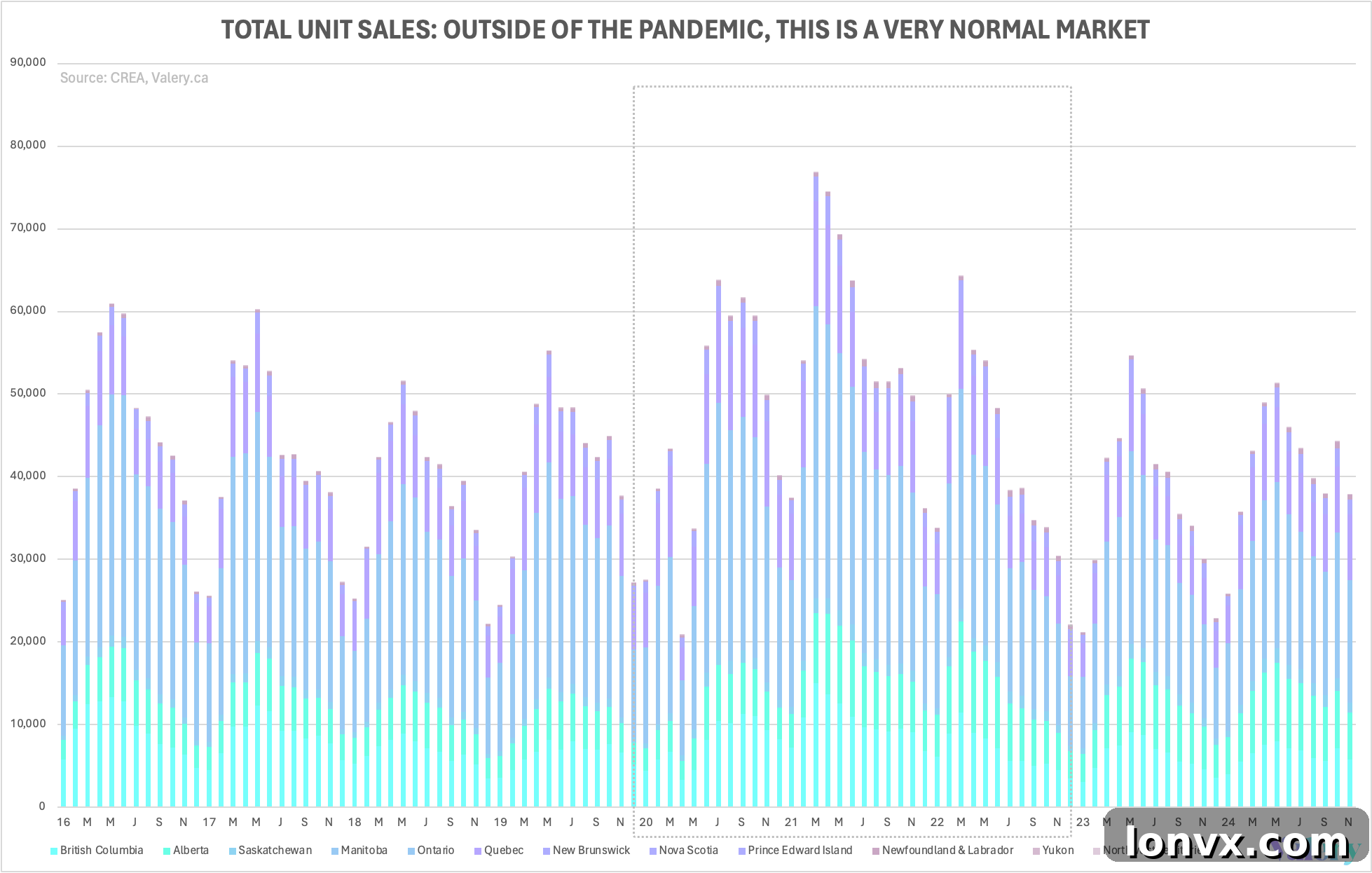
According to the Canadian Real Estate Association (CREA), national home sales registered a notable 2.8 percent climb in November compared to October. This marks the second consecutive month of gains, culminating in an impressive cumulative rise of 18.4 percent since May. This significant upturn follows several months of subdued activity earlier in 2024, a period largely attributed to the persistent “higher for longer” interest rate environment that kept many potential buyers on the sidelines.
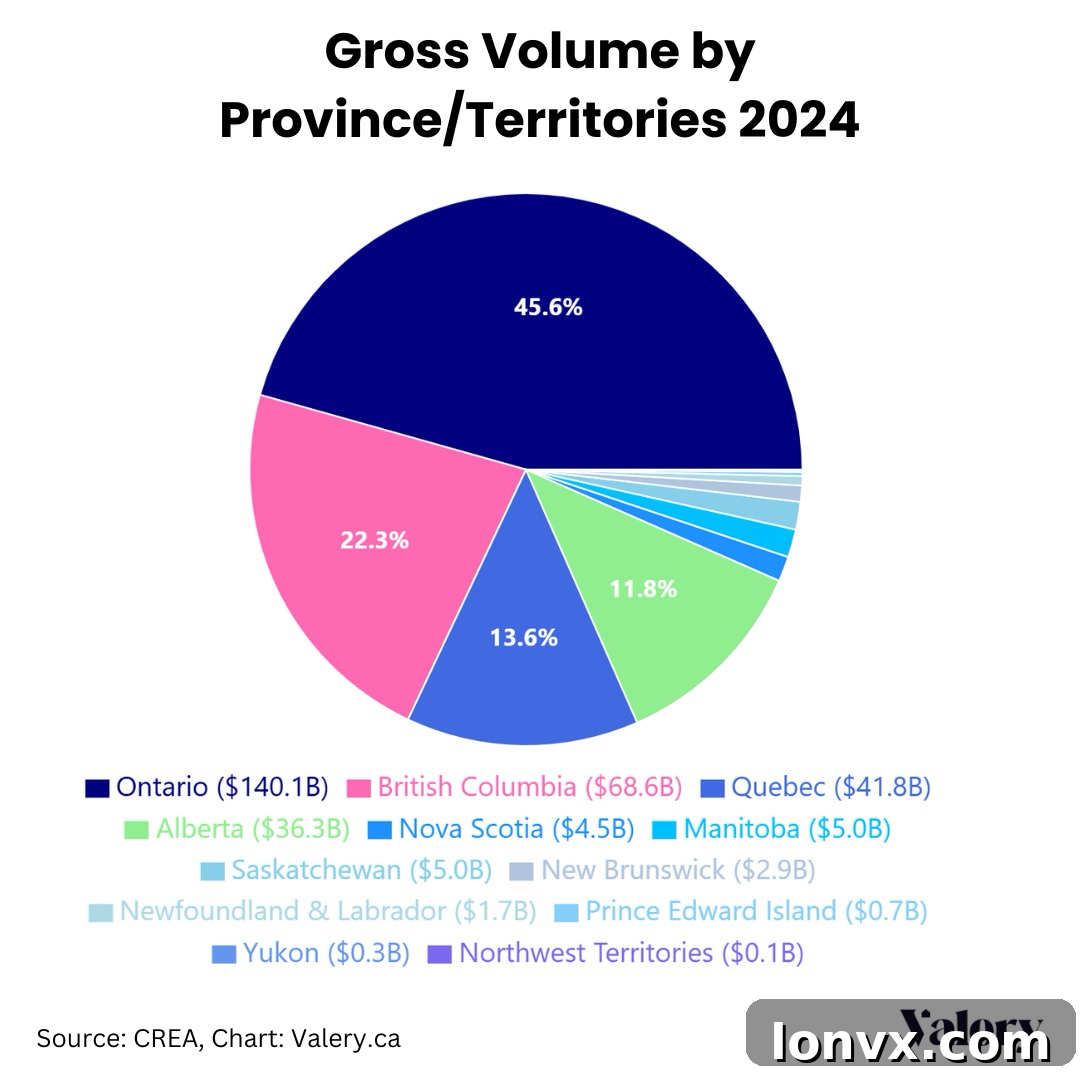
With the Bank of Canada now seemingly embracing a more aggressive stance on rate cuts, moving at what some describe as a “recession-ready pace,” these previously sidelined buyers have evidently been drawn back into the market. The numbers clearly indicate their enthusiastic return, with activity notably strongest in Canada’s traditional real estate powerhouses: the Greater Toronto Area, Metro Vancouver, Calgary, and Montreal. Furthermore, several smaller cities in Alberta and Ontario also reported double-digit increases in sales, indicating a broad-based and widespread uptick in demand. Ontario, in particular, appears to be reclaiming its former dominance, once again accounting for nearly half of the monthly dollar volume of sales nationwide.
However, this surge in activity prompts a crucial question: Does it represent a genuine, sustainable recovery, or is it merely another temporary spike? This concern is particularly relevant given the potential influence of policy tweaks designed to artificially boost demand. Such measures, while providing immediate relief, might be aimed at softening the blow of a looming recession and anticipated unemployment challenges in 2025 rather than addressing fundamental market imbalances. Realistically, the current market dynamics share many characteristics with typical pre-pandemic years (e.g., 2016 to 2019). While it feels elevated compared to the lows of last year, it remains comparatively subdued against the unprecedented highs witnessed during the pandemic boom, suggesting a nuanced picture rather than a clear trajectory.
Source: CREA, Claude, Valery.ca
Sellers Maintain the Upper Hand in a Tightening Market
For individuals considering selling their properties, the current market climate continues to be highly favorable, distinctly tilting in their favor. The sales-to-new-listings ratio (SNLR), a critical metric for gauging market balance, climbed to 59.2 percent in November. This represents a significant increase from the 52 percent to 53 percent range observed earlier in the year, unmistakably signaling a tightening market where demand is outstripping new supply. With fewer new listings entering the market—a decline of 0.8 percent month-over-month—buyers are increasingly compelled to compete fiercely for an ever-shrinking pool of available homes.
This growing imbalance between supply and demand is further underscored by the “months of inventory” metric, which plummeted to a mere 3.7 months nationally. This figure marks the lowest level recorded in over a year, highlighting the severity of the supply crunch. To put this in context, a healthy, balanced market is typically characterized by an inventory level of 4 to 6 months. The current figure starkly illustrates that the pace of new supply simply cannot keep up with the robust demand, creating intensely competitive conditions for prospective homebuyers. For sellers, this translates to faster sales, fewer conditions, and often, higher selling prices, reinforcing their strong negotiating position in the current market.
Prices “Rise” – But What Does That Really Mean?
Source: CREA, Valery.ca
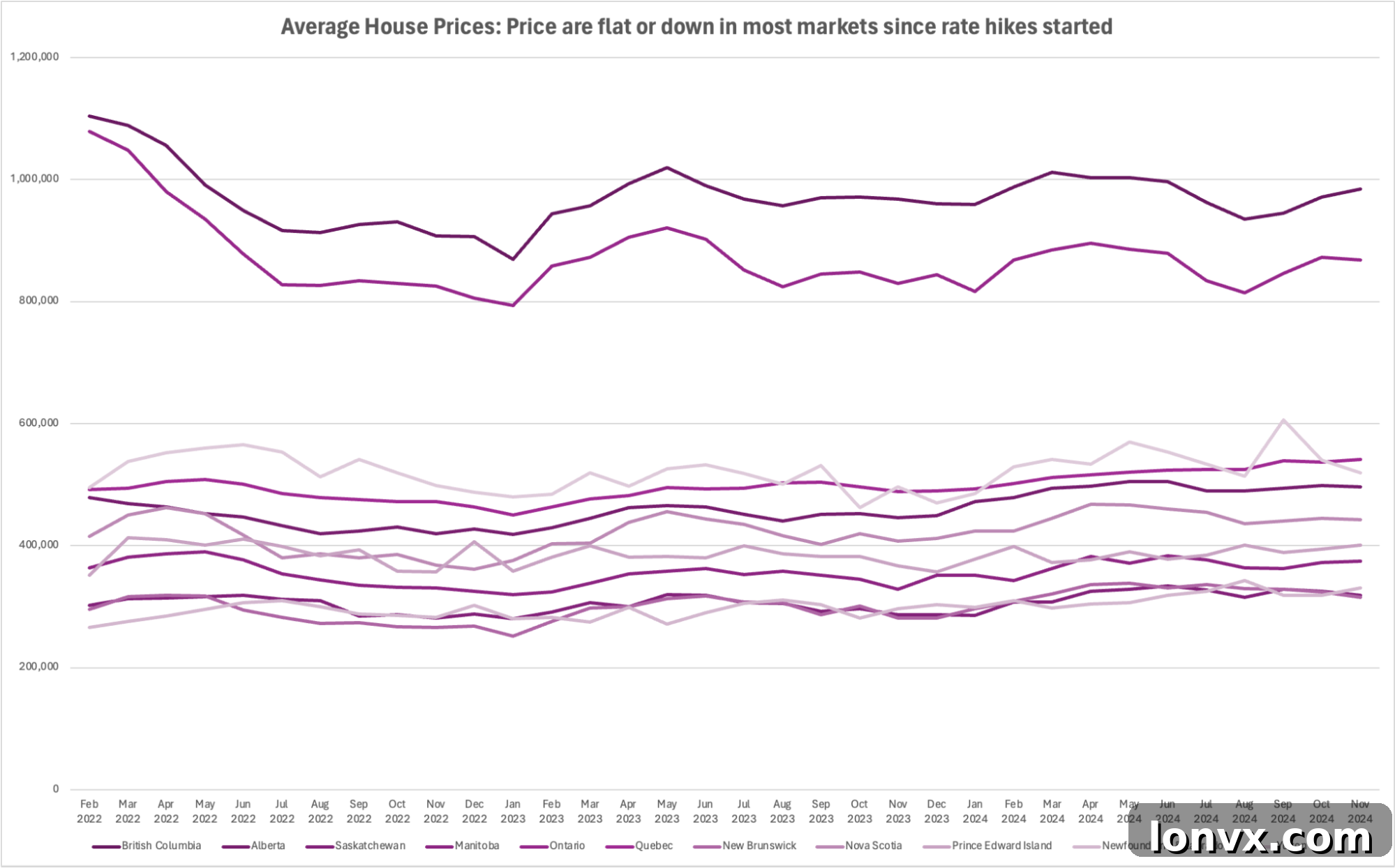
November marked the first significant uptick in Canadian home prices in nearly 18 months, offering a glimmer of hope for market observers. The National Composite MLS Home Price Index (HPI), a benchmark for housing value trends, rose by 0.6 percent from October. Concurrently, the actual national average sale price experienced a more dramatic jump of 7.4 percent compared to November 2023. These price increases strongly suggest that the recent surge in demand is beginning to exert upward pressure on home values, particularly evident in dense urban centers and highly desirable smaller markets.
However, it is crucial to temper enthusiasm with a dose of realism. The market, despite these gains, still exhibits early signs of recovery rather than runaway growth reminiscent of previous booms. While any price appreciation is naturally welcomed, a broader, long-term perspective reveals a market trajectory that aligns more closely with the “flat market” scenario that has been consistently discussed over the past few years. The HPI, a more accurate indicator of true price trends due to its adjustment for property types and features, remains 1.2 percent lower year-over-year. This key detail highlights that even with increasing demand, the market has not yet fully recouped the ground lost during the downturn triggered by the aggressive interest rate hikes of 2022 and 2023, which severely eroded affordability and buyer confidence.
This ongoing recovery, therefore, remains notably fragile. The market is still highly susceptible to external shocks and shifts. Future alterations in interest rates, unforeseen policy changes by government or regulatory bodies, or broader economic uncertainty—such as a deeper recession or unexpected geopolitical events—could easily disrupt the current momentum. Buyers and sellers alike should approach the market with caution, recognizing that while positive trends are emerging, the path to a robust and sustained recovery is far from assured and could be easily derailed by a variety of macroeconomic factors.
High Supply, High Stakes: Unpacking Canada’s Housing Dilemma
Source: CREA, Valery.ca
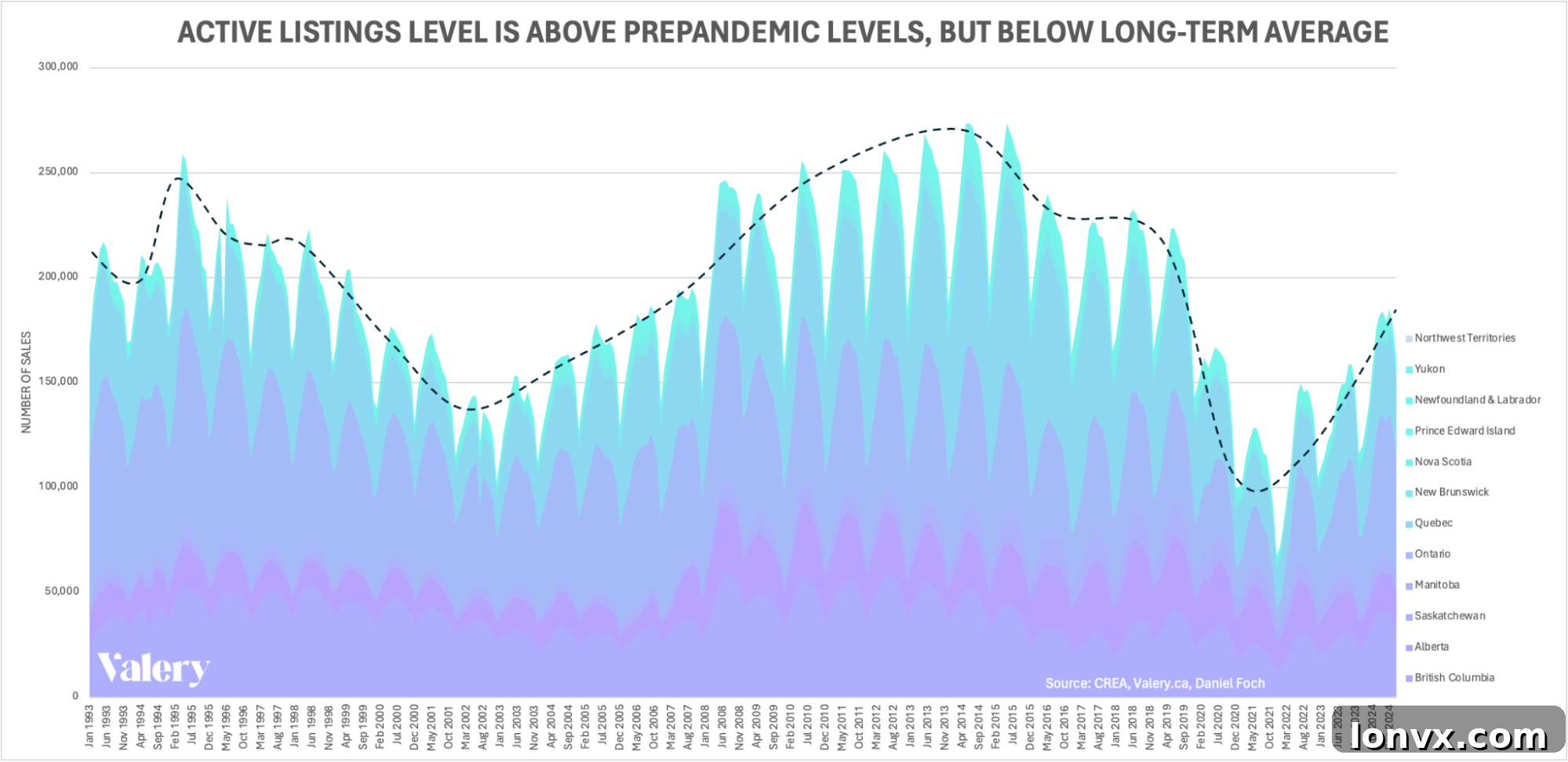
CREA’s analysis of inventory levels often frames the situation as a chronic problem: Canada’s housing supply consistently falls short of burgeoning demand. By the end of November, there were just over 160,000 properties listed for sale nationally. While this represents an 8.9 percent increase compared to a year ago, it still falls short of the long-term average of 178,000 active listings. The industry frequently interprets this as irrefutable evidence of a structural supply deficiency, a deep-seated issue that requires monumental intervention. However, an alternative perspective suggests that this scenario also presents considerable room for growth and potential for future supply to catch up.
Despite the prevailing narrative of scarcity, it’s critical to note that the current environment represents the highest level of active listings we’ve observed since the beginning of the pandemic. Furthermore, a clearly visible and steep upward trend in active listings has been evident each year since the aggressive rate-hiking cycle commenced. This suggests that while underlying structural issues persist, the market is seeing a gradual increase in available homes, which could, in time, help alleviate some of the competitive pressures.
Looking ahead, the trajectory of the Canadian real estate market may hinge critically on the performance of the upcoming spring market. This period traditionally accounts for the highest volume of transactions and often sets the prevailing tone for the remainder of the year. While the recent momentum, coupled with lower interest rates, has undoubtedly injected a dose of optimism, several significant headwinds could still derail a sustained recovery. Mounting concerns about a potential economic recession, declining population growth rates—particularly in the context of recent immigration policy adjustments—and rising unemployment figures could collectively dampen buyer enthusiasm. These macroeconomic pressures might well outweigh the positive effects of incrementally lower borrowing costs and a perceived increase in affordability.
The pivotal question remains: Can the current market momentum build sufficient steam to overcome these multifaceted challenges? Early indicators from activity in December and January will be crucial in gauging whether this nascent recovery possesses genuine staying power or if it is merely a transient response to targeted policy changes and a series of interest rate cuts. A robust spring market would signal a stronger foundation for growth, whereas a faltering one could revert the market to a state of prolonged uncertainty.
Final Thoughts: The Lingering Echoes of Deja Vu
It’s hard to shake a profound sense of deja vu when observing the Canadian housing market. Time and time again, interest rate cuts are deployed as a seemingly quick fix, a perceived panacea intended to stimulate the housing sector. Yet, more often than not, these interventions merely serve to exacerbate underlying issues, kicking the can of fundamental problems further down the road without genuine resolution.
While lower rates theoretically make borrowing more affordable, this benefit is often negated by the persistent and widening disparity between average household incomes and soaring house prices. For many prospective buyers, particularly in urban centers, the dream of homeownership remains a distant fantasy, irrespective of a few percentage points off their mortgage rate. Similarly, relaxed mortgage qualification rules, while helping some individuals secure financing, simultaneously prop up demand in a market already characterized by a chronic shortage of supply. This artificial boost in demand, without a corresponding increase in housing stock, inevitably leads to renewed price escalation, perpetuating the affordability crisis.
For first-time buyers, the path to homeownership continues to be fraught with challenges. Rising prices, even after brief dips, and dwindling inventory create formidable barriers, forcing them into intense competition with wealthier, often multi-property owners or seasoned investors. While existing homeowners and sellers may understandably take comfort in the appreciating value of their properties, the broader reality for the Canadian housing market is far less optimistic. This cycle of quick fixes and reactive policies continues to deepen the divide between the “haves” and “have-nots,” transforming what should be an accessible fundamental need into an increasingly unattainable luxury for many, thereby undermining long-term social and economic stability.
Enjoying this article?
Get the latest REM articles in your inbox 3x week so you stay up to date on the latest in the Canadian real estate industry