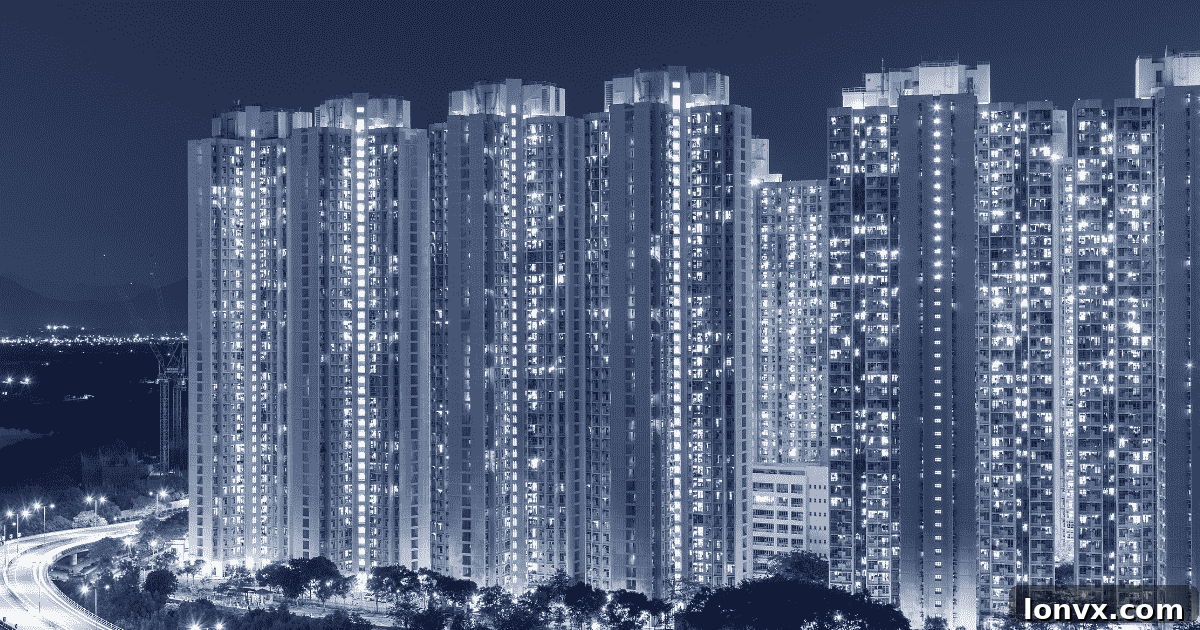
Hong Kong (Canva)
Navigating the Tremors: An In-Depth Look at China’s Evolving Real Estate Market
Once a land of unparalleled opportunity where property developers gifted luxury cars as bonuses to top-performing salespeople, China’s real estate sector now paints a starkly different picture. Today, even in the world’s largest real estate market, with a robust economy and one of the highest homeownership rates globally, real estate agents face unprecedented struggles. The era of effortless wealth creation through property speculation has unequivocally ended, giving way to a period of profound uncertainty and adjustment.
The Epicenter of the Crisis: China’s Housing Bubble Bursts
For decades, China witnessed a relentless surge in urban development, fueled by an insatiable demand for housing and a speculative frenzy that seemed immune to economic cycles. This sustained boom lifted hundreds of millions from poverty into the burgeoning middle class, cementing property ownership as a cornerstone of the Chinese dream and a primary vehicle for household wealth accumulation. However, this era of galloping growth culminated in an epic crash-and-burn, ignited several years ago by the dual pressures of the global pandemic and the catastrophic collapse of colossal property developers like the Evergrande Group and others.
The Rise and Fall of Property Giants
The unraveling of Evergrande, once China’s second-largest developer, served as a stark warning sign. Its immense liabilities, estimated at over $300 billion, exposed a systemic over-leveraging across the sector. Many developers had relied heavily on pre-sales to fund new projects, creating a precarious house of cards. When buyer confidence plummeted and access to new financing tightened, the cycle broke. Across the nation, a landscape emerged dotted with parked construction cranes, abandoned half-finished high-rises, and ghost cities, symbolizing the abrupt halt of a once-unstoppable force. The once-vibrant construction sites, symbols of progress, now stand as monuments to defaulted loans and massive developer debt.
Economic Ripple Effects and Consumer Confidence
The bursting of this housing bubble has triggered wide-ranging economic repercussions. The accumulation of excess inventory, particularly in lower-tier cities, has led to plunging property values and sales volumes. Rental markets have also felt the squeeze, with falling rents adding pressure to landlords and investors. More critically, the crisis has shattered consumer confidence, which is vital for reigniting demand. Homebuyers are hesitant to commit amidst falling prices and fears of unfinished projects, while existing homeowners grapple with declining asset values. As Bingley Liew, a senior consultant with Century 21 China, mildly puts it, “Buyers and sellers are testing each other’s boundaries.” This understatement barely scratches the surface of a market in flux, where distrust and uncertainty prevail.
Government’s Hand: Policies, Hopes, and Persistent Hurdles
Recognizing the severity of the crisis and its potential threat to social stability, the Chinese government has introduced a flurry of support measures. These interventions, aimed at stabilizing the market, alleviating developer debt, and rekindling buyer interest, have sparked a flicker of hope among experts. Policy adjustments include loosening mortgage restrictions, reducing down payments, lowering interest rates, and providing direct financial support to beleaguered developers to ensure project completion. The overarching goal is to engineer a soft landing rather than a hard crash, restoring equilibrium and trust in the market.
A Flurry of Intervention Measures
The “three red lines” policy, introduced in 2020 to rein in developers’ debt levels, while well-intentioned, inadvertently contributed to the liquidity crunch for many firms. Now, the government is delicately balancing regulation with stimulus. Local governments have also rolled out tailored incentives, such as subsidies for homebuyers and relaxation of purchase restrictions, especially in smaller cities. These measures are critical, as the health of the real estate sector is deeply intertwined with broader economic stability, employment, and the financial well-being of millions of Chinese households.
Shared Challenges: Affordability and Demographics
Despite these efforts, a plethora of continuing hurdles persists, many of which resonate with challenges faced in Western economies, including Canada. China contends with a rapidly aging population, which impacts future demand for housing and increases pressure on social welfare systems. The widening income gap further exacerbates the problem, leaving many young buyers locked out of the market dueating to soaring housing costs. The disconnect between stagnant wages and astronomical property prices, particularly in mainland China’s teeming ‘top tier’ cities like Beijing and Shanghai, remains a formidable barrier. These metropolises are consistently ranked among the most competitive and expensive real estate markets in the world, characterized by staggering price-to-income ratios. China’s unofficial city tier system, popularized by media, categorizes cities by desirability and cost, with Tier 1 representing the pinnacle.
The Uniqueness of Hong Kong’s Market
Beyond the mainland, Hong Kong stands as a unique case study. Long dubbed “the most impossibly unaffordable city in the world” by analysts, its housing market operates under immense pressure due to limited land supply and high demand. While distinct from mainland China’s regulatory framework, Hong Kong’s market dynamics are also influenced by broader regional economic trends and global political shifts, including the lingering threat of international tariffs and trade tensions, which always add an unpredictable layer of complexity.
A Shifting Paradigm: Re-evaluating Homeownership in China
Perhaps one of the most startling consequences of the property downturn is a profound shift in attitudes towards homeownership itself. For decades, real estate was the primary engine that propelled hundreds of millions of Chinese citizens from poverty into the middle class. Property ownership held immense cultural clout, deeply intertwined with social status, family honor, and was often considered a prerequisite for marriage. It was not merely an investment; it was the ultimate mark of success and security.
Cultural Significance vs. Modern Realities
However, reports from media sources like Diplomat magazine indicate that younger generations are now under significant pressure and are “re-considering their options.” The dream of homeownership, once universal, is being questioned. Faced with precarious job markets, high living costs, and the specter of unfinished apartments or declining property values, an increasing number of potential buyers are wondering if purchasing a home is truly worth the immense financial risk. This cultural shift poses a long-term challenge to the market, especially in low-tier cities which are struggling more acutely than the resilient top-tier markets. With apartment inventory at a historic high nationwide, resolving this crisis of confidence and demand may take years to fully materialize.
Distinctive Foundations: The Structural Peculiarities of China’s Property Sector
China’s real estate market is far from a typical global model; it is a “one-off” – a uniquely structured system driven by distinct historical, cultural, and political forces. Its relentless push for advancement and innovation is formidable, yet many of its underlying cultural norms and governmental controls, such as censorship and mass surveillance (which American whistle-blower Edward Snowden famously called “utterly mind-boggling”), are foreign to Western sensibilities.
State Ownership and Land-Use Rights
A fundamental differentiator is that land in China remains state-owned. Private ownership of property, as understood in many parts of the world, was only truly introduced in China in 1998, as explained by Harry Lu, CEO of Century 21 China. Instead of owning the land outright, urban residential buyers acquire land-use rights for a finite period, typically 70 years. While this might seem unsettling to foreign investors accustomed to perpetual freehold ownership, Lu asserts that “people here are not very concerned about this.” The widespread expectation among the populace is that these land-use rights will be renewed, or otherwise handled by the government in a manner that will “maintain social stability and a healthy market.” This implicit trust in government intervention underscores a key difference in consumer mindset.
Navigating Expropriation and Social Stability
Despite the general acceptance of state control, the government’s power to expropriate land for development on occasion can lead to disputes. While compensation is typically offered, the process can sometimes be contentious, highlighting the tension between rapid urbanization goals and individual property rights. The government’s paramount concern for “social stability” often guides its approach to such matters, ensuring that any resolution seeks to mitigate widespread discontent and maintain public order.
The Regulatory Landscape and Industry Practices for Real Estate Agents
China’s engagement in overseas real estate markets has been remarkably active, with significant investment flowing into countries like Canada, albeit now facing tighter foreign buyer restrictions. Domestically, however, the Chinese market is profoundly focused on local demand, according to Harry Lu. Foreign buyers encounter substantial restrictions when seeking to own property within China, a policy designed to prioritize domestic needs and control capital outflow.
Foreign Investment and Domestic Focus
The government’s tight control over capital flows and property ownership by non-citizens creates a distinct operating environment. While some exceptions exist, the general policy aims to prevent speculative foreign investment from destabilizing the domestic market or making housing even less affordable for Chinese citizens. This local-first approach means real estate agents primarily serve a domestic clientele, navigating a complex web of local regulations and cultural nuances.
The Agent’s Path: Licensing, Competition, and Market Tools
Paradoxically, despite the industry being heavily regulated overall, the barrier to entry for aspiring real estate agents in China is surprisingly low. Agents (the term “Realtors” isn’t used) must register with local housing authorities, but there are no standardized mandatory national training or licensing requirements, unlike in many Western countries. This ease of entry contributes to an oversaturated market, particularly during boom times when an influx of agents perceives easy money. Lu observes that “even now, many people believe China has far more agents than necessary.” This intense competition translates into a demanding profession characterized by “long irregular hours” and constant pressure to secure listings and close deals. Furthermore, China lacks a unified Multiple Listing Service (MLS) system. While there are popular listing apps and some information sharing among major brands, the absence of a centralized platform can make market transparency and data access challenging for agents and consumers alike.
Cultural Undercurrents: Demographics, Guanxi, and the Art of Negotiation
The demographics of China’s real estate workforce also present a notable contrast to many Western markets. Unlike Canada, where agents may come from diverse age groups and backgrounds, the majority of agents in China are young and tech-savvy, with the average age reportedly under 30. This youthfulness reflects the rapid pace of economic change and the attraction of younger generations to dynamic industries. Commission payment models are customary, though many brokerages “still offer new agents a base salary” to provide initial stability. Practices vary, but in resale transactions, it is common for agents to represent both the buyer and seller, with the commission costs (typically 2 to 3 percent of the transaction value) often split between them. This dual representation model, while prevalent, can raise questions about potential conflicts of interest, a challenge agents must navigate carefully.
The Power of “Guanxi” and “Face” in Transactions
Success in China’s real estate market, perhaps more than anywhere else, hinges significantly on strong relationships and networking, a concept known as “guanxi.” This intricate web of personal connections and reciprocal obligations is central to Chinese business culture. Jan Repa, ReMax area vice president for global development, further explains the importance of ‘face’ in Chinese culture, which revolves around being mindful of a client’s reputation, dignity, and social standing. “Maintaining and giving face is crucial,” says Repa. This can manifest in various ways, from showing profound respect for a client’s status to meticulously avoiding any actions that could cause them embarrassment, such as public criticism or direct confrontation.
Chinese negotiators often employ indirect communication strategies to preserve face, using subtle hints or non-verbal cues rather than explicit statements. Building robust relationships often extends beyond formal meetings, involving friendly carousing like dinners or informal gatherings where trust and rapport are cultivated. For agents, understanding and skillfully leveraging guanxi and face are not just advantageous; they are often indispensable for navigating complex policy changes, purchase restrictions, and ultimately, for closing deals in a highly relationship-driven market.
Market Dynamics and the Road Ahead: Building Trust Amidst Uncertainty
Nathan Yang, regional director for ReMax Shanghai, aptly summarizes China’s real estate market as “policy-driven, relationship-focused, and tech-heavy.” He emphasizes that government involvement significantly impacts agents and market dynamics in ways fundamentally different from Canada. The strong governmental hand can create unique market conditions; for instance, in tech-industry-focused cities like Shenzhen, policies may specifically favor certain buyers, such as tech experts, thereby “creating niche markets for agents” that require specialized knowledge and connections.
Policy-Driven Markets and Niche Opportunities
The direct and indirect influence of government policies means that agents must be exceptionally agile and informed, constantly adapting to new regulations and directives that can shift market landscapes overnight. This policy-driven environment, while challenging, also generates specialized opportunities for agents who can deeply understand and cater to these evolving niches. For instance, agents specializing in properties eligible for specific government incentives or those targeting particular demographic groups (e.g., first-time homebuyers benefiting from subsidies) can carve out successful careers.
Efforts to Professionalize the Industry
Yang also acknowledges that real estate agents in China do not universally enjoy a stellar reputation. Similar to sentiments in North America, the field often attracts a degree of mistrust and concern regarding transparency. However, reputable domestic mega-firms like Lianjia and Beike are actively “working to improve standards” and build trust across the industry. These leading companies are investing in agent training, ethical guidelines, and leveraging technology to enhance transparency and professionalism. Their efforts are crucial in reshaping public perception and establishing a more reliable and trustworthy real estate ecosystem, which is essential for the long-term health and stability of China’s recovering property market.
Conclusion: Charting a New Course for China’s Property Future
China’s real estate market stands at a pivotal juncture. The dizzying heights of its past boom have given way to a challenging period of correction, marked by developer defaults, plummeting values, and a crisis of confidence among homebuyers. The government’s intricate dance of intervention aims to stabilize the sector, yet deep-seated issues like an aging population, affordability gaps, and shifting societal perceptions of homeownership present formidable long-term hurdles. For real estate agents, the path forward demands exceptional adaptability, a keen understanding of policy nuances, and a profound appreciation for the cultural intricacies of guanxi and face. As leading firms strive to professionalize the industry and rebuild trust, China’s property sector is undoubtedly charting a new course—one that promises to be more sustainable, albeit less speculative, and profoundly redefined by its recent tremors.