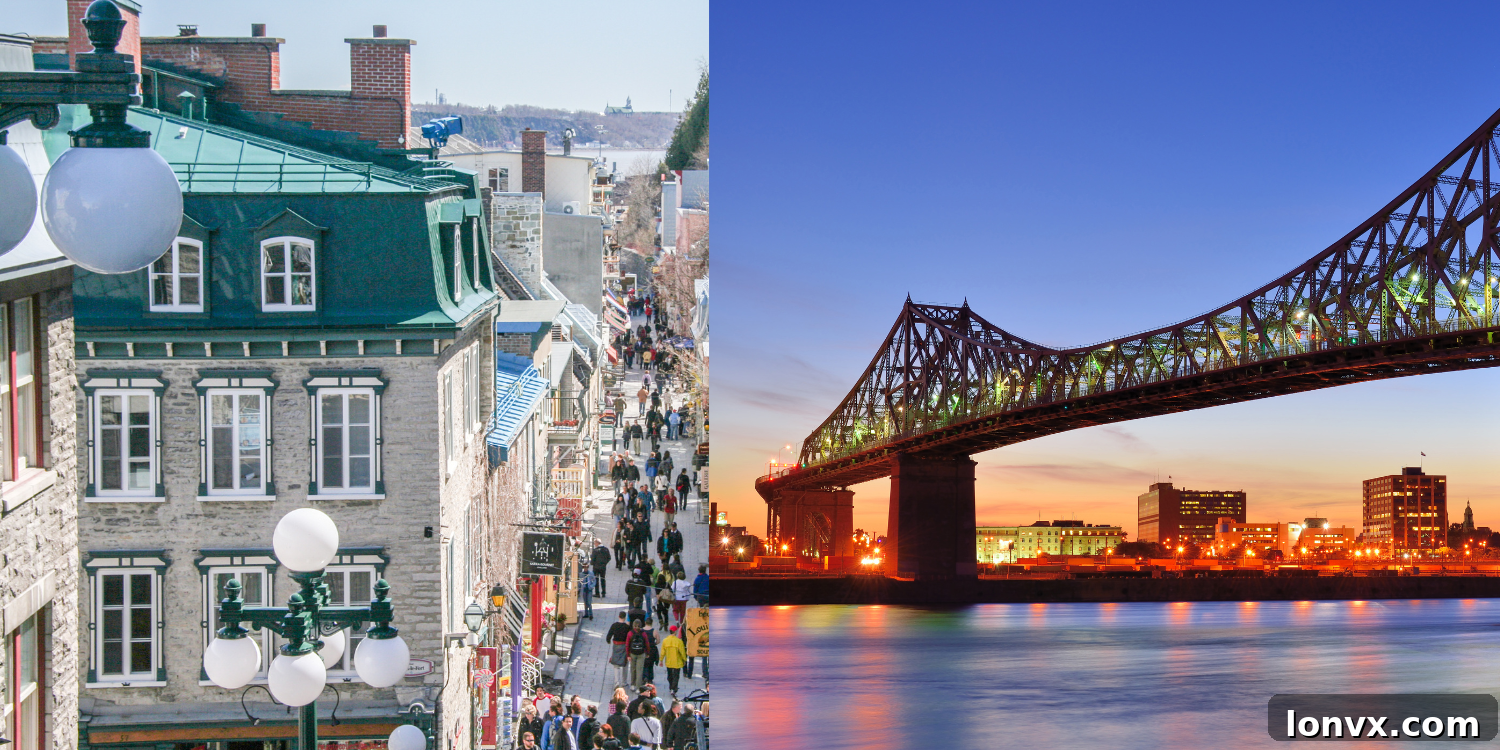
Quebec’s Residential Real Estate Market: A Comprehensive Analysis of April’s Surging Performance in Montreal and Quebec City
The Quebec Professional Association of Real Estate Brokers (QPAREB) has released its latest data, offering crucial insights into the residential real estate market across Quebec for April. This detailed report highlights significant uptrends in both Quebec City and Montreal, painting a picture of a dynamic and increasingly competitive market. With sales figures showing robust growth, particularly in Quebec City, and a reactive recovery taking hold in Montreal, understanding these regional nuances is essential for anyone involved in the province’s housing sector.
Specifically, Quebec City recorded an impressive 976 residential sales last month, marking an 18 percent increase compared to April of the previous year. This performance isn’t just a minor improvement; it represents the second-highest sales level for this specific time of year since the turn of the millennium, underscoring a powerful resurgence in buyer activity. Montreal, not to be outdone, registered 4,688 sales during the same period. While this figure represents a substantial 26 percent jump year-over-year, it still sits slightly below the historical average for April, suggesting a recovery with distinct characteristics compared to its provincial counterpart.
Quebec City’s Remarkable Rebound: A Deep Dive into a Seller-Favored Market
Robust Sales Activity Driving Market Tightness and Overheating
The Quebec City market has demonstrated exceptional vitality, characterized by sales figures that have not only surpassed historical averages but also rivaled the peak levels observed during the pandemic years. Charles Brant, QPAREB’s market analysis director, emphasized this point, noting, “April posted robust sales well above the historical average, and which even compared to the all-time highs reached for this time of the year during the pandemic. This rebound, different from what is happening in other Quebec markets, is an intensification of the upward trend in the number of transactions.” This sustained upward trajectory in transactions is a clear indicator of burgeoning buyer confidence and strong underlying demand.
The consequence of this intensified activity is a noticeable tightening of market conditions. Quebec City is rapidly transitioning into a seller-favored environment, where demand frequently outstrips supply. This shift has led to the emergence of “acute overheating conditions,” a term used to describe a market where competition among buyers is intense. A direct manifestation of this overheating is the increasing prevalence of overbidding, particularly pronounced in the central metropolitan area of Quebec City and its burgeoning South Shore. Buyers are often compelled to offer above the asking price to secure properties, reflecting the fierce competition and limited inventory available.
Geographical Hotspots and Distinct Property Type Performance
Delving deeper into Quebec City’s performance, certain areas have experienced extraordinary growth. The South Shore of Quebec, for instance, saw an impressive 42 percent surge in sales compared to April 2023. Similarly, the Northern Periphery of Quebec City recorded a significant increase of 41 percent during the same period. These areas, often offering a blend of affordability and suburban appeal, are clearly attracting a large share of the region’s buyers, contributing substantially to the overall market upswing.
Transactional activity across different property types also highlights varied preferences and market dynamics. Single-family homes remained the most popular choice, with 629 sales. Condominiums followed with 272 sales, and small-income properties (plexes) accounted for 75 sales. The percentage increases across these categories ranged between 13 percent and 34 percent year-over-year. Notably, the condominium segment, as highlighted by Brant, has experienced a considerable increase in its median price, indicating strong demand in this particular market niche, perhaps driven by changing demographics or evolving affordability concerns.
Shrinking Inventory and Accelerating Median Price Growth
A critical factor contributing to Quebec City’s tightening market is the dwindling supply of available properties. Active listings last month saw a nine percent decline from a year ago, primarily driven by a significant drop in the inventory of condominiums and plexes. This reduction in listings is alarming, marking the third-lowest inventory level of available properties for this time of year since 2000. Such scarcity inevitably places upward pressure on prices, further solidifying the seller-favored market conditions.
The impact of this robust demand and limited supply is clearly reflected in median price increases across all property types. Condominiums led the charge with a substantial 19 percent year-over-year increase, reaching a median price of $276,500. Single-family homes also saw healthy growth, climbing nine percent to a median of $381,340. Plexes, while showing a more modest increase, still rose by four percent to $425,000. Furthermore, the median prices for all property types demonstrated an upward trend even when compared to March figures, indicating sustained momentum in price appreciation.
Montreal’s Strategic Recovery: Interest Rates, Repeat Buyers, and High-End Momentum
A Reactive Market Responding to Rate Expectations
In Montreal, the real estate market experienced a “reactive recovery” in April, following an initial rebound in February. Charles Brant attributes this recovery to two primary factors: “an increasingly obvious and imminent return to a downward cycle in interest rates, in addition to a resumption of price growth that this drop in rates may suggest.” This indicates that buyers and sellers are closely monitoring economic signals, with the anticipation of lower borrowing costs fueling renewed interest and activity. The market’s responsiveness to these external economic factors underscores its sensitivity and the cautious optimism prevailing among participants.
The Influence of Repeat Buyers and Elevated Price Points
Despite tangible purchasing intentions, Brant points out that the “ability to take action belongs to repeat buyers.” This segment of the market, typically comprising homeowners with accumulated equity, is better positioned to navigate the current pricing landscape. Prices in the Montreal region have, in fact, reached the highs of 2022 for the same time of year, making entry for first-time buyers potentially more challenging without significant financial leverage. The market’s improved fluidity, likely due to a greater number of properties changing hands, benefits these more established buyers.
A particularly striking trend in Montreal is the heightened activity in the higher price segments. Wealthier buyers are notably active in single-family homes and condominiums priced above $700,000. Sales in this luxury segment surged by 48 percent, significantly outpacing the overall 25 percent increase seen across all price ranges combined. This suggests a bifurcated market, where the upper echelons are experiencing robust growth, while other segments might be more constrained by affordability and borrowing capacity.
Dissecting Sales by Region and Property Category
Across Montreal’s main metropolitan areas, April brought positive news with all regions reporting higher property sales. Laval stood out with the highest increase, registering an impressive 35 percent rise compared to the same period last year. This regional growth contributes to the overall strength of the broader Montreal market, indicating widespread recovery.
In terms of property types, single-family homes again led in volume, with 2,438 sales. Condominiums followed with 1,814 sales, and small-income properties (plexes) accounted for 433 sales. The year-over-year transactional activity for these property types ranged between 24 percent and 34 percent, demonstrating consistent growth across the board, although the luxury segment’s performance was clearly an outlier.
Listing Dynamics and Median Price Evolution
Unlike Quebec City, Montreal experienced an increase in active listings last month, with a 19 percent rise from a year ago across all property types. While this increase offers a glimmer of hope for buyers by providing more options, the total inventory still remained slightly below the historical average for this time of year. This suggests that while more properties are coming onto the market, they are being absorbed relatively quickly, preventing a significant build-up of supply that could dampen price growth.
Median prices in Montreal also showed an upward trajectory compared to April of last year. Condominiums reached $400,598, marking a three percent increase. Single-family homes saw a more substantial seven percent rise, reaching a median of $575,000. Plexes increased by four percent to $754,000. Interestingly, while prices were up year-over-year, overall median prices for all property types remained stable when compared to March, indicating a steady, rather than accelerating, pace of appreciation in the immediate term.
Key Takeaways and Future Outlook for Quebec’s Housing Market
The April data from QPAREB paints a fascinating picture of Quebec’s residential real estate market, characterized by strong regional variations and nuanced trends. Quebec City is clearly in a seller’s market, driven by intense demand, dwindling inventory, and rapidly appreciating prices, pushing conditions towards “overheating.” This robust performance is largely due to sustained buyer confidence and potentially a more localized economic resilience. The overbidding phenomenon in Quebec City is a clear sign of the urgency and competition among buyers.
Montreal, while experiencing a significant recovery in sales, presents a more measured and “reactive” market. Its rebound is heavily influenced by expectations around interest rate adjustments, with repeat buyers and the high-end luxury segment driving much of the activity. The increase in listings in Montreal offers a slightly more balanced environment compared to Quebec City’s acute inventory squeeze, but prices are still firm. The stability of median prices month-over-month suggests a cautious but steady progression.
Looking ahead, the direction of interest rates will undoubtedly remain a pivotal factor for both markets. A consistent downward trend in rates could further invigorate buyer activity across all segments, potentially intensifying competition in Montreal and maintaining the high momentum in Quebec City. For sellers, these conditions present opportune moments, especially in Quebec City where demand is exceptionally strong. Buyers, on the other hand, will need to remain agile and well-informed, particularly as competition for desirable properties continues to escalate across the province. The QPAREB’s continued monitoring and analysis will be crucial in navigating these evolving market dynamics.
Enjoying this article?
Get the latest REM articles in your inbox 3x week so you stay up to date on the latest in the Canadian real estate industry