
Canada’s Rental Market: Navigating Rising Rents Amidst Emerging Slowdown Signals
Canada’s dynamic rental market continues to capture the attention of prospective tenants, landlords, and policymakers alike. While the nation has largely experienced a relentless upward trajectory in rent prices, a closer examination of recent data reveals a nuanced landscape. Specifically, a significant slowdown in rent growth in major hubs like Toronto could be signaling a broader economic shift and evolving affordability challenges across the country. This comprehensive analysis delves into the latest trends, regional disparities, and the intriguing rise of shared accommodations, offering a detailed snapshot of the Canadian rental scene.
National Rental Trends: A Continuous Ascent with Caveats
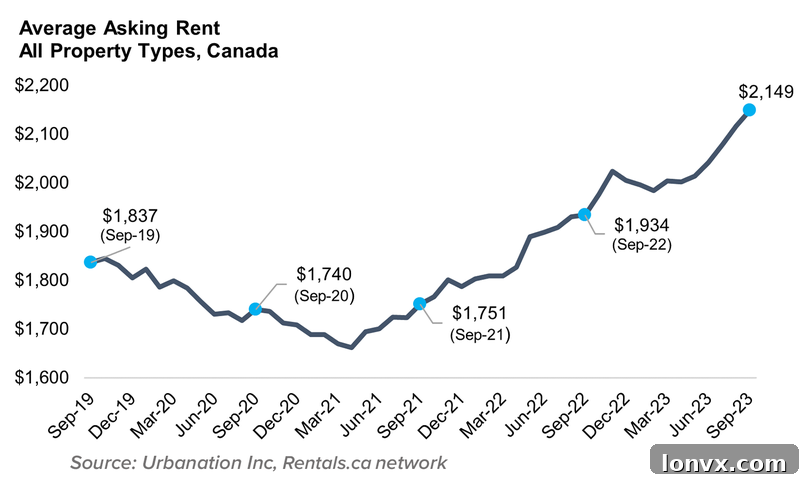
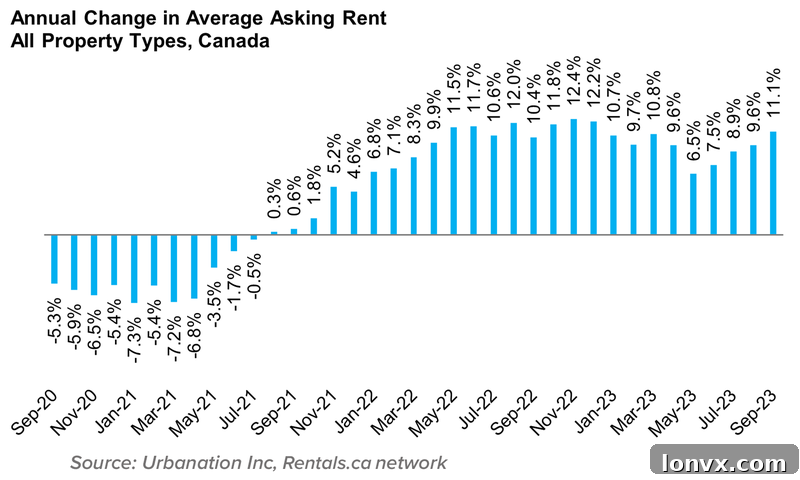
The latest National Rent Report, a collaborative effort by industry leaders Rentals.ca and Urbanation, paints a clear picture of sustained growth in the Canadian rental market. September figures indicate a robust month-over-month increase of 1.5 percent, pushing the average asking rent nationwide to an impressive $2,149. This represents a significant 11 percent year-over-year surge, marking a nine-month high in the annual rate of rent inflation. Such consistent increases highlight persistent demand fueled by factors like a growing population, constrained housing supply, and the ripple effects of rising interest rates pushing more individuals into the rental sector.
However, beneath these soaring national averages, there’s a developing story of regional divergence. While many markets are still experiencing robust rent appreciation, some, particularly the larger and more mature ones, are beginning to show signs of moderation. This intricate dance between national strength and localized cooling suggests a market grappling with its own success, where affordability thresholds are increasingly being tested and consumer behavior is adapting in response.
Understanding these macro and micro trends is crucial for anyone involved in the Canadian housing market. The sustained national growth underscores the pressing need for increased housing supply and innovative solutions to address the fundamental demand-supply imbalance. Yet, the emerging signs of deceleration in specific areas suggest that the market is not monolithic and requires a granular approach to truly grasp its complexities.
Toronto’s Deceleration: A Bellwether for Broader Economic Cooling?
As Canada’s largest and most influential rental market, Toronto often serves as an economic barometer. The city’s recent experience of a deceleration in rent growth is, therefore, particularly noteworthy. While other major markets continued their upward trend, Toronto saw its rental appreciation slow significantly last month. Experts are carefully watching this development, suggesting it could be an early indicator of broader economic cooling across the country or, at the very least, a clear sign that affordability limits are being reached for many renters in the Greater Toronto Area.
Shaun Hildebrand, President of Urbanation, emphasized the significance of this shift, stating, “While rent inflation in Canada remained exceptionally strong in September, most major markets experienced a slower annual rate of rent growth compared to recent months. This was particularly true in Toronto, where rents grew by their slowest pace in two years.” This statement underscores a pivotal moment for Toronto’s housing market, which has long been characterized by relentless price increases. The slowdown might offer a slight reprieve for renters, but it also raises questions about the long-term sustainability of current rental rates and the economic pressures on the city’s residents.
The implications of Toronto’s slowdown extend beyond just rental prices. It could reflect various factors, including saturation of demand at current price points, increased supply from new developments finally coming online, or a broader economic tightening impacting renters’ disposable income. Furthermore, the growing popularity of shared accommodations within Toronto points to a direct response by renters to these affordability constraints, choosing collaborative living arrangements to mitigate costs.
Unit-Specific Dynamics: One-Bedroom Apartments Lead the Charge
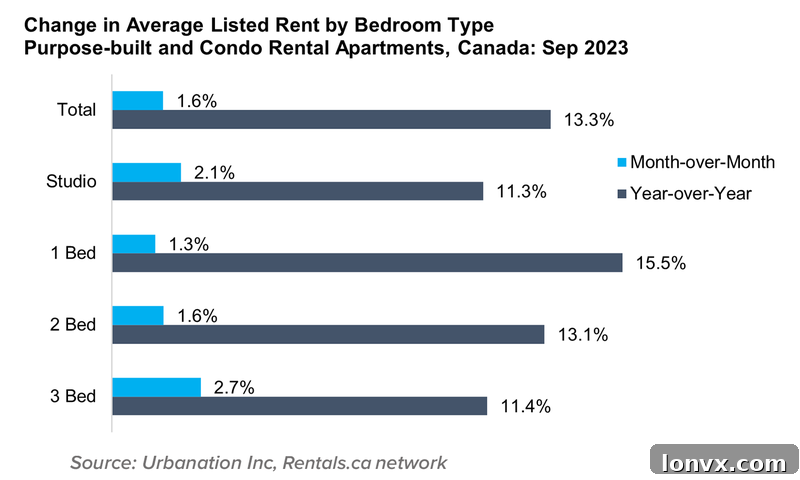
Analyzing the rental market by unit type reveals distinct patterns of demand and growth. One-bedroom apartments have emerged as the frontrunners in annual rent increases, experiencing a substantial 15.5 percent surge year-over-year, bringing their average asking rent to $1,905. This strong performance often reflects a sweet spot in the market, appealing to single professionals, young couples, and those seeking independent living without the higher costs of larger units.
Two-bedroom units also saw significant year-over-year growth, with rents increasing by 13.1 percent to an average of $2,268. These units cater to small families, roommates, or individuals desiring extra space for a home office. Three-bedroom apartments followed suit, registering an 11.4 percent increase, with average rents now at $2,514, indicating continued demand for larger family-friendly spaces, albeit at a slightly slower growth rate than their smaller counterparts.
Studio apartments, typically considered the most affordable entry point into the rental market, also experienced robust growth. With an 11.3 percent annual increase, the average rent for a studio unit reached $1,511. While still the most budget-friendly option, the pace of growth in studio rents underscores the widespread pressure on affordability across all unit sizes, pushing even those seeking the smallest spaces to contend with escalating costs. These variations highlight how different segments of the renter population are navigating the current market conditions, with smaller units often bearing the brunt of demand due to their relative affordability.
Provincial Powerhouses: Nova Scotia and Alberta Top Annual Rent Growth
When examining rent growth across Canada’s provinces for purpose-built and condominium apartments, Nova Scotia and Alberta have distinguished themselves with leading annual growth rates. Nova Scotia posted an impressive 15.4 percent increase, closely followed by Alberta at 15.3 percent. This robust growth in these provinces can be attributed to various factors, including strong inter-provincial migration, economic expansion, and a growing population seeking housing in their urban centers.
Quebec and British Columbia also demonstrated strong performance, reporting significant rent growth figures of 13 percent and 12.3 percent, respectively. These provinces, with their vibrant economies and popular cities, continue to attract residents, putting upward pressure on rental prices. In contrast, Ontario experienced a noticeable slowdown. The annual growth rate in the province dropped from 10 percent in August to a more modest 6.6 percent in September. This shift in Ontario aligns with the broader deceleration observed in its major market, Toronto, suggesting a potential market correction or stabilization after a period of intense growth.
The provincial disparities in rent growth reflect unique economic and demographic conditions. Provinces with rapid population growth, robust job markets, and perhaps less existing housing stock are seeing steeper increases. Conversely, provinces like Ontario, which have seen sustained, high growth for an extended period, might be reaching a point where market saturation or affordability limits begin to temper the pace of rent hikes.
Major Cities in the Spotlight: Calgary’s Surge and Toronto’s Slowdown
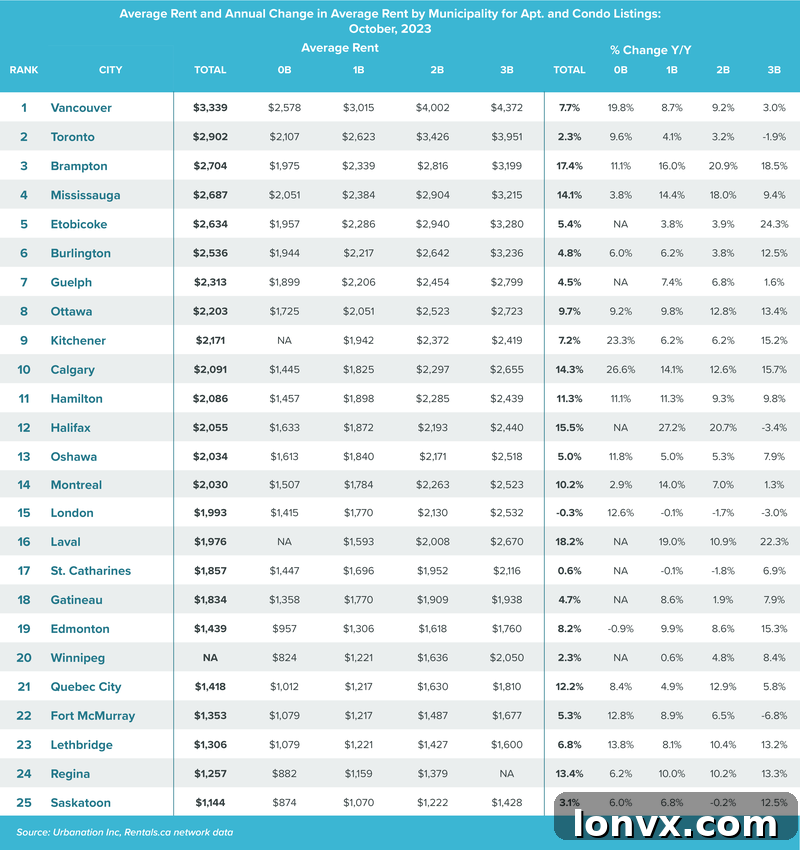
A closer look at Canada’s major cities reveals a fascinating divergence in rental market performance. Calgary, Alberta’s bustling economic hub, led the pack with a remarkable 14.3 percent annual increase in asking rents, reaching an average of $2,091. This surge in Calgary is indicative of a booming economy, strong job growth, and an influx of new residents, making it a highly competitive market for renters. Montreal, Quebec’s largest city, also experienced significant growth, with a 10.2 percent year-over-year increase, bringing its average rent to $2,030. Montreal’s vibrant culture, strong university presence, and comparatively lower cost of living than Toronto continue to attract a steady stream of renters.
In stark contrast to these bustling markets, Toronto witnessed a significant slowdown in rent growth, with its annual increase moderating to just 2.3 percent. This dramatic shift from previous periods of double-digit growth underscores the unique challenges and evolving dynamics within Canada’s largest metropolitan area. The Toronto slowdown, as previously discussed, is a crucial indicator that affordability constraints are becoming more pronounced, leading to adjustments in demand and potentially a more balanced market environment.
The varied performance of these major cities highlights the complex interplay of local economic conditions, housing supply, and population movements that shape rental markets across Canada. While some cities continue to experience heated competition, others are showing signs of cooling, providing a mixed outlook for renters and investors.
The Unseen Strength: Resilience in Small and Medium Markets
Beyond the national averages and major city spotlights, Canada’s medium and smaller markets are quietly exhibiting some of the most impressive annual rent growth rates. This trend suggests a broader decentralization of rental demand, as individuals seek more affordable living options outside the traditional urban centers, often facilitated by remote work opportunities.
Richmond, B.C., topped this category with an astonishing 29 percent increase in annual rents, reflecting its desirability and proximity to Vancouver while offering a slightly lower cost of living. Cote-Saint-Luc, Quebec, followed closely with a 27.5 percent growth rate, indicating strong local demand. Red Deer, Alberta, ranked third with a robust annual growth rate of 22 percent, likely benefiting from Alberta’s overall economic buoyancy. Oakville, Ontario, demonstrated the fastest rising rents within its province, with an annual growth rate of 19.4 percent, showcasing the continued appeal of suburban communities within the Greater Toronto Area.
In smaller provinces, Halifax, Nova Scotia, and Regina, Saskatchewan, led the way with 15.5 percent and 13.4 percent annual rent growth rates, respectively. These figures underscore the robust demand in provincial capitals and regional hubs, driven by local economic development, educational institutions, and migration trends. The resilience and accelerated growth in these smaller and medium-sized markets highlight a significant shift in Canada’s rental landscape, where affordability and lifestyle choices are increasingly influencing where people choose to live.
The Rise of Shared Accommodations: A Response to Affordability Challenges
A notable and increasingly prevalent trend in the Canadian rental market is the surging demand for shared accommodations. The latest report reveals a significant increase in the volume of listings for shared living spaces, with a 27 percent rise over the past three months compared to the previous year. This trend is particularly pronounced in British Columbia, which saw a 40 percent increase in shared accommodation listings, and even more dramatically in Ontario, with a staggering 78 percent increase.
This remarkable growth in shared living arrangements is a direct reflection of the persistent affordability crisis facing many Canadians. As average rent prices continue their upward climb, particularly for single-unit dwellings, more individuals are turning to shared accommodations as a practical and necessary solution to manage housing costs. The average asking rents for shared accommodations have also seen a substantial increase, growing by 18 percent year-over-year to reach $944 per month. While still significantly more affordable than renting an entire apartment, the growth in these rents suggests that even this segment of the market is feeling the pressure of high demand.
The rise of shared accommodations points to changing demographics and evolving preferences, especially among younger generations and new immigrants who prioritize location and community over sole occupancy. It also highlights the ingenuity of renters in adapting to challenging market conditions, creating new models of living to maintain access to urban centers and manage their budgets effectively. This trend is likely to continue as long as traditional rental costs remain elevated, shaping the social fabric of Canada’s urban and suburban areas.
Conclusion: Navigating Canada’s Evolving Rental Landscape
Canada’s rental market is currently a complex tapestry of national growth, regional disparities, and evolving consumer behavior. While the overall trend indicates a continued ascent in average rent prices, driven by strong demand and limited supply, the emerging slowdown in major markets like Toronto signals a potential turning point. The leading growth in specific unit types and the varying provincial and city-level performances underscore the importance of localized analysis.
Perhaps most telling is the significant surge in shared accommodations, a clear indicator that renters are actively adapting to affordability challenges. As the market continues to evolve, a deeper understanding of these intertwined trends will be essential for renters seeking sustainable housing, landlords making investment decisions, and policymakers striving to create a more equitable and accessible housing environment for all Canadians.