
Canada’s vibrant and diverse landscape offers a myriad of opportunities for residents, yet navigating its rental market can often feel like a formidable challenge. With rising housing costs and competitive demand in many urban centers, finding a place that truly feels like home—one that balances affordability with a high quality of life and a strong sense of community—is a top priority for millions of Canadians. Recognizing this crucial need, a comprehensive study by Point2 meticulously analyzed 24 key metrics across the nation’s 100 largest cities, pinpointing the premier locations where renters can not only survive but truly thrive.
Discover Canada’s Top Cities for Renters: Where Affordability Meets Quality of Life
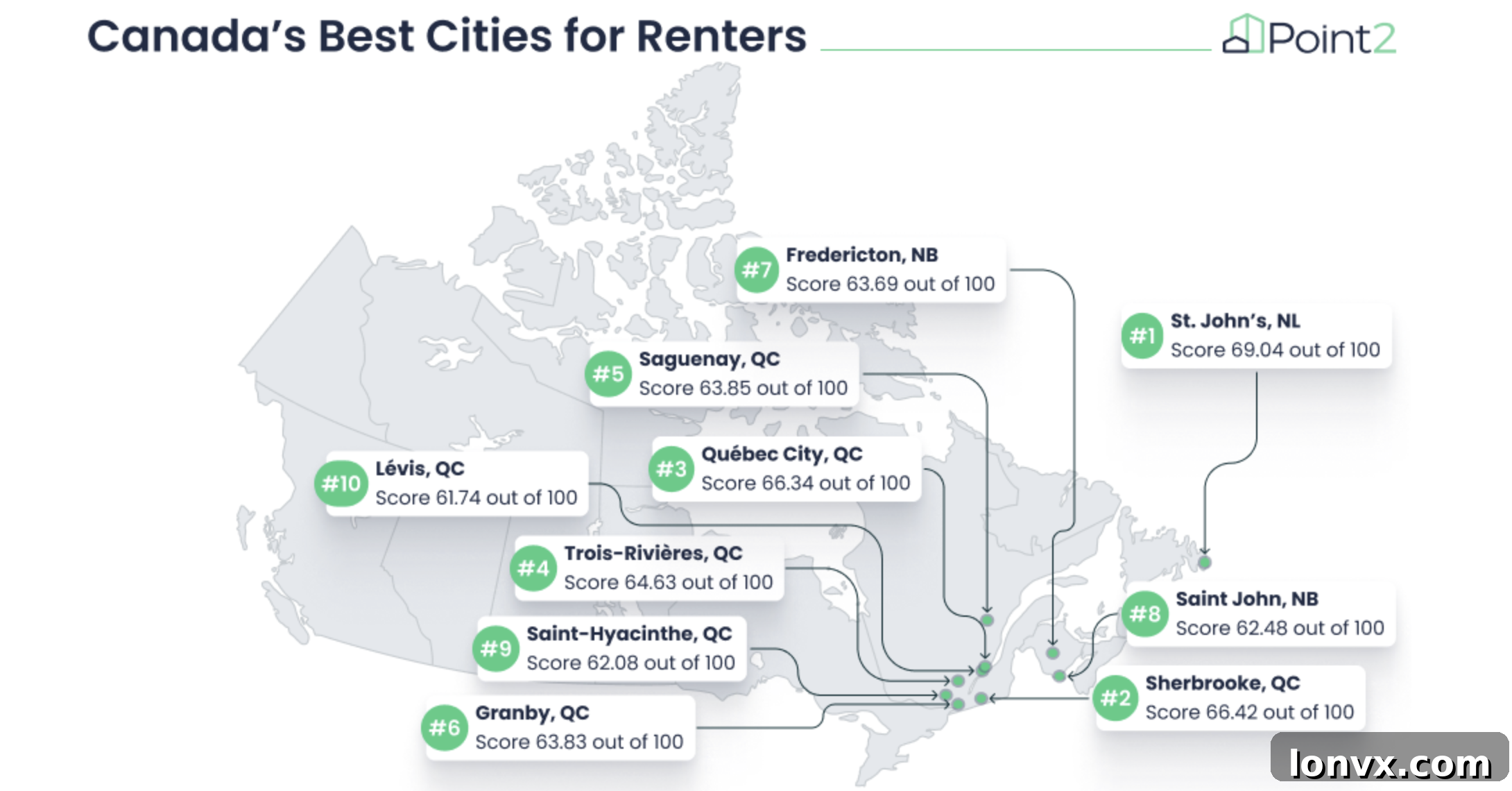
The latest research unveils a compelling narrative: while the rental landscape presents its share of hurdles, several Canadian cities are emerging as beacons for tenants, offering an optimal blend of economic viability, lifestyle amenities, and robust community ties. These top-ranking cities are not merely places to rent; they are environments where individuals can cultivate a well-balanced lifestyle, fostering long-term stability and satisfaction, rather than simply biding time until homeownership becomes a distant possibility. Interestingly, a significant portion of these rental havens are concentrated in Quebec, alongside a notable standout in Nova Scotia.
For instance, seven cities within Quebec, alongside Cape Breton, Nova Scotia, proudly feature average rents falling below the $1,000 mark. This remarkable affordability positions them as prime destinations for renters prioritizing budget-friendly living without compromising on essential amenities or a comfortable environment. Such low housing costs provide a crucial financial cushion, allowing residents to allocate more of their income towards savings, leisure, or other vital expenses, significantly reducing financial stress.
Beyond sheer affordability, the study also highlights cities excelling in terms of housing availability and development. Major metropolitan areas like Toronto, Oakville, and Montreal boast impressive inventories of rental homes, offering a diverse array of options to suit various preferences and needs, from studio apartments to larger family units. This abundance of choice empowers renters, providing greater flexibility and reducing the intense competition often seen in markets with limited supply. Complementing this, North Vancouver, B.C., stands out for its highest number of new rental unit starts, signaling a proactive approach to addressing future housing demands and offering modern, purpose-built rental accommodations.
Amidst these varied strengths, St. John’s, Newfoundland, emerges as a particularly compelling choice. This vibrant city masterfully strikes a delicate balance between promising economic opportunities and a rich, engaging community life. Its ability to combine economic stability with a welcoming, active social scene makes it a highly attractive destination for renters seeking both professional growth and personal fulfillment. However, it is cities within Quebec, such as Sherbrooke and Quebec City, that predominantly secure the top positions in the rankings, renowned for fostering the most satisfying renter lifestyles. Here, tenants are not just “making do” but are genuinely thriving, supported by a system that prioritizes their well-being and integration into the urban fabric.
Economic and Housing Hotspots: Quebec Leads the Way for Renters
When scrutinizing the economic and housing conditions that most benefit renters, Quebec’s cities consistently shine. An impressive 18 out of 19 Quebec cities analyzed in the study dominated this crucial category, underscoring their exceptional quality of life and advantageous circumstances for tenants. This dominance points to a confluence of factors, including potentially more stable local economies, lower average wages that are offset by significantly reduced cost of living, or perhaps provincial policies that actively support affordable housing initiatives.
Furthermore, Wood Buffalo, Alberta, shines brightly as an unexpected haven of affordability within this segment. The city boasts an impressive statistic: nearly 83 percent of its renters dedicate less than 30 percent of their income to housing costs. This benchmark, often cited as the golden rule for financial stability, indicates that the vast majority of renters in Wood Buffalo are not “cost-burdened,” meaning they have ample disposable income after paying for housing. This remarkable level of affordability is a significant draw, especially for individuals or families looking to maximize their savings or reduce their overall financial strain, offering a comfortable and sustainable living environment.
The economic landscape of a city profoundly influences a renter’s experience. Stable job markets, reasonable consumer prices, and, crucially, housing costs that align with average incomes create a foundation for financial security and peace of mind. Quebec’s consistent performance across these metrics suggests a robust framework that supports its rental population, making it an enviable region for those seeking both economic stability and comfortable housing.
Unpacking Quality of Life: British Columbia and Ontario Offer Diverse Perks
The essence of a satisfying rental experience extends far beyond just the monthly rent; it deeply intertwines with the overall quality of life a city can offer. This encompasses a broad spectrum of factors, including personal safety, the ease of navigating the city on foot (walkability), and access to vital green spaces that promote health and recreation. In these crucial aspects, British Columbia and Ontario distinguish themselves with unique strengths.
British Columbia’s major urban centers, such as Vancouver and North Vancouver, are consistently lauded for their exceptional walkability. This isn’t merely a convenience; it’s a lifestyle choice that fosters community engagement, reduces reliance on private vehicles, and promotes physical activity. Cities designed for walking often feature vibrant streetscapes, accessible local businesses, and a palpable sense of community that enhances daily living for renters. The ability to stroll to a local café, grocery store, or park without needing a car significantly improves urban living quality.
On the other hand, Caledon, Ontario, stands out with the highest greenness score among the surveyed cities. A high greenness score indicates abundant access to parks, natural reserves, and open spaces, which are invaluable assets for mental well-being and recreational opportunities. For renters, proximity to green spaces offers a tranquil escape from urban bustle, opportunities for outdoor activities, and a general improvement in air quality and aesthetic appeal of their surroundings. This focus on natural environments contributes significantly to a higher quality of life, allowing residents to reconnect with nature and enjoy a healthier lifestyle.
The study also identified where Canada’s “least stressed” renters reside: St. John’s, Saskatoon, and Oshawa. This designation suggests that life in these cities feels notably more comfortable and less demanding. This feeling of reduced stress can stem from a variety of factors, including shorter commute times, a less frenetic pace of life compared to larger metropolises, a stronger sense of community, and a general feeling that one’s income goes further. For renters, living in a low-stress environment means more time for personal pursuits, stronger social connections, and an overall greater sense of contentment.
From the urban vibrancy and pedestrian-friendly streets of British Columbia to the green havens of Ontario and the tranquil comfort of cities like St. John’s, the quality of life metrics reveal a diverse array of options for Canadian renters seeking more than just a roof over their heads. These cities offer environments where health, convenience, and peace of mind are prioritized, making them highly desirable locations for long-term residency.
Forging Community Connections: Victoria, B.C., Leads the Pack
A strong sense of community is not just a desirable amenity; it’s a vital component of a fulfilling life, particularly for renters who may seek to put down roots without the commitment of homeownership. The study’s findings highlight that Victoria, B.C., excels in fostering these crucial community connections, securing the top spot in this category. Victoria achieves high scores across the board for its abundant access to a rich array of cultural institutions, including diverse restaurants that cater to every palate, captivating museums that enrich the mind, and numerous educational opportunities that support lifelong learning and personal growth.
Victoria’s vibrant cultural scene and emphasis on education contribute significantly to its high ranking. Access to museums and galleries provides residents with opportunities for cultural engagement and intellectual stimulation, fostering a deeper connection to their city’s history and artistic expression. Similarly, a thriving culinary scene, with a multitude of restaurants and cafes, acts as a social hub, encouraging interaction and creating a sense of local identity. The presence of strong educational institutions not only provides learning opportunities but also often attracts a diverse population, enriching the community fabric.
Beyond Victoria, the research demonstrates that every Canadian province boasts cities that are exceptional at cultivating a powerful sense of community. This widespread presence of community-focused cities underscores the fact that renters nationwide have ample opportunities to find environments where they can feel truly connected and engaged. Whether through local festivals, volunteer organizations, public spaces designed for interaction, or accessible recreational facilities, these cities create an atmosphere where social bonds flourish and residents feel a sense of belonging. For a renter, integrating into a community means having a support network, opportunities for social engagement, and a feeling of being an integral part of the place they call home.
Ultimately, the ability to connect with one’s neighbours, engage with local culture, and participate in civic life transforms a mere dwelling into a cherished home. The study reaffirms that Canadian renters are not limited to just finding a place to live; they can actively seek out and discover cities that offer a rich, fulfilling lifestyle bolstered by strong, supportive community ties, regardless of their preferred region across the country.
For a detailed breakdown of the metrics, city-specific rankings, and further insights into Canada’s dynamic rental market, we strongly encourage you to review the full, in-depth report available through the following link:
Access the Full Report Here.