
Calgary’s housing market is poised for an exceptionally active spring season, characterized by persistently strong demand far outstripping historically low inventory levels. Real estate professionals are bracing for intense competition, with bidding wars becoming a commonplace scenario for prospective buyers across the city.
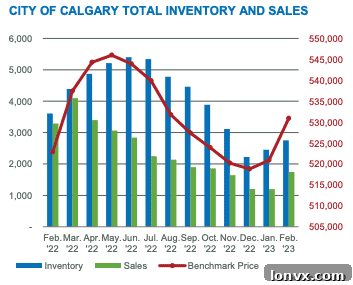
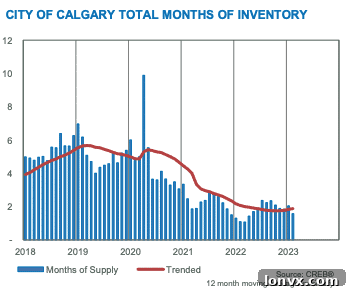
The latest data from the Calgary Real Estate Board (CREB) paints a clear picture of this supply crunch, reporting that February concluded with the lowest inventory levels seen for that month since 2006. This trend has continued unabated into March, with only 3,034 active MLS listings recorded in the city as of March 15. This figure represents a significant year-over-year decline of 25.31 percent, underscoring the severity of the supply shortage plaguing the market.
Despite the current challenges, demand is projected to escalate further, fueled by increasing national immigration levels and a notable surge in interprovincial migration. Alberta has proactively sought to capitalize on this trend by launching its second “Alberta is Calling” campaign. This initiative specifically targets skilled workers from across Ontario and Atlantic Canada, aiming to attract them to the province’s burgeoning job market and comparatively more affordable lifestyle, thereby adding another layer of demand to an already strained housing supply.
Joel Semmens, a seasoned realtor with Re/Max Real Estate (Central) in Calgary, echoes these sentiments, highlighting the extraordinary scarcity of active listings over the past three months. “Sales volume is down a little bit, but inventory levels are really low, and I’m finding there’s still a big influx of people coming from other provinces, mainly Ontario, BC and Saskatchewan, for people coming for jobs,” Semmens observed. This influx of out-of-province buyers, drawn by Calgary’s economic opportunities and relative affordability, has been a pivotal factor in sustaining the high demand.
Semmens’ forecast for the year ahead is equally robust: “I think we’re in for a very active market here this whole year… The start of this year has been extremely active, and I think that will continue throughout the spring market and into the summer.” This prediction suggests that the intense market conditions are not a fleeting phenomenon but rather a sustained trend that buyers and sellers will need to navigate for the foreseeable future.
The Reality of Bidding Wars: Navigating Calgary’s Seller’s Market
“If you’re looking for a single detached home, anything from $500,000 to $700,000, you’re pretty much going to be in a bidding war scenario…”
The stark contrast in housing affordability between Calgary and Canada’s other major metropolitan areas remains a significant draw. According to the Canadian Real Estate Association (CREA), the benchmark price for a home in Calgary in February stood at $521,400. This figure is approximately half the price observed in both the Greater Vancouver and Greater Toronto areas, making Calgary an attractive alternative for those seeking homeownership or greater value for their investment. However, this affordability gap is rapidly narrowing. The persistent lack of inventory combined with unwavering strong demand is inexorably pushing home prices upwards, diminishing Calgary’s long-standing affordability advantage.
Joel Semmens further elucidated the competitive landscape, particularly for specific property types and price points. “If you’re looking for a single detached home, anything from $500,000 to $700,000, you’re pretty much going to be in a bidding war scenario in order to get the property as a buyer,” he stated unequivocally. This segment of the market, which caters to a broad base of homebuyers, has become hyper-competitive, demanding swift decisions and often aggressive offers from buyers. “Without a doubt, it’s heavily a seller’s market in that segment,” Semmens concluded, highlighting the power imbalance favouring property owners.
The intensity of the market is not confined solely to the mid-range detached home sector. Semmens notes, “But I’m even finding it in most segments. In the ultra-high-end, you’re not in bidding war situations, but those properties are still moving readily as well.” This indicates a broad-based demand across various price points, driven by the diverse demographic of individuals migrating to Calgary. “The unique thing I’m finding with our market… is the migration of people coming to our province is all age groups and all price levels,” he added, suggesting a comprehensive appeal that spans various socio-economic groups and lifestyle needs.
Low Inventory: A Catalyst for Upward Price Pressure
Calgary’s real estate market has experienced a remarkable run in recent years, setting new records for MLS sales in both 2021 and 2022. This sustained momentum, however, has depleted available housing stock to critical levels. In the current market conditions, real estate experts are advising potential buyers and their agents to act with unprecedented speed and decisiveness when making an offer. The luxury of taking time to deliberate is no longer an option, as attractive properties are snapped up almost immediately.
“Time is of the essence for sure because you’ve got a lineup of other buyers that will jump at the opportunity,” Semmens cautioned. For buyers, this translates into being pre-approved for mortgages, having a clear understanding of their budget, and being prepared to waive certain conditions to make their offer more appealing. This intense competition is projected to have a tangible impact on property values. “I think conservatively, we’re going to see anywhere from a five to eight per cent appreciation in house values,” Semmens predicted, underscoring the expected trajectory of price growth in the coming months.
Ann-Marie Lurie, Chief Economist with CREB, reinforced the critical role of supply in moderating market pressures. She emphasized that without a significant shift in the availability of homes, the market will continue to experience “further upward pressure on prices over the near term.” The challenge, as Lurie points out, is the frustratingly slow pace at which new listings are entering the market. “The biggest challenge is seeing supply come onto the market. That’s the one thing we keep waiting to happen,” Lurie stated. “But it doesn’t seem to be happening. It’s a bit early, but we’ll see what happens in the next month here.”
While demand may not be at the record-breaking peaks of the previous year, it remains remarkably strong, significantly outpacing the dwindling supply. Lurie anticipates that the market dynamics will become even clearer as spring progresses through March, April, and May. The economist also noted that while a slight dip in sales from previous record highs is not surprising, given the unsustainable pace, the real concern lies in the persistent lack of new listings. This scarcity is the primary driver of current market intensity and price increases, rather than a flagging demand.
Competition Across All Segments: Condos, Townhouses, and Single-Family Homes
“There are multiple offers on pretty much every category, whether it’s condominium, townhouses or single-family homes.”
Catherine Chow, a realtor with CIR Realty in Calgary, characterized the current market with a single, potent word: “crazy.” Her description perfectly encapsulates the frantic pace and intense competition that has become the new normal for buyers and sellers alike. “It’s been incredibly busy due to lack of inventory. There’s just not much on the market right now. So it’s a seller’s market. Buyers are often having to compete on properties and get out there as soon as something is listed,” she elaborated, highlighting the urgency required from prospective homeowners.
Chow’s observations confirm that the competitive nature of the market is not limited to a specific niche but spans the entire spectrum of housing options. “There are multiple offers on pretty much every category, whether it’s condominium, townhouses or single-family homes,” she revealed. This widespread competition underscores the systemic nature of the supply shortage and the broad-based demand. Furthermore, the recent increases in interest rates have introduced a new dynamic, impacting some buyers’ purchasing power. This shift has, in turn, redirected more activity towards the relatively more affordable attached housing and condominium markets, where buyers can stretch their budgets further and potentially avoid the fiercest bidding wars seen in the detached sector.
For sellers, these conditions represent an opportune moment. “It’s a great time to sell right now,” Chow affirmed. She attributes this to a confluence of factors: “With the affordability in Calgary and recent job growth here, it’s driving a lot of people to come to Alberta.” Even as prices climb, Calgary still offers a compelling value proposition compared to other major Canadian cities, making it a magnet for new residents and a lucrative market for those looking to sell their properties.
The Spring Surge: Buyers Emerge, Inventory Stalls
“It seemed as soon as March came along, the faucets turned on, and people started coming out…”
Corinne Lyall, broker/owner of Royal LePage Benchmark in Calgary, is witnessing the same persistent challenges in the market: an abundance of eager buyers juxtaposed against a critical shortage of available homes. Her colourful analogy vividly describes the seasonal shift in market activity: “It seemed as soon as March came along, the faucets turned on, and people started coming out, but the challenge still is we don’t have inventory.” This sudden surge of buyer interest post-winter is a recurring pattern, but this year it’s exacerbated by the anemic supply.
Lyall laments the missed potential of the market if only there were more homes to satisfy the demand. “We’d have a really good market if we had stuff to sell buyers,” she noted, emphasizing the frustration of realtors who have clients ready to buy but limited options to show them. While the current frenzy isn’t quite as extreme as the peak periods of last year, when out-of-province buyers were regularly bidding $100,000 over asking price, competition remains fierce. “It’s not as crazy as it was last year at this time where you were seeing people come in from Ontario and bid $100,000 over list (price). It’s not quite like that, but there are still people competing for the same property, and it’s still pushing prices up,” Lyall clarified, indicating a sustained upward pressure on prices, albeit perhaps with slightly less outrageous over-bidding.
Looking ahead, Lyall harbours some optimism regarding the potential impact of stabilizing interest rates. She anticipates that this newfound stability could instill a greater sense of confidence within the market, which might, in turn, encourage more homeowners to list their properties. A return of seller confidence, coupled with favourable market conditions, could potentially alleviate some of the acute inventory pressures. However, she quickly added a note of caution: homes are indeed being listed daily, but the pace is simply insufficient to meet the overwhelming demand from the multitude of buyers actively searching for properties in Calgary. The gap between new listings and buyer appetite remains significant, ensuring that competition will likely persist well into the year.
In conclusion, Calgary’s real estate market remains a testament to the powerful interplay of relentless demand, acute inventory shortages, and strategic interprovincial migration. While the spring market promises continued intensity and upward price pressure, it also underscores Calgary’s enduring appeal as a vibrant city offering robust job growth and a compelling lifestyle, even as its historic affordability gradually erodes under the weight of its own success. Both buyers and sellers must navigate this dynamic environment with agility, informed decisions, and a clear understanding of the competitive landscape.