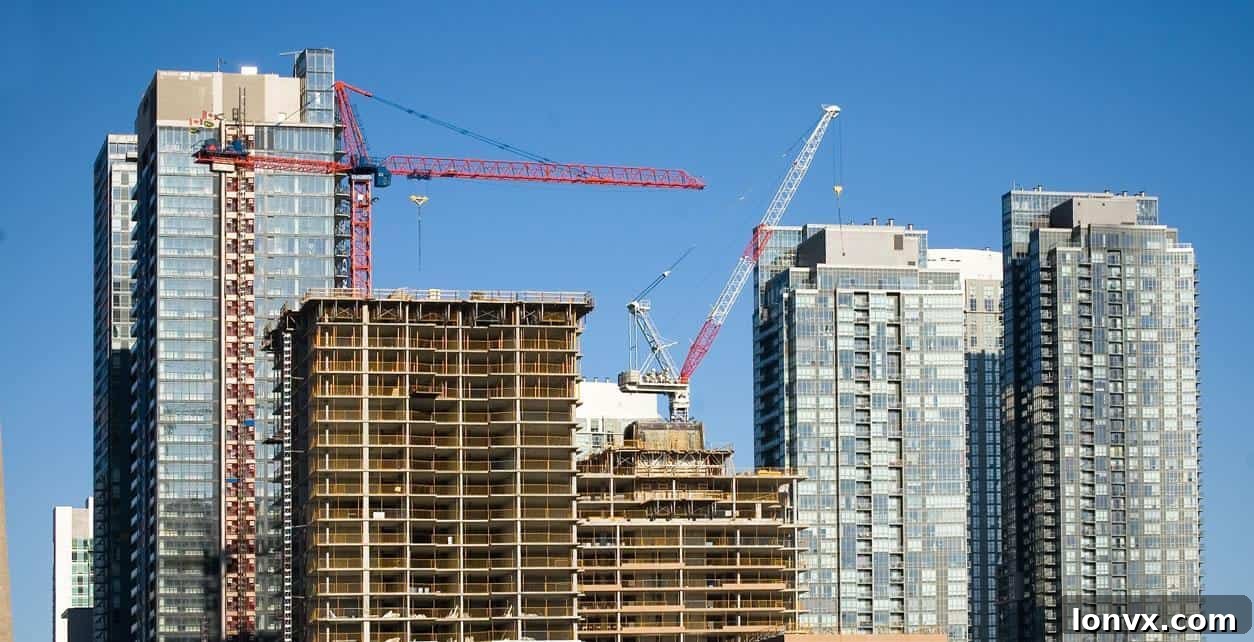
Look up, and you’ll witness a towering testament to modern urban living: condominiums. Across bustling metropolises like Toronto and Vancouver, condo sales are consistently on the rise, mirroring a continuous boom in construction. This surge in popularity isn’t solely driven by cost-effectiveness; it’s deeply rooted in the promise of convenience and a streamlined lifestyle. Condo residents often relish the freedom from traditional homeownership chores, waving goodbye to snow shoveling and lawn mowing. Instead, they gain access to an array of appealing amenities such as state-of-the-art gyms, elegant party rooms, and the coveted ability to walk or utilize public transit for their daily commute. While condo living undeniably offers a host of attractive perks, seasoned residents will attest that this unique lifestyle comes with its own distinct set of challenges. Disruptive neighbors, elusive building managers, and the frustrating disappearance of packages are all too common hurdles that can diminish the overall experience.
Recognizing these prevalent pain points, forward-thinking developers and proactive building managers are increasingly turning to innovative technological solutions. Their goal is clear: to leverage smart systems and digital tools to not only mitigate these frustrations but genuinely elevate the quality of condo living, transforming everyday nuisances into seamless conveniences.
Revolutionizing Communication: Building Connected Condo Communities
Effective communication forms the bedrock of any thriving community, and condominiums are no exception. Historically, communication channels between condo owners, residents, and building management have often been fragmented, limited, or even entirely non-existent. This void can leave residents feeling isolated, uninformed, and disengaged, fostering a weak sense of community belonging. Poor communication frequently translates into a lack of adherence to bylaws, misunderstandings regarding property rules, and can even contribute to lower occupancy rates as dissatisfied residents seek more responsive environments. Fortunately, the digital age offers powerful remedies, with technology now playing a pivotal role in opening these lines of communication and cultivating more cohesive, connected communities.
Central to this transformation are sophisticated resident portals and comprehensive condo management software platforms. These are rapidly becoming indispensable tools that empower building managers to foster active engagement among owners and residents. Through these digital hubs, critical information can be disseminated with unparalleled ease and efficiency. Managers can securely share important documents such as bylaws, meeting minutes, and financial reports, ensuring transparency and accessibility. Residents gain clear instructions on how to submit service requests, report maintenance issues, or make online payments for various fees and services. Moreover, these platforms clarify who to contact for specific queries or urgent concerns, eliminating guesswork and frustration.
Beyond mere information dissemination, many advanced systems allow residents to conveniently book and pay for shared amenities – be it the gym, a guest suite, or the party room – all with a few clicks or taps. This eliminates the need for paper sign-up sheets, complex booking procedures, or inconvenient in-person visits, truly streamlining the resident experience. The benefits of implementing a robust digital communication system are profound and far-reaching. Residents feel genuinely heard and valued when their concerns are addressed promptly and transparently. Issues are resolved with greater efficiency, minimizing lingering problems and potential conflicts. Ultimately, a well-communicated and transparent environment leads to higher resident satisfaction, fostering a harmonious living space where owners feel more connected and content for the long term. This proactive approach to communication doesn’t just improve daily life; it significantly contributes to the overall value and desirability of the property.
Streamlining Deliveries: The End of Lost Packages
In our increasingly digital world, online shopping has become a daily ritual, leading to an unprecedented surge in package deliveries. While the convenience of having goods delivered directly to one’s doorstep is undeniable, it has created a significant logistical challenge for condominium buildings. Imagine the frustration: a homeowner receives an email confirming their eagerly awaited package has arrived, only to discover upon inquiry at the front desk that it’s nowhere to be found, perhaps misrouted to a distant post office. This scenario not only erodes the promise of convenience for residents but also places an immense burden on concierges and building staff, who are often overwhelmed by the sheer volume of envelopes and boxes arriving daily. Security concerns also loom large, as packages left unattended can be vulnerable to theft or damage.
To tackle this modern dilemma, automated parcel lockers have emerged as an elegant and highly effective solution. These secure, self-service systems keep deliveries organized, safe, and accessible 24/7, providing unparalleled peace of mind for both residents and building management. The operational process is remarkably straightforward and designed for maximum efficiency. Once a delivery person deposits a package into one of the secure lockers, the system instantly sends an email or SMS notification to the recipient. This notification typically includes a unique PIN or a QR code. Upon arrival at the locker system, the recipient simply enters their PIN or scans the QR code on a user-friendly screen. After signing digitally to confirm receipt, one of the designated lockers springs open, granting access to their parcel. Residents are usually afforded a generous window of several days to retrieve their package, offering flexibility around their busy schedules. However, to ensure efficient locker turnover, property managers may implement a nominal fee for packages not collected within a specified timeframe. Unclaimed packages, after a reasonable period, are securely mailed back to the sender, minimizing clutter and administrative overhead.
The integration of automated parcel lockers represents a simple yet profoundly valuable addition to any modern condominium. They dramatically enhance security by preventing theft and damage, reduce the operational load on building staff, and most importantly, provide residents with reliable, convenient access to their deliveries. This seemingly minor enhancement adds significant value to the living experience, fostering a sense of security and modern efficiency that residents truly appreciate.
Optimizing Space: Innovative Solutions for Compact Urban Living
As urban populations swell and real estate prices continue their upward trajectory, condominium units are, by necessity, becoming more compact. Buyers understand that purchasing a condo often entails a trade-off in terms of living space. However, smart design and innovative technology are rapidly redefining what’s possible within smaller footprints. The challenge for developers and owners alike is to maximize the utility and perceived spaciousness of every square foot. This is where groundbreaking companies are stepping in with ingenious solutions to help residents make the absolute most of the space they have.
One such visionary company is Ori, known for its revolutionary shapeshifting, retractable furniture systems. These intelligent systems are being introduced in a select number of avant-garde condominiums, transforming the functionality and versatility of compact units. The Ori Studio Suite, for instance, artfully simulates the functionality of multiple distinct rooms within a single, efficient living area. Imagine a pocket closet that appears precisely when needed, offering ample storage, then seamlessly contracts to free up valuable floor space when not in use. This Boston-based innovator is pushing the boundaries further, with concepts like a bed that gracefully floats to the ceiling at the touch of a button, instantly revealing a spacious living room or work area below. The beauty of the Ori system lies in its intuitive control; residents can command these transformations effortlessly via touch, a dedicated mobile app, or even voice commands, integrating seamlessly with smart home ecosystems.
While Ori products are technically available for adoption in various markets, including Canada, Canadian developers have, to date, been somewhat conservative in embracing this cutting-edge space-saving technology. However, interest is certainly growing. Sidewalk Labs, an American urban innovation firm and a sister company of Google, recognized Ori’s potential and made a significant investment, aiming to integrate such dynamic living solutions into its ambitious plans for tech-centric districts. Their vision for a smart district in Toronto, for example, explicitly included the potential for incorporating these movable furniture systems into residential units, promising a new paradigm for urban living. Though the future of specific projects like the Waterfront Toronto initiative with Sidewalk Labs has faced certain uncertainties and challenges, the underlying concept of flexible, technologically enhanced living spaces continues to gain traction globally.
The implications of such advancements are profound. Imagine effortlessly hosting a vibrant dinner party in your stylish one-bedroom unit, or with a simple command, transforming your dedicated workspace into a serene workout area or a cozy lounge. These aren’t mere futuristic fantasies; they represent the tangible evolution of residential design, empowering urban dwellers to experience unparalleled adaptability and luxury within a smaller footprint. Hopefully, Canadian condo owners and developers will soon fully embrace these transformative technologies, turning these dreams of versatile living into widespread reality.
Enhancing Security and Access Control in Smart Condos
Beyond communication and space optimization, another critical aspect of modern condo living being revolutionized by technology is security and access control. In dense urban environments, residents rightly prioritize safety and convenience, and smart condo systems are delivering on both fronts. Traditional key systems are giving way to advanced, keyless entry solutions, which utilize smart cards, mobile apps, or biometric scanners. This not only enhances security by making unauthorized access significantly harder but also adds a layer of convenience for residents who no longer need to carry physical keys. Imagine granting temporary, time-limited access to a pet sitter or a delivery person directly from your smartphone, without ever having to share a physical key.
Visitor management systems are also becoming increasingly sophisticated. Rather than relying on manual sign-ins or cumbersome intercom systems, modern condos are implementing digital platforms that allow residents to pre-register guests, who then receive a temporary access code or a digital pass. This streamlines entry for visitors, reduces the burden on front desk staff, and provides a clear, auditable record of who enters and exits the building. Integrated smart cameras, often equipped with AI-powered analytics, further bolster security, offering continuous monitoring of common areas, entrances, and parking facilities. These systems can detect unusual activity, send alerts to security personnel, and even assist in identifying potential threats, creating a safer environment for everyone.
Moreover, package rooms themselves can be integrated with these access control systems, requiring specific credentials for entry and ensuring that only authorized personnel or residents can access the delivery area. This holistic approach to security, leveraging interconnected smart technologies, offers residents unparalleled peace of mind and demonstrates a commitment by building management to foster a safe, modern, and efficient living environment. As technology continues to evolve, we can expect even more integrated and intuitive security solutions to become standard in future condo developments, further elevating the urban living experience.
The Future is Smart: A Holistic Approach to Modern Condo Living
The journey towards truly smart condo living is well underway, moving beyond isolated technological gadgets to create fully integrated, intelligent environments. The examples of enhanced communication, streamlined package management, innovative space optimization, and advanced security systems merely scratch the surface of what’s possible. Developers are now conceptualizing condos not just as living spaces, but as interconnected ecosystems designed to anticipate and meet the needs of their residents. This includes smart thermostats that learn preferences, integrated lighting systems that adapt to time of day, and even smart appliance integration for ultimate convenience.
The benefits extend beyond individual unit functionality. Smart technologies contribute to more sustainable buildings through optimized energy consumption, intelligent waste management systems, and water leak detection. They foster stronger communities by facilitating easier interaction, shared resource management, and transparent governance. For property managers, these systems offer unprecedented efficiency, reducing operational costs, improving response times, and providing valuable data insights for better decision-making. For residents, it translates into unparalleled convenience, security, comfort, and a heightened sense of belonging.
As urban density continues to grow, and the demand for sophisticated yet simple living solutions rises, the integration of smart technology will no longer be a luxury but a fundamental expectation. The future of condo living is bright, promising residences that are not just places to live, but intelligent partners in creating a more harmonious, efficient, and enjoyable urban existence. The pioneering efforts of today are paving the way for tomorrow’s smart cities, where condos stand as exemplars of how technology can genuinely improve daily life.