Metro Vancouver’s Condo Market Braces for Record Unsold Inventory by End of 2025
Metro Vancouver’s dynamic condo market is set to conclude 2025 with the highest level of unsold inventory seen in years, a significant finding highlighted in a comprehensive new report from Rennie. This forecast signals a pivotal shift in the region’s housing landscape, warranting close attention from potential buyers, developers, and policymakers alike.
Unveiling the Underlying Trends: A Market on the Cusp
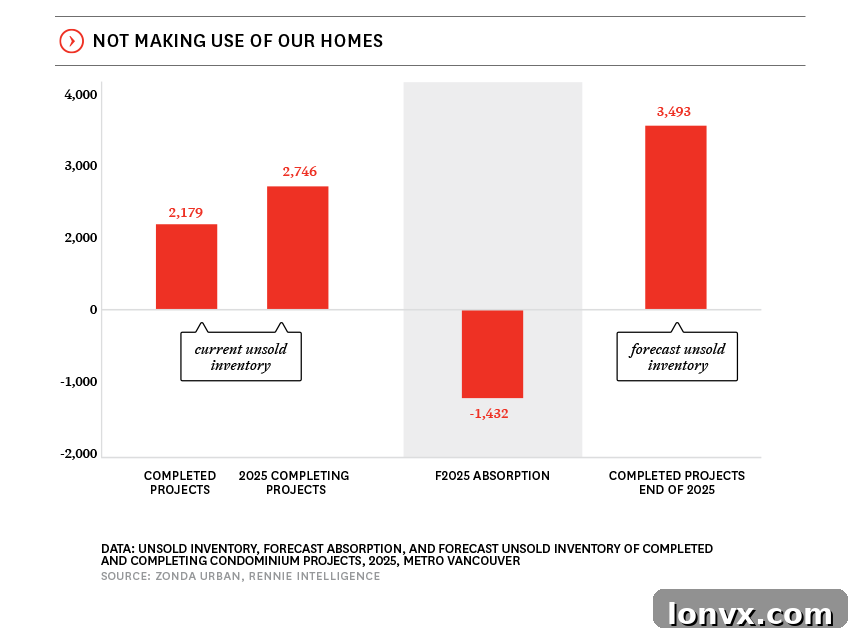
While the surface perception of Metro Vancouver’s housing market might suggest a state of equilibrium, the underlying inventory trends paint a distinctly different and more complex picture. The Rennie report, a key barometer for regional real estate, projects a sharp and substantial 60 percent increase in unsold condo units across Metro Vancouver by the close of the year. This dramatic surge is expected to escalate from the current figure of 2,179 units to an estimated 3,493, marking a critical turning point for the market.
“If the current trajectory continues unchecked, we are poised to end 2025 with an unprecedented level of unsold condo inventory, one that hasn’t been witnessed in many years,” explains Ryan Berlin, head economist and vice president of intelligence at Rennie. He emphasizes the far-reaching consequences of this trend, stating, “This carries real implications, not only for the nature and volume of future construction but also for how the region effectively manages critical issues such as affordability, market absorption rates, and sustainable future growth strategies.”
The image below visually represents some of the key market dynamics discussed in the Rennie report, offering a snapshot of the current environment and contributing factors.
Factors Fueling the Inventory Accumulation: A Multifaceted Challenge
This anticipated spike in unsold inventory is not a singular event but rather the culmination of several converging market forces. A primary driver is the growing imbalance between supply and demand, where newly completed condo developments are increasingly outpacing the rate at which buyers are entering the market and making purchases. While the momentum for purpose-built rental housing has undeniably grown, a significant counterpoint is the persistent sluggishness observed in pre-sale activity for condos, indicating a cautious approach from potential homeowners and investors.
Recent legislative adjustments, such as the extension of the marketing window under British Columbia’s Real Estate Development Marketing Act (REDMA) from 12 to 18 months, were intended to provide developers with more flexibility. However, even with this extended period, the market continues to grapple with formidable challenges. Elevated interest rates remain a significant deterrent, directly impacting buyer affordability and the cost of financing new purchases. Furthermore, a series of policy shifts—including potential changes to taxation or foreign buyer rules—and a prevailing sense of investor uncertainty are collectively contributing to these already high, and steadily climbing, levels of unsold inventory. Developers face a dilemma: complete projects in a softening market or delay launches, further impacting future supply.
Diving Deeper into Demand Dynamics and Developer Strategies
The slowdown in pre-sale activity is particularly telling. Pre-sales are vital for developers to secure financing and gauge market interest before construction completion. A lack of robust pre-sales can lead to projects being delayed or even cancelled, which, while reducing future supply, can also signal a lack of confidence in immediate market conditions. Buyers, on the other hand, are contending with higher borrowing costs, making the prospect of committing to a property two or three years out, often without fixed interest rates, a riskier proposition. This risk aversion shifts demand away from new construction towards the resale market, or towards more stable rental options.
The simultaneous growth in rental builds is a strategic response by developers to government incentives and a persistent demand for rental accommodation in Metro Vancouver. This shift reflects a changing investment landscape where stable rental income streams, supported by a strong renter base, may appear more attractive than the speculative nature of condo sales in a high-interest-rate environment. However, this focus on rentals does little to alleviate the accumulation of unsold ownership units.
Broader Economic Headwinds: Amplifying Market Uncertainty
Beyond the immediate real estate metrics, the Rennie report meticulously outlines broader economic issues that are exacerbating market uncertainty and influencing buyer behavior. These include a prolonged period of stress within the labor market, which can manifest as slower wage growth, job insecurity, or shifts in employment sectors. Such conditions directly impact household incomes and their capacity to afford homeownership, particularly in an expensive region like Metro Vancouver.
Furthermore, significant demographic shifts are at play. Changes in population age structures, household formation rates, and evolving lifestyle preferences can alter the demand for different housing types. Crucially, weakening immigration numbers pose a substantial threat. Metro Vancouver has historically relied on immigration as a key driver of population growth and, consequently, housing demand. A sustained decline in immigration could lead to a broader population contraction, or at least a stagnation of growth, which would inevitably dampen demand across all housing segments and further strain absorption rates for existing inventory.
Monetary Policy and Consumer Impact: A Balancing Act
On the monetary front, recent adjustments by the Bank of Canada, specifically lower interest rates following a period of aggressive hikes, have started to reignite consumer credit growth. While this might appear to be a positive signal for broader economic activity, its direct benefit to homeowners facing mortgage renewals is often limited. Many homeowners who secured their mortgages during periods of historically low interest rates are now confronting significantly higher payments upon renewal this year. This “mortgage shock” can severely impact disposable income, reduce purchasing power for potential move-up buyers, and contribute to overall financial strain within households.
Despite these challenges, there is a silver lining noted by Rennie: “While arrears rates are ticking up, they remain historically low.” This indicates that while more homeowners might be struggling to make payments, the overall system is not yet showing widespread distress, suggesting a degree of resilience in household finances. However, it remains a metric to watch closely as interest rate impacts fully materialize.
Adding another layer of complexity, the Canadian dollar continues to lag behind its U.S. counterpart. This persistent weakness is largely attributed to ongoing global trade tensions, which can impact Canadian exports and overall economic confidence. A weaker loonie can also make imported goods more expensive, contributing to inflation and further eroding consumer purchasing power, indirectly influencing the real estate market by affecting household budgets and investment decisions.
Navigating the Future: Implications for Metro Vancouver Real Estate
The Rennie report serves as a critical warning and a call to action for stakeholders across Metro Vancouver’s real estate ecosystem. The projected surge in unsold condo inventory demands a careful re-evaluation of current market strategies, development plans, and policy frameworks. Addressing this imbalance will require a multi-pronged approach that considers the interplay of interest rates, regulatory incentives, immigration policies, and broader economic health.
For prospective buyers, this evolving market could present new opportunities, particularly in the condo segment, where increased inventory might lead to more competitive pricing and negotiation leverage. However, the overall economic climate and individual financial circumstances will remain paramount in determining real estate decisions. Developers, meanwhile, must adapt to changing demand patterns, potentially shifting focus towards specific housing types or sub-markets that demonstrate greater resilience or unmet need. Policymakers face the crucial task of crafting strategies that support sustainable housing growth, enhance affordability, and ensure the long-term economic vitality of Metro Vancouver.
The path forward for Metro Vancouver’s condo market is undoubtedly complex, marked by both challenges and potential opportunities. Understanding the intricate dynamics outlined in reports like Rennie’s is essential for all participants aiming to navigate this evolving landscape successfully.
For an in-depth understanding of these trends and their full implications, we encourage you to access the comprehensive analysis. Read the full Rennie report here.