
As Ontario prepares for its provincial election, the critical issues of housing affordability and supply have surged to the forefront of public discourse, cementing their status as leading concerns for voters across the province. The dream of homeownership, once an attainable goal for many, has become increasingly elusive, transforming the housing market into a central battleground in the political arena.
A recent, comprehensive survey conducted by Royal LePage underscores the profound impact of this crisis on electoral decisions. The findings reveal that a significant 69 percent of Ontario adults openly state that a political party or candidate’s stance on addressing the housing crisis will directly influence their vote. This powerful sentiment is even more pronounced among younger demographics, who face some of the steepest barriers to entering the housing market. A striking 72 percent of Generation Z and an even higher 75 percent of Millennials prioritize the issue, indicating a clear generational divide in political priorities and economic anxieties.
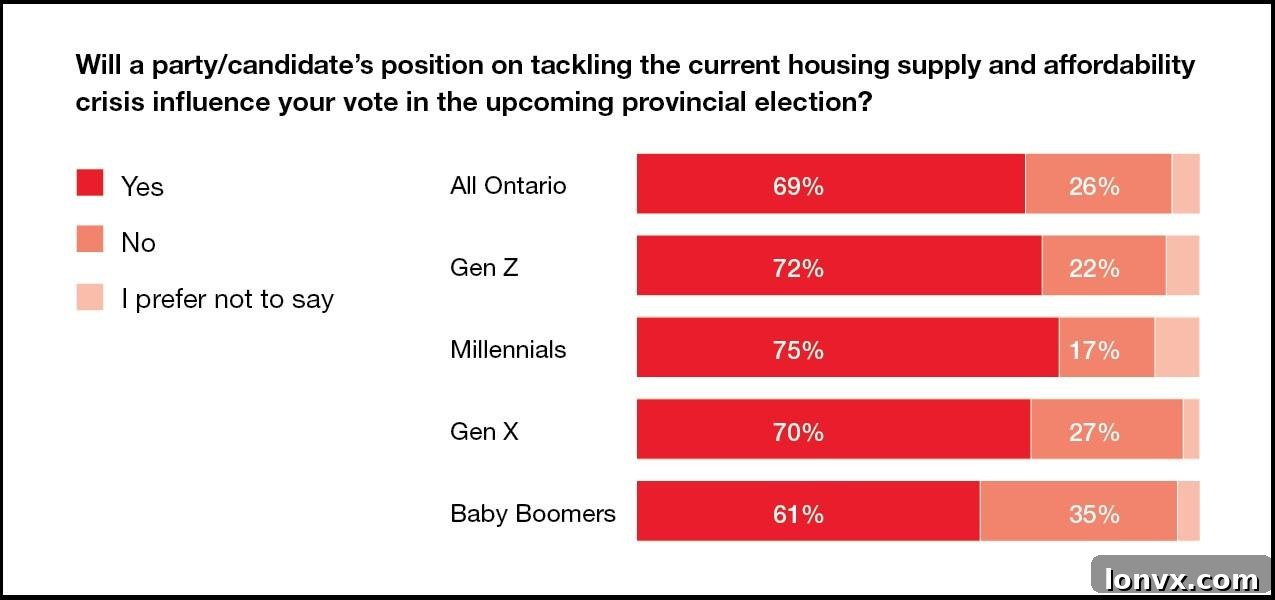
Source: Royal LePage
Phil Soper, President and CEO of Royal LePage, articulates the escalating severity of the situation. “Since the dramatic onset of the pandemic-induced real estate boom in 2020, housing affordability has evolved from a growing concern into a full-blown crisis, particularly within Canada’s most competitive and supply-constrained markets such as Toronto and Vancouver,” Soper explains. “Given that affordability challenges have reached such critical levels, it is entirely unsurprising that voters—especially younger Canadians who are most directly affected—are prioritizing robust housing policies as they head to the polls.”
Soper further emphasizes that despite recent market dynamics, including minor interest rate fluctuations and a temporary uptick in housing inventory, the fundamental issue remains unchanged: a chronic and severe lack of housing supply. He asserts, “True, sustainable affordability, which offers long-term stability and security for residents, can only be achieved through a significant, strategic, and sustained increase in housing construction across the province. Without decisively addressing this foundational imbalance between demand and available homes, any perceived short-term improvements will inevitably prove fleeting.”
Housing Affordability: A Top Priority for Ontario’s Young Voters
The Royal LePage survey meticulously uncovers the varying priorities among different age groups, clearly illustrating how the housing crisis disproportionately impacts younger Ontarians. When respondents were asked to identify their top three election priorities, both Generation Z and Millennials unequivocally ranked housing affordability as their foremost concern. This places the housing crisis above other traditionally dominant issues such as healthcare, which has long been a cornerstone of political debate.
For Millennials, government spending and taxes emerged as their third-most important issue, highlighting their concerns about fiscal responsibility in conjunction with housing accessibility. Generation Z, conversely, prioritized employment after housing and healthcare, reflecting their entry into a competitive job market amidst broader economic uncertainties. In stark contrast, healthcare consistently remains the leading concern for older demographics, specifically Generation X and Baby Boomers. This clear divergence in perceived immediate threats and long-term societal challenges between age cohorts underscores the urgent and unique pressures faced by younger generations.
This generational gap in priorities is deeply rooted in lived economic realities. Younger generations are contending with unprecedented hurdles in attempting to enter the housing market. Decades of stagnant wage growth relative to stratospheric property values, combined with the often-heavy burden of student debt, have made saving for a sufficient down payment an increasingly insurmountable feat. The traditional dream of homeownership, once a common milestone, now appears to be an elusive luxury for many, propelling housing to the absolute forefront of their political demands and expectations.
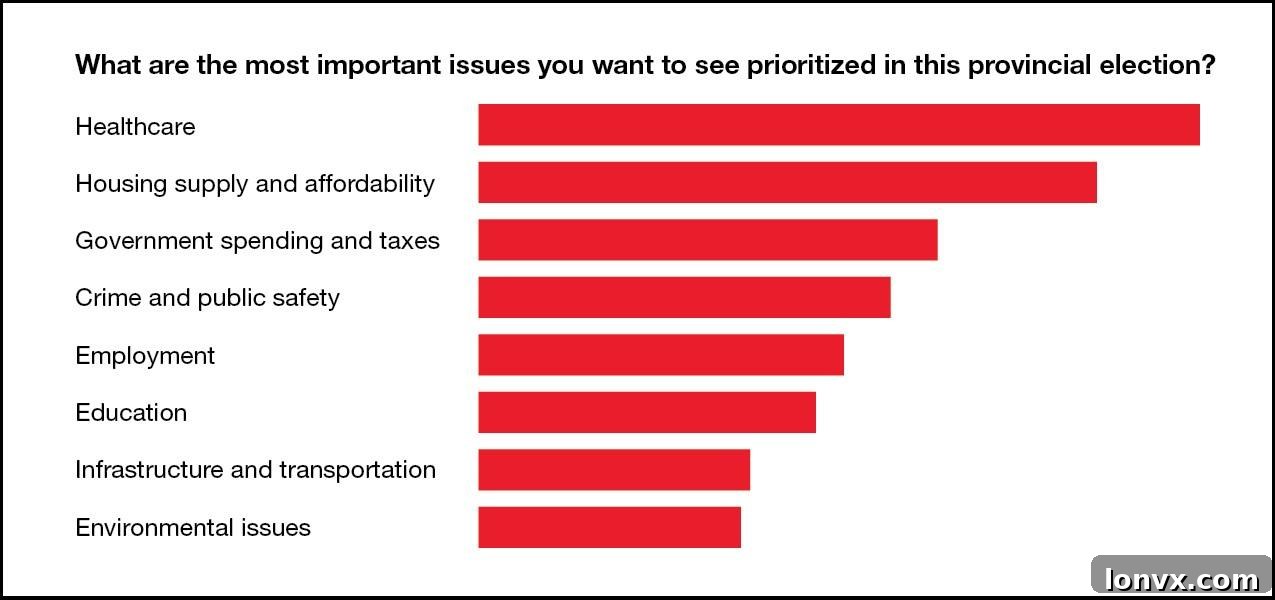
Source: Royal LePage
Navigating New Realities: Ontarians Explore Alternative Paths to Homeownership
In direct response to the persistent and acute affordability challenges, a significant segment of Ontarians is actively exploring innovative and often unconventional strategies to achieve the goal of homeownership. The Royal LePage survey unveils a fascinating landscape of adaptation and resourceful thinking among prospective homebuyers. Among the creative solutions being considered, 38 percent of respondents indicated a willingness to purchase a home in a more affordable region within Ontario. This trend, frequently termed “drive until you qualify,” involves individuals and families moving further afield from major urban centers in pursuit of attainable property prices, often leading to increased demand and impact on previously less expensive smaller communities.
Beyond intra-provincial relocation, a notable 20 percent of Ontarians are contemplating the more significant step of moving to another province entirely in search of more affordable housing options. This potential interprovincial migration represents a substantial demographic shift, as individuals weigh career opportunities and established community ties against the urgent need for accessible housing. Provinces such as Alberta and certain regions in Atlantic Canada, characterized by relatively lower housing costs, often emerge as attractive alternatives for those feeling priced out of Ontario’s market.
Another increasingly popular and pragmatic strategy involves leveraging rental income to alleviate the burden of mortgage payments. The survey found that 18 percent of Ontarians would consider buying a property that includes a rental unit, such as a basement apartment, a secondary suite, or an accessory dwelling unit (ADU). This approach not only provides crucial financial assistance for homeowners but can also contribute, albeit incrementally, to the overall housing supply by creating more available rental opportunities.
Furthermore, the traditional model of homeownership solely with a spouse is undergoing a re-evaluation. A notable 12 percent of respondents expressed openness to purchasing a home with family members or close friends. This trend towards co-ownership or multi-generational living arrangements reflects a pragmatic and collaborative response to economic pressures, where pooling resources can transform the seemingly impossible dream of homeownership into a tangible reality, fostering shared responsibility and community within the household unit.
However, it is also important to note that these alternative solutions are not universally appealing. A substantial 32 percent of respondents explicitly stated they would not consider any of these options. This resistance is likely due to a combination of factors, including strong personal or professional ties to their current communities, specific job requirements, or simply a preference for traditional, sole homeownership without the added complexities or compromises associated with co-ownership or relocation.
The survey also highlights a clear generational propensity for mobility. Younger Ontarians are significantly more open and willing to consider relocating. Twenty-nine percent of Gen Z respondents and 25 percent of Millennials expressed their willingness to move outside of Ontario in pursuit of more affordable housing. This contrasts sharply with older generations, where only 20 percent of Generation X and a mere 10 percent of Baby Boomers would consider such a significant move. This disparity underscores the unique challenges faced by younger generations and their greater flexibility and adaptability in overcoming persistent housing barriers.
Future Outlook: Navigating Supply Constraints and Market Dynamics
Despite the formidable current market challenges, the aspiration for homeownership remains remarkably strong across Ontario. The Royal LePage survey indicates that 26 percent of Ontarians who do not currently own a home plan to enter the market within the next two years. These prospective buyers, perhaps more than any other group, are acutely aware of the affordability crunch and are consequently more likely to actively explore and embrace the alternative strategies discussed above to make their homeownership dreams feasible.
Phil Soper offers a cautious, yet insightful, outlook on the immediate future, acknowledging some recent, albeit temporary, market relief. “Falling interest rates over the past year, combined with a period of relatively stable home prices and a gradual, consistent rise in wages, have collectively offered a temporary but undeniably meaningful improvement in housing affordability, particularly for first-time homebuyers,” Soper observes. This window of reprieve, however, is not projected to be long-lasting. “This temporary window of opportunity is unlikely to extend far beyond 2025,” he warns, signaling a probable return to more challenging market conditions.
Soper elaborates on the deep-seated underlying pressures: “Pent-up demand, which has accumulated over years of severely constrained housing supply, coupled with the relentless and ongoing need for housing in a rapidly growing country like Canada, will inevitably soon outpace the currently available inventory.” He reiterates the fundamental solution with unwavering conviction: “Without a robust, significant, and sustained increase in housing construction—encompassing diverse housing types across all regions of the province—the affordability challenges that currently plague Ontario will not only persist but are highly likely to intensify well into the future, creating enduring social and economic repercussions for generations to come.”
Addressing the Core Problem: Policy Imperatives for Sustainable Housing in Ontario
The data from Royal LePage unequivocally points to a systemic issue that demands comprehensive and multi-faceted solutions from all levels of government. The core problem, as consistently identified by Phil Soper and substantiated by market trends, is an enduring and critical lack of housing supply. Addressing this requires a concerted effort from provincial and municipal governments, working collaboratively with the private sector, non-profit organizations, and local communities.
Provincial policies must prioritize streamlining the notoriously complex and often bureaucratic development approval process, which is currently a significant impediment to timely construction. Incentivizing builders to construct a greater diversity of housing types—including affordable rental units, townhouses, and mid-rise developments—is crucial to meet varied needs. This necessitates a proactive revision of restrictive zoning bylaws, particularly in established urban and suburban areas, to allow for greater density and mixed-use developments that can effectively accommodate population growth without endless urban sprawl.
Furthermore, significant investments in infrastructure are paramount. New housing developments cannot proceed without the necessary supporting infrastructure, including robust roads, efficient public transit, reliable water systems, and effective sewage treatment facilities. The provincial government has a critical role in funding and coordinating these essential infrastructure projects, ensuring that housing growth is strategically accompanied by the necessary community amenities and services that foster liveable, sustainable communities.
The persistent labor shortage within the construction sector also demands urgent attention. Implementing targeted vocational training programs, expanding apprenticeship opportunities, and launching initiatives to attract and retain more skilled tradespeople are essential steps to ensure there are sufficient hands to build the vast number of homes Ontario desperately needs. Similarly, proactively addressing the rising costs of building materials through supply chain improvements, innovative construction techniques, and potentially government-led bulk purchasing initiatives can help mitigate the overall cost of new homes, making them more affordable for buyers.
For younger generations, specifically Gen Z and Millennials, the upcoming provincial election represents a critical opportunity to demand concrete and actionable plans from their elected officials. Their significant political sway, as unequivocally demonstrated by the survey results, means that political parties ignoring the housing crisis do so at their peril. Voters are actively seeking clear, pragmatic, and implementable plans that go beyond mere rhetoric and offer tangible, long-term pathways to secure and affordable housing for all Ontarians.
In conclusion, the upcoming Ontario provincial election is unequivocally poised to be a referendum on housing. The Royal LePage survey paints a clear and compelling picture of a populace, particularly its younger segments, that is deeply concerned about housing affordability and supply. While temporary market fluctuations may offer brief respites, the long-term, sustainable solution lies in a fundamental overhaul of how Ontario plans, permits, and builds homes. The choices made by voters at the ballot box and the subsequent policies adopted by the next provincial government will undoubtedly shape the economic landscape and social fabric of Ontario for decades to come, ultimately determining whether the dream of homeownership remains attainable for future generations or recedes further into the realm of impossibility.