
GTA Housing Market Heats Up: Overbidding Surges as Buyer Confidence Returns
The Greater Toronto Area (GTA) housing market experienced a notable shift last month, with a significant surge in overbidding activity, building on the trend first observed in February. This dynamic change marks a stark contrast to just a few months prior, as Wahi’s latest Market Pulse Report reveals that in January, no GTA neighbourhoods were under overbidding conditions. This rapid evolution signals a resurgence of buyer confidence and intensified competition across the region.
Overbidding Dominates Nearly Half of GTA Neighbourhoods
March saw 43 percent of GTA neighbourhoods fall into overbidding territory, a substantial increase from 25 percent in February and 35 percent reported a year ago. This accelerated pace highlights a market rapidly favoring sellers in many areas. In parallel, only 6 percent of properties were selling at their asking price, while the proportion of underbid properties dropped significantly to 51 percent, down from 69 percent during the same period last year. This trend indicates a shrinking window for buyers to secure properties below or at the listed price, forcing more aggressive offers.
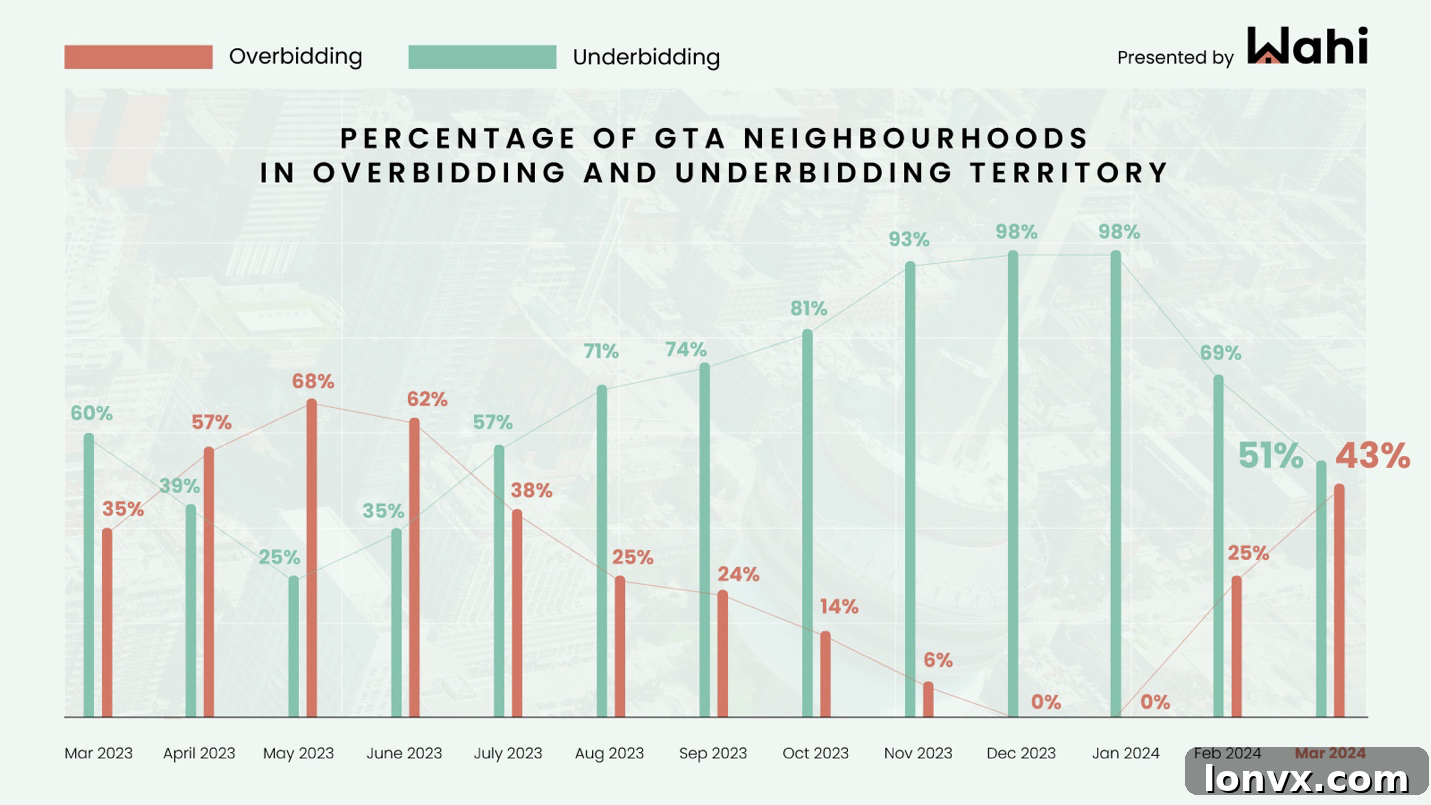
Benjy Katchen, CEO of Wahi, observed this shift, stating, “We’re beginning to see more homebuyers step off the sidelines, resulting in more bidding competition in a growing number of neighbourhoods.” This sentiment reflects a market that is regaining momentum after a period of uncertainty, with buyers re-engaging and driving up demand. However, Katchen also provided a nuanced perspective, noting that despite this upward trend, over half of GTA neighbourhoods still experience underbidding, a condition particularly prevalent within the condominium market.
Competition Intensifies, Especially for Non-Condominium Homes
The intensification of buyer competition was most pronounced in the non-condominium segment of the market. Approximately 61 percent of neighbourhoods reported overbidding conditions for non-condominium homes in March, a notable leap from 39 percent in February. This segment, typically comprising detached, semi-detached, and townhouses, continues to be highly sought after, likely due to factors such as perceived long-term value, larger living spaces, and land ownership.
Conversely, the condominium market demonstrated a distinctly different pattern, experiencing significantly less overbidding activity. Only 14 percent of condominium-focused neighbourhoods were in overbidding territory in March, while a substantial 82 percent saw properties underbid. This disparity underscores a bifurcated market where different housing types react distinctively to economic pressures and buyer preferences.
Katchen attributes this subdued activity in the condo market to the “pricing pressure from new-build condominiums entering the resale market.” He elaborates that “as higher interest rates have taken their toll, many units purchased two to three years ago are now hitting the market at discounts from the original purchase prices.” This influx of previously purchased units, often by investors now facing higher carrying costs or mortgage renewals at elevated rates, creates an abundant supply that benefits buyers and moderates price growth.
Navigating the Divided Landscape: Overbidding vs. Underbidding Hotspots
The regional distribution of these trends offers critical insights for both buyers and sellers. The top five overbidding neighbourhoods in March were exclusively located within the Regional Municipality of York. This concentration highlights the enduring desirability and strong demand in areas known for their quality of life, excellent schools, amenities, and relatively easy commute options, making them prime targets for competitive bidding.
In contrast, the neighbourhoods experiencing the most underbidding were spread across Toronto, York, and Halton regions. This broader distribution suggests that while competition is fierce in some pockets, opportunities for more favorable purchases still exist across a wider geographical and price spectrum. This “renewed activity across the price spectrum” indicates that the market isn’t uniformly hot or cold, but rather a complex mosaic where localized supply and demand dynamics play a crucial role. For savvy buyers, understanding these micro-market variations is key to identifying potential value and avoiding bidding wars in hyper-competitive areas.
What Drives These Market Shifts?
Several underlying factors contribute to the GTA housing market’s current trajectory. The stability, and potential future reduction, of interest rates are critical in bringing buyers back into the market. After a period of aggressive rate hikes, a sense of predictability can empower prospective homeowners to plan their finances and make purchasing decisions. Furthermore, persistent population growth in the GTA continues to fuel demand, placing constant pressure on limited housing inventory, especially for non-condominium properties.
The supply side also plays a pivotal role. While the new-build condo market has added significant inventory, particularly in downtown core areas, the supply of ground-oriented homes has not kept pace with demand. This imbalance is a primary driver of the intense competition seen in the non-condo segment. Economic sentiment also impacts large purchasing decisions; as the broader economic outlook improves or stabilizes, consumer confidence typically rises, translating into greater willingness to invest in real estate.
Implications for Buyers and Sellers in the Current Market
For prospective buyers, the current market demands strategic thinking. In overbidding hotspots, preparedness is paramount: secure pre-approvals, be ready to make quick decisions, and set realistic expectations about potential bidding wars. Flexibility with closing dates or conditions can also provide an edge. Conversely, in underbidding areas, buyers might find opportunities for more negotiation and potentially better value, particularly in the condominium sector. Exploring these diverse market segments with the guidance of an experienced real estate agent is crucial.
Sellers, particularly those in overbidding neighbourhoods, are well-positioned to capitalize on the heightened demand. Proper pricing strategies, effective staging, and comprehensive marketing can maximize exposure and attract multiple offers. However, even in underbidding areas, a well-presented property can stand out. Understanding the specific dynamics of their local market, rather than relying on generalized GTA trends, will enable sellers to make informed decisions about listing price and timing.
The Wahi Market Pulse Report serves as an invaluable resource for understanding these complex market dynamics. Access the full report for comprehensive data and insights to navigate the evolving GTA real estate landscape effectively. Get full details here.
Enjoying this article?
Get the latest REM articles in your inbox 3x week so you stay up to date on the latest in the Canadian real estate industry