The Greater Toronto Area (GTA) housing market recently experienced one of its most challenging Aprils in recent history, signaling a profound shift in market dynamics. Far from a typical seasonal slowdown, the region is grappling with a significant imbalance: a dramatic surge in housing inventory coupled with a sharp decline in sales. Across nearly all property types, prices are trending downwards, leaving potential buyers on the sidelines and sellers in a precarious position. This isn’t the chaotic panic often associated with a market crash; instead, it’s a silent and stubborn standoff, characterized by sellers eager to offload properties and buyers adopting a ‘wait-and-see’ approach as property values continue their descent. This unique market behavior suggests more than just a mere correction; it points to a deep-seated erosion of confidence among participants – a full-scale collapse in conviction that is reshaping the future of Toronto real estate. Understanding these complex forces is crucial for anyone navigating the current GTA housing landscape.
Understanding the GTA Housing Market Shift: Inventory Surges as Bidding Wars Vanish
The once-ubiquitous bidding wars that defined the Greater Toronto Area’s property landscape have become a relic of the past. Today, the market tells a dramatically different story, marked by an unprecedented surge in housing inventory that is fundamentally altering buyer and seller dynamics. This shift is not merely cyclical; it reflects a deep recalibration of expectations and financial realities across the region. Potential buyers seeking opportunities in Toronto’s property market are now faced with a wealth of choices, a stark contrast to the fierce competition of previous years.
GTA Condo Market: The Epicenter of Inventory Overload
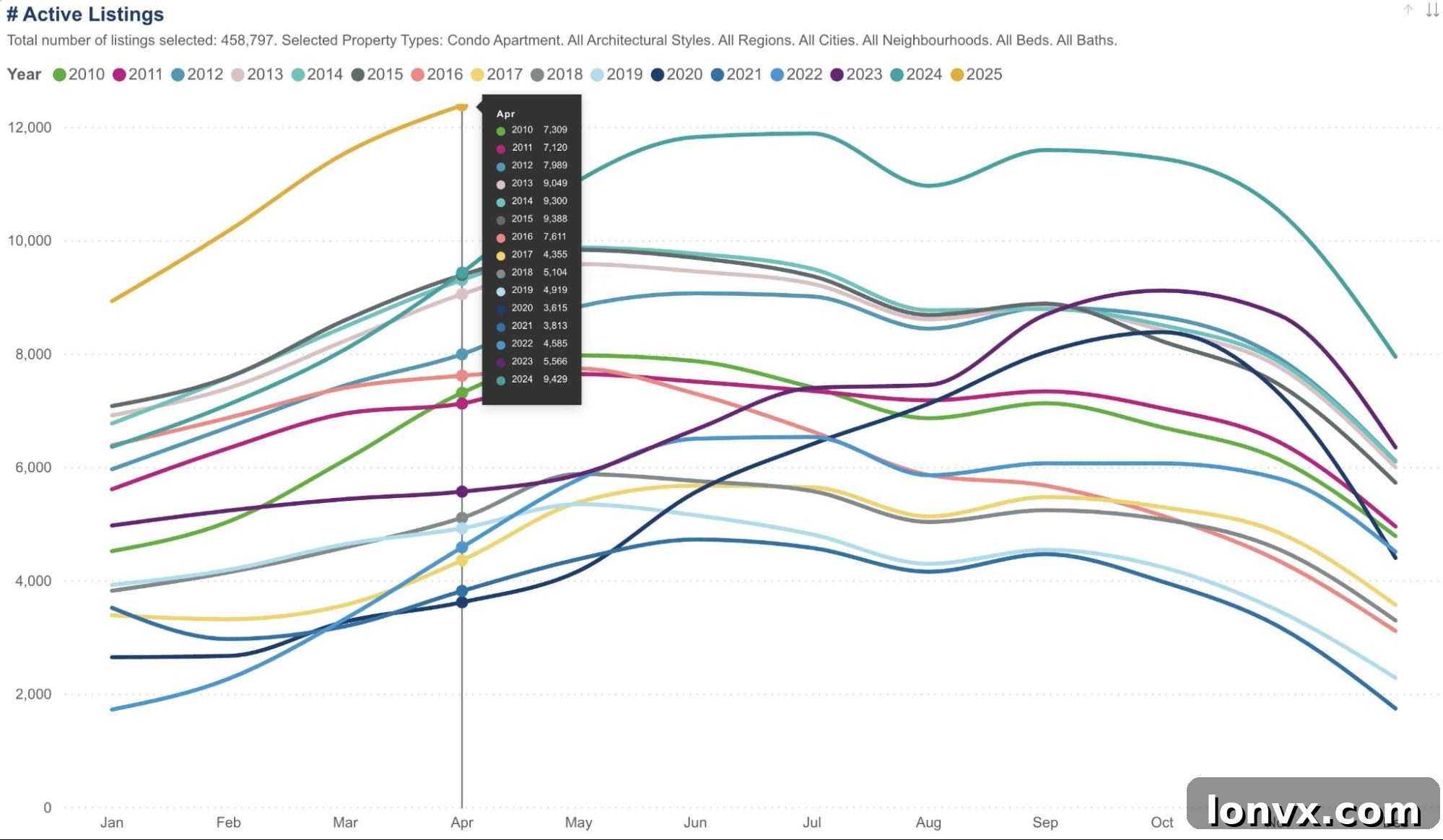
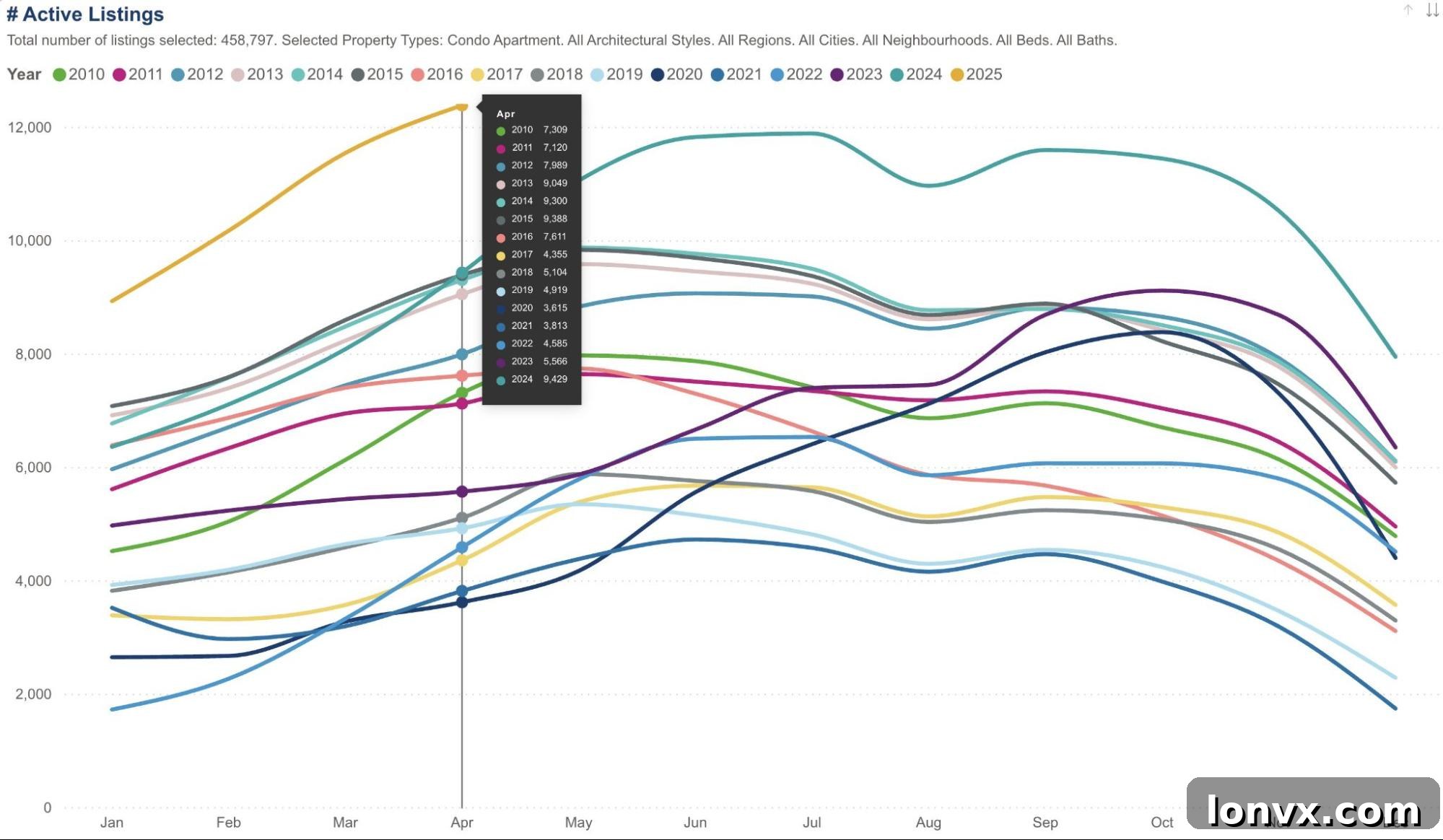
The condominium segment of the Greater Toronto Area’s housing market has emerged as the most telling indicator of this broad downturn. April data revealed an astonishing oversupply, with active condo inventory soaring past 12,000 listings. To put this into perspective, an active listing count of 9,000 in April would typically be considered elevated, even during robust spring markets. This current figure represents a significant and concerning overhang in supply, pointing to a severe mismatch between available units and genuine buyer interest in the Toronto condo market.
Several factors contribute to this glut. A wave of new project completions has unleashed thousands of units onto a market ill-equipped to absorb them. Developers are handing over keys to units originally conceived during more bullish times, only to find the once-eager queues of end-users and rental investors have evaporated. Simultaneously, existing resale demand has stalled, exacerbating the supply issue and contributing to the decline in Toronto property values.
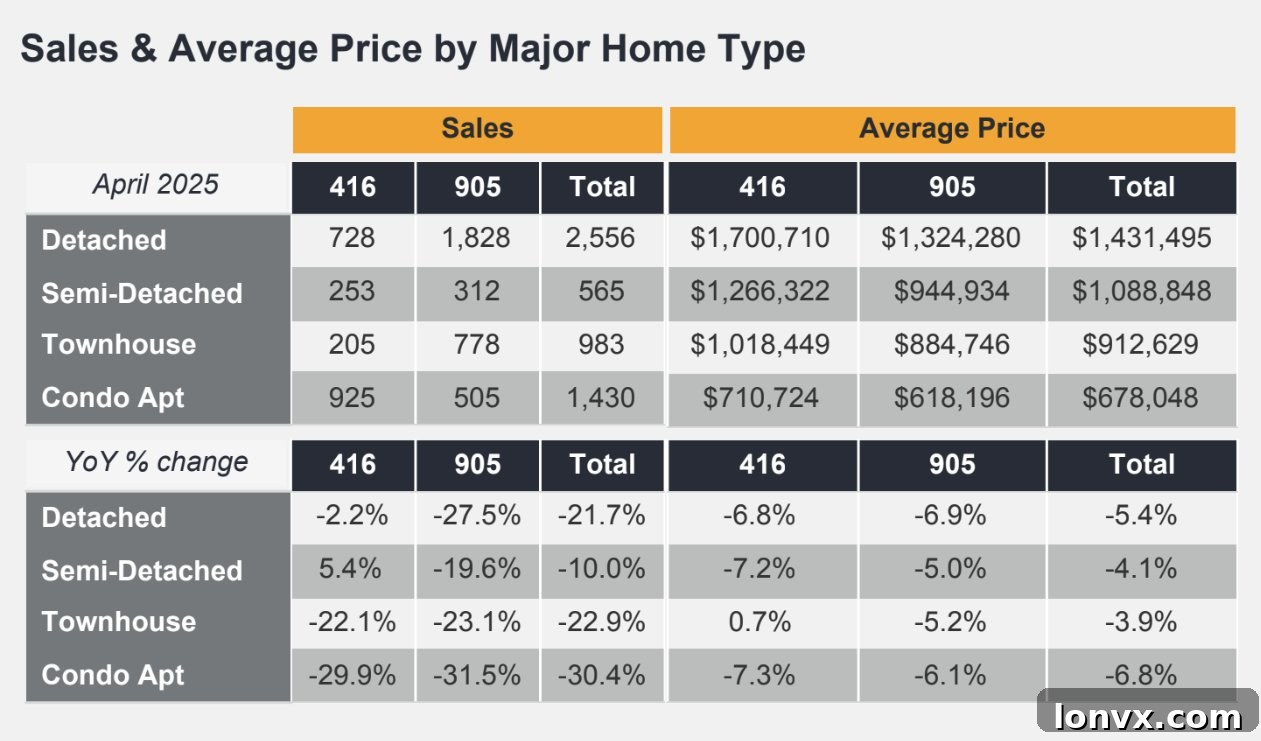
The impact on sales has been dramatic. April saw a mere 1,430 condo units sold across the GTA. This figure is a stark departure from the typical April performance, which historically ranges between 2,500 and 3,500 sales. Such a massive drop highlights a rapidly deteriorating absorption rate, where sellers vastly outnumber buyers. With approximately nine sellers for every single buyer, the market is profoundly imbalanced. This severe disparity doesn’t just exert downward pressure on prices; it fundamentally erodes buyer urgency. When faced with an abundance of options and dwindling competition, prospective buyers see no compelling reason to make swift decisions, opting instead to observe the market from the sidelines, anticipating further price adjustments. This psychological shift is a critical component of the current market fragility in Greater Toronto.
Broader Market Contraction: Detached, Semi-Detached, and Townhomes Face Similar Headwinds
While condominiums bear the brunt of the market’s current challenges, the issues are far from exclusive to this segment. The broader Greater Toronto Area housing market, encompassing detached homes, semi-detached properties, and townhouses across both the 416 (City of Toronto) and 905 (surrounding regions) areas, has also experienced a significant cooling. Year-over-year sales figures reveal a sharp and widespread decline, indicating a softening of Toronto’s housing market across various property types:
- Detached homes witnessed a substantial 21.7 percent reduction in sales.
- Townhouses experienced a 22.9 percent decrease in sales activity.
- Semi-detached homes saw a 10.0 percent decline in transactions.
The only notable exception to this market-wide downturn was the semi-detached segment within the 416 area, which managed to narrowly avoid a decline. However, this anomaly is precisely that – an outlier in an otherwise uniformly retreating market. Nearly every other category and geographical pocket within the GTA has registered a swift and steep drop-off in sales volume.
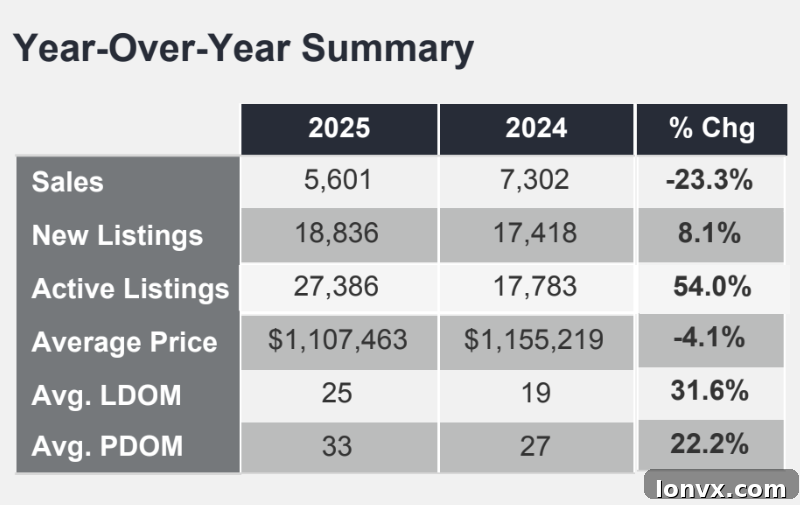
Compounding this reduction in buyer activity is a dramatic increase in available properties. Active listings across these segments collectively surged by an alarming 54 percent year-over-year. This combination of dwindling sales and proliferating listings paints a clear picture: the GTA housing market is not merely undergoing a slowdown, but a comprehensive reversal. Sellers, facing a shifting landscape, are actively bringing their properties to market, while buyers, now holding a position of strength, are increasingly choosing to step back and await more favorable conditions. This fundamental imbalance underscores the widespread nature of the current market fragility.
GTA Home Prices Soften as Buyer Psychology Undergoes a Fundamental Shift
The persistent imbalance between supply and demand is inevitably translating into downward pressure on property values across the Greater Toronto Area. While initial glances might suggest moderate declines, a closer inspection reveals a widespread and consistent pattern of price erosion that is reshaping buyer expectations and seller strategies. This shift in pricing, coupled with a fundamental change in buyer psychology, is defining the current market landscape for Toronto real estate investments.
Widespread Price Adjustments: A Market of “Death by a Thousand Cuts”
The notion that GTA housing prices are merely flattening is increasingly inaccurate. What the market is experiencing is a broad and consistent pattern of price declines, often described as “death by a thousand cuts” due to their pervasive nature. These aren’t isolated incidents but rather widespread adjustments impacting various property types across the region:
- Detached homes in the 416 area saw a 6.8 percent decline in value.
- Semi-detached properties in the 416 area experienced a 7.2 percent decrease.
- GTA condominiums recorded a 6.8 percent dip in average prices.
- The overall GTA Home Price Index (HPI) Benchmark, a key measure of market health, fell by 5.4 percent.
- The average sale price across the entire GTA decreased by 4.1 percent.
Strikingly, only one category managed to buck this trend: 416 townhouses, which registered a marginal 0.7 percent price gain, an anomaly that hardly offsets the broader market’s downward trajectory. This consistent erosion of value is fundamentally altering the psychology of both buyers and sellers in the Greater Toronto Area housing market. While some sellers remain anchored to the elevated valuations seen in 2022, buyers have largely recalibrated their expectations. A growing number of prospective purchasers now operate under the conviction that patience will be rewarded with better deals. This belief, in turn, fuels a self-fulfilling prophecy: buyers delay making offers, anticipating further price concessions. This collective hesitation actively prolongs transaction times and inevitably compels sellers to reduce their asking prices even further to attract any meaningful interest, perpetuating the downward price spiral.
Macroeconomic Factors Fueling Buyer Hesitation in Toronto Real Estate
The observed hesitation among buyers in the Greater Toronto Area is not merely anecdotal; it is deeply rooted in broader macroeconomic trends and shifting consumer sentiment. Several powerful “macro tailwinds” are reinforcing this cautious approach, creating a structurally more conservative buyer pool. Modest wage growth, which struggles to keep pace with the rising cost of living, combined with persistently high household debt levels, leaves many potential buyers with diminished purchasing power and increased financial anxiety. This creates a significant challenge for affordability in the Canadian housing market.
Crucially, even where property price declines have led to some improvements in affordability, this has largely failed to ignite a resurgence in demand. This suggests that the primary barrier to entry for many buyers is no longer solely about the numerical affordability of a property. Instead, the core issue has evolved into a lack of conviction – a fundamental uncertainty about the future direction of the market, the stability of interest rates, and the long-term value of a real estate investment in the current climate. Without this conviction, buyers are unlikely to commit, regardless of minor price adjustments, signaling a deeper challenge for the GTA housing market.
The Rental Market: A Foreboding Warning for Toronto’s Housing Future
For those seeking clues about the whereabouts of the Greater Toronto Area’s absent homebuyers, the rental market provides a telling, albeit concerning, narrative. Far from offering solace, the rental sector appears to be sounding a clear warning, acting as a “canary in the coal mine” for the broader housing landscape. Recent data paints a picture of substantial oversupply and weakening demand within the rental segment, with significant implications for the ownership market.
Key indicators from the rental market reveal a dramatic shift:
- New Toronto condo rental listings reached unprecedented record highs in 2025, signaling an influx of units.
- Active rental listings in April climbed to their highest level ever recorded, reinforcing the growing supply.
- Reflecting this imbalance, average rents have effectively rolled back to levels last seen in the summer of 2022, reversing months of upward trajectory.
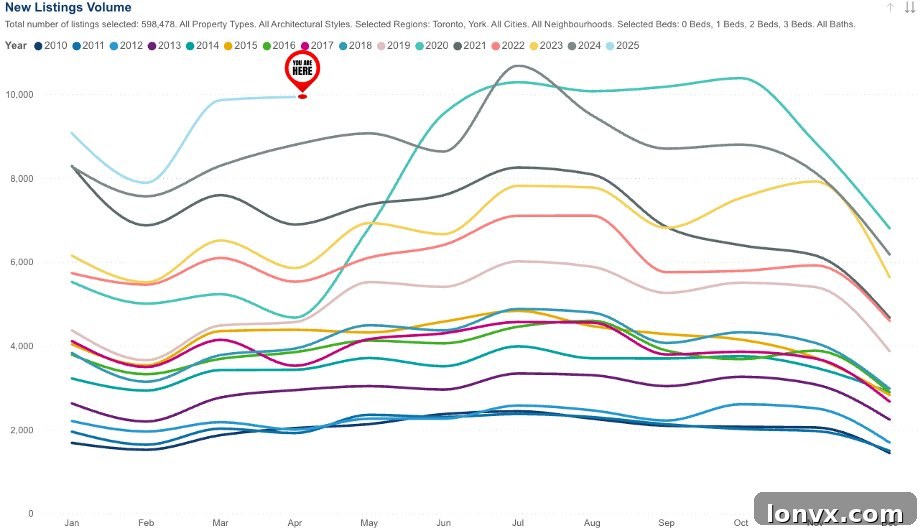
This confluence of factors is highly significant. It points to a market where investor cash flow is increasingly under pressure. Higher mortgage rates and softening rental income diminish the profitability for landlords, making real estate investment less appealing. With rental supply now significantly outpacing tenant demand, there are clear early signs of a substantial retreat from the investor segment – a critical pillar of the GTA housing market.
If this trend persists, the implications are profound. Many investors who previously absorbed new inventory, either directly from developers or through the resale market, with the intention of generating rental income, are now stepping back. This withdrawal leaves an ever-growing share of listings without a ready buyer, further contributing to the overall market oversupply. In essence, both traditional end-users (first-time homebuyers, those moving up or down) and rental investors, historically the twin engines of demand, appear to be increasingly drifting to the sidelines, creating a precarious void in market activity.
Future Outlook: Key Implications for the GTA Housing Market
The current dynamics in the Greater Toronto Area housing market—characterized by soaring inventory, plummeting sales, and softening prices—are setting the stage for several critical developments in the months ahead. Understanding these implications is vital for both prospective buyers and sellers navigating this uncertain environment in Toronto real estate.
1. Intensifying Price Pressure Across All Segments
The fundamental laws of supply and demand dictate that as active listings continue their upward trajectory and sales volumes simultaneously decline, pricing pressure is not just likely, but inevitable. Without a significant and sustained rebound in buyer demand during the crucial spring and early summer months (May and June), sellers will find themselves in an increasingly challenging position. This is particularly true for owners within the highly saturated condominium segment, who will likely be compelled to progressively reduce their asking prices to attract any meaningful interest – essentially “chasing the market down.”
A crucial aspect of this intensifying pressure is the evolving psychology of buyers. They are acutely aware of the market’s trajectory, and their collective expectation of further price declines is now a powerful force shaping market direction, sometimes even more so than traditional macroeconomic indicators. This buyer sentiment creates a feedback loop: lower confidence leads to fewer transactions, which in turn reinforces the expectation of lower prices, further perpetuating the decline in GTA housing prices.
2. Significant Risks for Pre-Construction and Investor Markets
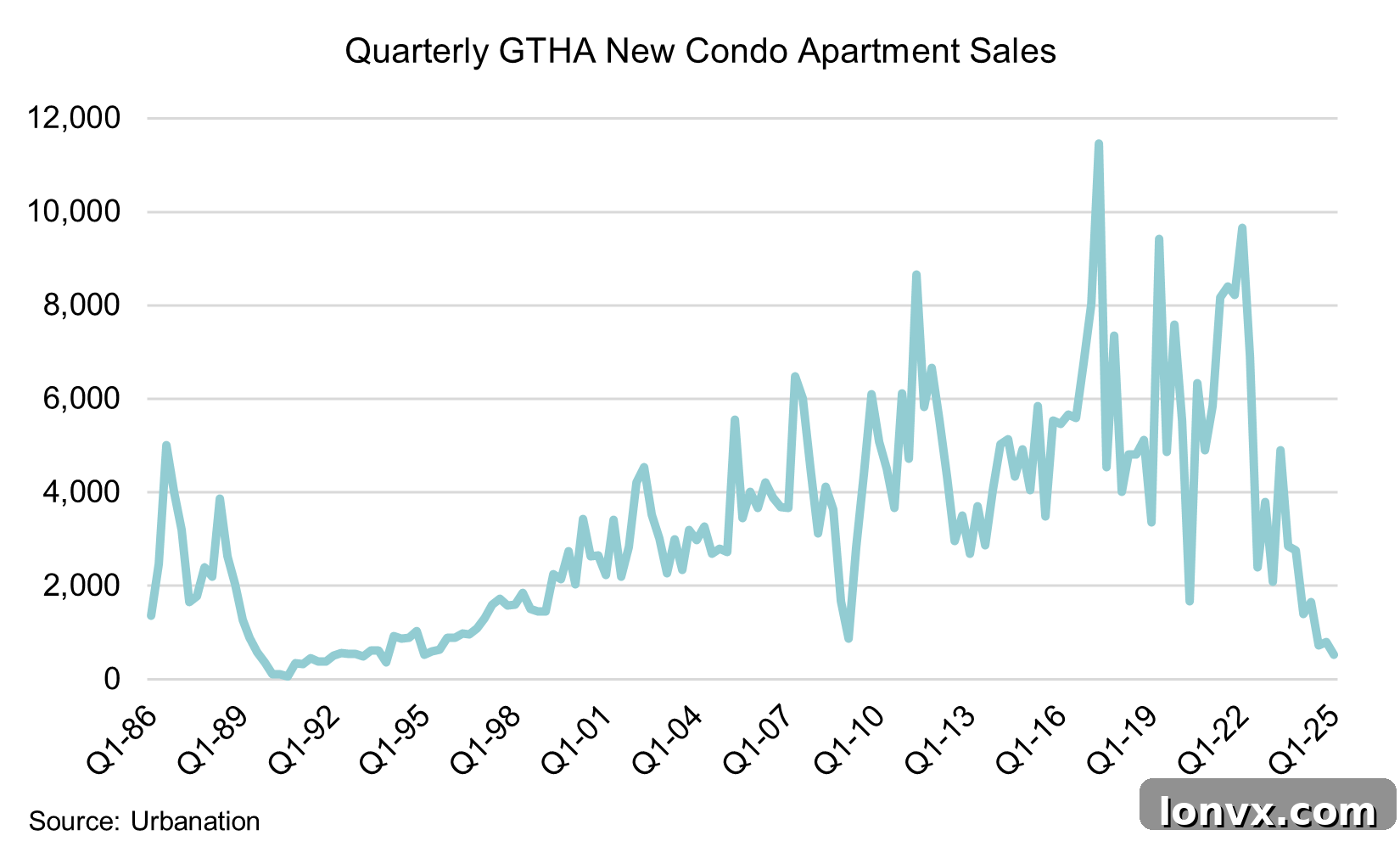
The current market instability poses a particularly acute threat to the pre-construction housing segment, a cornerstone of development in the GTA. Recent data underscores this vulnerability: Urbanation reported that the Greater Toronto Hamilton Area (GTHA) new condo apartment market recorded a mere 533 sales in Q1-2025. This staggering figure represents a 62 percent year-over-year decline and an alarming 88 percent drop below the ten-year average, marking the lowest quarterly sales total since 1995. Even more starkly, new condo sales within the City of Toronto itself plummeted to just 215 units in Q1, a level not seen since 1990.
This dramatic slowdown has severe implications, especially for investor-oriented projects. With softening rental yields and declining resale values in the broader market, the financial viability that once underpinned many of these developments has eroded. The anticipated cash flow for investors is no longer guaranteed, making it difficult to justify current pre-construction pricing. As a result, the market is bracing for a potential flood of “assignments” – pre-construction contracts being sold before completion – in the coming quarters. This influx of units could further exacerbate supply issues in the resale market and impact overall Canadian housing market trends.
Expect significant financial strain among individuals who purchased pre-construction units during the market peaks of 2021-2022, many of whom locked in at inflated prices. These buyers may face appraisal gaps at closing, where the completed unit’s value is lower than the purchase price, making mortgage financing challenging. In response, developers may be compelled to delay new project launches, introduce aggressive incentives to attract buyers, or even pivot their product types to better suit evolving market demand, particularly in areas already facing oversupply, such as Toronto’s downtown core.
3. A Functioning Market Lacking Momentum and Direction
Despite the prevalent headwinds, it is crucial to note that the GTA housing market is not entirely frozen. Transactions are still occurring, indicating that some level of liquidity and activity remains. However, this is a market conspicuously devoid of momentum or a clear direction. The fundamental drivers that typically dictate market health – such as balanced supply and demand, predictable price appreciation, and robust consumer confidence – have become largely disconnected, particularly impacting Toronto’s real estate market.
In this current environment, sales only materialize when specific conditions are met: sellers must be willing to make significant price concessions, and buyers must possess a rare degree of confidence and conviction to proceed. This creates a highly conditional and fractured market where the perceived “value” is constantly being negotiated downwards. Such a scenario, where liquidity is contingent on deep discounts and bold buyer action, does not represent a healthy equilibrium. Instead, it signifies a precarious fragility, where widespread participation and organic growth are stifled by uncertainty and a deep-seated apprehension among market participants.
4. The Pivotal Role of the Bank of Canada’s Monetary Policy
Looking ahead, the direction of the Greater Toronto Area housing market will be profoundly influenced by the forthcoming policy decisions of the Bank of Canada (BoC). The central bank’s stance on interest rates is arguably the most critical external factor impacting buyer affordability and market sentiment. If the Bank of Canada signals or implements rate cuts in the coming months, this could serve as a powerful catalyst, potentially “thawing” current demand by late summer or early fall. Lower borrowing costs would improve affordability for many, reduce mortgage stress for existing homeowners, and might encourage some fence-sitting buyers to re-enter the market.
Conversely, if the Bank of Canada opts to hold interest rates steady for an extended period, the current state of market limbo – characterized by hesitation and uncertainty – could persist well into Q3 and potentially beyond. A prolonged period of high rates would continue to suppress borrowing capacity and maintain the psychological barrier that prevents many buyers from acting.
Until a clear signal emerges from the BoC, market participants in the GTA real estate scene should anticipate the following trends to intensify:
- Longer Days on Market: Properties will remain listed for extended periods as buyers become more selective and less pressured to act quickly.
- More Aggressive Price Reductions: Sellers will increasingly resort to significant price cuts to attract attention and finalize transactions in a competitive environment.
- Continued Buyer Hesitation: Most critically, the “wait-and-see” approach among prospective buyers is expected to continue, further prolonging the market’s stagnation.
The Bank of Canada’s decisions will not just impact borrowing costs; they will crucially shape the overall sentiment and conviction that the GTA housing market so desperately needs to regain its footing.
Final Assessment: The GTA Housing Market is Stalling, Not Crashing
While the term “crash” often evokes images of rapid, widespread panic and steep, immediate value destruction, the current state of the Greater Toronto Area housing market presents a more nuanced, yet equally challenging, reality. There may not be outright panic reflected in the raw numbers, but there is also a distinct lack of vitality – no discernible “pulse” of healthy market activity. This quiet stagnation is a key characteristic of the current Canadian housing market trends.
What the developments of April have unequivocally clarified is that the GTA housing market is no longer operating primarily on fundamental economic principles of supply and demand in a balanced ecosystem. Instead, it is largely driven by a profound and pervasive psychological undercurrent: the fear of overpaying for an asset, the apprehension of “catching a falling knife” by investing too soon, and the overarching reluctance to make a significant financial move in an environment utterly devoid of clear direction or positive momentum.
This prevailing fear and uncertainty have paralyzed the market. Buyers are hesitant, sellers are frustrated, and the usual mechanisms of a healthy real estate cycle are disrupted. Until a significant external catalyst emerges – whether a decisive shift in monetary policy, a renewed surge in economic confidence, or a fundamental change in buyer conviction – the only element progressing with any speed in this otherwise stagnant market is time itself, further extending the period of uncertainty and re-evaluation for all participants in Toronto’s complex real estate landscape.