
Navigating Canada’s Home Insurance Landscape in 2024: A Comprehensive Outlook for Homeowners
As 2024 progresses, the Canadian home insurance sector stands at a pivotal juncture, mirroring the dynamic shifts previously observed in the auto insurance market. The significant inflationary pressures experienced over the past year have laid the groundwork for a period of considerable adjustment and transformation within the industry. Homeowners across the country are bracing for what is widely anticipated to be a challenging year, marked by notable increases in insurance premiums.
While economic forecasts from institutions like the Bank of Canada suggest a gradual return to the two percent inflation target by 2025, several persistent factors continue to exert upward pressure on home insurance costs. These include stubbornly high claims expenses, the escalating price of construction materials and labor for repairs and replacements, and a worrying surge in climate-related natural disasters. Collectively, these elements signal an undeniable need for insurers to reassess and adjust their rates, making it imperative for Canadian homeowners to understand the evolving landscape.
The Alarming Rise in Premiums: A National Overview for 2024
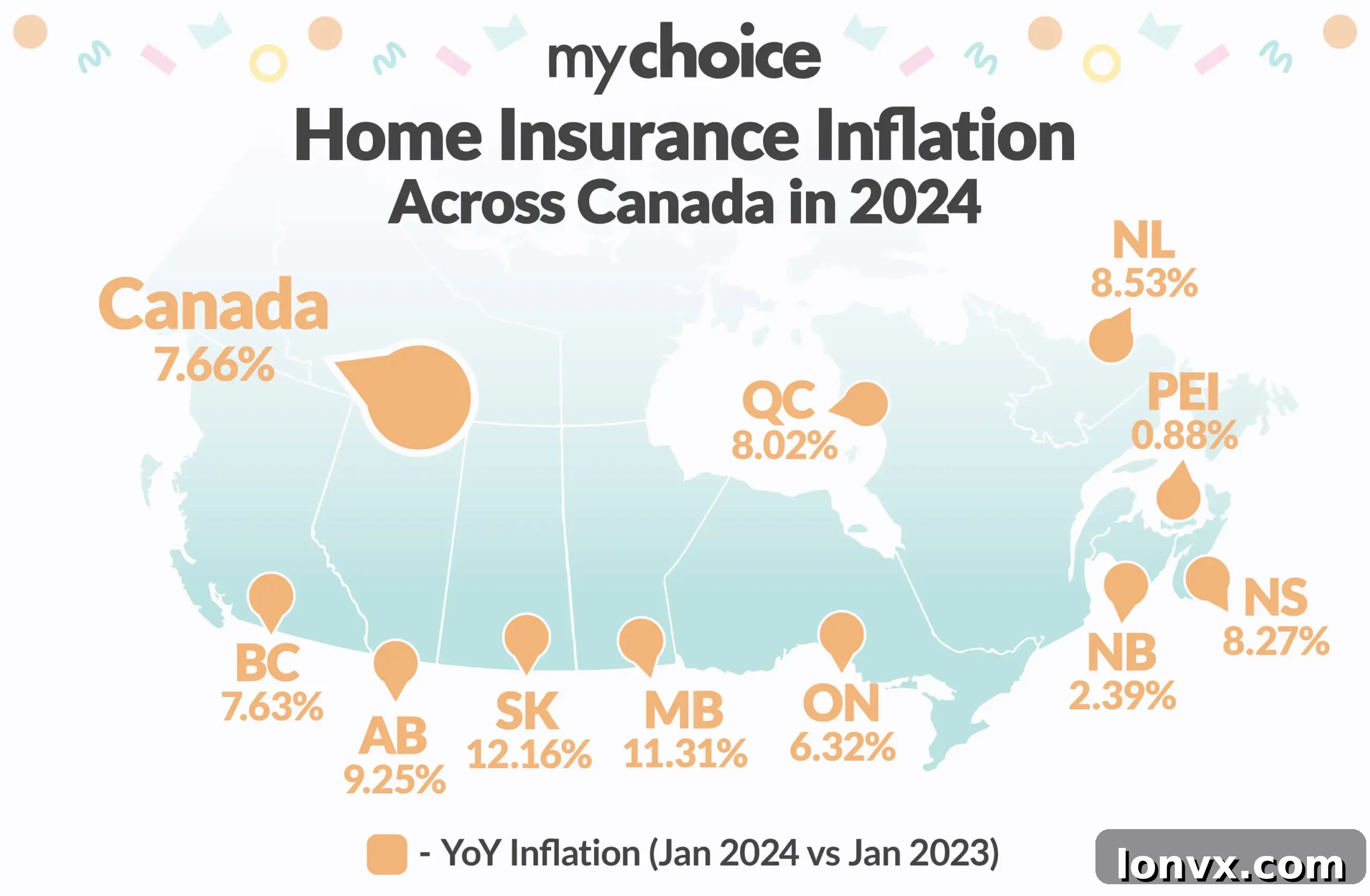
Recent data underscores the immediate impact of these trends. According to MyChoice, a prominent insurance comparison platform, Canadian home insurance premiums have witnessed a substantial 7.66 percent year-over-year increase since the beginning of 2024. This notable jump highlights a national trend, indicating a broader market recalibration.
However, the effects of these rising home insurance rates are not uniformly distributed across the vast Canadian landscape. Certain provinces are confronting more pronounced and rapid increases, influenced by a confluence of regional economic conditions, varying levels of exposure to natural hazards, and differing regulatory environments. Understanding these provincial disparities is crucial for homeowners looking to anticipate and manage their insurance expenditures effectively.
Provincial Disparities: Where are Home Insurance Rates Rising Most?
The uneven distribution of premium increases means that while the national average provides a general indicator, individual experiences can vary significantly. For instance, provinces with higher vulnerability to specific types of natural disasters—such as coastal regions prone to flooding or areas historically affected by wildfires—are likely to see more aggressive rate adjustments. Similarly, regions experiencing rapid urbanization or significant changes in property values may also face unique pressures on their insurance markets. This regional variance necessitates a localized approach to understanding home insurance trends and finding suitable coverage options.
Understanding the Drivers Behind the Increase in Home Insurance Costs
Delving deeper into the factors propelling these premium hikes reveals a complex interplay of economic, environmental, and industry-specific dynamics. Identifying these key drivers is essential for homeowners seeking to comprehend the rationale behind their rising costs and potentially explore ways to mitigate them.
The Complex Role of Replacement Costs and Inflation
One of the primary components influencing home insurance premiums is the replacement cost – the expense an insurer would incur to rebuild a home from the ground up if it were completely destroyed. MyChoice’s analysis illuminates that the relationship between replacement cost inflation and home and mortgage insurance inflation is not always straightforward. While often considered a primary determinant, replacement costs alone do not dictate premium trajectories across all provinces.
This nuanced relationship is evident in provincial examples. Manitoba, for instance, is projected to experience an 11.31 percent home insurance inflation rate despite a reported -1.52 percent change in replacement costs. This suggests that other significant factors are at play, overriding the direct influence of rebuilding expenses. Similarly, Saskatchewan faces a substantial 12.16 percent insurance rate hike, even with a modest 1.35 percent rise in replacement costs. Such discrepancies highlight that while building material and labor costs are important, they are part of a larger ecosystem of risk assessment that insurers consider.
Source: Statistics Canada, 2024
Climate Change and Natural Disasters: The Dominant Factor in Rate Increases
Perhaps the most potent and increasingly influential factor driving projected increases in home insurance rates is the undeniable impact of climate change on the frequency and severity of natural disasters nationwide. Each year, the insurance industry grapples with the escalating challenge of covering immense losses stemming from a growing array of catastrophic events, including devastating wildfires, widespread floods, severe windstorms, and other intense climate-related occurrences. This relentless pattern necessitates a continuous reassessment of rates to accurately match the escalating risk profile of insured properties.
The scale of these events is staggering. According to the Insurance Bureau of Canada, severe weather conditions throughout 2023 alone resulted in over $3.1 billion in insured damage across the country. Such massive financial outlays directly impact the profitability and solvency of insurance providers, compelling them to adjust premiums to ensure their capacity to cover future claims remains robust. Regions that consistently experience higher insured damages, such as British Columbia, which saw $720 million in damages, and Ontario and Quebec, which together accumulated $710 million, disproportionately contribute to the broader trend of rising insurance rates. This is due to the elevated risk and associated cost of claims in these areas, making them focal points for premium adjustments.
The long-term outlook suggests that as climate change continues to intensify, the frequency and intensity of these events will only grow, cementing their role as a primary driver of home insurance costs for the foreseeable future. This necessitates not only reactive premium adjustments but also proactive measures in risk mitigation and climate adaptation at both individual and governmental levels.
Other Contributing Factors to Rising Home Insurance Costs
Beyond replacement costs and natural disasters, several other elements contribute to the upward trajectory of home insurance premiums. These include increasing labor costs in the construction and repair sectors, supply chain disruptions affecting material availability and pricing, and rising reinsurance costs – the insurance that insurers themselves purchase to protect against large payouts. Each of these factors, while perhaps less prominent than climate change, adds incremental pressure to the overall cost structure of home insurance.
The Broader Economic Impact: Home Insurance and Mortgage Delinquencies
The continuous escalation in home insurance costs is not an isolated financial challenge; it is poised to significantly exacerbate financial pressures for Canadian homeowners, particularly those already struggling with other housing-related expenses. The confluence of rising interest rates, inflationary pressures on daily living expenses, and now higher insurance premiums creates a formidable financial burden for many households.
Recognizing the severity of some of these challenges, the federal government has begun to allocate resources, as seen with the $31.7 million assigned to the national flood insurance program in its 2023 budget. This program specifically targets the socioeconomic impact of floods, which have historically devastated regions like Atlantic Canada, aiming to provide a safety net and mitigate future losses.
Cities at Risk: A Deep Dive into Mortgage Delinquencies
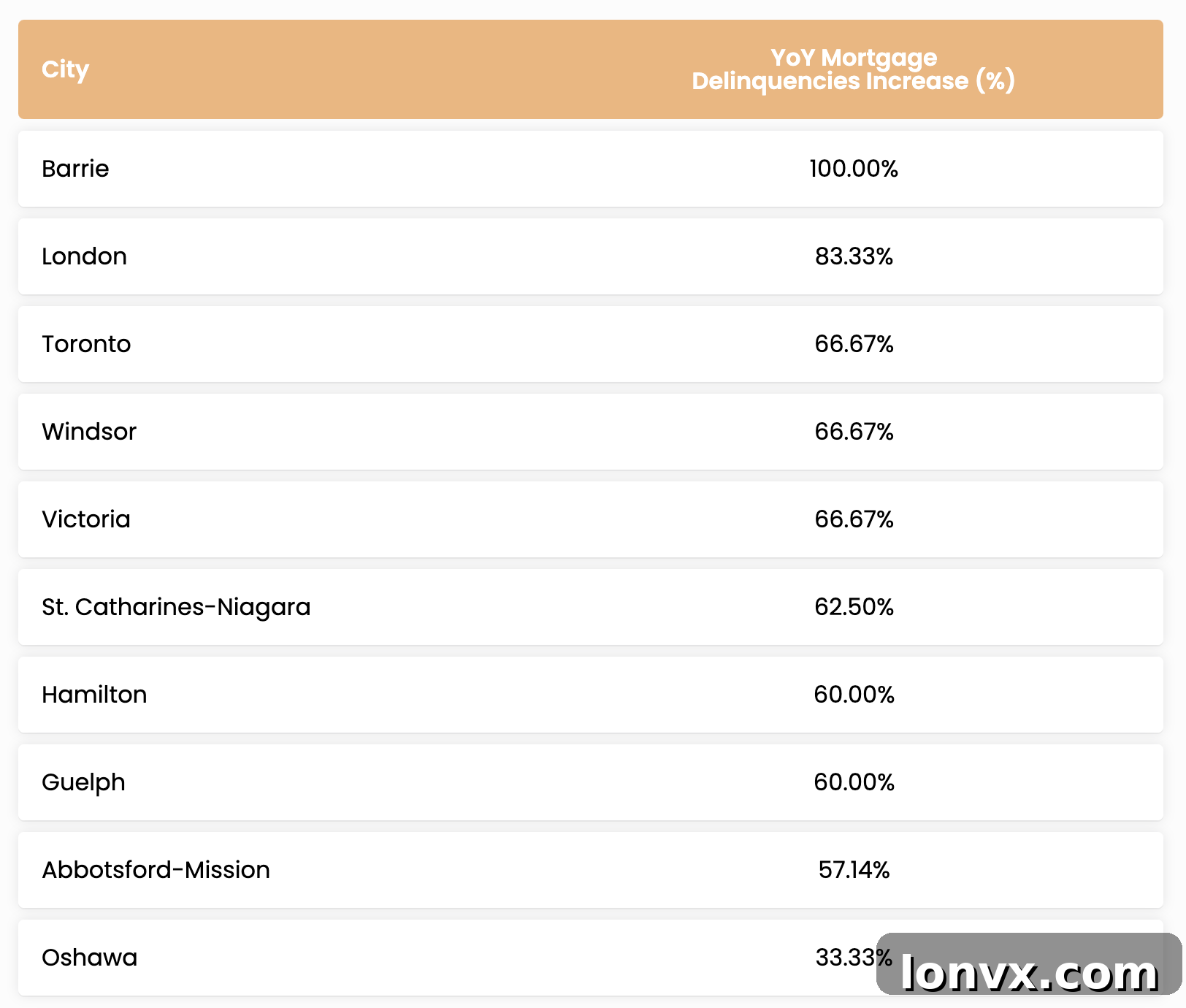
The additional strain from rising home insurance is particularly concerning for homeowners in cities identified by a recent Equifax/CMHC study as experiencing the most significant increases in mortgage delinquencies. These areas represent critical points of vulnerability within Canada’s housing market.
Cities such as Toronto and Victoria, which have witnessed alarming mortgage delinquency increases of 66.67 percent, clearly underscore the existing financial strain on homeowners. A further 7.66 percent average increase in home insurance rates could significantly intensify this precarious situation. For many, this added cost could be the tipping point, potentially compelling homeowners to consider difficult decisions or even driving them out of cities already most at risk for mortgage delinquencies.
Source: Equifax, 2024 (via MyChoice.ca)
What Canadian Homeowners Can Do to Prepare and Mitigate Costs
In this challenging environment, proactive measures can empower homeowners to better manage their insurance costs and protect their properties. Understanding the market dynamics is the first step; taking action is the next.
- Shop Around and Compare Quotes: Do not settle for your renewal quote without exploring alternatives. The insurance market is competitive, and comparing offers from multiple providers can yield significant savings. Online comparison websites like MyChoice can be a valuable tool.
- Review Your Policy Annually: Your insurance needs can change. Ensure your coverage accurately reflects the current value of your home and possessions, avoiding both under-insurance and over-insurance.
- Improve Home Resilience: Investing in preventative measures can reduce your risk profile. This includes installing flood sensors, reinforcing your roof against wind damage, updating electrical systems, or maintaining proper drainage around your foundation. Some insurers offer discounts for such improvements.
- Understand Your Deductibles: A higher deductible can lower your annual premium, but ensure you can comfortably afford the deductible amount if you need to file a claim.
- Bundle Insurance Policies: Many insurers offer discounts when you bundle your home and auto insurance policies with the same provider.
- Inquire About Discounts: Ask your insurer about any available discounts you might qualify for, such as those for a new home, non-smokers, security systems, or being mortgage-free.
- Maintain Good Credit: In some provinces, your credit score can influence your insurance premiums. A healthy credit history may lead to lower rates.
- Avoid Small Claims: Filing frequent small claims can signal higher risk to insurers and lead to increased premiums. Consider covering minor damages out of pocket.
Conclusion: Navigating the Evolving Home Insurance Landscape
The Canadian home insurance market in 2024 is undergoing significant transformation, driven by a complex mix of economic inflation, escalating replacement costs, and the intensifying impact of climate change. The projected rise in premiums, alongside increased risks of mortgage delinquencies in vulnerable cities, presents a formidable challenge for homeowners across the nation.
However, by staying informed, understanding the underlying drivers of these changes, and taking proactive steps, Canadian homeowners can better navigate this evolving landscape. Regular policy reviews, diligent shopping for competitive rates, and investing in home resilience are not just recommendations but essential strategies for managing costs and safeguarding properties in an increasingly unpredictable environment. As the market continues to adapt, vigilance and informed decision-making will be key to financial security for Canadian homeowners.
Read the full study here.
Enjoying this article?
Get the latest real estate articles in your inbox 3x a week so you stay up to date on the latest in the Canadian real estate industry.
Enter your email to subscribe.