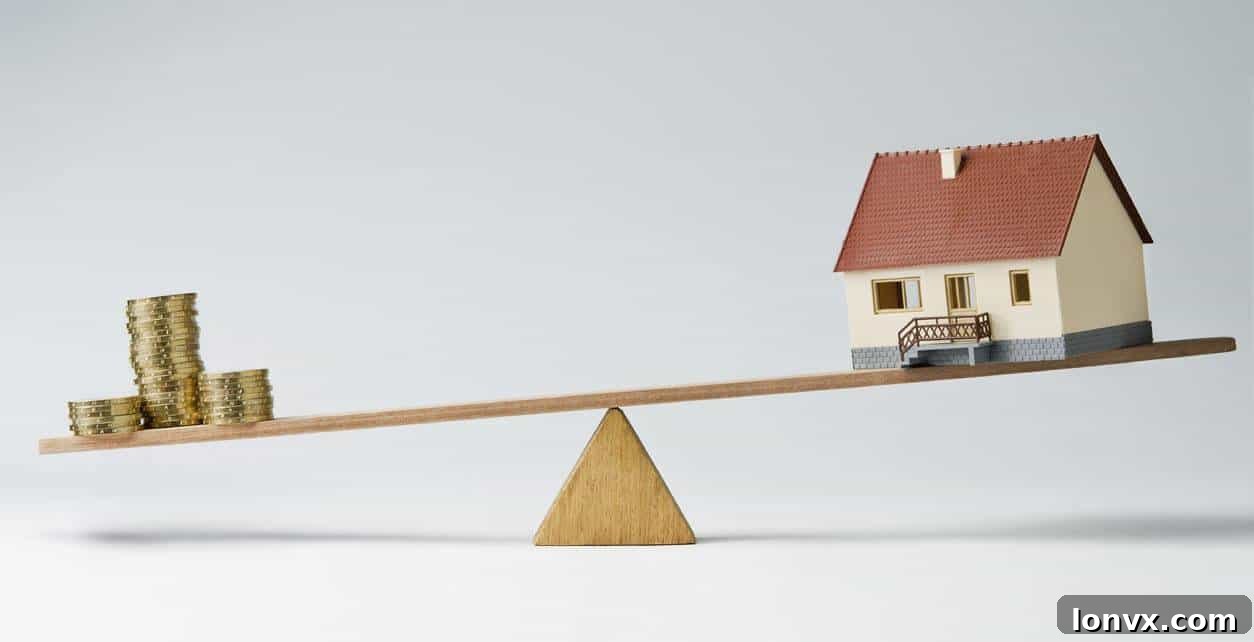
Unraveling the Affordable Housing Paradox: A Call for Sustainable Solutions
For many years, I have been deeply immersed in the intricacies of the affordable housing crisis, observing its multifaceted impacts on individuals and communities alike. My extensive involvement has led to the identification of numerous causal factors, all contributing to the pervasive challenge we face today. It has become abundantly clear that achieving genuine affordability in both housing purchases and rentals will remain an unattainable goal until two fundamental changes occur: first, “affordability” must be properly and rigorously defined, and second, the critical adjective “sustainable” must be integrated into that definition. Without a clear, long-term vision of what sustainable affordability truly entails, our efforts risk being fragmented, temporary, and ultimately insufficient.
The Affordable Housing Paradox: A Core Misconception
Among the least understood, and arguably most detrimental, misperceptions surrounding affordable housing is a phenomenon I refer to as The Affordable Housing Paradox. This paradox highlights a counterintuitive relationship: as property taxes increase, the market value of the property—upon which those taxes are fundamentally based—tends to decrease. This creates a perplexing cycle, undermining the very fiscal health it seeks to support and directly impacting the viability of affordable housing initiatives.
Understanding Property Valuation: Net Operating Income and the Capitalization Rate
To fully grasp this paradox, it’s essential to understand the mechanics of investment property valuation. The most common method, especially for income-generating properties, is the Direct Capitalization Method, often called the Income Approach by real estate professionals. This method determines a property’s baseline value by assessing its earning potential.
The cornerstone of this valuation is the Net Operating Income (NOI). NOI is calculated by taking all revenue generated by a property—primarily rental income, but also other ancillary earnings—and subtracting all its operational expenses. These operational expenses encompass a wide array of costs essential for the property’s day-to-day functioning, including utilities, maintenance, management fees, insurance, and crucially, property taxes. It’s important to note that certain significant costs are explicitly excluded from NOI calculations, specifically capital expenses (CapEx), such as major renovations or structural upgrades, and financing costs, particularly mortgage interest. These exclusions ensure that NOI provides a clear picture of the property’s operational profitability, detached from its specific financing structure or long-term capital improvement cycles.
Once the NOI is established, it is then divided by the Capitalization Rate (Cap Rate), a market-driven percentage that represents the expected one-year return on investment for a buyer. The Cap Rate is a vital metric for real estate investors, offering a snapshot of a property’s potential profitability relative to its purchase price. A higher Cap Rate generally suggests a higher perceived risk or a lower valuation for a given income, while a lower Cap Rate typically indicates a lower risk and a higher property value. For many new participants in the real estate market—be it aspiring investors, tenants trying to understand rental costs, or even some real estate agents—the Cap Rate can be an exceptionally challenging concept to fully comprehend. Yet, a clear understanding of the Cap Rate is absolutely fundamental to accurately assessing property value and, consequently, its true affordability.
The Paradox Unveiled: How Rising Taxes Depress Property Values
This brings us back to the heart of the paradox. A critical dynamic within the NOI-Cap Rate calculation dictates that an increase in operational expenses will directly lead to a decrease in the property’s overall value. Since property tax is a significant operational expense, any increase in municipal property taxes directly reduces the Net Operating Income. A lower NOI, when capitalized, inevitably results in a lower assessed property value. This creates a self-defeating feedback loop: when a municipality raises property taxes in an effort to generate more revenue, it simultaneously diminishes the equity of property owners by lowering the very market value upon which those taxes are based. This is the essence of The Affordable Housing Paradox – a seemingly logical fiscal policy inadvertently eroding the tax base and discouraging investment.
This challenge is often exacerbated by long-standing rent control programs, such as those implemented for decades. While often well-intentioned, aiming to protect tenants from escalating rents, these programs frequently cap or limit rental income without providing corresponding controls over the associated operational expenses. From the perspective of tenants, their advocates, and the politicians who champion these policies, lower rents are seen as a direct benefit. However, the reality for property owners is that reduced rental revenue without a proportional decrease in expenses leads directly to a reduced Net Operating Income. As previously explained, a lower NOI translates to a lower property value, which in turn leads to a reduction in property taxes due to the diminished assessed value.
The Erosion of Municipal Services and Community Well-being
While a reduction in property taxes might, at first glance, appear beneficial to property owners, the broader implications for the community are profoundly negative. Lower property tax revenues severely impact the funding available for essential municipal services that form the backbone of a healthy, functioning society. This includes critical investments in new affordable social housing initiatives, ensuring that vulnerable populations have access to safe and dignified shelter. It also directly affects the ability to adequately staff and equip vital public safety departments, such as police and fire services, potentially compromising community safety and emergency response times. Furthermore, essential services like education, efficient garbage collection, effective bylaw enforcement, legal aid for those in need, the construction and ongoing maintenance of crucial infrastructure (roads, bridges, water treatment facilities), various social assistance programs, and the operation of local hospitals all rely heavily on property tax revenues. A sustained decrease in this income starves these vital public services, leading to a noticeable decline in the overall quality of life and exacerbating social inequalities within the community.
It might seem that the simplest solution to insufficient municipal funding would be to simply increase property taxes. However, as the paradox demonstrates, such an increase would once again reduce property values, thus perpetuating the vicious, self-defeating cycle. This highlights the urgent need for a more sophisticated and integrated understanding of the economic mechanisms at play within the housing market.
Unmasking the True Taxpayer: Tenants’ Hidden Burden
Adding another layer of complexity, and contrary to popular belief, it is often residential tenants—not landlords—who ultimately bear the financial responsibility for municipal property taxes in jurisdictions such as Ontario. This mechanism is subtly but firmly integrated into the Residential Tenancies Act (RTA). In practice, landlords act as collectors, gathering property tax payments from tenants much like retailers collect Harmonized Sales Tax (HST) on behalf of the government from consumers. This means that, indirectly and often without full awareness, the government is essentially relying on market-rent-paying tenants to cover a significant portion of the financial obligations that would otherwise fall to low-rent-paying tenants, or indeed the broader tax base, to fund critical municipal services. This system not only obscures the true cost of these public services but also shifts the financial burden in ways that can exacerbate existing inequities within the housing market.
Beyond Demand: Prioritizing Housing Supply and Systemic Reform
Since the mid-1970s, there has been a glaring and persistent absence of effective government strategies at any level aimed at genuinely increasing housing supply to meet ever-growing demand. Instead, the focus has often been misplaced. Incentivizing multi-billion-dollar developers and their billionaire owners, for instance, is often an unwarranted approach. The reality is that if governments were to establish clear, consistent, and enabling policy frameworks—such as streamlined permitting, predictable regulations, and strategic infrastructure investments—these companies, driven by profit, would naturally line up to build the housing units society desperately needs. Their inherent business model aligns with construction when the conditions are right.
Critiquing Flawed Demand-Side Interventions
While initiatives like the National Housing Strategy are commendable first steps, their overall effectiveness is significantly hindered by a lack of robust organizational infrastructure and the necessary political will for comprehensive implementation. Alarmingly, a substantial portion of current housing affordability initiatives, strategies, and tactics tend to either narrowly focus on limiting housing demand—a largely futile exercise in a growing population—or, more often, inadvertently contribute to increasing demand, thereby worsening the very problem they aim to solve. For example, financial incentives and breaks offered to first-time homeowners, while seemingly supportive, often inflate the pool of prospective buyers competing for an already diminishing housing inventory. This surge in demand, coupled with inelastic supply, invariably drives prices higher, ultimately making homeownership even more elusive for those who need assistance the most.
Conversely, policies designed to cool the market by increasing mortgage qualification standards, while perhaps removing a significant number of families (as many as 200,000 Canadian families, for example) from the homeownership competition, inadvertently create a different set of problems. These families, no longer able to purchase a home, typically remain in their existing rental properties. This creates a “blockage at the top” of the housing ladder. The cascading effect is severe: new and low-income tenants, who might otherwise have found openings in the rental market as others transitioned to homeownership, are locked out of the low (“affordable”) end. This dynamic intensifies competition for rental units, driving rental prices upward and pushing true affordability further out of reach for countless individuals.
The Imperative of Redefining the Problem for Real Solutions
A fundamental principle in problem-solving dictates that half the solution lies in accurately defining the problem itself. Regrettably, no single entity has yet “properly” or comprehensively defined the multifaceted issue of housing unaffordability. Consequently, without a precise and holistic understanding of the challenge, effective and lasting solutions remain perpetually out of reach. My research has identified 14 distinct major causal factors contributing to rental and purchase housing unaffordability, all of which are systemically present and interlinked across various levels of government in Canada. These factors collectively create a complex web of impediments that prevent meaningful progress.
I firmly believe that the only truly effective way to resolve the housing crisis in its many forms is for the federal government to assume a decisive leadership role. This would necessitate the establishment of a vertically integrated, multi-level-government housing agency. One could envision an organizational structure similar to the U.S. Homeland Security agency—not in its mandate, but in its operational model of compelling cooperation and information sharing. Such an agency would mandate that all levels of government—federal, provincial/territorial, and municipal—actively share all relevant information and data pertaining to their housing mandates. Crucially, it would compel them to work collaboratively and synergistically towards a common, clearly defined national objective: achieving sustainable housing affordability for all Canadians. This coordinated, holistic approach would dismantle existing silos, foster genuine collaboration, and enable the development and implementation of the comprehensive, long-term strategies so desperately needed to overcome this entrenched national crisis.
Towards Sustainable Affordability: A Unified Vision for Canada
The path toward a future where sustainable housing affordability is a tangible reality, rather than a distant aspiration, demands a profound paradigm shift in both perspective and strategy. We must move beyond fragmented policies and squarely confront the inherent paradoxes that currently impede progress. By meticulously defining what ‘sustainable affordability’ truly means, by thoroughly understanding the intricate economic levers such as Net Operating Income and Capitalization Rates, and by unequivocally addressing the hidden financial burdens covertly borne by tenants, we can begin to untangle this complex Gordian knot. The ongoing crisis serves as an stark testament to the inadequacy of piecemeal approaches and the inherent dangers of ignoring fundamental market dynamics and systemic interdependencies. The time has come for Canada to embrace a unified, national housing strategy, spearheaded by a powerful, coordinating federal agency. Only through such comprehensive, collaborative, and evidence-based action can we genuinely hope to build communities where safe, dignified, and truly sustainable housing is accessible to all, transforming the elusive dream of home into a tangible reality for every Canadian citizen.