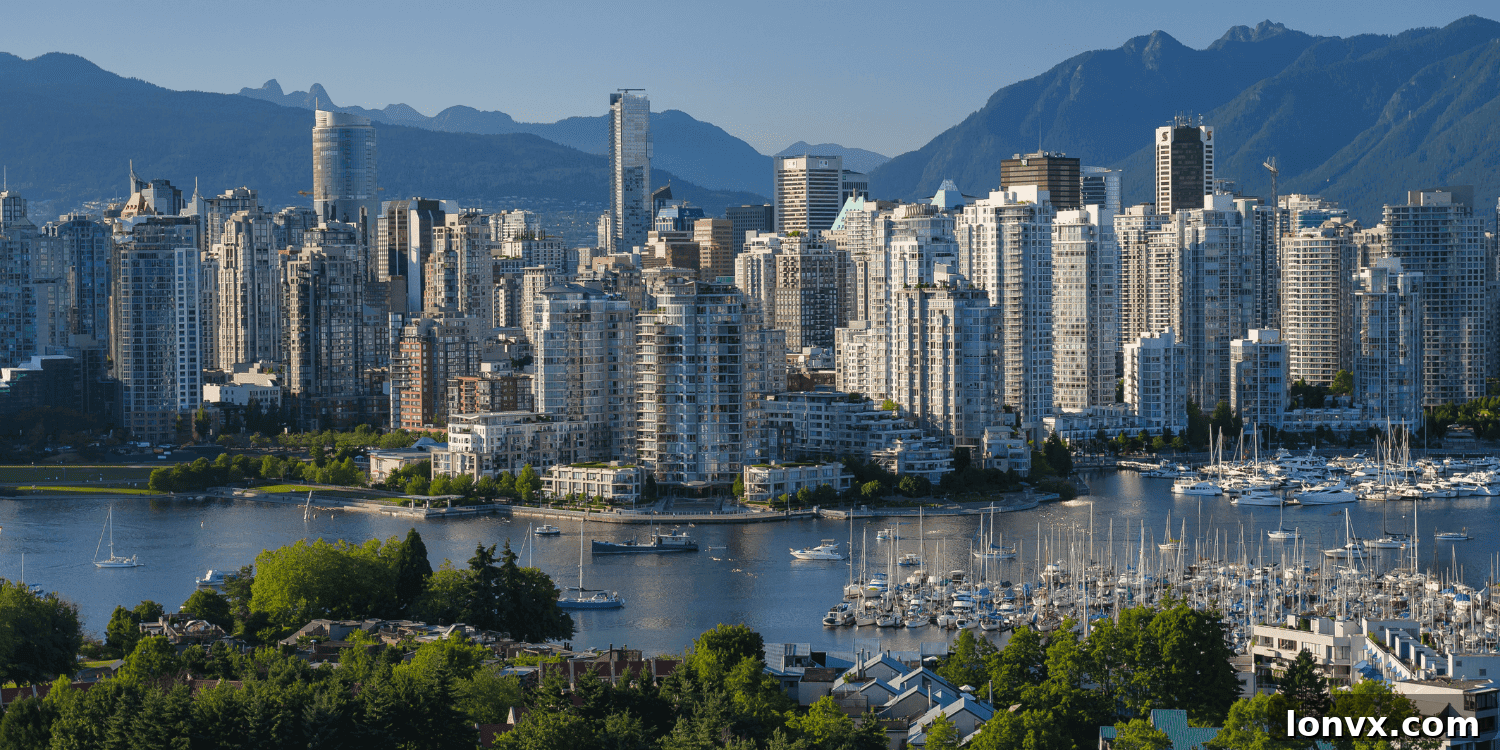
Metro Vancouver’s Housing Market Heats Up: Prices Climb Amidst Strong Demand and Scarce Inventory
The dynamic real estate landscape of Metro Vancouver continues to captivate and challenge residents and prospective homeowners alike. As mid-2023 data emerges, a compelling narrative unfolds: the region’s housing market is experiencing a significant upturn, characterized by relentlessly climbing prices. This upward trajectory is primarily fueled by a powerful confluence of robust buyer demand and a persistent shortage of homes available for sale, a trend that underscores the enduring allure and unique pressures within one of Canada’s most sought-after urban centers.
According to the latest insights from the Real Estate Board of Greater Vancouver (REBGV), June 2023 marked another period of notable growth. The benchmark price, a key indicator representing a typical home in the region, registered an increase across all property types. This consistent appreciation signals a resilient market, even in the face of evolving economic conditions and increased borrowing costs.
Delving into the specifics, residential home sales across Metro Vancouver reached an impressive total of 2,988 units in June 2023. This figure represents a substantial 21.1 percent surge when compared to the 2,462 sales recorded during the same period in 2022. While this year-over-year growth demonstrates strong market activity and renewed buyer confidence, it’s worth noting that the June 2023 sales volume remained 8.6 percent below the ten-year seasonal average of 3,269 sales. This suggests that while the market is undeniably active, it has not yet returned to the exceptionally high volumes seen in previous peak periods, hinting at ongoing supply constraints as a limiting factor.
Apartment Segment Leads the Charge as Benchmark Prices Approach 2022 Peak
Within Metro Vancouver’s diverse housing market, the apartment segment has emerged as a standout performer, exhibiting remarkable strength and resilience. Andrew Lis, the director of economics and data analytics at REBGV, highlighted this trend, noting, “The market continues to outperform expectations across all segments, but the apartment segment showed the most relative strength in June.” This robust performance underscores a shift in buyer preferences and affordability considerations.
Lis further elaborated on the apartment market’s impressive momentum, revealing that the benchmark price for apartment homes is now on the cusp of surpassing its peak level achieved in 2022. This rebound indicates strong demand, potentially from first-time homebuyers and those seeking more affordable entry points into the Metro Vancouver market. What truly sets the apartment segment apart is its sales volume, which has not only demonstrated significant year-over-year growth but has also exceeded the region’s ten-year seasonal average for apartments. This contrasts sharply with the attached and detached segments, where sales figures, while increasing, remained below their respective ten-year averages. The sustained interest in apartments speaks volumes about their perceived value and the ongoing demand for urban living solutions.
Despite the heightened sales activity, the overall supply picture remains tight. New listings of detached, attached, and apartment properties totaled 5,348 in June 2023. While this figure represents a modest 1.3 percent increase compared to the 5,278 homes listed in June 2022, it ultimately fell 3.1 percent below the ten-year seasonal average of 5,518 new listings. This persistent shortfall in new inventory exacerbates the existing supply-demand imbalance, contributing directly to the upward pressure on prices.
Active Listings Decline 7.9% Year-Over-Year, Intensifying Competition
The challenge of limited inventory is further underscored by the decline in the total number of homes actively listed for sale on the Multiple Listing Service (MLS) in Metro Vancouver. As of June 2023, the total active listings stood at 9,990 properties. This figure marks a 7.9 percent decrease compared to June 2022, indicating a shrinking pool of available homes for prospective buyers. The situation becomes even more pronounced when viewed against historical trends: current active listings are a significant 17.4 percent below the ten-year seasonal average of 12,091 homes.
This dwindling supply intensifies competition among buyers, often leading to multiple offers and quicker sales. A crucial metric for understanding market dynamics is the sales-to-active listings ratio. For June 2023, this ratio, encompassing all property types (detached, attached, and apartment), registered at a robust 31.4 percent. Breaking this down further, detached homes saw a ratio of 20.9 percent, townhomes (attached properties) reached 38.5 percent, and apartments soared to 39.4 percent.
The REBGV’s historical data analysis provides valuable context for these figures. When the sales-to-active listings ratio consistently falls below 12 percent for an extended period, it typically signals a buyer’s market, exerting downward pressure on home prices. Conversely, when this ratio consistently exceeds 20 percent over several months, it indicates a seller’s market, with home prices often experiencing sustained upward pressure. The current ratios, especially for townhomes and apartments, are well above the 20 percent threshold, clearly pointing to a strong seller’s market and validating the observed price increases.
Limited Inventory Continues to Drive Up Home Prices Despite Rising Borrowing Costs
The overarching theme driving Metro Vancouver’s housing market, despite recent increases in borrowing costs, remains the pronounced imbalance between limited resale inventory and a substantial pool of eager buyers. Andrew Lis reiterated this fundamental dynamic, stating that this disparity continues to be the primary reason for the month-over-month price increases observed across all segments of the market. Even with higher interest rates making mortgages more expensive, the sheer demand for housing in Metro Vancouver, coupled with the scarcity of available properties, creates an environment where prices are continually pushed upwards.
Recognizing the growing affordability challenges, especially for those trying to enter the market, Lis issued a strong call to the provincial government. He urged policymakers to critically review and adjust the Property Transfer Tax (PTT) exemption threshold for first-time homebuyers. Currently set at $525,000, this threshold is increasingly out of sync with current market realities. With the benchmark price for apartments, often considered the entry-level segment, climbing to $767,000, the existing exemption provides limited benefit to many first-time buyers. Lis argued persuasively, “This is a simple policy adjustment that could help more first-time buyers afford a home right now,” highlighting the potential for a targeted government intervention to alleviate some of the financial barriers.
MLS Home Price Index Sees Monthly Increase, Reflecting Market Recovery
The MLS Home Price Index (HPI) composite benchmark price for all residential properties in Metro Vancouver provides a comprehensive overview of the market’s trajectory. As of June 2023, this benchmark price stood at $1.2 million. While this figure represents a 2.4 percent decrease when compared to the peak market conditions of June 2022, it notably indicates a 1.3 percent increase from May 2023. This month-over-month growth signifies a clear recovery and renewed upward momentum in property values across the region, demonstrating the market’s ability to bounce back.
A closer examination of individual property types reveals distinct trends and benchmark prices:
- Detached Homes: Sales for detached properties reached 848 units in June 2023, marking a significant 28.3 percent increase from the 661 sales recorded in June 2022. The benchmark price for a detached home currently stands at $1.99 million. This figure shows a 3.2 percent decrease compared to June 2022, reflecting the larger adjustments seen in this segment from its historical highs, but importantly, it represents a 1.9 percent increase from May 2023, indicating recent growth.
- Apartment Homes: The apartment segment continued its strong performance with 1,573 sales in June 2023, signifying an impressive 18.6 percent increase compared to the 1,326 sales in June 2022. The benchmark price for an apartment home is $767,000. This marks a modest but significant 0.5 percent increase from June 2022 and a solid 0.8 percent increase from May 2023, solidifying its position as a key growth driver.
- Attached Homes (Townhomes): Sales of attached properties totaled 547 units in June 2023, representing a notable 17.6 percent increase compared to the 465 sales in June 2022. The benchmark price for an attached home is $1.1 million. This indicates a one percent decrease from June 2022, but a healthy 1.5 percent increase from May 2023, showing recovery and steady appreciation in this popular segment.
Looking Ahead: Navigating Metro Vancouver’s Competitive Real Estate Landscape
The Metro Vancouver housing market in June 2023 clearly demonstrated its enduring resilience and the persistent challenges it poses. High buyer demand, particularly in the apartment segment, coupled with historically low inventory levels, continues to be the dominant force driving prices upwards. Despite rising interest rates, the fundamental desire for homeownership in this world-class city shows no signs of waning. Policymakers are being called upon to consider adjustments that could aid first-time homebuyers, acknowledging the growing gap between entry-level prices and existing financial support mechanisms.
For prospective buyers, the current market necessitates a clear strategy, prompt action, and a thorough understanding of financing options. For sellers, the low inventory environment presents an opportune moment, often resulting in competitive bids. As the market progresses through the latter half of 2023, all eyes will remain on the interplay of supply, demand, and economic factors that continue to shape Metro Vancouver’s vibrant, yet intensely competitive, real estate landscape.