The following is sponsored, promotional content. This content is not written by and does not necessarily reflect the views of REM.
Elevating the Modern Workspace: The Critical Role of Digital Connectivity in Toronto’s Office Market
In today’s rapidly evolving business landscape, the demands of office tenants and companies seeking new office space have shifted dramatically. Beyond prime location, aesthetic appeal, and ergonomic design, a fundamental requirement has emerged as paramount: robust, high-speed internet, and unparalleled digital connectivity. This isn’t merely a desirable amenity; it’s the lifeblood of modern commerce, directly influencing productivity, innovation, and competitiveness.
However, not all office spaces are created equal when it comes to delivering business-grade internet connectivity. Tenants now expect their building’s infrastructure to seamlessly integrate with their company’s sophisticated technological needs. This places immense pressure on commercial real estate owners and developers to provide workspaces that are not just contemporary in design, but also future-proof in their digital capabilities, meeting the ever-evolving demands of the digital economy.
This digital imperative is particularly pronounced in thriving urban centers like Toronto. Recognized increasingly as the “Silicon Valley of the North,” Toronto has witnessed an astounding 33% increase in its tech workforce between 2011 and 2016, according to a comprehensive CBRE report. This growth isn’t confined to nascent tech startups; established sectors such as financial services, life sciences, education, and creative industries are all becoming increasingly reliant on advanced technology and the robust connectivity that powers it. For businesses operating in this vibrant ecosystem, reliable and high-performance internet is no longer a luxury but a critical operational utility.
The Digital Transformation of Commercial Real Estate: Why Connectivity Matters
The traditional perception of office buildings as mere physical structures is rapidly being replaced by the concept of “smart buildings” – interconnected ecosystems designed to optimize operations, enhance tenant experience, and support advanced technological requirements. At the heart of a smart building lies its digital infrastructure. From IoT devices managing energy consumption and security systems to cloud-based collaborations and artificial intelligence applications, everything hinges on superior connectivity.
For commercial real estate owners, the ability to clearly communicate their connectivity capabilities is crucial for attracting and retaining discerning tenants. In a market where digital fluency dictates success, properties lacking transparent information about their internet infrastructure risk being overlooked. This challenge led to the commercial real estate industry adopting a global standard to identify and certify office buildings that offer best-in-class connectivity: Wired Certification.
Arie Barendrecht, CEO and Founder of WiredScore
Wired Certification Launches in Toronto: A New Benchmark for Digital Infrastructure
Wired Certification has officially launched in Toronto, arriving at a pivotal moment for a city that continues to solidify its reputation as a global innovation hub. A recent survey on the current state of Digital Connectivity in Toronto underscored this urgency, revealing that a staggering 99% of the Greater Toronto Area’s office workers consider access to reliable internet absolutely critical for their daily operations.
Councillor Michelle Holland, the Mayor’s Advocate for the Innovation Economy, highlighted the strategic importance of this initiative: “Toronto is a global center of innovation and technology that continues to expand with unprecedented growth, including in the financial services sector. Our City must use our advantage to attract and retain talent and to continuously improve our competitiveness, which also means adopting global standards related to the innovation economy. Wired Certification will assist Toronto as it moves forward within the innovation economy.” Her remarks emphasize how critical digital infrastructure is to maintaining and enhancing Toronto’s competitive edge on the international stage.
Wired Certification, developed by WiredScore, is the preeminent international platform for rating the connectivity and technological capacity of office buildings. It provides a clear, concise, and credible benchmark, enabling landlords to showcase their digital readiness and allowing tenants to make informed decisions based on verified data. This system tackles the long-standing challenge for office owners and developers: how to effectively communicate their connectivity capabilities to attract and retain the most sought-after tenants.
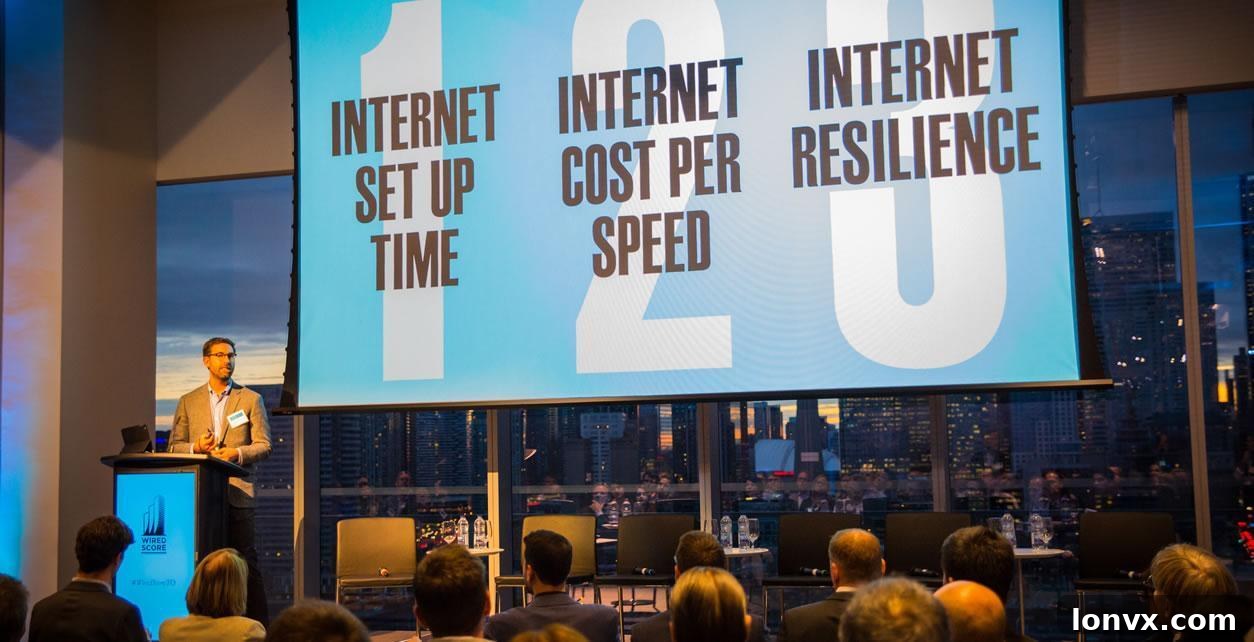
The launch event for Wired Certification in Toronto on October 26th marked a significant milestone, announcing the first Wired Certified office buildings in the city. This initiative immediately garnered strong support from Toronto’s most forward-thinking landlords and developers. Nine prominent launch partners committed to Wired Certification for their Toronto office properties, signaling a major shift in the market’s approach to digital infrastructure:
- Cadillac Fairview
- Hines
- Menkes Developments
- Ivanhoé Cambridge
- Canderel
- KingSett Capital
- Alberta Investment Management Corporation (AIMCo)
- Bentall Kennedy
- Hullmark
This impressive roster of industry leaders demonstrates a collective recognition of connectivity as a foundational element of modern office space, with more commercial landlords and developers expected to join in the coming weeks and months.
Empowering Tenants and Guiding Landlords Towards Digital Excellence
For too long, commercial tenants in Toronto have lacked reliable, standardized information regarding the quality of internet connectivity in potential office spaces. Wired Certification bridges this information gap, providing tenants with the critical data they need when evaluating office space. This transparency empowers businesses to choose locations that truly meet their operational demands, eliminating guesswork and costly surprises.
Beyond simply rating buildings, the WiredScore team actively supports commercial owners in understanding and improving the digital capacity of their properties. They also collaborate closely with developers, providing expert guidance to design superior connectivity infrastructure for new developments and comprehensively renovated properties. This proactive approach ensures that buildings are not just certified but are continually striving for digital excellence.
Wired Certification is not a regional phenomenon; it’s a globally recognized benchmark. With over four million tenants in more than 1,000 buildings worldwide trusting Wired Certification as the standard for connectivity, its entry into Toronto, as the first Canadian city, signifies a major step forward for the nation’s commercial real estate market. WiredScore has ambitious plans to expand into additional Canadian markets in 2018, further solidifying its presence and impact across the country.
Arie Barendrecht, CEO and founder of WiredScore, succinctly articulated the core challenges: “Poor planning, perceived financial burden, and a lack of understanding about how and why tenants leverage connectivity, often limits commercial real estate professionals from optimally catering to companies that demand technological infrastructure to match the sophistication of their essential day-to-day operations.” He further elaborated on the solution: “Addressing these challenges starts with standardizing how our industry approaches the building process: with a set of universal guidelines providing the simple infrastructural foresight needed to keep up with the rapid pace of technological advancement in the workplace, both now and in the future. This is why Toronto will benefit from Wired Certification.”
Beyond the Brochure: 6 Crucial Questions for Evaluating Office Space Connectivity
In a world where downtime can translate to significant financial losses and reputational damage, businesses can no longer afford to leave connectivity to chance. When seeking new office space, prospective tenants must become proactive in assessing a building’s digital readiness. Here are six crucial questions every company should ask to ensure their chosen workspace can support their technological demands:
1. What are my company’s specific telecom needs?
Before even looking at buildings, it is essential to understand your own requirements. Leverage a trusted IT advisor to help you meticulously determine your company’s critical connectivity requirements. Different businesses have varying needs: a creative agency might prioritize high upload speeds for large file transfers, while a financial trading firm demands ultra-low latency and maximum reliability. Clearly communicate your desired speed, reliability (including uptime guarantees and redundancy options), and security requirements to your landlord or broker. This detailed understanding will enable them to best assess if a building’s existing tech infrastructure aligns with your operational imperatives.
2. Which telecom providers and carriers are currently in the building?
Enquire with your broker or landlord about the internet service providers (ISPs) and carriers that already service the building. A diverse range of providers is a significant advantage. This creates a competitive environment among them, often leading to better pricing, more flexible service plans, and a wider array of options for your business. Furthermore, multiple providers can offer redundancy, meaning if one service experiences an outage, you have alternative options to maintain connectivity.
3. What specific services do these providers and carriers offer within the building?
While large providers might have a presence or connectivity “to” the building, it doesn’t automatically mean they can offer their full range of services *within* the building. This can be due to limitations in the building’s internal infrastructure. If your company heavily relies on internet-intensive applications, your best bet is to prioritize buildings with fiber-based tech services. Fiber optic technology represents the latest and most advanced available, offering superior speed, bandwidth, and reliability. Its presence is a strong indicator of how well the building’s underlying infrastructure can support your business’s current and future connectivity needs.
4. Is my potential office space specifically equipped for optimal service delivery?
Even if fiber services are technically “available” in the building, the specific office space you are leasing might not be adequately equipped. A building might advertise fiber, but in some older structures, the fiber cables may not extend directly to or near your individual office suite. Look for buildings that feature a dedicated telecom closet within your leased space, with fiber optic cables already “pulled” into it. This ensures that the high-speed connection can be delivered directly and efficiently to your workstations without needing extensive and potentially costly internal wiring installations.
5. Is the landlord willing to facilitate the entry of new providers into the building?
If your business requires specialized internet services, such as a specific fiber connection or a niche provider that isn’t currently in the building, inquire about the landlord’s flexibility. Some proactive landlords may be willing to work with your preferred internet provider to install the necessary fiber or infrastructure to the building. Don’t hesitate to ask your broker or landlord if the building management is open to bringing in new providers to meet your unique needs. This willingness can be a powerful negotiating point when securing your lease, ensuring you have access to the exact internet services your business requires to function optimally.
6. Is the building Wired Certified?
The most straightforward way to streamline this entire process and gain immediate confidence is to ask your landlord or broker if the building you are considering is Wired Certified. If it’s not, encourage your landlord to pursue certification. Wired Certified buildings are recognized as best-in-class in terms of connectivity, offering verified information about internet speed, reliability, and infrastructure. Choosing a Wired Certified building provides peace of mind, assuring you that the property can robustly support your internet-driven business now and into the future, helping you attract and retain top talent by providing a truly modern and efficient workspace.