
Defying Expectations: Why 76% of Canadian Homeowners Have No Regrets Amidst Market Shifts
In a surprising revelation from a recent Wahi survey, a significant 76 percent of Canadians who purchased a home within the last five years report having no regrets about their decision. This sentiment persists even in the face of escalating interest rates and increasingly demanding mortgage payments that have characterized the real estate landscape in recent times. The findings offer a compelling glimpse into the enduring confidence and long-term perspective of Canadian homeowners, challenging prevailing narratives of market apprehension.
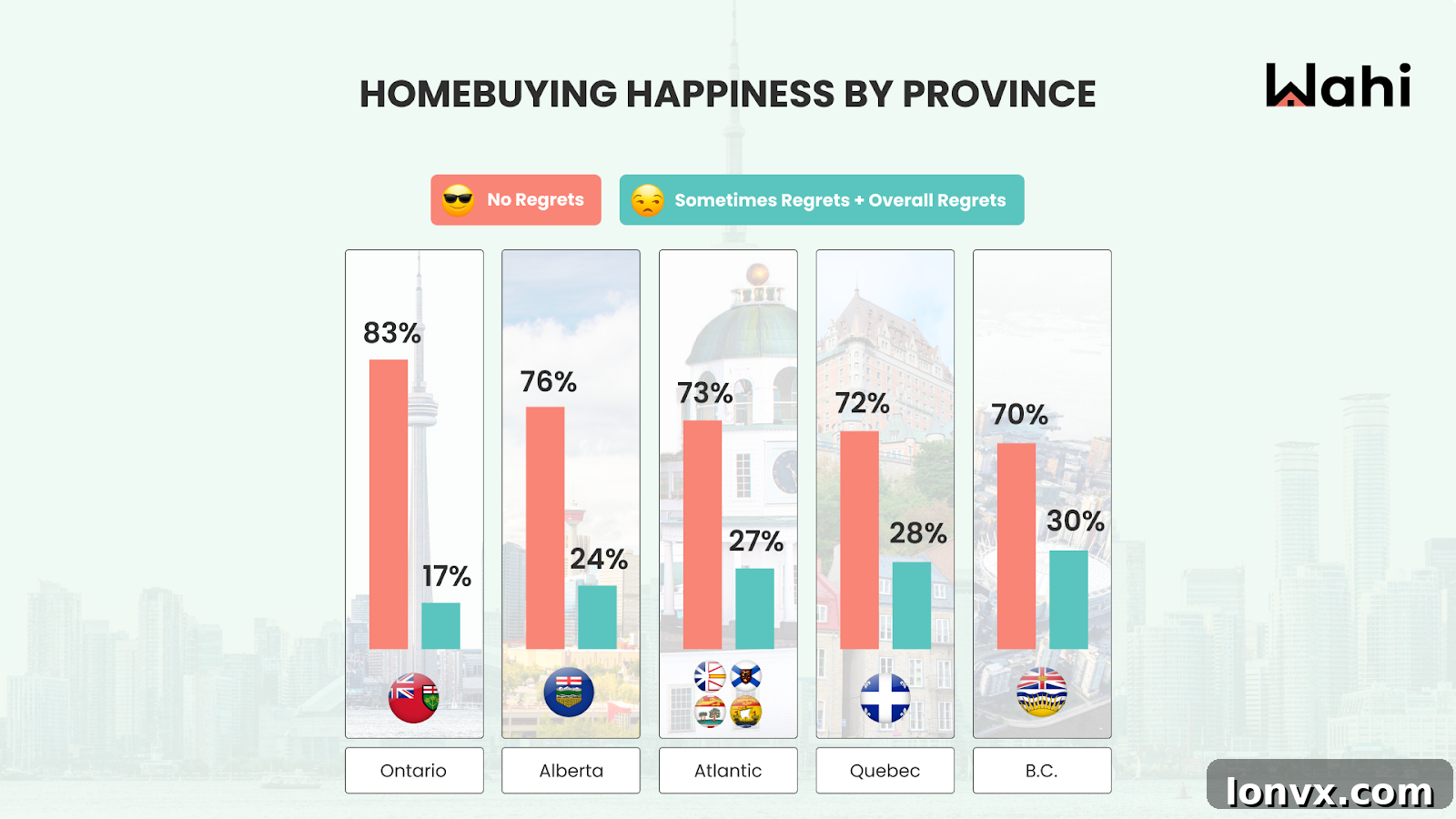
The survey further highlighted interesting regional variations in homeowner satisfaction. Homeowners in Ontario, Canada’s most populous province and a major economic hub, demonstrated the least amount of regret, underscoring a strong sense of security and satisfaction within its housing market. Conversely, residents of British Columbia, a province known for its highly competitive and expensive housing markets, indicated the highest levels of regret.
Benjy Katchen, CEO of Wahi, emphasized the deeper cultural significance of these results. “While some homeowners are undeniably facing challenges today, there are a variety of reasons for them to feel confident in their decisions,” says Katchen. “Owning a home is deeply ingrained in the culture, as Canada’s homeownership rate sits at a robust 66.5 percent.” This cultural bedrock, combined with a belief in the long-term value of real estate, appears to be a powerful shield against short-term market fluctuations and financial pressures.
Let’s delve deeper into the key findings from this illuminating survey, exploring the nuances behind Canadian homeowners’ unwavering conviction and what it signals for the future of the housing market.
Regional Dynamics: Who Regrets the Least, Who Regrets the Most?
Ontarians: Least Likely to Regret Their Home Purchase
The survey data clearly positions Ontarians as the most content homeowners. A mere 17 percent of respondents from Ontario admitted to sometimes regretting or regretting their home purchase overall. This low figure suggests a high level of satisfaction and resilience among homeowners in the province. The strong economic fundamentals of Ontario, including a diverse job market, steady population growth, and robust infrastructure development, likely contribute to this optimistic outlook. Homeowners here may perceive their investments as more stable and appreciate the quality of life and opportunities afforded by their chosen locations.
Even with affordability challenges in major cities like Toronto, the belief in the enduring value of property, coupled with potentially higher household incomes, seems to buffer the impact of rising costs. This steadfast confidence could also reflect a long-term investment strategy, where homeowners anticipate future appreciation despite temporary market headwinds.
British Columbians: Highest Levels of Regret
In stark contrast, 30 percent of British Columbian respondents reported regretting their home purchase, making them the group with the highest level of remorse. This disparity is perhaps unsurprising given British Columbia’s unique market conditions. Cities like Vancouver consistently rank among the most expensive in the world, leading to extreme affordability challenges. Homebuyers in BC often face some of the highest property values and mortgage burdens in the country, which can amplify financial stress when interest rates rise.
The combination of steep entry costs, high property taxes, and a highly competitive market might lead to buyers feeling they overpaid or made compromises on location or property type. The emotional and financial toll of maintaining such expensive assets, particularly when faced with unexpected market shifts or personal financial changes, could easily translate into higher rates of regret.
Generational Optimism: Younger Canadians Happiest About Buying a Home
One of the most encouraging findings from the Wahi survey is the strong sense of satisfaction among younger homeowners. Nearly 80 percent of Canadians aged 18-34 who have purchased a home since 2019 expressed no regret about their decision. This statistic is particularly noteworthy as this demographic often faces the steepest barriers to entry in today’s challenging market, including saving for down payments, navigating competitive bids, and securing mortgages at higher rates than previous generations.
Their optimism suggests a forward-looking perspective, likely viewing homeownership as a long-term asset and a crucial step towards financial stability and wealth building, despite immediate hurdles. This group may also have a clearer understanding of current market realities, making their decision with eyes wide open, leading to greater acceptance and satisfaction with their investment.
Comparing this to other age groups, 68 percent of respondents aged 35-54 and 80 percent of those aged 55 and older reported no regrets. While the older cohort mirrors the younger generation’s high satisfaction (likely due to having paid off mortgages or benefiting from past market appreciation), the slightly lower satisfaction among the 35-54 age group could indicate a period where financial pressures are acutely felt, perhaps balancing family responsibilities with rising mortgage costs, or having entered the market during a peak and now experiencing market corrections.
The Biggest Regret? Beyond Mortgage Rates, It’s About Choice and Responsibility
For the segment of homeowners who do express regret, the reasons extend beyond just financial concerns about rising mortgage rates. The survey pinpointed the primary sources of dissatisfaction, offering valuable insights for prospective buyers.
Choosing the Wrong Home or Location
The most common reason for regret, cited by 33 percent of those who sometimes or regularly regret their purchase, was the realization that a different home or location would have been a better fit. This speaks to the often-emotional and fast-paced nature of homebuying. Buyers might feel pressured to make quick decisions, leading to overlooking critical aspects of a property or neighborhood. Factors like commute times, proximity to amenities, school districts, noise levels, or even the long-term suitability of the property for their lifestyle can become sources of regret over time. This highlights the importance of thorough research, multiple visits, and perhaps even temporary stays in a desired area before making such a significant commitment.
The Burden of Maintenance and Repairs
Close behind, at 31 percent, was the regret associated with the responsibility of maintenance and repairs. Many first-time homeowners, or even those moving from newer properties, underestimate the ongoing costs and time commitment required to maintain a home. From unexpected roof repairs and appliance failures to routine landscaping and seasonal upkeep, the financial and physical demands can quickly accumulate. This finding underscores the need for buyers to not only budget for the purchase price and mortgage but also to allocate a significant contingency for ongoing maintenance and potential major repairs.
Rising Mortgage Rates
While often highlighted in media reports, rising mortgage rates came in third as a primary regret, affecting 24 percent of those who expressed remorse. This demonstrates that while financial pressures are real and impactful, the more tangible, day-to-day realities of homeownership – such as living in the chosen space and managing its upkeep – often outweigh the anxieties of a fluctuating financial market in terms of regret. For those impacted, the shift from historically low rates to higher ones has undoubtedly placed strain on household budgets, making fixed-rate options or careful financial planning even more critical for future buyers.
Homebuying Intentions Staying Strong Despite Affordability Challenges
Despite the prevailing headlines about high housing prices and interest rates, the dream of homeownership remains a powerful aspiration for many Canadians. The Wahi survey indicates that close to 20 percent of Canadians aged 18 and up say they probably will or may buy a home this year. This strong intent suggests that a significant portion of the population remains committed to entering or moving within the housing market, defying current affordability challenges and economic uncertainties.
To realize this enduring dream, Canadians are actively planning and adapting their financial strategies. Approximately 45 percent of prospective buyers stated they are lowering their overall spending to save more effectively. Additionally, 21 percent plan to work more hours, signaling a willingness to increase their income to better prepare financially for a home purchase this year. These proactive measures highlight a resilient and determined cohort of future homeowners who are committed to overcoming obstacles through diligent financial planning and sacrifice. This collective effort to save and earn more could sustain demand in the market, even as supply struggles to keep pace in certain regions.
Conclusion: An Unwavering Commitment to Canadian Homeownership
The Wahi survey provides a nuanced and largely optimistic perspective on the state of Canadian homeownership. Despite significant market shifts, including rising interest rates and increased living costs, the majority of recent homebuyers express profound satisfaction with their decision. This contentment is particularly strong among younger demographics and in provinces like Ontario, reinforcing the deep cultural and financial value Canadians place on owning property.
While regrets do exist, they are often tied to the practicalities of property choice and maintenance rather than solely the financial pressures of the market. The continued strong intentions to buy a home, coupled with proactive financial strategies by prospective buyers, underscore an unwavering commitment to the homeownership dream across the nation.
These findings suggest that the Canadian housing market, while certainly complex and evolving, is underpinned by a resilient homeowner base and persistent demand. For those looking to enter or navigate this market, understanding these sentiments and preparing diligently will be key to a successful and regret-free homeownership journey.
For more detailed insights and a comprehensive breakdown of the findings, you can explore the full report from Wahi.
Get more details here.
Enjoying this article?
Get the latest real estate articles and insights directly in your inbox 3x a week, keeping you up to date on the Canadian real estate industry.