Saskatchewan Renters Face Critical Housing Choices Ahead of Provincial Election
The landscape for renters in Saskatchewan is increasingly complex and contentious as the province gears up for its next election. A recent, revealing survey conducted by Rentals.ca illuminates a significant divide among the province’s rental population, shedding light on their pressing housing concerns and how these issues are poised to influence their decisions at the ballot box. This extensive survey paints a vivid picture of a demographic deeply affected by market realities and acutely aware of the political implications of housing policy.
Housing affordability has emerged as a dominant theme, resonating deeply within communities across Saskatchewan. The findings suggest that for a substantial majority of renters, the question of where they live and how much they pay for it is not merely a personal finance matter but a critical political issue that will shape the electoral outcome.
The Pervasive Crisis of Affordability: Renters’ Overwhelming Concerns
The Rentals.ca survey unequivocally highlights the severity of the affordability crisis gripping Saskatchewan’s rental market. A staggering 87.6% of respondents expressed the belief that there are insufficient affordable housing options in their local areas. This overwhelming sentiment underscores a widespread struggle to secure housing that aligns with their financial realities, indicating a systemic challenge that transcends individual circumstances.
Further solidifying the depth of these concerns, the survey revealed that 78% of renters identify high rental prices as the most pressing issue in the current market. This statistic is particularly telling, indicating that for a vast majority, the monthly cost of rent is not just a burden but the primary source of housing-related stress. High rental prices exert immense pressure on household budgets, often forcing difficult compromises on other essential expenditures like food, healthcare, and transportation. This financial strain can lead to reduced quality of life, increased stress, and even housing insecurity for vulnerable populations.
The root causes of this affordability crunch are multifaceted, often stemming from a confluence of factors including stagnant wage growth relative to housing costs, a persistent imbalance between housing supply and demand, and broader inflationary pressures impacting the overall cost of living. In many Saskatchewan communities, particularly urban centers, a limited inventory of new rental units struggles to keep pace with population growth and changing demographic needs, thereby driving up prices for available properties. This scenario creates a challenging environment for individuals and families alike, making it increasingly difficult to find stable, suitable, and affordable housing.
Policy Priorities and the Political Calculus of Rental Housing
As the election approaches, the survey delves into the specific policy areas that renters deem most critical, revealing a clear mandate for political candidates. Nearly half of all respondents, a significant plurality, emphasized that affordable housing options for low-income renters should be a top priority for political parties and candidates. This strong preference signals a desire for targeted interventions designed to support the most vulnerable segments of the rental population, such as direct housing subsidies, expansion of social housing programs, or incentives for developers to build income-restricted units.
Another key policy area attracting considerable attention is rent control. While not a majority, a notable 19.5% of renters expressed support for rent control policies. Rent control, typically involving caps on how much landlords can increase rent, is often championed as a direct mechanism to protect tenants from excessive and unpredictable rent hikes. This policy preference reflects a desire for greater stability and predictability in housing costs, which can be particularly appealing in a market characterized by rapid price increases.
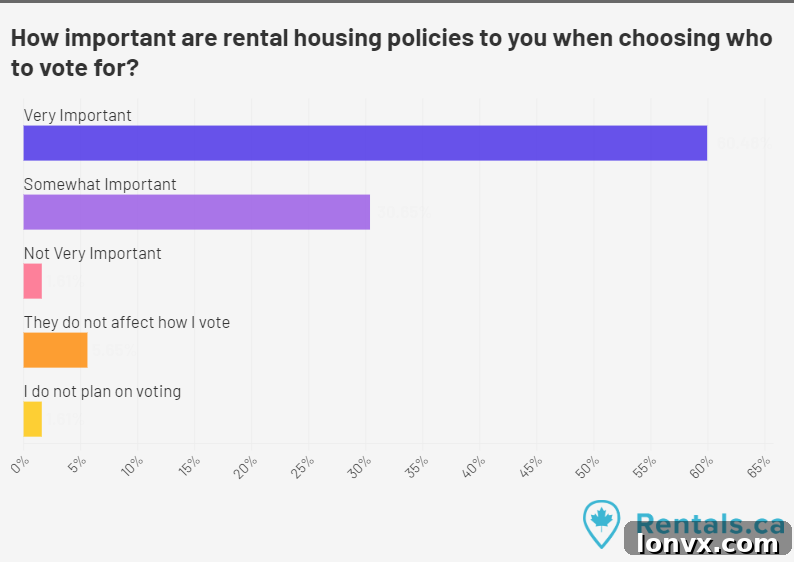
Beyond specific policies, the survey underscores the broader electoral significance of housing. Over 60% of renters unequivocally stated that rental housing policies will be a “very important consideration” in determining their vote. This statistic transforms housing from a mere social issue into a powerful electoral determinant, signaling to all political parties that their platforms must robustly address the concerns of renters if they hope to secure a significant portion of the electorate. Parties that fail to present credible and comprehensive housing strategies risk alienating a crucial voting bloc, especially in an election where affordability is so acutely felt.
The Nuance of Voter Intentions and the Rent Control Debate
Despite the clear priorities, voter intentions among Saskatchewan renters reveal a more complex political landscape. The survey indicated that support for the two leading provincial parties—the Saskatchewan Party and the New Democratic Party (NDP)—was roughly equivalent, with approximately 30% of renters backing each party. This near-even split is particularly intriguing given the distinct housing platforms often espoused by these parties, especially concerning rent control.
Max Steinman, CEO of Rentals.ca, offered a keen insight into this political dynamic. He noted, “It’s refreshing to see that renters are split, considering the NDP’s platform has promised protections for renters via rent control or rent increase caps.” Steinman’s observation highlights a fascinating aspect of the Saskatchewan renter psyche: despite the immediate appeal of rent control for some, a significant portion appears to weigh the potential long-term implications of such policies.
Steinman elaborates, suggesting that this split “shows that Saskatchewan residents have a balanced understanding of the potentially harmful impacts that rent control has in the long-term to overall housing supply and investment and upkeep in housing stock.” This perspective touches on a long-standing economic debate surrounding rent control:
- Arguments in favor of rent control: Proponents argue that it provides immediate relief to tenants, prevents predatory pricing, enhances housing stability, and reduces the risk of displacement. For low-income renters or those on fixed incomes, predictable rent can be crucial for financial planning and avoiding homelessness.
- Arguments against rent control: Critics, including many economists and housing developers, contend that rent control can lead to a reduction in the overall supply of rental housing by disincentivizing new construction. Landlords may be less inclined to invest in maintaining existing properties or developing new ones if their potential returns are capped. This can ultimately exacerbate the very affordability problems it seeks to solve by shrinking the pool of available housing and potentially deteriorating the quality of existing units over time.
The fact that a substantial number of renters are not swayed solely by promises of rent control suggests a broader awareness of these complex trade-offs. It implies that many voters are looking for sustainable, long-term solutions to the housing crisis that don’t inadvertently create new problems down the line. This nuanced understanding pushes political parties to develop more sophisticated and comprehensive housing strategies that address both immediate affordability and long-term supply challenges.
Compounding this political complexity is the finding that nearly as many renters indicated they do not plan on voting. This segment represents a significant untapped or disengaged portion of the electorate, potentially driven by disillusionment with political processes, a feeling that their concerns are not being adequately addressed, or a lack of trust in any party’s ability to deliver meaningful change. Engaging these non-voters could be a critical factor in determining the election’s outcome, underscoring the need for parties to articulate compelling and believable solutions to the housing crisis.
The Economic Landscape and Future Housing Dynamics in Saskatchewan
The survey findings exist within the broader economic and demographic context of Saskatchewan. The province, known for its resource-based economy, experiences unique housing market dynamics influenced by fluctuating commodity prices, population migration patterns, and regional economic development initiatives. While some areas might see strong demand fueled by industry growth, others might grapple with persistent challenges in attracting and retaining residents due to housing stock limitations or lack of diverse housing options.
Understanding these dynamics is crucial for crafting effective housing policy. For instance, incentives for developers to build multi-unit residential buildings in high-demand urban areas could help address supply shortages. Similarly, support for modular housing or alternative construction methods might accelerate the creation of more affordable units. The provincial government’s role extends beyond mere regulation; it involves fostering an environment conducive to investment in housing, collaborating with municipal governments on zoning and permitting, and potentially directly funding initiatives that target specific housing gaps.
Moreover, the conversation around housing must also consider the perspectives of landlords and property owners. Their willingness to invest in and maintain rental properties is directly tied to the economic viability of their operations. Policies that fail to consider their costs, such as property taxes, maintenance expenses, and insurance, could inadvertently lead to reduced investment or even the withdrawal of units from the rental market, further tightening supply.
Charting a Path Forward: Towards Sustainable Housing Solutions
The Rentals.ca survey serves as a critical barometer of renter sentiment in Saskatchewan, urging political leaders to move beyond simplistic solutions and embrace comprehensive, sustainable housing strategies. With such a significant portion of the electorate prioritizing housing policies, the upcoming provincial election presents a pivotal moment to address the affordability crisis head-on.
Moving forward, effective strategies will likely involve a multi-pronged approach:
- Supply Enhancement: Streamlining the permitting process for new residential construction, incentivizing the development of diverse housing types (including affordable units), and potentially leveraging provincial lands for housing projects.
- Targeted Support: Implementing or expanding rental assistance programs for low-income households, increasing investment in social and co-operative housing, and supporting initiatives that help prevent homelessness.
- Data-Driven Policy: Utilizing comprehensive data on rental market trends, vacancy rates, and demographic shifts to inform policy decisions, ensuring that interventions are evidence-based and responsive to actual needs.
- Collaboration: Fostering stronger partnerships between provincial and municipal governments, the private sector, and non-profit organizations to pool resources and expertise in tackling the complex challenges of housing.
The future of housing affordability in Saskatchewan will undoubtedly be shaped by the choices made by its citizens and their elected representatives in the upcoming election. The Rentals.ca survey clearly indicates that for many, these choices will be driven by the fundamental need for a secure and affordable place to call home.
For a complete understanding of the survey’s detailed findings, interested readers can review the full report.
Review the full survey findings here.