
Montreal’s Real Estate Market Roars Back: A Deep Dive into 2025’s Explosive Recovery
Montreal’s real estate market has officially kicked off 2025 with unprecedented vigor, completing a remarkable two-year recovery that has positioned the city once again as one of Canada’s most dynamic and competitive housing markets. With January sales volumes soaring and home prices continuing their steady ascent, the metropolitan area is experiencing a robust resurgence driven by renewed buyer confidence, strategic interest rate adjustments, and persistent demand.
Sales Rebound to Pre-Pandemic Levels: A Testament to Market Resilience
The latest indicators paint a clear picture of a market on a strong upward trajectory. RBC economist Robert Hogue, in his insightful monthly housing report, unequivocally declared that “Another strong advance in January effectively sealed the deal on a two-year-long market recovery in Montreal.” This significant milestone reflects a remarkable rebound, bringing market activity back to the bustling levels observed before the global pandemic disrupted economies worldwide. By Hogue’s calculations, seasonally adjusted and annualized resale transactions in Montreal have now surpassed 54,000, signaling a full return to a period characterized by robust demand and vibrant growth.
This positive trend is further corroborated by data from the Quebec Professional Association of Real Estate Brokers (QPAREB), which reported a substantial 2,812 residential sales in January 2025. This figure represents an impressive 36 percent increase compared to the same period last year, underscoring the accelerating momentum. The surge in transactions was not confined to a single segment but was observed across all property types, indicating broad-based strength. Notably, single-family homes on the coveted Island of Montreal spearheaded this growth, experiencing an outstanding 55 percent increase in transactions. This highlights the enduring appeal and strong demand for detached properties in the city’s core, often sought after by families and long-term investors alike.
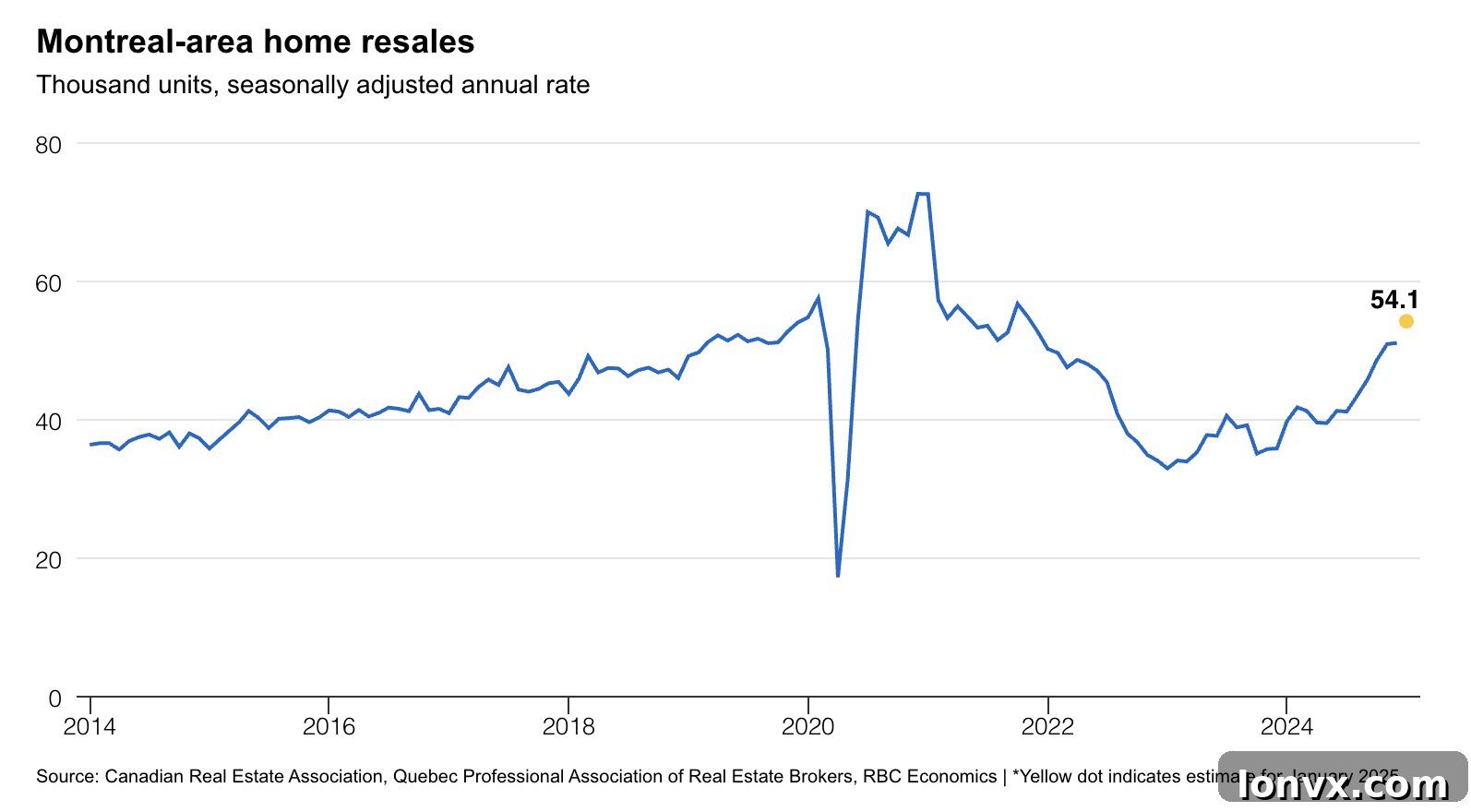
The return to pre-pandemic sales volumes is particularly significant for Montreal, a city that has consistently demonstrated strong economic fundamentals and a high quality of life. The recovery indicates that the temporary market slowdowns are now firmly in the rearview mirror, replaced by renewed confidence from both local and out-of-province buyers seeking opportunities in this dynamic urban center.
Tight Inventory Keeps Sellers in Control: Navigating a Competitive Landscape
While surging demand is excellent news for the overall health of the Montreal housing market, it simultaneously presents challenges for prospective buyers due to dwindling inventory. As more eager buyers re-enter the market, the number of active listings continues to shrink, intensifying competition. Although new listings saw a modest, seasonally adjusted increase of 11 percent from December, this influx was insufficient to significantly bolster the overall housing supply. QPAREB’s data confirms this scarcity, noting a 4 percent drop in active listings at the start of the year—a pattern not uncommon as the market recalibrates after the holiday season.
RBC’s Robert Hogue underscores the severity of this situation, emphasizing, “This did little to boost inventory, which has shrunk slightly since mid-2024. Montreal remains among the tighter markets in the country, with sellers holding a strong hand in price negotiations.” This tightness translates into a classic seller’s market, where properties often receive multiple offers, sell above asking price, and move quickly off the market. For buyers, this means the need for preparedness, quick decision-making, and often, flexibility in their search criteria.
The scarcity is particularly pronounced in sectors bordering the Island of Montreal, where less than four months of inventory is currently available. To put this in perspective, a balanced market typically has between four to six months of inventory. Anything less signals a strong seller’s advantage, giving them significant leverage in setting prices and terms. This limited supply is a confluence of factors, including steady population growth, ongoing investor interest, and a slower pace of new construction development relative to demand. The tight inventory fuels the competitive environment, making professional guidance from real estate brokers more crucial than ever for both buyers and sellers.
Prices and Demand Continue to Rise: An Upward Trajectory
The combined forces of robust demand and constrained supply have predictably led to a sustained and accelerated upward trajectory in Montreal’s home prices. The median price for single-family homes experienced a substantial increase of over 10 percent year-over-year in January, demonstrating the strong appetite for this property type. Condo apartments, a vital segment of Montreal’s urban landscape, also saw significant appreciation, with prices rising by nearly 8 percent over the same period. According to QPAREB, single-family homes were indeed the frontrunners, registering an impressive 11 percent annual increase in value, solidifying their position as a prime investment.
This consistent price appreciation is not an anomaly but rather a reflection of Montreal’s fundamental appeal. The city benefits from a diverse economy, a vibrant cultural scene, and a growing population, all contributing to sustained housing demand. As Hogue rightly anticipates, “We expect broad-based price appreciation to continue over the remainder of 2025—possibly accelerating faster.” This forecast suggests that the current growth is likely to persist, further enhancing the investment appeal of Montreal properties but also posing ongoing affordability challenges for some buyer segments.
The rising prices reflect a market where demand far outstrips supply, compelling buyers to act decisively. While this trend benefits existing homeowners and investors, it also underscores the importance for prospective buyers to enter the market with a clear strategy, understanding the competitive nature of current pricing dynamics. The continued rise in values also contributes to the overall wealth effect, boosting consumer confidence and further stimulating the local economy.
Interest Rates and Market Confidence: Fueling the Resurgence
The remarkable resurgence of the Montreal real estate market can be largely attributed to pivotal shifts in monetary policy and supportive government initiatives. Crucially, interest rate cuts implemented in October and December played a significant role in reigniting buyer interest. Lower borrowing costs directly translate to increased purchasing power and more accessible mortgage payments, effectively drawing a substantial segment of previously hesitant buyers back into the market. These rate adjustments provided the much-needed impetus after a period of higher rates had kept many potential homeowners on the sidelines.
In addition to these rate cuts, new homeownership measures introduced just before the holidays further sweetened the deal for many. While specific details can vary, such measures often include programs aimed at first-time homebuyers, enhanced tax credits, or adjustments to mortgage qualification rules, all designed to facilitate access to property ownership. QPAREB highlights the tangible impact of these combined factors, noting that nearly 20 percent of what they termed “latent demand”—buyers who had been waiting since mid-2024 for more favorable conditions—have now confidently re-entered the market. This release of pent-up demand has injected considerable energy and capital into the system.
QPAREB Market Analysis Director Charles Brant, while acknowledging the underlying currents of economic uncertainty, provided a balanced perspective. “It is true that these uncertainties have already been reflected by a slight decline in the consumer confidence index in January,” Brant stated, pointing to broader economic concerns that can temper market enthusiasm. However, he quickly added a note of cautious optimism regarding potential future support for buyers: “developments in trade relations with the United States could, as part of Canada’s economic support measures, lead to further rate cuts.” This suggests that the Bank of Canada might continue to ease rates if the economic climate and international trade dynamics warrant it, potentially offering another boost to the housing market and alleviating some of the current affordability pressures.
The Allure of Montreal: Beyond the Numbers
Beyond the raw statistics of sales and prices, Montreal’s inherent appeal continues to be a driving force behind its robust real estate market. The city offers a unique blend of European charm and North American dynamism, making it a highly desirable place to live, work, and invest. Its vibrant cultural scene, renowned universities, thriving tech industry, and a relatively affordable cost of living compared to other major Canadian cities like Toronto or Vancouver, consistently attract a diverse demographic. Strong immigration levels also contribute significantly to housing demand, as newcomers seek to establish roots in a welcoming and economically promising environment.
Montreal’s commitment to urban development and sustainable growth further bolsters its long-term real estate prospects. Ongoing infrastructure projects, revitalization efforts in various neighborhoods, and public transit expansions enhance the city’s livability and accessibility. These factors create a resilient market that not only recovers quickly from downturns but also offers sustained growth potential, appealing to both first-time homebuyers and seasoned investors looking for stable returns.
Navigating a Seller’s Market: Advice for Buyers
For individuals looking to enter the Montreal housing market in 2025, understanding the dynamics of a strong seller’s market is crucial. The current environment demands strategic planning and agility. Buyers should prioritize getting pre-approved for a mortgage to clearly understand their budget and demonstrate their seriousness to sellers. Working with an experienced local real estate agent is invaluable; they can provide insights into specific neighborhoods, identify off-market opportunities, and guide clients through competitive bidding situations. Being prepared to act quickly, having necessary documentation in order, and being flexible with viewing schedules can significantly improve a buyer’s chances in this fast-paced market. Additionally, considering different property types or neighborhoods that might offer slightly more inventory or less intense competition could open up new possibilities.
Investment Opportunities and Future Outlook
From an investment perspective, Montreal’s real estate market in 2025 presents compelling opportunities. The combination of strong demand, limited supply, and continued price appreciation suggests a healthy environment for capital growth. Rental demand also remains robust, offering attractive yields for investors. As the market stabilizes from the effects of previous rate hikes and potentially benefits from further cuts, investor confidence is likely to grow, reinforcing Montreal’s position as a key investment hub in Canada. The outlook for the remainder of 2025 appears optimistic, with experts forecasting sustained growth and a return to consistent, albeit perhaps more measured, appreciation after the initial recovery surge. While economic uncertainties always exist, Montreal’s fundamental strengths and supportive market conditions point towards continued vitality in its housing sector.
Enjoying this article?
Get the latest real estate articles in your inbox 3x week so you stay up to date on the latest in the Canadian real estate industry