Unprecedented Underbidding Reshapes GTA Real Estate Market Dynamics
The Greater Toronto Area (GTA) real estate market witnessed a dramatic shift last month, reaching unprecedented levels of underbidding. A comprehensive analysis by Wahi revealed that a staggering 98 percent of the region’s neighbourhoods found themselves in underbidding territory. This significant figure, based on an evaluation of 122 out of approximately 400 GTA neighbourhoods (those with sufficient sales activity), underscores a profound recalibration of buyer and seller expectations.
This marked a five percent increase from November 2023, representing the seventh consecutive month of growth in the share of neighbourhoods experiencing underbidding. Such a consistent trend highlights a sustained cooling in buyer enthusiasm and a notable increase in negotiating power for prospective homeowners, challenging the long-held perception of the GTA as an exclusively seller-dominated market.
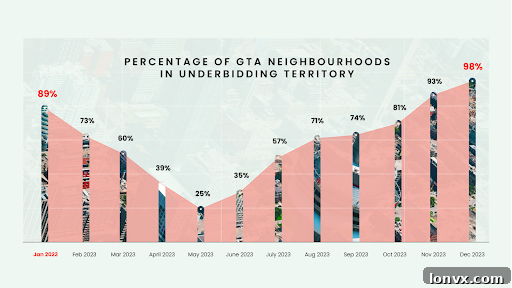
Source: Wahi
The Shifting Landscape: A Market in Transition
Of the 122 neighbourhoods evaluated, a vast majority—120—were firmly in underbidding territory. Only two neighbourhoods, Pine Valley Business Park in Vaughan and Woodbine Gardens in Toronto, maintained an asking-price equilibrium. More strikingly, the report found no neighbourhoods in overbidding territory, a stark contrast to November of the previous year when 16 neighbourhoods were experiencing bids above asking price. This complete absence of overbidding signifies a significant power shift, moving from what was once a highly competitive, fast-paced market to one where buyers have considerably more leverage.
Benjy Katchen, CEO of Wahi, points directly to the macroeconomic environment as the primary driver of these changes. “The Bank of Canada’s rate hikes last year are clearly having an impact on real estate markets across southern Ontario,” Katchen states. Indeed, rising interest rates directly affect mortgage affordability, reducing the maximum amount buyers can borrow and consequently their willingness to engage in bidding wars. This ripple effect has now fully permeated the GTA market, altering price expectations and negotiating dynamics.
Opportunities for Buyers: Navigating the New Normal
Despite the challenges posed by higher interest rates, Katchen offers an optimistic perspective for potential buyers. “That said, with interest rates recently stabilizing or in some cases even falling, now could be a great time to potentially purchase a home due to having a greater selection of properties for sale and potentially being able to cut a sharper deal than even just a few months ago,” he elaborates. This sentiment highlights a critical window of opportunity. A market characterized by underbidding typically offers:
- Increased Inventory: As properties stay on the market longer and sellers adjust to the new reality, buyers often find a wider selection of homes to choose from.
- Enhanced Negotiating Power: The prevalence of underbidding means buyers are less likely to face intense competition, allowing them to negotiate on price, terms, and conditions. This can lead to significant savings and more favorable purchase agreements.
- More Deliberate Decision-Making: Without the pressure of frenzied bidding wars, buyers have more time to conduct due diligence, secure financing, and make informed decisions, reducing the risk of buyer’s remorse.
For those who have been priced out or sidelined during the previous hyper-competitive phases, this period of market adjustment presents a unique chance to enter the GTA housing market on more advantageous terms. The key for buyers now is preparation: securing pre-approval, understanding market comparables, and working with experienced real estate professionals who can guide them through the negotiation process.
GTA’s Top 5 Underbidding Neighbourhoods: A Closer Look
The Wahi analysis further reveals that, consistent with previous trends, the most significant underbidding amounts were observed in the GTA’s most expensive areas. Neighbourhoods like Old Oakville, Eastlake, The Annex, and Deer Park, known for their premium properties and affluent residents, experienced the largest median underbid amounts. This trend suggests that higher-value properties are often more sensitive to shifts in market sentiment and financing costs, as even a small percentage reduction in price translates into substantial dollar figures.
Interestingly, East Woodbridge in Vaughan emerged as an exception to the pattern of underbidding being concentrated solely in traditionally expensive areas. Its inclusion in the top five indicates that underbidding is not exclusive to luxury markets but can also impact a broader range of desirable communities within the GTA, especially those experiencing rapid development or changing demographics.
| Rank | Neighbourhood | Median underbid amount | Median sale price |
| 1 | Old Oakville | -$449,000 | $3,550,000 |
| 2 | Eastlake, Oakville | -$250,000 | $3,900,000 |
| 3 | The Annex, Toronto | -$145,000 | $1,750,000 |
| 4 | East Woodbridge, Vaughan | -$128,000 | $1,100,000 |
| 5 | Deer Park, Toronto | -$123,500 | $1,989,000 |
Analysis of Top Underbidding Neighbourhoods:
- Old Oakville and Eastlake, Oakville: These highly sought-after lakeside communities are synonymous with luxury. A median underbid of nearly half a million dollars in Old Oakville and a quarter-million in Eastlake highlights how changes in market sentiment, particularly among high-net-worth buyers, can significantly impact the final sale price of multi-million dollar properties. Even a slight hesitation or increased negotiation in this segment can lead to substantial price adjustments.
- The Annex and Deer Park, Toronto: Two of Toronto’s most prestigious and historic neighbourhoods, known for their elegant homes and prime locations. The median underbids here, while lower in absolute terms than Oakville’s top two, still represent significant discounts off asking prices, reflecting the broader market trend affecting even the most resilient segments of the Toronto market.
- East Woodbridge, Vaughan: Its appearance on this list is particularly noteworthy. While a desirable area, it typically isn’t classified alongside the ultra-luxury markets of Oakville or central Toronto. This suggests that the impact of underbidding is not confined to the highest echelons of the market but is beginning to extend to a wider array of well-established, family-oriented communities, indicating a more widespread market correction. The median sale price of $1,100,000 in East Woodbridge puts it in a more accessible bracket for many GTA buyers compared to the other neighbourhoods on the list, making the underbidding trend here particularly impactful for a larger segment of the buying public.
Median Underbid Amount Across Southern Ontario
Beyond the top five neighbourhoods, the broader GTA median underbid amount last month stood at $24,900. This figure provides a crucial benchmark for buyers and sellers across the region. When considering the median underbid amount as a proportion of the median sold price, several other Southern Ontario cities showed comparable underbidding dynamics with the GTA, registering approximately -3 percent. These cities include Hamilton, London, Waterloo, Barrie, St. Catharines, and Kingston.
This regional consistency indicates that the market forces driving underbidding are not isolated to Toronto and its immediate surroundings but are part of a wider trend across Southern Ontario. The Bank of Canada’s monetary policy, combined with evolving buyer confidence and inventory levels, appears to be influencing housing markets far beyond the GTA’s borders. For buyers, this means that the increased negotiating power and opportunities for sharper deals are likely available in many urban centers across the province, not just the GTA. For sellers, it underscores the importance of realistic pricing strategies and market-savvy real estate advice to navigate these new conditions effectively.
What This Means for the Future of GTA Housing
The current market dynamics suggest a recalibration rather than a collapse. While the widespread underbidding points to a buyer’s market, the underlying demand for housing in the GTA remains strong due to population growth and immigration. The stabilization, and potential future decline, of interest rates could inject renewed confidence into the market, potentially moderating the underbidding trend in the medium term. However, the days of automatic overbidding appear to be firmly in the past, at least for the foreseeable future.
For sellers, adjusting expectations and pricing properties competitively from the outset will be crucial. Understanding the median underbid amounts in their specific neighbourhood, and across the GTA, can help in setting realistic asking prices that attract serious buyers. For buyers, the current environment is ripe with opportunity, but it demands patience, strategic negotiation, and thorough market research. The focus should be on value, long-term investment, and securing favorable terms rather than rushing into decisions.
Ultimately, the latest Wahi report paints a clear picture of a real estate market undergoing a significant transformation. The era of rampant overbidding has given way to a landscape where negotiation is king, and buyers are regaining their footing. This shift, driven by monetary policy and evolving market sentiment, offers both challenges and distinct opportunities for all participants in the GTA’s vibrant housing sector.
Read the full report here.
Enjoying this article?
Get the latest real estate articles in your inbox 3x week so you stay up to date on the latest in the Canadian real estate industry.