The journey of a real estate professional is often punctuated by moments of ethical and legal ambiguity, where the path forward isn’t always clear-cut. From navigating unexpected property issues to balancing client interests with moral obligations, these scenarios test the very foundation of professional integrity. Early in my career, I encountered a particularly challenging situation while listing an acreage property, the home of an acquaintance and his family. The calm of a typical workday was shattered by an anonymous phone call, delivering unsettling news: the seller allegedly faced problems with their septic system freezing during Alberta’s harsh winters. This was an era before the convenience of caller ID and the widespread adoption of mandatory property inspections, leaving agents to grapple with unverified claims and their potential ramifications.
Years later, approximately fifteen years ago, another incident unfolded during the sale of a home in Edmonton. The city was hit by one of those rare, “one-in-a-hundred-year” rainfall events, leading to widespread basement flooding across many residences. In my clients’ home, a small, isolated puddle of water appeared in one corner of the basement. While seemingly minor compared to the broader devastation, this incident raised critical questions about disclosure and responsibility. Both situations, though distinct, presented classic real estate disclosure dilemmas, forcing a difficult contemplation of what constitutes the ‘right thing to do’ in a profession built on trust and transparency.
Understanding Legal and Ethical Obligations in Real Estate
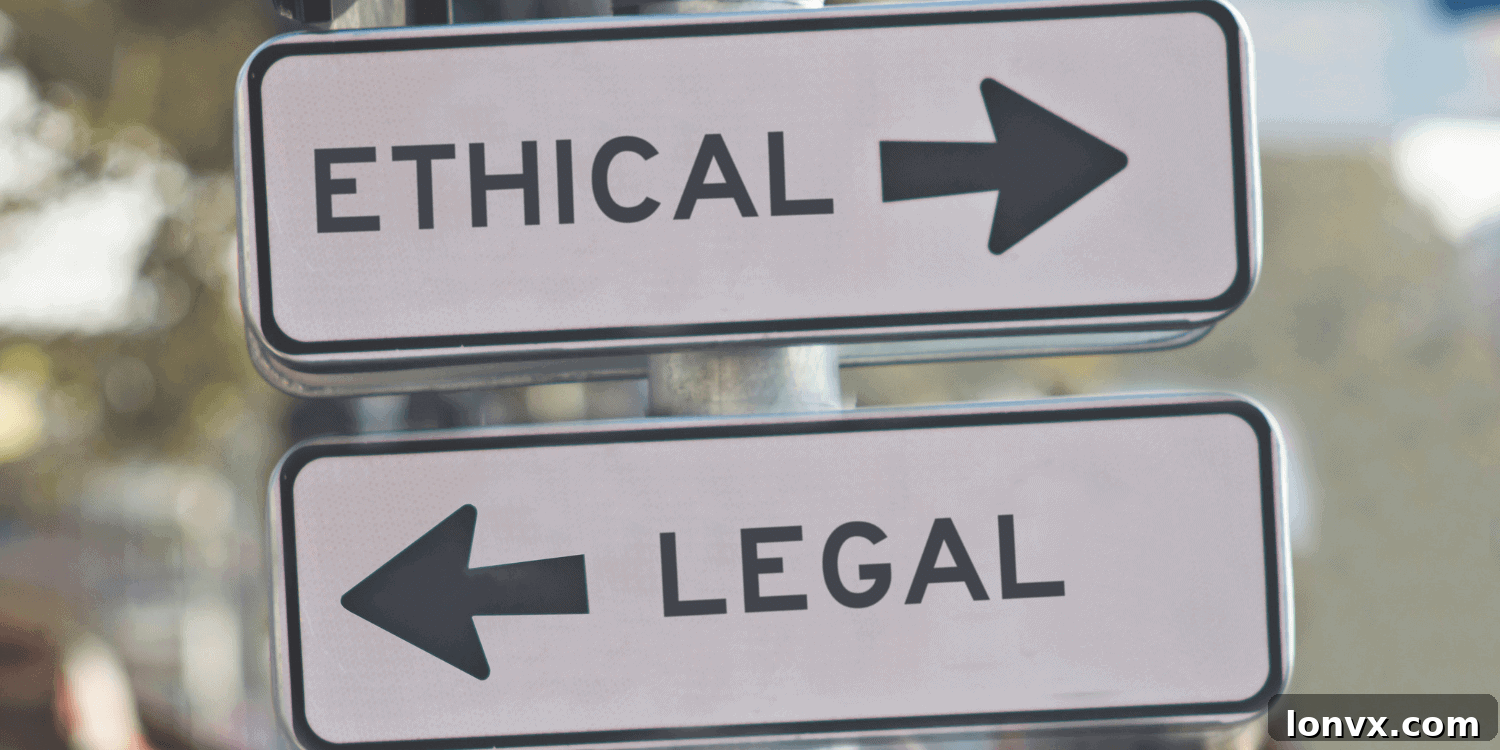
Real estate professionals frequently encounter scenarios that blur the lines between what is legally permissible and what is ethically sound. While our legal obligations are often enshrined in statutes, regulations, and industry standards, our ethical duties delve into the moral compass guiding our actions. The challenge lies in harmonizing these two critical components, especially when they appear to diverge. The Real Estate Institute of Canada (REIC), through its highly respected ethics course REIC 2600, provides a profound definition: “Ethics is the difference between what we have a right to do (legal) and the right thing to do (ethics).” This distinction is not merely academic; it forms the bedrock of professional conduct and client trust in the real estate industry.
Navigating this complex landscape requires more than just adherence to rules; it demands a deep understanding of fiduciary duties, the principle of good faith, and a commitment to protecting all parties involved in a transaction. For real estate agents, the obligation to act honestly and with integrity is paramount. However, interpreting this obligation in the face of unverified information or isolated incidents can be incredibly taxing. The question then becomes: given this framework, how do we proceed? What choices are truly ethical, and what actions uphold our professional responsibilities while protecting our clients’ interests? These are the questions that define a real estate professional’s toughest moments, shaping their reputation and the public’s perception of the industry.
Scenario #1: The Anonymous Tip and the Septic System
The initial scenario, involving the anonymous tip about a freezing septic system, presented an immediate ethical quandary. The fundamental rule in real estate is clear: agents cannot knowingly withhold information that could materially affect a property’s value or desirability. My first step was to address this serious allegation with my clients. Depending on their response and instructions, I would then have to determine if I could ethically continue to represent them. As a young agent eager to establish my career and earn income, I distinctly remember wishing this problem would simply disappear. The pressure to complete the sale was undeniable, yet the weight of my professional responsibility was equally heavy.
My clients expressed complete surprise, vehemently denying any issues with their septic system. They owned horses, and several bales of straw were arranged in their backyard, which didn’t immediately raise suspicions, though I privately pondered the unusual arrangement. My broker, a seasoned professional, pointed out a crucial detail: the caller was anonymous. What if this was a malicious attempt by someone with an “axe to grind,” seeking to sabotage the sale? Disclosing unverified information, if false, could have severe negative repercussions for my sellers, potentially leading to lost sales or even legal action. Conversely, if the allegation were true, failing to disclose would expose buyers to significant future problems and myself to professional liability. In the absence of concrete evidence, and with my clients’ firm denials, I concluded that an anonymous phone call alone was insufficient proof to warrant disclosure. I was not an expert in septic systems, and I had no compelling reason to distrust my clients.
An important concept that became clear to me much later was the “buyer beware” principle, or caveat emptor, particularly relevant to readily observable conditions or those discoverable through reasonable due diligence. In this instance, a knowledgeable person, understanding septic systems in cold climates, might have recognized the strategic arrangement of straw bales as a crude attempt to insulate a problematic system. This was a “dead giveaway” I failed to identify at the time, highlighting the evolving nature of an agent’s expertise and the limitations of their responsibility regarding obvious, yet undisclosed, issues. While I never heard of any post-sale issues from the buyers, leaving the ultimate truth unresolved, the peculiar placement of the straw bales remained consistent with the less desirable scenario, serving as a lasting lesson in astute observation and the complex layers of property disclosure.
Scenario #2: The Basement Puddle and Latent Defects
The second scenario involved a small puddle in the basement after an extraordinary rainfall event. My clients, again, expressed surprise, asserting they had never experienced water issues in the seventeen years they had lived in the home. This situation was complicated by two significant factors: I had a familial relationship with the clients, adding a layer of personal conflict to the professional dilemma, and more critically, if the water ingress was indeed a recurring issue rather than an isolated incident, it could constitute a material latent defect. Under real estate law, both I and my clients would have a clear legal and ethical obligation to disclose such a defect to potential buyers.
A material latent defect is a hidden flaw that would not be discovered by a reasonable inspection and that renders the property dangerous or unfit for habitation, or affects its value substantially. Determining if this single incident qualified as such a defect was paramount. Disclosing a one-off event that was merely a consequence of an unprecedented weather anomaly could unfairly prejudice my sellers, implying a chronic problem where none existed. Conversely, failing to disclose a recurring issue, masked by the extreme weather event, would be a clear breach of my duties to the buyer and could lead to significant legal repercussions. Faced with this “no-win” situation, I sought counsel from my real estate lawyer, a common and advisable step for agents grappling with complex disclosure issues.
My lawyer’s advice, combined with my intimate knowledge of my clients and their consistent claims of no prior water problems, reinforced my initial assessment. Given the unprecedented severity of the rainstorm, it was plausible that this isolated incident was a direct result of the extraordinary weather, rather than an indication of a systemic and recurring basement water problem. Based on this, I made the difficult decision not to disclose the incident as a material latent defect. However, it is crucial to remember that legal obligations demand honesty. When a couple of buyers’ agents later specifically inquired about any past water problems, I was legally bound to answer truthfully. My honest response, in line with my clients’ assertions and my own assessment, was that this single incident was directly attributable to the historic storm. The home successfully sold, passed inspection without any further issues raised regarding water intrusion, and I never heard back from the buyers, giving me hope that my decision was indeed the correct one.
Navigating Disclosure: Best Practices and Ethical Considerations
These two scenarios underscore the multifaceted nature of disclosure in real estate, demonstrating that the “right” decision is rarely straightforward. While non-disclosure can sometimes be the correct response, particularly when claims are unsubstantiated or incidents are clearly isolated and not indicative of a defect, the default position for any real estate professional should always lean towards transparency. When sufficient evidence points to a potential issue that could affect a property’s value or desirability, full disclosure is not just an ethical imperative but often a legal requirement.
To navigate these challenging waters effectively, real estate agents must adopt several best practices. Firstly, fostering open and honest communication with clients is paramount. Agents must educate sellers on their disclosure obligations and encourage them to reveal any known issues, however minor they may seem. Secondly, robust documentation of all conversations, inquiries, and decisions is critical. This creates a clear audit trail that can protect agents and clients in the event of future disputes. Thirdly, agents should never hesitate to seek legal counsel when faced with ambiguous situations, especially concerning potential material latent defects or unverified claims. A lawyer specializing in real estate can provide invaluable guidance, helping to interpret complex laws and regulations.
Furthermore, understanding the evolving landscape of disclosure laws and the nuances of concepts like “buyer beware” and “material latent defect” is essential. While caveat emptor still holds some sway, its application has significantly diminished, particularly with respect to hidden defects that sellers or their agents should reasonably know about. The emphasis is increasingly on protecting buyers through mandatory disclosures. Ultimately, the reputation of a real estate professional is built on integrity. Making ethical choices, even when difficult, reinforces public trust in the industry and ensures fair dealings for all parties involved. Did I make the right choices in those moments? The outcomes were positive, but the internal debate and the complexities of the decisions resonate even today, reminding us that ethical vigilance is a continuous journey in real estate.