Unmasking Greedflation: How Corporate Profits Drive Canada’s Cost of Living Crisis
The term “greedflation” has become a stark reality for many Canadians, describing a worrying economic phenomenon where corporate profits surge far beyond inflation rates, directly contributing to a significant rise in the cost of living. A recent study by Money.ca delves deep into this issue, revealing how corporate profiteering acts as a potent driver behind the escalating financial strain on Canadian households.
“Some economists are quick to dismiss ‘greedflation’ as merely a buzzword,” observes Cory Santos, finance editor at Money.ca and the author of the insightful report. “However, one must question that dismissal when official figures indicate a declining inflation rate, yet consumer prices continue their upward trajectory, corporate profits hit record highs, and the average Canadian’s hard-earned savings progressively dwindle. What else could explain such a discrepancy?”
Santos emphasizes that in the face of such economic pressures, robust financial education and the adoption of astute budgeting techniques stand as the most formidable defenses against economic exploitation. These tools, he argues, are paramount to achieving long-term financial security. “By actively learning and consistently applying these best practices, Canadians can empower themselves with the essential knowledge and practical skills required to effectively navigate and mitigate the challenges posed by ‘greedflation’ within their personal finances.”
Corporate Profits: A Dominant Factor in Post-Pandemic Inflation
Since the onset of the global pandemic, Canadians have endured an unprecedented and steep rise in their cost of living. Inflation reached a staggering 6.8 percent in June 2022, a peak not seen in nearly four decades. While the inflation rate has shown signs of stabilization, hovering around 2.3 percent as of May 2024—a figure below the country’s historical average of 3.15 percent from 1915 to 2024—prices in numerous critical industries stubbornly remain elevated, demonstrating a disconnection between headline inflation figures and everyday expenses.
A comprehensive report from the Groundwork Collaborative sheds critical light on the true drivers behind these persistent price increases. It reveals that corporate profits accounted for an astonishing 53 percent of inflation during the second and third quarters of 2023. This figure marks a dramatic and concerning escalation when compared to the pre-pandemic era, where corporate profits contributed a mere 11 percent to overall price growth. Further corroborating this trend, FactSet, a leading U.S.-based financial data company, notes that the profit growth rate for S&P 500 companies stands at an impressive 9.8 percent, representing the highest year-over-year earnings growth rate observed in many years. These statistics underscore a profound shift in the economic landscape, where corporate balance sheets appear to benefit disproportionately from inflationary pressures.
Understanding the Mechanism of Greedflation: More Than Just Rising Costs
The concept of “greedflation” challenges the traditional view of inflation being solely a consequence of supply-demand imbalances or increased production costs. Instead, it posits that a significant portion of current price hikes stems from corporations leveraging economic instability and their market power to widen profit margins beyond what is necessary to cover their own increased expenses. This opportunistic pricing strategy transforms a challenging economic environment into a period of unprecedented profitability for many large enterprises, placing an undue burden on consumers.
Economists who acknowledge greedflation point to several factors enabling this phenomenon. These include reduced competition in key sectors, which grants dominant companies more pricing power; disruptions in global supply chains, which provide a convenient justification for raising prices even when specific input costs might not have risen proportionally; and a general environment of high demand post-pandemic, which allows businesses to test higher price points without significant pushback from consumers. The result is a cycle where consumers pay more, not just because things cost more to make, but because companies choose to make higher profits.
Key Findings Unveiled by the Money.ca Report
The Money.ca report offers several crucial insights into the nature and impact of greedflation on the Canadian economy:
Inflation Primarily Driven by Corporate Profits
One of the most striking findings is the unequivocal evidence that companies have significantly accelerated their price increases, doing so at a pace far exceeding any corresponding rise in their operational costs. This aggressive pricing strategy has made corporate profits an exceptionally high contributor to the overall inflation rate. This observation directly contradicts earlier narratives, particularly from 2021, which suggested that corporate greed played a comparatively minor role, perhaps contributing only about 10 percent to the year’s inflation. The current data paints a very different and more alarming picture, highlighting a substantial shift in how inflation is being generated and sustained.
Increasing Costs Are Systematically Passed On to Consumers
Large corporations are not merely absorbing rising costs; they are actively streamlining their budgets and adjusting their pricing models with a clear objective: to maximize their profit margins. A core strategy in this approach involves the direct transference of additional operational expenses, such as increased shipping costs, directly onto the shoulders of consumers. This is achieved by embedding these surcharges into higher final prices for goods and services. This practice effectively shields corporate profitability at the expense of household budgets, making consumers bear the full brunt of any economic fluctuations or supply chain inefficiencies that might arise.
Profound Impact on Everyday Canadian Consumers
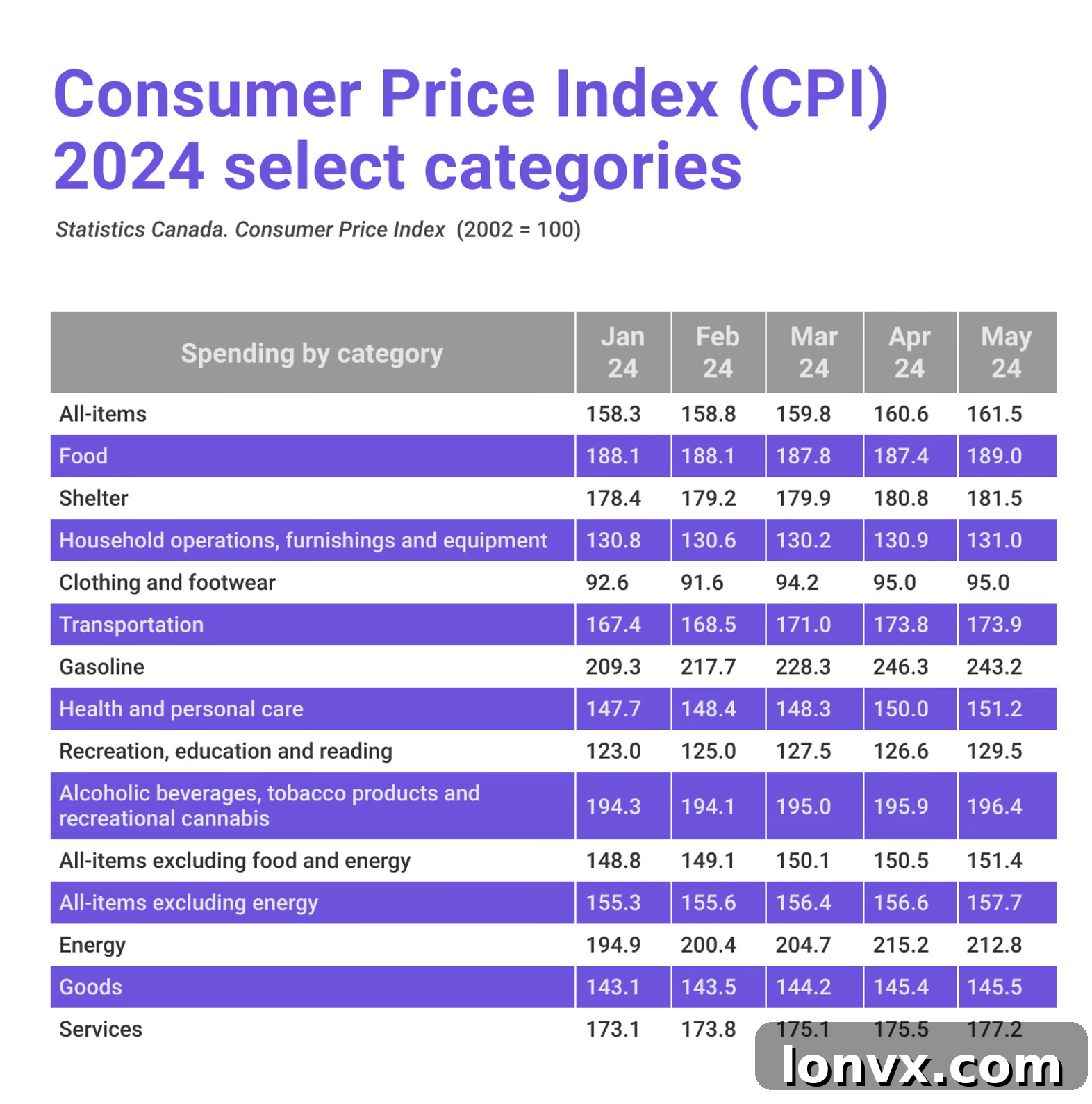
The ripple effect of these inflated prices has been particularly severe and pervasive, striking at the very core of essential commodities that form the backbone of daily life for Canadians. Food and fuel, two non-negotiable necessities, have borne the brunt of these price surges. For instance, while the general rate of food inflation reached an alarming peak of 8.8 percent in 2022, the unfortunate reality for consumers is that prices for many food items continue to remain stubbornly high, even as the overall inflation rate has started to recede. This decoupling of food prices from general inflation metrics signifies a deeper, more structural issue.
The financial burden is starkly illustrated by projections for family food costs. The average cost of food for a typical family of four is anticipated to reach an astounding $16,297.20 in 2024. This represents a significant increase of $701.79 from the previous year, 2023. Such figures highlight the immense pressure on household budgets, forcing families to make difficult choices, potentially sacrificing nutritional quality, reducing discretionary spending, or accumulating debt to cover basic necessities. The pervasive impact of these elevated prices extends beyond just food and fuel, touching upon housing, transportation, and every other facet of consumer spending, fundamentally reshaping the financial landscape for millions of Canadians.
Beyond Necessities: The Broader Economic Strain
While food and fuel are immediately felt, the tentacles of greedflation extend further, impacting various sectors and services. Housing costs, though influenced by unique market dynamics, also feel the upward pressure as businesses involved in construction, maintenance, and property management pass on higher operational costs and seek increased profits. Transportation, from public transit fares to vehicle maintenance, experiences similar hikes. The cumulative effect is a significant erosion of purchasing power for Canadian consumers, leading to reduced savings, increased reliance on credit, and a palpable decline in overall financial well-being.
Empowering Canadians: The Path Through Financial Education and Smart Budgeting
In an economic climate defined by such pervasive and often opaque pricing strategies, the importance of robust financial literacy and strategic budgeting cannot be overstated. These are not merely defensive tools but essential mechanisms for individual empowerment and long-term financial resilience.
The Imperative of Financial Literacy
Financial education equips individuals with the knowledge to understand complex economic terms like inflation, interest rates, and profit margins. It enables them to critically analyze price increases, differentiate between legitimate cost-driven inflation and profit-driven price hikes, and make informed decisions about their spending and savings. Understanding how economic forces, including corporate strategies, impact personal finances is the first step towards taking control.
Key areas of financial education include:
- Understanding Inflation: Not just the number, but its real-world impact on purchasing power.
- Recognizing Market Manipulation: Learning to identify when prices are disproportionate to actual costs.
- Debt Management: Strategies for avoiding high-interest debt and reducing existing burdens.
- Saving and Investing: Building a secure financial future through smart savings and growth.
- Consumer Rights: Knowing what recourse is available if unfair pricing practices are suspected.
Practical Strategies for Smart Budgeting
Armed with financial knowledge, smart budgeting becomes a powerful weapon against greedflation. It moves beyond simply tracking expenses to becoming a proactive strategy for optimizing every dollar.
Effective budgeting techniques include:
- Detailed Expense Tracking: Knowing exactly where money is going helps identify areas for reduction. Utilize apps, spreadsheets, or pen and paper to categorize and monitor spending.
- Creating a Realistic Budget: Allocate funds to categories like housing, food, transportation, and discretionary spending. The 50/30/20 rule (50% for needs, 30% for wants, 20% for savings/debt) can be a helpful starting point.
- Distinguishing Needs from Wants: In an era of high prices, prioritizing essential needs becomes paramount. Re-evaluate discretionary spending and identify areas where sacrifices can be made without compromising well-being.
- Meal Planning and Grocery Optimization: Given the significant rise in food costs, strategic meal planning, buying in bulk when practical, utilizing sales, and reducing food waste can yield substantial savings.
- Energy Conservation: Implementing energy-saving habits at home can reduce utility bills, a significant recurring expense for many households.
- Seeking Alternatives: Actively look for more affordable substitutes for products and services. This might involve switching brands, exploring discount retailers, or utilizing public services where available.
- Building an Emergency Fund: A robust emergency fund provides a crucial safety net, preventing the need to incur high-interest debt during unexpected financial challenges.
By diligently applying these practices, Canadians can not only navigate the current economic turbulence but also build a foundation for lasting financial security, even in the face of widespread economic shifts driven by corporate strategies.
The full study on “greedflation” in Canada is available for review here, offering further data and insights into this critical economic issue.