Decoding the GTA Real Estate Market: What Open House Trends Reveal
Navigating the complexities of the current real estate market can feel like an impossible task, with countless factors influencing its trajectory. While economists and analysts pore over intricate data, there’s a more visible and often overlooked barometer that offers real-time insights: open houses. These weekend spectacles are not just opportunities for potential buyers to peek inside homes; they are a direct reflection of market conditions, sometimes in surprising and counter-intuitive ways.
The frequency of open houses—whether more or fewer are being held—can signal significant shifts in buyer and seller dynamics. Understanding this trend provides a unique lens through which to view the Greater Toronto Area (GTA) housing market, revealing underlying pressures and emerging patterns.
A Remarkable Surge: Open House Activity in the Greater Toronto Area
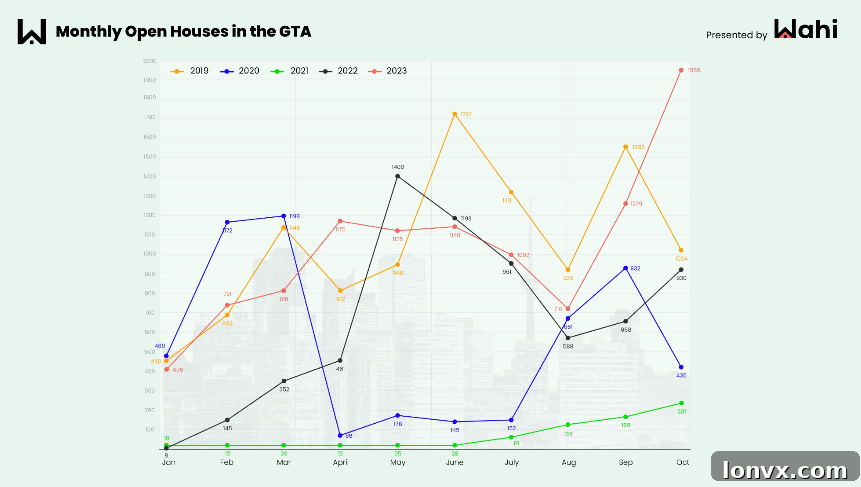
Recent data indicates a substantial surge in open house activity within the Greater Toronto Area. Wahi, a rapidly expanding digital real estate platform across Canada, reported a remarkable increase, paralleled by trends in other major Canadian centers like Vancouver, as noted by recent Royal LePage statistics. This isn’t just a minor fluctuation; it’s a significant shift that demands attention.
Benjy Katchen, CEO of Wahi, highlighted the astonishing numbers: “There were 1,965 open houses across the GTA in October, making it the biggest month since at least 2019 in any month through all periods. In October 2022, there were 930, so it’s more than double that now.” This phenomenal growth represents not just a post-pandemic recovery, but an unprecedented level of activity, even surpassing pre-COVID figures from October 2019. The robust activity seen in September further solidified a phenomenally busy fall for open houses, signaling a crucial period of change in the Toronto housing market.
Unpacking the Data: Why the Volume Increase?
This dramatic increase in the volume of open houses isn’t merely a coincidence; it’s a response to evolving market dynamics. Sellers and their agents are increasingly utilizing open houses as a primary tool to attract attention in a market that has become less predictable. The traditional notion that a high number of open houses signifies a booming seller’s market is being challenged. Instead, this surge could be interpreted as a strategic necessity, where sellers are striving to maximize exposure and engagement in a landscape where buyers hold more leverage.
The underlying causes for this strategic shift are multifaceted, including fluctuating interest rates, evolving buyer confidence, and a general recalibration of pricing expectations. By holding more open houses, agents aim to cast a wider net, hoping to capture a segment of buyers who might be hesitant or overwhelmed by the sheer volume of online listings. It represents a proactive effort to generate interest and, ideally, offers, in a market that no longer guarantees swift, multiple bids.
The Shifting Sands: Open Houses in a Buyer’s Market
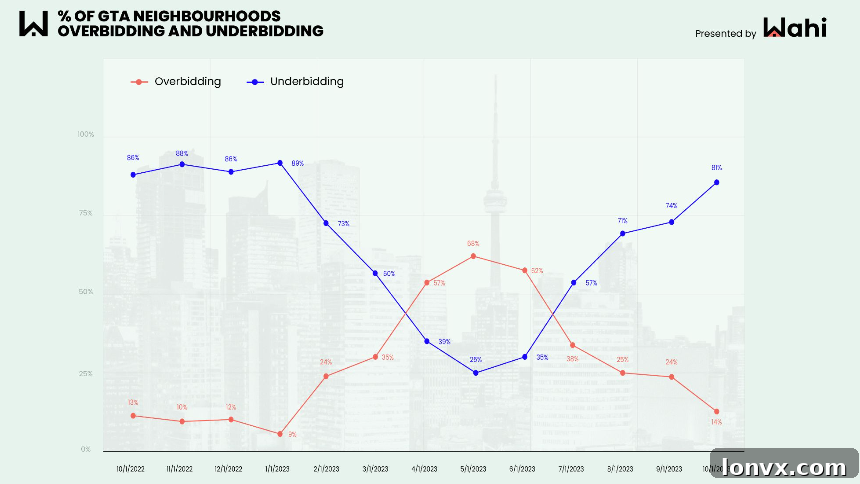
“The open house is back, I’d say,” asserts Katchen, a statement that at first glance might seem like a positive indicator for sellers. However, the reality is more nuanced. Katchen explains that this resurgence, coupled with findings that “we’re in underbidding territory” in a staggering 81% of GTA neighborhoods according to Wahi’s research, points to early signs of a market that is not just shifting, but potentially “fraying.” This implies a transition from the frenzied seller’s market of recent years to one where buyers wield significantly more power.
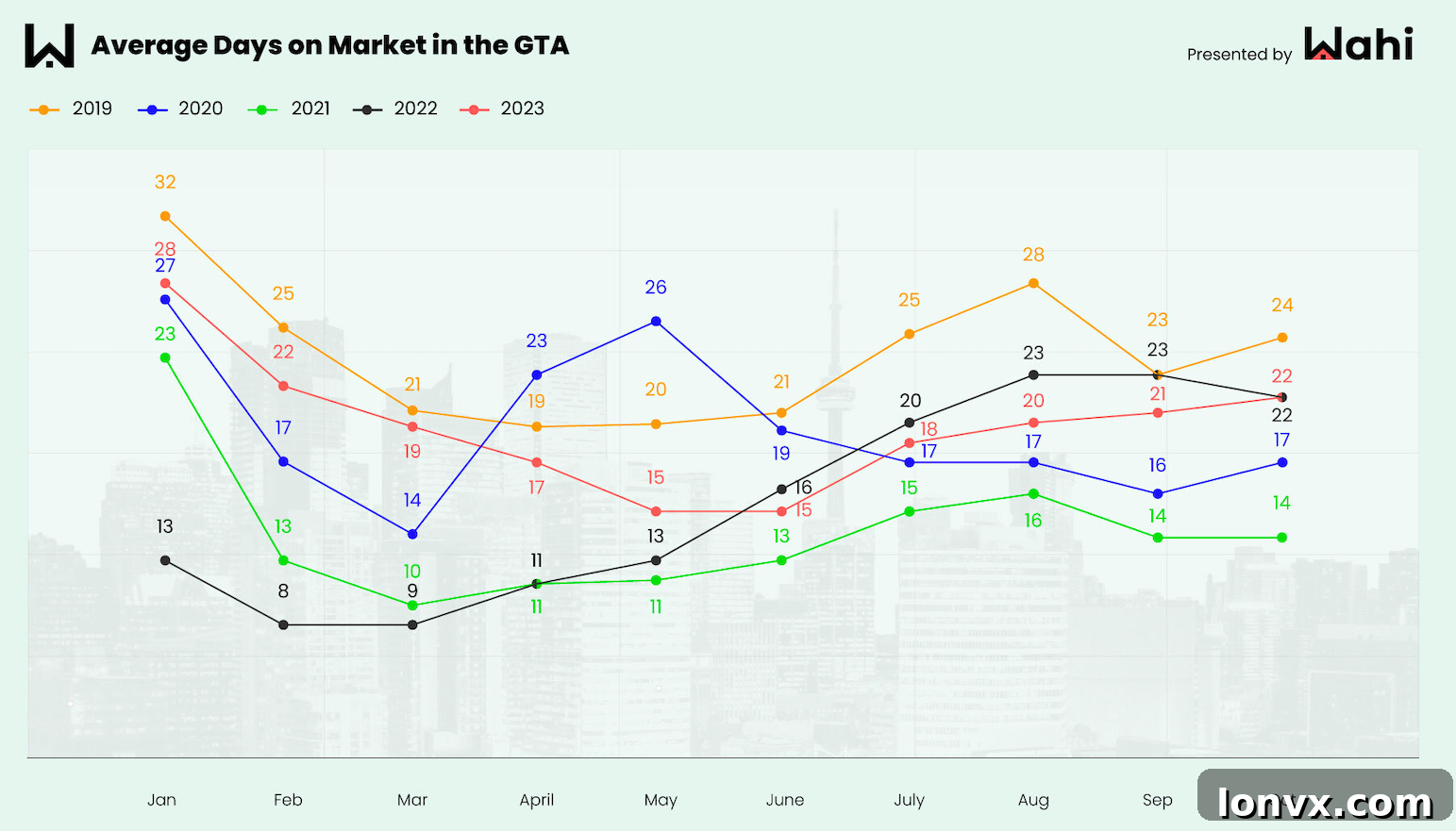
Further compounding this complex picture are the days-on-market statistics, another key gauge of real estate activity. While these figures have remained relatively stable, hovering in the low 20s, Katchen predicts an imminent rise. This stability might be a deceptive calm before the storm, as properties that struggle to sell might be withdrawn and relisted, artificially keeping the average days on market lower than they truly are. This creates a “funny market,” as Katchen describes it, where surface-level metrics don’t always tell the full story of underlying market stress.
The trend of homebuyers consistently purchasing properties for under the asking price is gaining momentum, directly impacting sellers who are finding it increasingly difficult to achieve their desired figures. “We’re seeing a bit of a cooling off,” notes Katchen, a clear indication that the market equilibrium is shifting away from sellers’ favor. This adjustment in pricing power is not uniform across all segments of the market. Analysis shows that the neighborhoods experiencing the most significant underbidding trends this year tend to be the more expensive ones, where asking prices are often higher. Conversely, areas that still see some overbidding activity generally feature comparatively lower list prices, suggesting a strong demand for more affordable housing options even in a cooling market.
More Than Meets the Eye: Open Houses as a Market Stress Indicator
The substantial increase in open house activity, while appearing to signal vibrancy, can actually be a crucial indicator of deeper selling challenges within the market. When properties become harder to sell, sellers and their agents are compelled to explore every avenue to generate interest. This often leads to more listings being terminated and then re-listed, a practice that can inadvertently distort the “days-on-market” statistics, making them appear more favorable than the actual time properties are truly spending on the market. This phenomenon masks the true duration and difficulty involved in selling a home in a sluggish environment.
Beyond statistical distortions, a fundamental shift from a seller’s to a buyer’s market significantly influences open house numbers. In such a transition, sellers and their agents feel an amplified pressure to “put their best foot forward,” as Katchen rightly maintains. This translates into a heightened emphasis on marketing strategies, and holding open houses becomes an essential component of this effort. The resulting boost in open house numbers, as observed recently, is therefore not merely a sign of market enthusiasm, but often a symptom of increased competition and the necessity for greater exposure in a market where buyers have ample choices and are more selective.
The Paradox: High Volume, Low Attendance?
Despite the undeniable surge in open house listings, a surprising paradox emerges when considering actual attendance. While some real estate professionals still champion open houses as an invaluable tool, others argue they are outdated and inefficient in the modern market. This division highlights a crucial disconnect between the quantity of open houses and their perceived effectiveness.
Intriguingly, Wahi, despite collecting comprehensive data on open house listings, does not track attendance figures. However, numerous realtors interviewed by REM (Real Estate Magazine) report a significant decline in the actual number of visitors to these events. As one agent succinctly put it, “Nobody shows up…crickets.” While this isn’t a universal experience, it has become increasingly common, painting a picture of properties available but buyers conspicuously absent from traditional showings. This raises critical questions about the efficacy of open houses as a direct sales tool in the current climate.
Why Are Buyers Staying Away?
Several factors contribute to this puzzling trend of high open house volume but low buyer turnout. The overarching challenging market conditions, characterized by persistently high interest rates and broader affordability issues, naturally reduce the pool of eligible and confident buyers. Many prospective homeowners are adopting a wait-and-see approach, or simply cannot afford current prices and borrowing costs.
Furthermore, the digital revolution has fundamentally reshaped the home-buying journey. Buyers are increasingly sophisticated in their use of online tools, leveraging virtual tours, high-resolution photography, interactive floor plans, and detailed listing descriptions to pre-screen properties from the comfort of their homes. This digital vetting process means that only the most serious and highly interested buyers are likely to commit time to physical open house visits. The casual “Sunday drive” browsing experience has largely been replaced by a focused, data-driven approach, making the traditional open house less of a discovery platform and more of a final validation step for a select few.
Diverse Perspectives: Realtors’ Strategies and Justifications
The varied opinions among real estate agents regarding the utility of open houses underscore the complexity of the current market. What works for one agent or property might not for another, reflecting a landscape where adaptability and nuanced strategies are key to success. The decision to hold an open house, or to forego it, is often influenced by a combination of market conditions, property characteristics, and the agent’s individual philosophy and business goals.
Attracting the Right Traffic in a Challenging Market
Even in a buyer’s market, certain types of listings continue to draw considerable traffic to open houses. Freshly listed properties that are impeccably presented, accurately priced, boast excellent curb appeal, and are situated in desirable urban areas with convenient parking tend to perform best. Good weather, naturally, also plays a role in encouraging attendance. Interestingly, according to Katchen, the specific dwelling type (e.g., detached, semi-detached, condo) appears to be less critical than these other factors. Traditionally, June and September stand out as the busiest months for open houses, with weekends consistently being the preferred days for these events, capitalizing on leisure time.
Beyond the Sale: Open Houses as a Business Tool
For many agents, the motivation to host an open house extends far beyond simply selling the featured property. For new agents, in particular, open houses serve as an invaluable “farming tool” for lead generation. As Sue Anfang, an agent with Keller Williams in Toronto, points out, even if a direct sale doesn’t materialize, “it allows them to have conversations and get the soft skills practice that’s so important.” This includes honing communication, sales, and negotiation skills in a low-pressure environment, crucial for long-term career development.
Experienced agents, like Anfang with her extensive background, continue to find significant value. She consistently gathers qualified leads and observes reasonable activity at her open houses, especially in popular Toronto neighborhoods such as Leslieville and The Beaches. She even embraces the inevitable presence of “nosy neighbors,” acknowledging that “I do occasionally get clients that way,” recognizing the potential for future business within the local community.
Another compelling reason for agents to hold open houses is client appeasement. It serves as a tangible demonstration to sellers that no stone is left unturned in the marketing process. “It’s a good way to demonstrate that you’re doing everything you can to sell the property,” Anfang emphasizes, fostering trust and transparency with clients who often expect this traditional marketing effort as part of a comprehensive sales strategy. This element of client relations is vital, ensuring sellers feel fully supported and confident in their agent’s commitment.
The Enduring Value of Open Houses in a Dynamic Market
Ultimately, the enduring appeal and perceived value of open houses, particularly from the seller’s perspective, remain strong. Most sellers continue to desire open houses, recognizing the unique exposure they offer in a competitive market. This preference underscores the idea that while digital platforms are crucial, the human element and direct interaction still hold significant weight in the real estate transaction process.
Karina Sadu of Real Estate Homeward in Toronto articulates this value eloquently: “At an open house, I can engage with the public and sell the house, the neighborhood and myself. It’s face-to-face marketing. I get lots of good leads.” This direct engagement allows agents to connect with potential buyers on a personal level, answer questions immediately, and build rapport, fostering a sense of trust that online listings alone cannot fully achieve. It’s an opportunity to truly “sell” the lifestyle and community surrounding a property, not just its dimensions.
Despite the challenges and evolving buyer behaviors, the sentiment among many dedicated real estate professionals is clear: “I don’t find them a waste of time at all. I think open houses are really valuable.” This perspective highlights their multifaceted role as a marketing tool, a lead generation strategy, a client relations builder, and a tangible indicator of market conditions. In a dynamic market like the GTA, open houses continue to adapt and prove their enduring relevance as a fundamental component of a comprehensive real estate strategy, bridging the gap between digital presence and vital human connection.
Enjoying this article?
Get the latest real estate articles in your inbox 3x week so you stay up to date on the latest in the Canadian real estate industry.