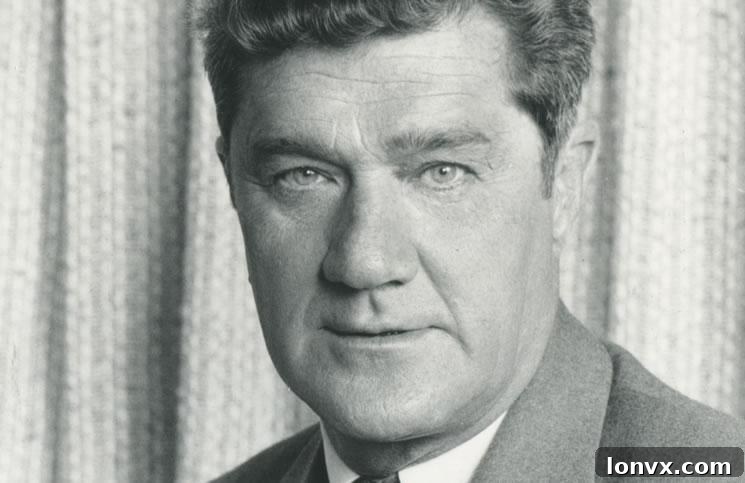
Remembering George Cormack: A Visionary Pioneer Who Shaped Canadian Real Estate and Royal LePage’s Enduring Legacy
For well over a century, Royal LePage has stood as a pillar of innovation and leadership within the dynamic Canadian real estate industry. The foundation of such a resilient and flourishing enterprise rests squarely on the shoulders of exceptional individuals. Over its rich history, countless brilliant minds have left an indelible mark on the firm, but a select few leaders truly stand out, even among such a distinguished company. George Cormack was undoubtedly one of these towering figures. It is with a profound sense of loss and deep sadness that we acknowledge his passing, reflecting on a life dedicated to shaping the very landscape of real estate in Canada.
Early Leadership and Groundbreaking Growth in the 1960s and 1970s
George Cormack embarked on his journey with A.E. LePage as an eager and ambitious young executive during a period of significant societal and economic change in Canada. Throughout the transformative decades of the 1960s and 1970s, he proved instrumental in propelling the company’s remarkable growth trajectory. His initial rise to prominence was fueled by a unique blend of innovative marketing techniques and forward-thinking management strategies that challenged the conventional wisdom of the day. The Canadian real estate market was evolving, and George possessed an innate ability to anticipate these shifts and position A.E. LePage at the forefront of the industry.
One of Cormack’s most significant early contributions was spearheading the company’s ambitious expansion plans. At a time when LePage’s operations were largely concentrated within its traditional stronghold in the vibrant heart of Toronto, George championed the bold vision of opening new offices in emerging markets. He recognized that the urban landscape was transforming, with the rapidly developing suburbs becoming increasingly attractive to new waves of immigrants from Europe. Understanding the immense potential of these burgeoning communities, George and his dedicated team meticulously focused on building a business model specifically tailored to capture this crucial, emerging demographic. This strategic foresight laid the groundwork for Royal LePage’s future national footprint and underscored a commitment to serving diverse Canadian communities that remains a cornerstone of the company’s ethos today. It brings a poignant smile to reflect on how central today’s new Canadians are to the contemporary Royal LePage; George, no doubt, would wholeheartedly approve of this continuing legacy.
Pioneering the “Agent Tour” Concept: Fostering Collaboration and Trust
As a field manager, George Cormack introduced a revolutionary practice that would fundamentally alter the way real estate agents operated in Canada: the “agent tour” concept. In an era often characterized by fierce competition and a prevailing lack of trust between agents in many real estate brokerages, Cormack’s approach was nothing short of groundbreaking. He firmly believed that fostering a spirit of collaboration would ultimately serve the best interests of clients and, by extension, the firm itself. This visionary concept planted the vital seeds for profitable internal cooperation within Royal LePage, a principle that has since become deeply embedded in the company’s DNA and continues to thrive in the 21st century.
Cormack’s innovative weekly ritual involved gathering agents together every Monday morning. During these meetings, they would meticulously review current property listings and actively work to match homes with the hopeful buyer clients the firm was representing. This was a radical departure from the competitive norm. Despite the industry’s prevalent culture of secrecy, George adamantly insisted that the LePage team openly share detailed information about their sellers and prospective buyers. His rationale was simple yet profound: it was unequivocally in their clients’ best interest to do so. This proactive information exchange not only streamlined the sales process but also cultivated an environment of mutual respect and shared success.
A passage from the commemorative book marking Royal LePage’s 100th anniversary in 2014 vividly captures the essence of this pioneering method. Cormack himself explained, “We would go out Monday after our meeting and tour properties with about eight or nine agents in tow. We would talk to the homeowner, hear from the listing salesperson, and report back to the homeowner with what we thought would help to sell the house. And then we all came up with a price based on the opinion of the group.” This systematic approach, while perhaps not considered technologically sophisticated by today’s 21st-century standards, was transformative for its time. The profound trust built through this structural collaboration was instrumental in forging a powerful and uniquely cohesive corporate culture that set Royal LePage apart from its competitors and laid a robust foundation for its future growth.
The “Model Office”: A Blueprint for Standardized Success
These novel and highly effective tactics were met with immense success, instilling in George Cormack the confidence to further refine his innovative approach into a comprehensive formula for success. This culminated in the development of what he famously dubbed the “model office” concept. This meticulously crafted business plan provided a complete, standardized blueprint for achieving excellence in the real estate sector. It covered every conceivable detail necessary for optimal operation and growth, ranging from a precise, “cookie-cutter” building layout and uniform signage that ensured instant brand recognition, to the ideal number of agents required per office, and even specifying the exact size of the desk a Realtor would be provided with. This level of standardization was revolutionary, ensuring consistency in service delivery, operational efficiency, and a unified brand experience across all LePage locations. It transformed the expansion process, making it repeatable and scalable, much like a modern franchise system.
A Period of Unprecedented National Expansion and Global Recognition
George Cormack’s tenure in the business development role ushered in an era of truly explosive growth for A.E. LePage. Under his strategic guidance, a new office was opening its doors in Ontario every single month – an astonishing pace of expansion for the period. By the close of the decade in 1970, LePage had successfully extended its reach far beyond its Ontario origins, establishing a significant presence across various regions of Canada. The momentum continued unabated, with the company aggressively pursuing a strategy of strategic acquisitions. Between 1974 and 1979, A.E. LePage acquired more than 50 mid-sized firms across the country, a move that consolidated its market power and significantly expanded its national footprint. This aggressive yet calculated growth strategy was incredibly successful, leading A.E. LePage to become not only the largest real estate company in Canada but also the second-largest globally during this remarkable period. This achievement underscored Cormack’s unparalleled vision and execution in scaling a business to unprecedented heights, cementing Royal LePage’s position as a dominant force on the international real estate stage.
Ascension to CEO and an Enduring Legacy
The remarkable trajectory of A.E. LePage continued to evolve, culminating in a significant merger with Royal Trust in 1983. This pivotal event further strengthened the company’s market position and expanded its service offerings. Just three years later, in 1986, George Cormack’s exceptional leadership and profound contributions were formally recognized when he ascended to the pinnacle of the organization, becoming the President and Chief Executive Officer of Royal LePage. In this esteemed role, he continued to steer the company with his characteristic vision and unwavering dedication, guiding it through further periods of change and consolidation. After a distinguished career marked by transformative achievements, George Cormack retired in 1993, leaving behind an indelible mark on Royal LePage and the broader Canadian real estate industry.
A Deeply Personal Tribute to a True Leader
Beyond his professional achievements, George was widely remembered as a man of immense energy and quick wit, qualities that endeared him to all who had the privilege of knowing him. His passing leaves a significant void, and he will be deeply missed by many who were touched by his leadership, mentorship, and vibrant personality. Our deepest and most heartfelt sympathies extend to his family during this time of profound loss. His spirit and contributions will forever be etched into the fabric of Royal LePage. To George himself, wherever you may be listening, I consider myself incredibly fortunate to have crossed paths with you, to have met you, and to have been able to hear first-hand the captivating stories from your incredible era. From the more than 20,000 modern-day colleagues who now proudly carry forward the Royal LePage name, from coast to shining coast across Canada, we extend a hearty and sincere thank you for the pioneering trails you blazed, which have so powerfully helped us reach where we stand today.
The TD Centre Anecdote: A Testament to Enduring Vision
In 2013, to commemorate the company’s extraordinary 100th birthday, I had the distinct honor of hosting a luncheon for former Royal LePage presidents. This memorable gathering took place at the prestigious Canoe restaurant, situated on the 54th floor of the iconic TD Bank building in downtown Toronto. Every single one of the company’s living legends attended, creating a truly unforgettable couple of hours that will forever remain a cherished memory.
The choice of location held a particularly special significance, one that perfectly encapsulated the forward-thinking vision characteristic of leaders like George Cormack. Approximately 60 years prior to that luncheon, A.E. LePage had quietly and strategically assembled the land, piece by painstaking piece, that would eventually be utilized for the construction of the magnificent TD Centre. This monumental project, occupying an entire city block in the very heart of the city, was not only the largest construction endeavor in the entire Commonwealth at the time but also proudly stood as the tallest building in the country upon its completion. This anecdote serves as a powerful reminder of the profound strategic foresight and enduring impact that George Cormack and his contemporaries had, not just on the real estate market, but on the very urban landscape of Canada itself. Their vision continues to inspire and shape the legacy of Royal LePage, a testament to a century of innovation and leadership built on the foundations laid by giants like George Cormack.