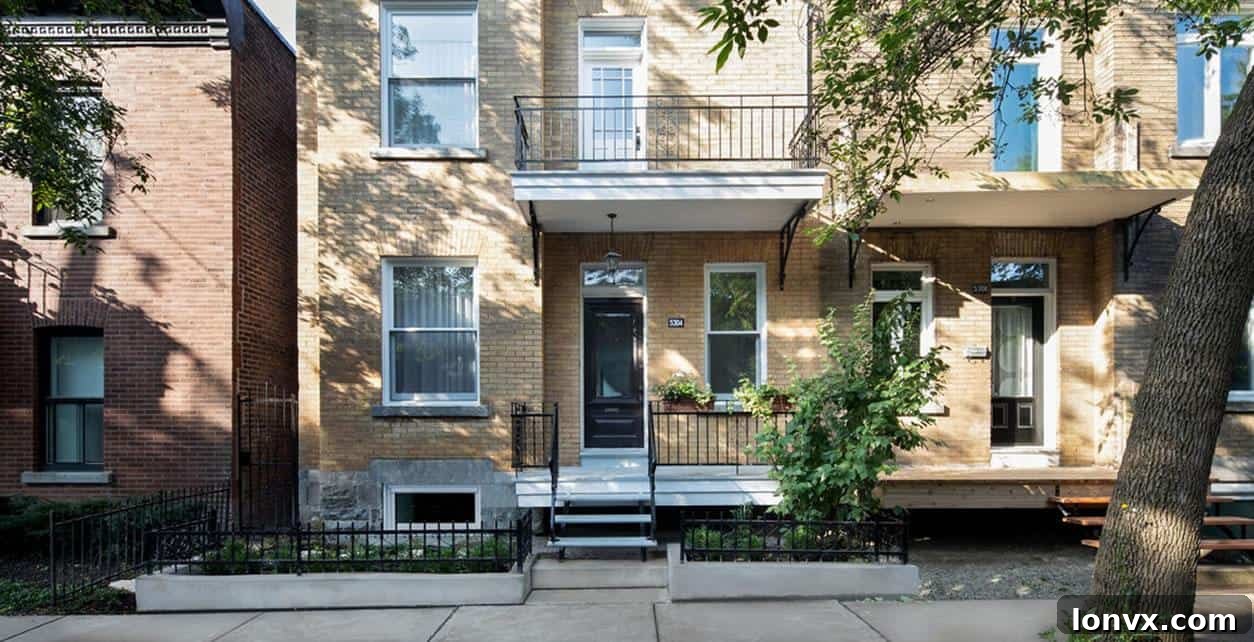
Nestled discreetly on a compact urban lot within the vibrant city of Montreal, the Cartier House presented a unique architectural challenge. Its original footprint, characterized by notably restrained proportions, including a narrow lateral passage and a quaint, intimate inner courtyard, required a highly sensitive approach to expansion. The clients harbored a distinct vision: to seamlessly integrate the home’s interior spaces with its exterior environments, all while meticulously preserving the inherent charm, character, and deep-seated intimacy that defined the existing structure. This delicate, yet ambitious task was expertly entrusted to Montreal’s distinguished architectural firm, Architecture Microclimat, known for its nuanced understanding of urban residential design and its commitment to context-sensitive interventions. Their mission was clear: to craft an expansion that felt both contemporary and respectful, extending the home’s functional capacity without overshadowing its historical essence or encroaching upon its precious outdoor realms.
The clients wanted to connect the indoor spaces to the exterior spaces without losing the home’s existing charm and intimacy.
The transformation of Cartier House commences with a reverent nod to its past, evident in the meticulously executed restorative work on its front facade. This careful preservation celebrates the original features characteristic of Montreal’s iconic “plexes” – multi-unit dwellings that define much of the city’s residential landscape. The intricate ironwork balconies, gracefully extending from the building, have been painstakingly repaired and refreshed, their delicate patterns once again adding a layer of historical elegance. The exterior cornices, often overlooked but vital architectural details, have been meticulously restored to their former glory, re-establishing the building’s traditional silhouette and contributing to its harmonious street presence. Furthermore, the brickwork, a cornerstone of Montreal’s architectural identity, underwent extensive cleaning, repointing, and repair, bringing back the rich texture and enduring quality of the original masonry. This comprehensive restoration not only revitalizes the building’s aesthetic appeal but also reinforces its deep connection to the historical fabric of the neighborhood, ensuring its place within Montreal’s cherished architectural heritage.
“Refurbishing these elements was not merely about aesthetic repair; it was about reinforcing the existing harmony between the house and its immediate surroundings,” explains the firm in a recent news release. “Every detail, from the filigree of the ironwork to the precise lines of the brick, was handled with an aim to shed renewed light on their inherent architectural qualities and historical significance.” In stark contrast to the front’s respectful homage to the past, the rear of the home boldly articulates a distinctly contemporary language. This modern expression is primarily embodied in the strategic addition of a new living room volume. Crafted with a profound understanding of scale and proportion, this new extension has been meticulously designed to seamlessly integrate with the existing structure and its constricted urban lot. Its precise dimensions ensure that the home gains significant additional living space without ever feeling disproportionate or, crucially, without intruding upon or diminishing the intimate proportions of the existing inner courtyard. This careful balancing act exemplifies the firm’s commitment to thoughtful, context-driven design.
Where the interior expanse of the new living room meets the verdant calm of the exterior courtyard, a remarkable “garden room” emerges. This intentionally designed space transcends the conventional boundaries between indoors and outdoors, forging an extraordinarily strong visual and physical symbiosis. Expansive glazing, strategically placed to maximize natural light and views, blurs the line between the built environment and the natural landscape. The use of compatible materials and a coherent design language ensures that the new addition feels like a natural extension, rather than an abrupt imposition. This garden room becomes a dynamic hub, offering occupants a direct, unhindered connection to nature, inviting the tranquility of the courtyard deep into the heart of the home, regardless of the season. It represents a living breathing testament to the client’s desire for an enhanced connection with the outdoors, realized through innovative and sensitive architectural intervention. This seamless integration creates an atmosphere of expansive calm, transforming what was once a compact backyard into an integral part of the home’s daily experience, fostering a sense of openness and connection that defies the property’s urban constraints.
The thoughtful articulation of this expansion extends beyond the primary living space, masterfully introducing a captivating “play of intimate terraces” across two distinct levels. These tiered outdoor areas are more than mere functional extensions; they are carefully sculpted zones designed to optimize the dialogue between the home and its verdant landscape while simultaneously offering a crucial layer of protection from the outside eye. The strategic placement and design of these terraces create secluded pockets for relaxation and contemplation, allowing residents to enjoy the open air in privacy. The upper terrace, perhaps more exposed, might offer sweeping views of the urban surroundings, while the lower level, nestled closer to the garden, provides a serene, verdant sanctuary. This multi-level approach enhances the perceived depth and utility of the outdoor space, making a small courtyard feel more expansive and versatile. In this continued spirit of harmoniously sharing space with the existing architecture, the new volume gently and humbly extends onto the lot, its refined presence adding to the overall sense of intimacy. This is achieved through the careful delineation and thoughtful landscaping of various outdoor areas, each offering a unique experience and contributing to the home’s expanded sense of secluded luxury and connection to its natural, yet urban, environment. These terraces become outdoor rooms, providing varied experiences for dining, lounging, and connecting with nature, all within the confines of a city lot.
The staircase and mouldings were restored.
Stepping inside Cartier House, the narrative of coexistence between old and new continues to unfold with striking elegance and clarity. The interior intervention by Architecture Microclimat first focused on a fundamental re-evaluation of the home’s internal structure. Historic barriers between rooms, often characterized by enclosed, compartmentalized spaces, were strategically broken down. This strategic removal of non-structural walls and the clever re-imagining of circulation paths were paramount in creating a fluid, open-plan layout. This new spatial arrangement significantly enhances natural light penetration, improves visual connections between various living zones, and, most importantly, better meets the dynamic needs of modern-day living. The result is an interior that feels remarkably more expansive, adaptable, and inviting, fostering a seamless flow that encourages interaction and connectivity while retaining distinct functional areas. This modern fluidity is gracefully juxtaposed with the meticulously restored historical elements that form the very soul of the home.
A testament to the firm’s dedication to preserving heritage, several key features underwent painstaking restoration. The grand original staircase, a central artery of the home, has been brought back to life, its intricate detailing and sturdy craftsmanship once again commanding attention. Large wooden doors, imbued with the character of a bygone era, along with the ornate plaster mouldings that trace the ceilings and walls, have all been carefully refurbished, their delicate textures and patterns now shining anew. Even the robust cast-iron radiators, functional remnants of the home’s original heating system, have been lovingly restored, serving as both historical artifacts and continuing their practical purpose. These magnificently refurbished features collectively cast a rich and deeply textured backdrop, a canvas upon which natural and elegant contemporary accents are artfully expressed. Elements of warm walnut, utilized for custom cabinetry and paneling, introduce a refined, organic touch. Sleek glass partitions and railings offer transparency and lightness, allowing light to permeate deeper into the refreshed spaces. Finally, the subtle inclusion of crude steel details, perhaps in custom fixtures or minimalist frames, provides a touch of industrial elegance and contemporary edge. These modern materials do not compete with the historic fabric but rather complement it, creating a sophisticated dialogue between the past and the present, where each element enhances the other’s beauty and narrative. This thoughtful integration ensures that the home’s history is not merely preserved but actively participates in its contemporary identity.
Beyond its immediate aesthetic and functional triumph, the Cartier House project stands as a profound statement on the revaluation of Montreal’s residential architectural heritage. As articulated by the architects, this undertaking conveys the immense relevance and critical importance of considering conservation work within the broader, overarching interest of sustainable development. In an era increasingly focused on environmental responsibility, the adaptive reuse and sensitive expansion of existing structures offer a compelling alternative to new construction. By investing in the longevity and modernization of heritage buildings, Architecture Microclimat demonstrates a commitment to reducing waste, minimizing the carbon footprint associated with new builds, and preserving the embodied energy within existing materials. This approach champions the idea that the most sustainable building is often one that already exists. The project acts as a powerful model, illustrating how thoughtful architectural intervention can extend the lifespan of urban dwellings, contributing to the vitality and unique character of a city while simultaneously advancing crucial ecological goals. It underscores that architectural sustainability is not solely about new, green technologies, but also about intelligent, respectful engagement with the past.
Established in 2013, Architecture Microclimat has rapidly distinguished itself as a dynamic and forward-thinking firm in the Montreal architectural landscape. From its inception, the practice has consistently prided itself on promoting designs that are profoundly built on the principle of “cohabitation of architecture and its surrounding environment.” This philosophy is not just a theoretical tenet; it is meticulously woven into the fabric of every project they undertake, and the Cartier House serves as a quintessential example of this guiding principle in action. The firm’s work consistently seeks to forge deep connections between the built form and its specific context, whether urban, suburban, or natural. They prioritize understanding the unique qualities of each site – its history, its topography, its light, and its community – and integrate these elements into their designs. This contextual sensitivity results in buildings that feel inherently right for their place, existing in a symbiotic relationship with their surroundings rather than imposing upon them. Their commitment to sustainable practices, adaptive reuse, and creating spaces that enhance the human experience while respecting ecological and historical contexts solidifies their position as leaders in thoughtful, responsible architectural design. The Cartier House project is a vibrant testament to Microclimat’s vision, showcasing how contemporary design can respectfully and beautifully engage with heritage, ultimately creating spaces that are both innovative and deeply rooted in their unique sense of place.