
Canadian Housing Market Signals Recovery: A Deep Dive into Spring Trends
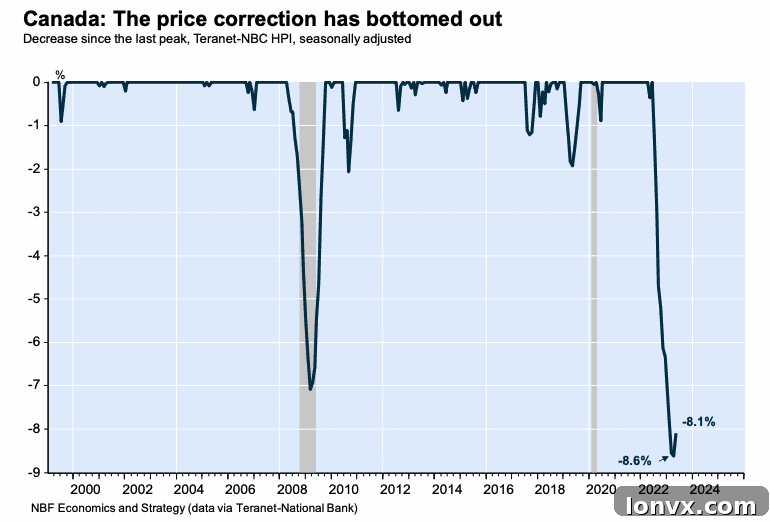
The Canadian housing market is demonstrating promising signs of revitalization this spring, marked by a significant upturn after a prolonged period of decline. According to the latest data from the Teranet-National Bank Composite House Price Index (HPI), May recorded a notable monthly increase of 0.6 per cent. This marks a pivotal moment, representing the first positive shift in home prices in 11 months, offering a breath of fresh air for homeowners, prospective buyers, and real estate professionals alike.
Further reinforcing this optimistic outlook, the HPI, prior to seasonal adjustments, saw an even more robust rise of 1.6 per cent from April to May. This latest figure represents the third consecutive monthly increase, solidifying the narrative of a market gradually regaining its footing. The comprehensive data encapsulated in the Teranet report paints a picture of a dynamic market in flux, with several key Canadian cities and regional markets experiencing notable gains in property values, indicating a broader positive trend emerging across the nation.
After navigating a challenging period characterized by rising interest rates and shifting buyer sentiment, this recent data suggests a potential turning point. The resilience of demand, coupled with evolving economic conditions, appears to be contributing to a more stable and, in some areas, appreciating real estate landscape. Understanding the nuances of these shifts is crucial for anyone involved in Canada’s vast and diverse housing sector.
Regional Performance: A Snapshot of Monthly Home Price Increases Across Canada
The latest Teranet-National Bank HPI revealed significant regional disparities and successes in May. Out of the 11 major Canadian Metropolitan Areas (CMAs) included in the index, a strong majority of eight reported an increase in house prices. This widespread growth suggests that the recovery is not isolated but rather a more generalized phenomenon gaining traction across diverse urban centers.
Leading the charge was Toronto, which saw a significant 1.6 per cent rise in its composite house price index. This rebound in Canada’s largest housing market is particularly noteworthy, given its susceptibility to previous downturns, and signals renewed buyer confidence and potentially tightening inventory. Winnipeg closely followed, demonstrating robust growth with a 1.5 per cent increase, reflecting perhaps a stable local economy and sustained demand in a market known for its relative affordability compared to its larger counterparts.
Other major CMAs also posted positive gains, ranging from 0.1 per cent to 1.3 per cent. These included Victoria, Edmonton, Quebec City, Montreal, Hamilton, and Calgary. The growth in cities like Calgary and Edmonton further underscores the strength of Western Canadian markets, often bolstered by a resilient energy sector and growing populations. Montreal’s increase highlights the ongoing vibrancy of Quebec’s largest city, while Hamilton’s rise suggests a recovery in markets adjacent to Toronto, often impacted by ripple effects from the GTA.
However, the recovery was not universal. Three CMAs experienced a decline in prices during the same period, indicating the market’s patchy nature. Halifax saw the steepest drop at -2.6 per cent, potentially reflecting a recalibration after a period of rapid growth during the pandemic. Vancouver, historically one of Canada’s most expensive markets, experienced a 1.2 per cent decline, possibly due to higher interest rates impacting affordability thresholds. Ottawa-Gatineau also saw a modest dip of -0.3 per cent.
Beyond the Major CMAs: Spotlight on Regional Housing Markets
The Teranet report also shone a light on the performance of regional markets not directly included in the composite index, offering a more granular view of Canada’s real estate landscape. Among the twenty additional CMAs for which data was available, half – ten, to be precise – recorded growth in May, further diversifying the recovery narrative.
Sudbury, Guelph, and Kingston emerged as top performers in this category, showcasing remarkably significant monthly increases of 4.9 per cent, 4.7 per cent, and 4.6 per cent, respectively. These substantial gains in smaller, often university-centric or resource-dependent cities, could be attributed to a variety of factors: increased demand for more affordable housing options, migration from larger urban centers, or specific local economic drivers contributing to heightened buyer activity.
Conversely, some regional markets faced considerable headwinds. Brantford experienced a notable decrease of -8.1 per cent, while Sherbrooke saw a decline of -4.5 per cent. Such fluctuations underscore the hyper-local nature of real estate, where specific economic conditions, inventory levels, and buyer demographics can lead to divergent market outcomes even within the same province.
Year-over-Year Analysis: A Broader Perspective on Market Shifts
While monthly gains provide immediate insights, a year-over-year analysis offers a crucial broader perspective on the Canadian housing market’s trajectory. From May 2022 to May 2023, the report still recorded an overall decline of 7.6 per cent. However, this figure represents a significant improvement, signaling a smaller contraction compared to the previous month’s record drop. This deceleration in the rate of decline is a positive indicator that the market’s depreciation phase may be nearing its end, paving the way for more sustained stability or growth.
Among the eleven cities in the composite index, Calgary emerged as the undisputed top performer year-over-year, exhibiting an impressive 8.3 per cent increase in property prices. This robust growth highlights the relative strength and resilience of the Calgary market, often driven by a strong jobs market, affordability relative to other major Canadian cities, and a steady influx of inter-provincial migration. Edmonton also showed positive growth with a gain of 4.9 per cent, reinforcing the buoyant conditions in Alberta’s major urban centers. Quebec City, with a 3.1 per cent increase, rounded out the cities demonstrating annual appreciation, reflecting a consistently stable market.
On the other hand, some cities continued to face significant challenges when viewed through a year-over-year lens. Hamilton experienced the sharpest decline at -16.8 per cent, indicating a substantial correction from its pandemic-era highs. Toronto, a bellwether for the national market, also saw a notable drop of -10.3 per cent, while Ottawa-Gatineau registered a -9.5 per cent decrease. These year-over-year declines in highly competitive markets can be attributed to the combined effect of rapid price appreciation in previous years, followed by sharp interest rate hikes that significantly eroded buying power and sentiment.
Delving into the additional twenty CMAs not included in the composite index, four registered annual gains. Saint John led this group with an impressive 7.2 per cent increase, followed by Trois-Rivieres at 3.9 per cent. These gains in smaller markets, particularly in Atlantic Canada and Quebec, often reflect a combination of increased affordability, lifestyle migration, and regional economic development. Conversely, Brantford, Peterborough, Oshawa, and Abbotsford-Mission faced some of the steepest annual declines, underscoring how certain markets are more sensitive to broader economic shifts and changes in buyer demand.
Expert Insights: Understanding the Driving Forces and Future Outlook
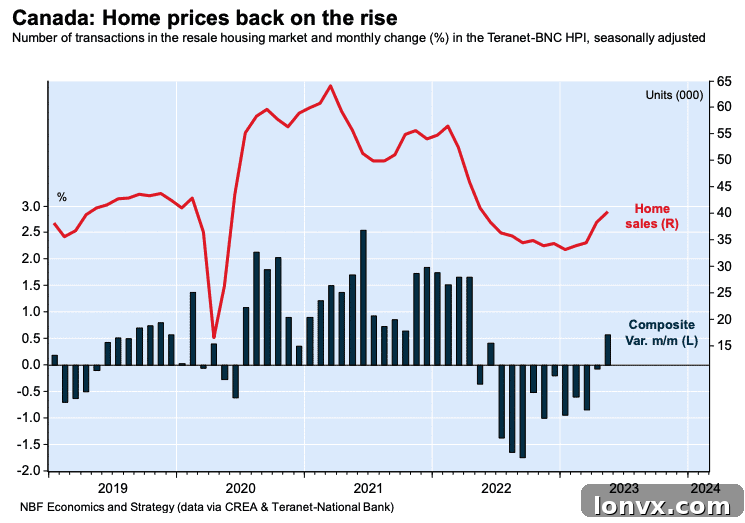
“This turnaround in property prices is due, in particular, to the rebound in the resale market over the past four months.”
– Darren King, Senior Wealth Advisor & Portfolio Manager, National Bank Financial
According to Darren King, a senior wealth advisor and portfolio manager at National Bank Financial, the recent surge in home prices is primarily a direct consequence of the robust rebound observed in the resale market over the past four months. This resurgence suggests a return of buyers who may have been on the sidelines, coupled with sellers re-entering the market, creating a more dynamic transaction environment. Factors such as easing inflation concerns, a perception of stabilizing interest rates, and pent-up demand from prospective homeowners likely contributed to this renewed activity.
King further observes, “This recovery is taking place against a backdrop of record demographic growth, which is accentuating the shortage of housing supply on the market.” This critical insight points to a fundamental imbalance in Canada’s housing sector. The nation has experienced unprecedented population growth through immigration, placing immense pressure on an already constrained housing supply. This surge in new residents translates directly into increased demand for housing, across all types and price points, irrespective of the prevailing economic climate.
However, the long-term outlook for supply remains challenging. King notes that domestic housing starts are currently at their lowest level in three years. This concerning trend implies that the gap between housing demand and supply is unlikely to narrow significantly in the immediate future. Low housing starts are often a result of various factors, including high construction costs, labor shortages, regulatory hurdles, and municipal delays, all of which conspire to slow down the pace of new home construction. This structural supply shortage is a persistent issue that will continue to underpin Canada’s housing market dynamics for years to come.
Looking ahead, King also provides a cautionary note regarding potential moderating factors for price growth later in the year. He points to the recent resumption of the monetary tightening cycle by the Bank of Canada, which could lead to further interest rate increases. Higher interest rates directly impact mortgage affordability, potentially cooling buyer enthusiasm and reducing purchasing power. Additionally, the anticipated economic slowdown could dampen consumer confidence, lead to job market uncertainties, and ultimately reduce the overall demand for housing. These macroeconomic forces could act as headwinds, preventing the market from overheating and leading to a more moderate pace of appreciation, or even localized corrections, as the year progresses.
Conclusion: A Cautiously Optimistic Path Forward for Canadian Real Estate
The latest Teranet-National Bank HPI report offers a nuanced yet largely optimistic view of the Canadian housing market. The first increase in home prices in 11 months, coupled with three consecutive monthly gains, unequivocally points towards a market in recovery. While regional variations persist, with some areas experiencing significant appreciation and others still navigating declines, the overall trend suggests a shift towards stabilization and growth in many key urban and regional centers.
Expert analysis from Darren King underscores the critical role of a rebounding resale market and Canada’s record demographic growth in fueling this recovery. The persistent challenge of housing supply, exacerbated by low housing starts, remains a fundamental driver of market dynamics, suggesting that demand will likely continue to outstrip supply for the foreseeable future. However, potential future interest rate hikes by the Bank of Canada and a broader economic slowdown introduce elements of uncertainty, which could temper price growth later in the year.
For buyers, sellers, and investors, understanding these intertwined factors is paramount. The Canadian housing market is not a monolith; its strength and direction are determined by a complex interplay of local economic conditions, population shifts, interest rate policies, and government initiatives. While the spring data provides a hopeful snapshot, the path to a fully stable and balanced market remains subject to ongoing economic shifts and policy responses. Close monitoring of both national and regional indicators will be essential as Canada’s housing story continues to unfold through the latter half of the year.