
Calgary’s Dynamic Real Estate Market: April Trends Highlight Continued Growth and Seller Advantage
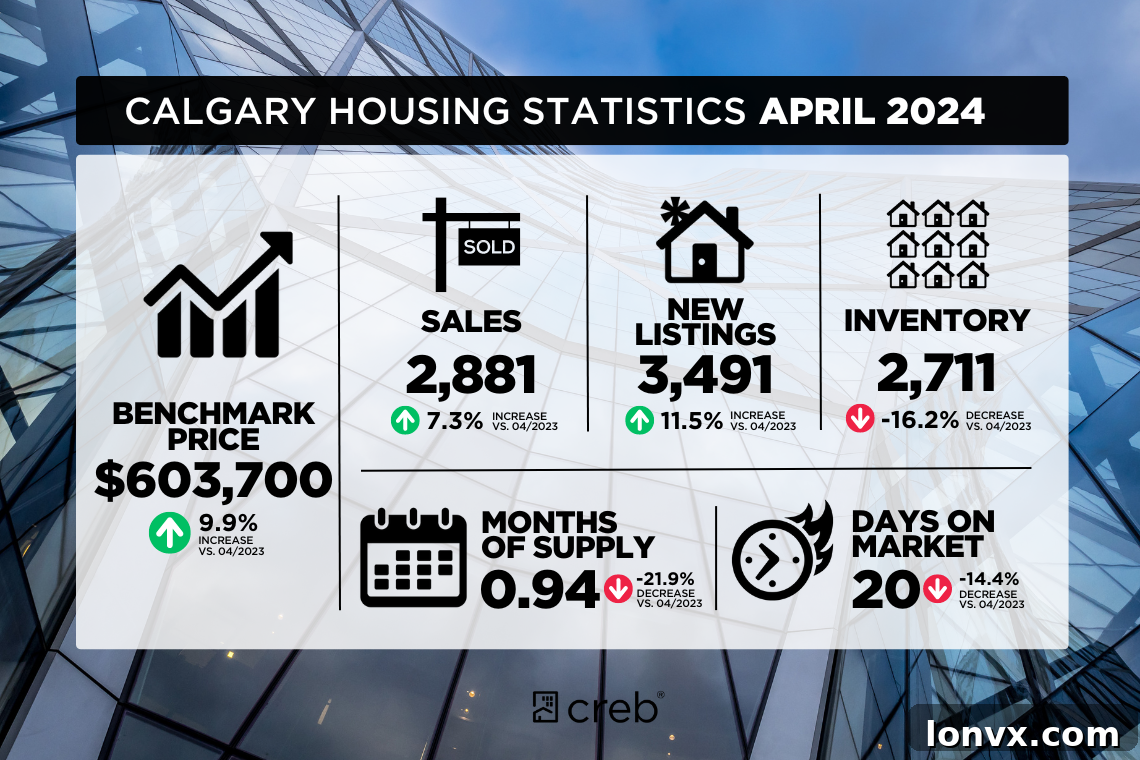
The Calgary residential real estate market continued its robust performance in April, demonstrating persistent strength despite a modest slowing in the pace of growth witnessed earlier in the year. According to the Calgary Real Estate Board (CREB), residential sales last month surged by seven per cent compared to the previous year, reaching 2,881 units. While this growth rate has moderated, the total sales volume remains an impressive 37 per cent higher than the long-term averages for April, underscoring the sustained demand within the city’s housing landscape. This ongoing vitality positions Calgary as a highly active market, attracting both local and external interest.
Overall Market Dynamics: A Tight Squeeze
Despite the strong sales figures, the market continues to grapple with inventory challenges. April saw a welcome increase in new listings, with 3,491 properties coming onto the market, an 11 per cent rise over last year. This influx provided some much-needed stabilization for inventory levels, even representing a three per cent increase over long-term trends for new listings. However, this boost was still insufficient to meet the fervent demand, with current new listing volumes remaining approximately half of what April typically experiences and 16 per cent lower than the previous year’s levels. The discrepancy between rising sales and limited supply is a defining characteristic of Calgary’s current market.
The persistent imbalance between supply and demand is starkly reflected in key market indicators. The sales-to-new-listings ratio for April stood at 83 per cent, a figure that strongly favors sellers. In a balanced market, this ratio typically hovers between 40-60 per cent. Furthermore, the months of supply, a measure of how long it would take to sell all available homes at the current sales pace, remained critically low at less than one month. A healthy, balanced market usually boasts four to six months of supply. These metrics collectively paint a clear picture of an intensely competitive seller’s market, where properties sell quickly and buyers face significant pressure.
Key Influencing Factors: Interest Rates and Affordability Shifts
The ongoing strength and unique characteristics of Calgary’s real estate market are heavily influenced by prevailing economic conditions, particularly high interest rates. Ann-Marie Lurie, chief economist at CREB, provides crucial insight into how these rates are reshaping market dynamics. “While supply levels are still declining, much of the decline has been driven by lower-priced homes,” Lurie observes. “Homes priced below $500,000 have reported a 29 per cent decline in available inventory. Meanwhile, we are seeing supply growth in homes priced above $700,000. Persistently high interest rates are driving demand toward more affordable products in the market and, at the same time, driving listing growth for higher-priced properties.”
This nuanced statement reveals a significant trend: affordability constraints, largely driven by elevated borrowing costs, are redirecting buyer demand. Prospective homeowners are increasingly targeting lower-priced segments of the market, intensifying competition for these limited properties and further exacerbating supply shortages in that bracket. Conversely, owners of higher-priced homes might be more inclined to list their properties, potentially motivated by strong capital gains or a desire to adjust their investment portfolios in a favorable market for luxury segments. This divergence creates a dual market, where affordability dictates demand in one segment, while strategic selling drives supply in another. Furthermore, Calgary’s robust economy and continued population growth contribute to this sustained demand, as more people choose to live and work in the city, further tightening an already constrained housing supply.
Calgary’s Benchmark Price: A City-Wide Surge
The intense seller-favored conditions have predictably led to continued price appreciation across the city. In April, the unadjusted residential benchmark price for Calgary reached an impressive $603,700. This represents a one per cent increase from March and a substantial jump of almost 10 per cent compared to levels recorded in April of the previous year. The benchmark price, a composite measure designed to represent the price of a “typical” home, provides an accurate reflection of market value trends.
Significantly, these price increases were not confined to specific luxury enclaves or booming districts; they were observed throughout the city and across all property types. This widespread appreciation indicates the broad-based strength of Calgary’s housing market. Notably, the more affordable areas of the city experienced particularly strong gains. This phenomenon is a direct consequence of the affordability crunch discussed earlier, as buyers are driven towards less expensive options, thereby fueling competition and rapid price growth in these segments. For existing homeowners, this translates to considerable equity gains, while for prospective buyers, it signifies an increasingly challenging environment for market entry.
Deep Dive: Performance Across Property Types
Detached Homes: Navigating Limited Supply and Shifting Demand
The detached housing segment, traditionally a cornerstone of the Calgary market, experienced a one per cent increase in sales compared to the previous year. While this figure might seem modest, it reflects a market grappling with critically low inventory, particularly in more accessible price points. April saw a notable surge in sales for higher-priced detached properties, indicating continued buyer confidence in the upper echelons of the market. Conversely, properties priced below $600,000 faced a sharp decline in sales, not due to lack of demand, but directly attributable to the severe scarcity of listings in this segment. This trend highlights the ongoing challenge for buyers seeking entry-level detached homes.
The unadjusted benchmark price for detached homes in April rose to $749,000, representing over a one per cent increase from the previous month and a significant 13 per cent surge compared to April 2023. Further emphasizing the impact of affordability constraints, the most affordable districts within Calgary witnessed the highest year-over-year gains in detached home prices. This underscores a clear migration of demand towards areas offering relative value, even within the premium detached segment, as buyers adapt to elevated interest rates and tighter budgets.
Semi-Detached Homes: A Growing Niche in a Competitive Market
Semi-detached homes continued their impressive ascent in April, solidifying their position as a highly desirable property type in Calgary. Sales in this category continued to climb, contributing to an overall year-to-date sales growth of almost 18 per cent. This robust performance is partly attributed to a rise in new listings within the segment, suggesting that more homeowners are choosing to capitalize on favorable market conditions. However, even with increased listings, the heightened demand meant that inventory levels remained critically low, with the months of supply staying below one month for the second consecutive month. This signals fierce competition among buyers for available semi-detached properties.
The persistent tight market conditions inevitably led to further price appreciation. The unadjusted benchmark price for semi-detached homes reached $668,400 in April, nearly two per cent higher than the previous month and an impressive 13 per cent higher than last year. Semi-detached homes often offer a compelling balance of space and relative affordability compared to detached properties, making them an increasingly popular choice for families and those seeking more room without the higher price tag of a fully detached residence.
Row Homes: Surging Popularity and Unprecedented Price Growth
Row homes, also known as townhouses, continued their strong performance in April, demonstrating consistent improvement in sales and contributing to a remarkable year-to-date gain of 19 per cent. This property type has seen a surge in popularity, often appealing to first-time buyers, young professionals, and those seeking modern, efficient living spaces at a more accessible price point. Despite a substantial 16 per cent increase in new listings, the robust sales activity meant that low inventory levels persisted, maintaining the months of supply below one month for an unprecedented fourth consecutive month. This extended period of critically low supply indicates intense buyer competition and rapid absorption of new listings.
The tight market conditions, particularly pronounced in the lower price ranges where row homes typically reside, drove further significant price appreciation. The unadjusted benchmark price for row homes in April reached $458,100, marking a two per cent increase from the previous month and an astounding 20 per cent rise from last year. This phenomenal year-over-year growth makes row homes the leading segment in terms of price appreciation, underscoring their role as a vital and highly sought-after option in Calgary’s housing market.
Apartment Condominiums: Leading the Charge in Affordability and Volume
The apartment condominium segment truly shone in April, demonstrating its critical role in providing affordable housing options within Calgary’s competitive market. Sales of apartment condominiums reached an impressive 822 units, contributing to a substantial year-to-date increase of 24 per cent across the city. This surge in activity means that apartment condominiums now represent nearly 30 per cent of all resale activity, a significant increase that highlights their growing importance as an entry point for many buyers.
This robust performance is partly attributed to a rise in new listings within the condo market, which has offered some relief to buyers. However, despite these new additions, overall inventory levels remain significantly lower than last year, preventing any meaningful easing of market tension and thereby continuing to drive price growth. The unadjusted benchmark price for apartment condominiums in April rose to $346,200, representing a gain of over two per cent from the previous month and nearly 18 per cent higher than last April. This strong appreciation underscores the immense demand for more affordable housing solutions in Calgary, making condominiums a pivotal component of the city’s real estate landscape.
Understanding the Market: Implications for Buyers and Sellers
For prospective buyers in Calgary, the current market dictates a strategic and agile approach. Limited inventory, especially in affordable price ranges, means that properties are often selling quickly and frequently command multiple offers. Buyers must be thoroughly pre-approved for financing, prepared to make swift decisions, and potentially be flexible with their desired property type or location. Working with an experienced real estate agent who understands the nuances of Calgary’s competitive market is crucial for navigating bidding wars and identifying opportunities.
For sellers, these are exceptionally opportune times. The high sales-to-new-listings ratio and critically low months of supply translate into strong negotiating power and the potential for quick, profitable sales. Owners of lower-priced homes, in particular, are likely to see significant interest and robust offers due to the severe supply shortage in that segment. Even higher-priced properties are finding eager buyers. Sellers should focus on professional staging and strategic pricing to maximize their returns in this buoyant market.
Looking Ahead: Calgary’s Resilient Real Estate Landscape
As Calgary moves forward, the real estate market is expected to remain dynamic and competitive. Underlying factors such as continued inter-provincial migration, a relatively strong local economy, and demographic shifts are likely to sustain demand. While interest rates remain a significant influence, the market has shown remarkable resilience and adaptability. Future trends will largely depend on the delicate balance between new construction, existing inventory levels, and any shifts in economic policy or consumer confidence. For the foreseeable future, Calgary’s real estate market is anticipated to maintain its seller-favored conditions, with continued price appreciation, particularly in the more attainable segments of the market.
For a comprehensive understanding of these trends, we encourage you to review Calgary’s official city and regional April updates, including detailed area summaries from the Calgary Real Estate Board (CREB).