
Navigating the Homebuying Journey: A Realtor’s Guide to Supporting Clients
For many, purchasing a home is the single largest financial and emotional investment of their lives. It’s a journey often fraught with excitement, anxiety, and unforeseen challenges. As a dedicated real estate professional, you play a pivotal role far beyond simply opening doors to properties; you are a guide, a confidant, and a strategist, leading your clients through a complex emotional and transactional landscape. While market conditions ebb and flow, influencing transaction volumes, the underlying psychology of the buyer remains a constant. The question isn’t always about the market slowdown, but rather how effectively you’re navigating the intricate emotional highs and lows of your buyer’s unique journey.
Indeed, recent data shows a shift in market activity, with fewer transactions occurring than in previous peak periods:
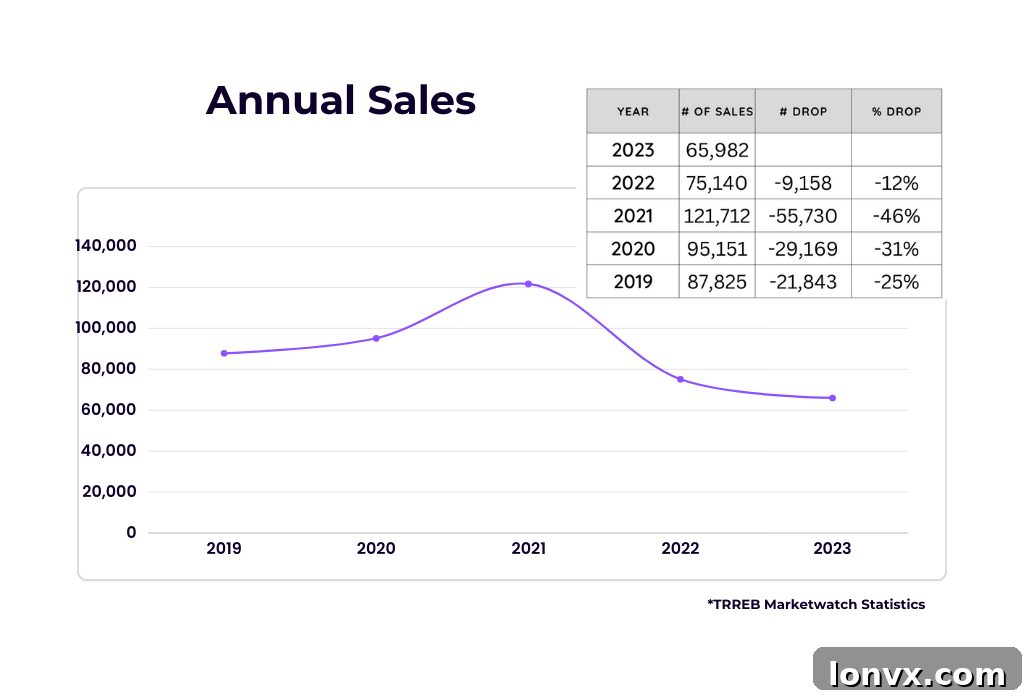
Despite these broader trends, homes are still being bought and sold every single day. This suggests that while external factors contribute, the core reasons for buyers getting “stuck” often lie within their personal journey and expectations. Understanding and proactively managing these psychological stages is key to transforming hesitant prospects into happy homeowners.
The Emotional Rollercoaster: A Realtor’s Guide to the Buyer’s Journey
Your role as a realtor is to expertly steer your buyers from the initial “spark” of inspiration to the ultimate satisfaction of being a “1-Year Homeowner.” This path is rarely linear; it’s an emotional rollercoaster with distinct phases, each requiring a tailored approach from your side. By recognizing these five critical stages, you can anticipate challenges, provide timely support, and ensure a smoother, more positive experience for your clients.
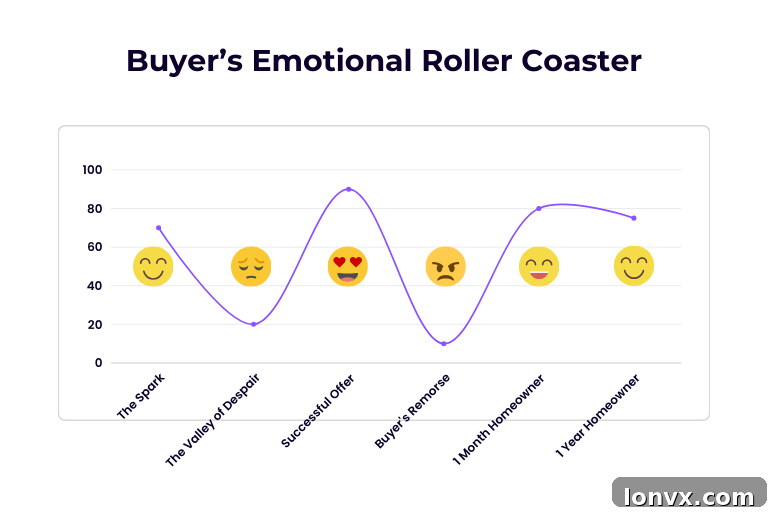
Let’s delve into each stage to understand how you can best support your clients, manage their expectations, and guide them successfully through their home-buying adventure.
Stage #1: The Spark – Igniting the Dream of Homeownership
The journey often begins with a “spark”—a moment of realization or a significant life event that ignites the desire for a new home. This initial motivation is powerful and often brings with it a surge of enthusiasm and a vivid vision for the future. Buyers may articulate this spark in various ways:
- “We’re tired of paying our landlord’s mortgage. How much does buying a home truly cost?”
- “Our current place is bursting at the seams! Can we find a larger space in a better school district?”
- “With the kids grown and moved out, maintaining this four-bedroom house feels like a lot of work. Where can we downsize to that offers convenience and a vibrant community?”
These sparks are frequently tied to one of life’s “6 Ds”:
- Diploma: A young professional or new graduate securing their first stable job, envisioning homeownership as a mark of independence.
- Diamonds: Engaged couples or newlyweds planning their future together, needing a place to build a family.
- Diapers: Growing families requiring more space, better schools, or a safer neighborhood for their children.
- Divorce: Individuals navigating new living arrangements, needing to sell a shared property and purchase a new, independent home.
- Downsizing: Empty nesters or retirees seeking a smaller, more manageable home, often for lifestyle changes or financial reasons.
- Death: Dealing with estate sales or needing to relocate after the loss of a loved one, seeking a fresh start.
During this initial stage, your buyers are highly motivated, filled with optimism, and eager to share their aspirations. This is the ideal time to conduct a thorough needs assessment, going beyond a simple checklist. Dive deep into their lifestyle, long-term goals, financial comfort zones, and what truly makes a house feel like a home to them. More importantly, this is your crucial window to gently begin preparing their expectations for the inevitable challenges ahead, especially the upcoming “Valley of Despair.” By setting realistic groundwork now, you help inoculate them against future frustration.
Stage #2: The Valley of Despair – Navigating Challenges and Setting Realistic Expectations
This is often the longest and most challenging stage, where many buyers get stuck, sometimes for months or even years. Your ability to patiently guide them through this valley, keeping their spirits up and expectations aligned, is what truly sets you apart as an exceptional real estate professional.
Defining a Competent Professional
Firstly, let’s assume you embody what it means to be a truly competent real estate professional. This goes beyond simply showing listed properties. It means you’re proactively:
- Exploring Non-MLS Options: Tapping into your network for off-market listings, pocket listings, and properties not yet publicly advertised.
- Researching Pre-Construction Properties: Understanding new developments that might align with long-term buyer goals and budget.
- Identifying Creative Financing Options: Staying informed about various mortgage products, grants, and programs that can assist buyers.
- Proactive Sourcing: Actively looking for homes through door-knocking in target neighborhoods, cold-calling potential sellers, or leveraging social media and community connections.
If you’re not consistently employing these proactive strategies, seek training and mentorship from your brokerage or experienced colleagues. Continuous learning is vital in a dynamic market.
However, if you’ve exhausted every proactive avenue and your buyers are still at an impasse, it’s time to re-evaluate their fundamental situation. The stagnation often boils down to one of two core reasons:
The Two Primary Reasons Buyers Get Stuck:
1. The Need to Buy Doesn’t Exist (Yet).
Unlike sellers, who often have to sell due to job relocation, financial necessity, or a growing family, buyers don’t always “have to” buy. They possess the luxury of time, which can become a hindrance. Without a genuine, pressing urgency—such as the “6 Ds” mentioned earlier—they may repeatedly pass on perfectly suitable properties, always believing “the next one” will be better, cheaper, or more perfect. This continuous searching without action indicates a lack of compelling motivation.
Consider the stark contrast between these two buyer profiles:
The “Doesn’t Need to Buy” Scenario: At a casual social gathering, an acquaintance remarks, “I’ve been thinking about buying an investment property. If you ever come across a *really* incredible deal—like, 50% off market rate—just send it over. I’ll see if it sparks my interest and if I can even get a mortgage for it!” This individual is passively open to an extraordinary opportunity, but lacks any driving force to act.
The “Urgent Need” Scenario: A couple approaches you, saying, “Our landlord gave us notice, and with a baby on the way, our small condo is simply too cramped. Ideally, we need to move by July so our older child can start kindergarten in the new school district by September.” This buyer has clear, time-sensitive needs with significant personal consequences, fostering a strong sense of urgency.
Your role here is to respectfully but directly qualify their motivation. Ask open-ended questions that reveal the true impact of buying (or not buying) on their lives. Help them articulate the emotional and practical benefits of acting now versus the costs of waiting. If a genuine need isn’t present, acknowledge it and consider nurturing them over a longer period with relevant market updates, rather than investing excessive time in immediate showings.
2. What They Want Doesn’t Exist at Their Price Point.
This is the classic “champagne taste on a beer budget” scenario, and it’s completely normal. Buyers often enter the market with an idealized vision, influenced by renovation shows, social media, or past experiences in different markets. Your job is to gently, yet firmly, bridge the gap between their desires and market realities. This requires consistent education about what their defined budget can realistically secure in their desired locations.
An effective strategy is to regularly present them with data and examples of recently sold homes over the past three to six months. These properties represent what actual buyers have paid for real homes in the current market. If your buyers consistently critique these sold homes—insisting they’re overpriced by $200,000, too small by 50%, or require a complete renovation, rating them a 5/10 at best—it’s a clear indicator that their expectations are misaligned with market value or that they are searching in the wrong price range or geographical area.
Further, consider showing them homes slightly above their stated budget to illustrate the features and finishes that come with a higher price point. Conversely, show them homes slightly below their budget to highlight the compromises that would need to be made. This helps them understand the trade-offs and recalibrate their priorities. If, after comprehensive market education and repeated showings, your buyers persist in chasing unrealistic dreams, you must make a professional decision about whether to continue the engagement. Your time is valuable, and focusing on clients with realistic expectations ensures greater success for everyone.
The Power of Patience and Persistent Guidance
However, if your buyers possess a strong, undeniable need to purchase, and you observe that many of the previously shown homes “could have worked” for them (meaning they met most core criteria but perhaps lacked a specific “wow” factor), then the remaining ingredient is patience—from both you and them. Your role shifts to one of steady perseverance:
- Consistent, Targeted Presentation: Keep presenting new properties that align with their evolving (and hopefully more realistic) criteria.
- Maintain Open Communication: Regularly check in, not just with new listings, but to discuss market trends, new neighborhoods, or alternative property types they might not have considered initially.
- Offer Reassurance and Empathy: Acknowledge their frustration and the emotional toll of the search. Remind them that finding the “right” home often takes time.
- Be Ready for the “Aha!” Moment: Sometimes, buyers need to see many homes to truly understand what they want and what they’re willing to compromise on. Be present and prepared when that moment of clarity arrives, and they are ready to make a decisive move.
Your unwavering support through this demanding stage will build immense trust and loyalty, paving the way for a successful offer.
Stage #3: The Successful Offer – The Thrill of Acceptance
After navigating the demanding “Valley of Despair,” you will eventually guide your buyers to that exhilarating moment: a successful offer accepted! As a skilled real estate professional, it’s assumed you possess the competence to expertly negotiate terms, secure the best possible price, and ensure all contractual details are meticulously handled. This stage, while celebratory, is relatively brief in its direct engagement for this discussion.
However, amidst the excitement and relief of a successful offer, there’s a critical, often overlooked task: you must proactively prepare your clients for the emotional downturn that is about to follow – Stage #4: Buyer’s Remorse. This pre-emptive conversation is paramount to their overall satisfaction and your long-term relationship.
Stage #4: Buyer’s Remorse – Calming the Doubts and Fears
The ink on the accepted offer is barely dry, yet a powerful wave of emotion, often manifesting as doubt, anxiety, or even regret, can sweep over your buyers. This phenomenon, known as buyer’s remorse, is incredibly common—in fact, it’s almost universal, whether explicitly voiced or silently harbored. It’s a natural psychological reaction to making such a significant commitment, often amplified by external influences.
Understanding Buyer’s Remorse
Buyer’s remorse stems from several psychological factors:
- Cognitive Dissonance: The uncomfortable mental state of having conflicting thoughts, beliefs, or attitudes. After making a big decision, buyers may experience dissonance as they second-guess their choice, comparing it to other options or focusing on minor flaws.
- Fear of Commitment: The sheer magnitude of a mortgage and homeownership can trigger a profound fear of being “tied down” or making the wrong long-term choice.
- External Validation Seeking: Well-meaning (and sometimes not-so-well-meaning) family and friends often contribute to this anxiety with unsolicited comments and questions.
Your buyers might start thinking:
- “Did we really pay too much for this house? I’m convinced we could have offered $20,000 less!”
- “The floorboards creak here, and the paint is peeling there—is this house going to fall apart around us?”
- “I never noticed the constant traffic noise during our showings. Is this neighborhood truly safe for the kids to play outside?”
- “Was there another house we saw that was actually better value, even if it meant a longer commute?”
Whether it’s an undertow of anxiety, a pang of guilt, or a surge of outright regret, buyer’s remorse is a normal part of the process. The key is to be acutely aware of this stage and to have proactively prepared your clients for it during the highs of the successful offer. This means having a frank discussion about what they might feel and why it’s a normal part of such a large decision.
Strategies for Reassurance and Validation
If you fail to prepare them for this emotional dip, you run the risk of them feeling isolated, and potentially blaming you for their “bad” purchase. Instead, become their anchor:
- Acknowledge and Normalize: Validate their feelings by telling them, “It’s completely normal to feel a bit overwhelmed or to have second thoughts after such a big decision. Almost everyone goes through this!”
- Reiterate the Positives: Gently remind them of all the reasons they fell in love with the home in the first place. Revisit their initial “spark” and how this home meets their most crucial needs and desires.
- Review the Process: Walk them through the steps taken: the extensive search, the comparisons made, the market analysis, and the strategic decision to make this specific offer. Remind them of the logical and emotional thought process that led to this choice.
- Address Specific Concerns: If they bring up specific issues (e.g., creaking floors, traffic), address them calmly. Remind them of the inspection results, potential solutions, or the trade-offs they consciously accepted (e.g., traffic for a desirable location).
- Manage External Influences: Advise them on how to respond to well-meaning but potentially damaging comments from friends and family. Empower them to confidently reiterate their reasons for buying.
By providing this crucial emotional support, you transform a potentially negative experience into a reinforced feeling of trust and confidence in their decision.
Stage #5: The Happy Homeowner – Cultivating Lasting Relationships
Eventually, with your expert guidance and empathetic support, your buyers will fully settle into their new home, transcending the lingering doubts of buyer’s remorse. Witnessing the genuine smiles and sense of accomplishment on their faces after such a long and often arduous journey is one of the most rewarding aspects of a real estate career. It’s a powerful reminder of why you do what you do.
However, this stage is not merely the end of a transaction; it’s the beginning of a long-term relationship. While your clients may forget the precise details of market conditions, negotiation tactics, or inspection reports, they will vividly remember how they felt throughout the entire process. The emotional experience you provided will be the lasting impression.
Your skill in managing their anxieties during “The Valley of Despair” and calming their fears during “Buyer’s Remorse” will be the defining factor. This exceptional client care is what differentiates a successful, one-time transaction from cultivating a loyal client who will eagerly return for future real estate needs and enthusiastically refer you to their friends, family, and colleagues as their “amazing agent.”
Continue to add value post-sale: provide resources for local services, send occasional market updates, or simply check in to see how they’re enjoying their new home. These gestures reinforce your commitment and build a foundation for a lasting, mutually beneficial relationship, ensuring your business thrives on a steady stream of referrals and repeat clients.
Conclusion: The Art of Guiding Homebuyers
The home-buying journey is undeniably complex, blending financial decisions with profound emotional experiences. For real estate professionals, understanding this intricate tapestry of motivations, expectations, and psychological responses is paramount. By embracing your role as more than just a sales agent—by becoming a empathetic guide, a strategic advisor, and a steady hand through the emotional peaks and valleys—you transform what could be a stressful ordeal into a fulfilling achievement for your clients.
From igniting the initial “Spark” and navigating the challenging “Valley of Despair” to celebrating the “Successful Offer,” soothing “Buyer’s Remorse,” and finally fostering a “Happy Homeowner,” each stage presents a unique opportunity to demonstrate unparalleled client care. Your ability to anticipate, address, and validate your clients’ emotions ensures a smoother process and builds enduring trust. Ultimately, it’s not just about closing a deal; it’s about helping people realize their dreams, and in doing so, cultivating a thriving business built on positive experiences and powerful referrals. Master the buyer’s journey, and you master the art of real estate success.
Enjoying this article?
Get the latest real estate insights and articles delivered to your inbox 3x a week so you stay up to date on the latest industry trends.