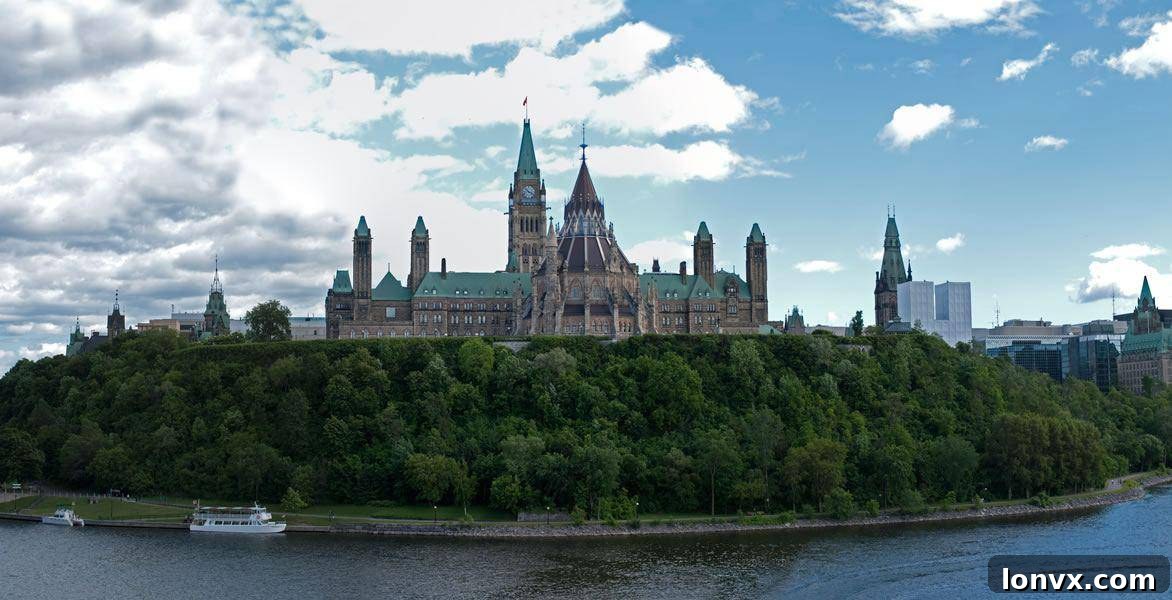
Historic Parliament Hill Lands Sold to International Consortium in Shocking Canadian Real Estate Deal
In a groundbreaking announcement that has sent ripples across the nation, the Government of Canada has confirmed the sale of the revered Parliament Hill grounds to a prominent Spanish business group. This unprecedented transaction marks a pivotal moment in Canadian history, transforming the iconic landscape of the nation’s capital. The consortium acquiring this prime real estate is the same international entity that previously purchased the 407 Highway in Ontario from the Mike Harris government in 1998, operating globally under the name Highway 407 International Inc. This sale underscores a significant shift in the federal government’s approach to national assets and urban development, sparking both intrigue and widespread debate across the country.
A Landmark Announcement Reshapes Canada’s Capital
The news, released earlier this morning, has immediately captured headlines and ignited public discourse. Parliament Hill, long recognized as the symbolic heart of Canadian democracy and a beacon of national heritage, is set to undergo a dramatic transformation. This move signals a bold new direction for the capital, challenging traditional notions of public ownership and national identity tied to physical landmarks. The sheer magnitude of the announcement — the sale of such a profoundly significant site — has left many Canadians in a state of disbelief and contemplation about the future appearance and functionality of their federal seat.
The transaction involves the transfer of land ownership, while the historic structures that adorn Parliament Hill, including the magnificent House of Commons, are slated for careful dismantling and relocation. This elaborate plan aims to preserve the architectural integrity and historical essence of these buildings by moving them across the Ottawa River to a newly designated site in Hull, Quebec. This area is projected to become the new permanent home for Canada’s Parliament by 2020, ushering in an entirely new era of governance from a different provincial vantage point. Meanwhile, the original site will be reimagined as a modern urban complex, featuring a collection of six high-end condominium buildings strategically positioned around a sophisticated shopping complex, which will be fittingly named “The Hill.”
The Spanish Consortium: A Global Player’s Deepening Canadian Footprint
The purchasing entity, a powerful business group primarily based in Barcelona, Spain, boasts an expansive portfolio of international holdings stretching across continents. Their strategic interest in Canadian investment has notably intensified in recent years, culminating in this monumental acquisition. Their previous high-profile foray into the Canadian market with the 407 Highway acquisition showcased their long-term vision and capacity for managing critical infrastructure. This history positions them as experienced, albeit controversial, players in the Canadian economic landscape, raising questions about the growing influence of foreign investment on nationally significant assets.
A spokesperson for the Government of Canada affirmed that the sale specifically pertains to the land itself, emphasizing a clear distinction between the ground and the structures it hosts. This separation allows for the ambitious development plans to proceed without directly impacting the historic buildings, which are deemed irreplaceable national treasures. The consortium’s decision to invest heavily in what will become a prime residential and commercial hub speaks volumes about their confidence in Ottawa’s economic future and its appeal as a global city, despite the profound changes such a development brings to its core identity.
The Vision for Parliament Hill: From National Landmark to Luxury Urban Hub
The transformation planned for the Parliament Hill grounds is nothing short of visionary, or perhaps, audacious, depending on one’s perspective. The proposed “The Hill” development envisages a vibrant, upscale urban environment catering to a discerning clientele. Six architecturally distinct condominium towers are slated to rise from the very soil where national debates once raged and history was forged. These residential units are expected to offer unparalleled views of the Ottawa River and the surrounding cityscape, blending luxury living with a sense of historical gravitas.
Complementing the residential component, the shopping complex will introduce a new dynamic to Ottawa’s retail landscape, potentially attracting high-end brands and diverse culinary experiences. This comprehensive development aims to create a self-contained community, offering residents and visitors a blend of leisure, commerce, and unparalleled convenience in the heart of the nation’s former political epicenter. Real estate expert Lirpa Loof, who played a crucial role in orchestrating this complex transaction on behalf of the Harper government, heralded the property’s potential. “This property is well known and may be the most spectacular location in all of Canada,” stated Loof, underscoring the intrinsic value and unique appeal of the site for such a redevelopment project.
Parliament’s New Home: A Cross-River Relocation to Hull, Quebec
The decision to relocate Parliament across the Ottawa River to Hull, Quebec, represents a colossal undertaking, unparalleled in modern Canadian history. This intricate process will involve the meticulous dismantling of the House of Commons and other venerable parliamentary buildings, piece-by-piece, ensuring their complete and faithful reconstruction in their new home. Such a move demands extraordinary engineering precision, meticulous planning, and a deep understanding of historical preservation techniques. The relocation project, projected to be completed by 2020, highlights a significant shift in the functional geography of Canada’s federal government.
This cross-river migration also carries symbolic weight, fostering new dynamics between the federal government and the province of Quebec. The new parliamentary precinct in Hull is envisioned to be a state-of-the-art facility, designed not only to house the federal legislature but also to accommodate what the government anticipates will be a larger parliamentary presence in the years to come. This forward-thinking approach to government infrastructure suggests a long-term vision for Canadian governance, moving beyond the confines of the traditional capital city to embrace a more integrated cross-provincial identity for its core institutions. The five-year timeline allotted for this intricate process, as articulated by Ms. Loof, emphasizes the scale and complexity of moving a nation’s legislative heart.
Outcry and Controversy: Historic Value Versus Economic Dealings
Predictably, the announcement has not been met with universal approval. Major real estate firms across Canada expressed immediate outrage, primarily criticizing the profound secrecy surrounding the deal and the astonishingly low selling price of $2 million. This valuation, they argue, is woefully inadequate, given the unparalleled historical, cultural, and national significance of Parliament Hill. “The historic value alone is far in excess of this paltry amount. It is far undervalued,” lamented a spokesperson for one prominent real estate executive, echoing a sentiment of profound disappointment and incredulity.
The perceived undervaluation has fueled a vigorous public debate about national heritage, public trust, and the proper stewardship of Canada’s most cherished landmarks. Many questions have arisen concerning the transparency of the negotiation process, the absence of broader public consultation, and the potential implications of privatizing a site so deeply embedded in the national consciousness. Critics argue that the sale represents a shortsighted economic decision that sacrifices invaluable cultural legacy for immediate financial gains, questioning the long-term impact on Canada’s identity and its international image as a nation that values its history.
The Harper Government’s Rationale: A Unique Real Estate Vision
Lirpa Loof, the real estate expert instrumental in bringing this deal to fruition on behalf of the Harper government, offered insights into the rationale behind the controversial selling price. She emphasized the extraordinary challenges inherent in the five-year project, which includes the painstaking process of dismantling, relocating, and reconstructing the House of Commons, alongside the extensive engineering and design required for new offices. “This is a project that will take place over a five-year period, permitting all the time needed to move the House of Commons piece-by-piece and allow time for engineering and design of new offices, for what we anticipate to be a larger government in the years ahead,” Loof explained.
She further justified the lower valuation by stating, “It is for that reason that consideration had to be given for a lower price. Canadian real estate companies simply do not understand real estate marketing the way I do.” Loof, who has held her influential position for nearly three years, suggests a unique perspective on large-scale, complex real estate transactions, implying that the true cost and value extend far beyond a simple per-acre calculation. Her statements suggest that the immense logistical hurdles and the future-proofing aspects of the relocation and expansion plans significantly impacted the negotiation of the final selling price.
Engaging the Public: A Glimpse into the Future of Canada’s Capital
To provide the public with an early glimpse into the future of Canada’s capital, an interim trailer will be established near the entrance of the current Parliament Hill site. This temporary installation is designed to serve as an information hub, showcasing detailed plans for the new condominium sites and providing visitors with the unprecedented opportunity to make deposits on their prospective new homes in the nation’s capital. The trailer is set to open its doors for business first thing on April 1, marking the official commencement of public engagement with this transformative project.
This public engagement strategy aims to bridge the gap between the monumental government decision and the everyday lives of Canadians, allowing them to visualize and even participate in the reshaping of their capital. While the trailer’s opening date may raise eyebrows, it underscores the government’s commitment to moving forward with the project and initiating the next phase of development and public interaction. This innovative approach offers a tangible connection for citizens to a project that will fundamentally alter one of Canada’s most cherished and historically significant landscapes.
Conclusion: A New Era for Canada’s Parliamentary Precinct
The sale of Parliament Hill grounds represents a turning point in Canadian history, ushering in an era of profound change for the nation’s capital and its parliamentary functions. While the decision has ignited intense debate and criticism, particularly regarding the valuation and transparency of the deal, it also signals a bold vision for urban development and governmental infrastructure. The transformation of Parliament Hill into “The Hill” urban complex and the relocation of Parliament to Hull, Quebec, are monumental undertakings that will undoubtedly redefine Canada’s political and urban landscape for generations to come.
As the nation grapples with the implications of this unprecedented transaction, the future holds a complex blend of preservation and progress. The coming years will witness the careful dismantling of historic structures, the rise of modern condominiums, and the forging of a new parliamentary home. This grand undertaking stands as a testament to evolving ideas of national space, foreign investment, and the ever-changing face of a dynamic nation, pushing the boundaries of what defines Canada’s capital in the 21st century. The legacy of this decision, whether celebrated as visionary or lamented as a loss, will undoubtedly shape the narrative of Canada for decades to come.