
GTA Real Estate: A Deep Dive into April’s Deceptive Housing Market Report
At first glance, the April housing market report for the Greater Toronto Area seems to signal a robust turnaround. The headline figures could easily be misinterpreted as the start of a new bull run. However, a deeper analysis reveals a far more complex and nuanced reality, one that savvy buyers and sellers need to understand.
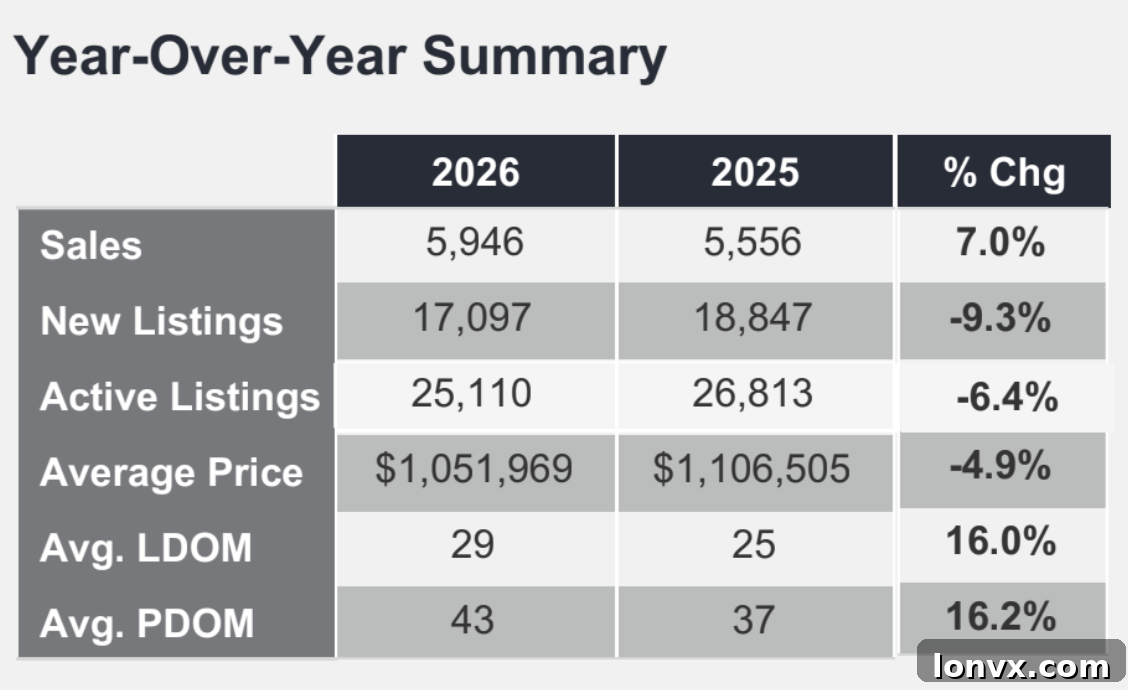
On the surface, the numbers look promising. The Toronto Regional Real Estate Board (TRREB) reported 5,946 sales in April 2026, marking a seven per cent increase compared to April 2025. Simultaneously, new listings decreased by 9.3 per cent, down to 17,097. In a typical market, this combination—rising sales and falling inventory—is a classic recipe for price growth and a tightening market. But this is not a typical market.
The true story lies beneath these initial figures. To understand the current state of GTA real estate, we must look beyond the headlines and examine the crucial details that paint a picture of a market still favouring cautious buyers.
Price Trends Tell a Different Story
While sales activity picked up, prices continued their downward trajectory. The average selling price across the GTA was $1,051,969, a significant 4.9 per cent drop year-over-year. The MLS Home Price Index (HPI) composite benchmark, often considered a more accurate measure of underlying price trends, fell even further, down 6.6 per cent from last April. Even TRREB’s own press release highlighted that buyers continue to enjoy “ample choice and negotiating power.”
This is the critical takeaway: this is not a “market is back” report. It is a “market is finally moving, but only at lower prices” report. An increase in sales volume while prices are falling is a common characteristic of a weak or correcting market. It indicates that sellers are adjusting their expectations downwards to meet buyers where they are financially comfortable and willing to transact. Deals are happening not because buyers are aggressively bidding up prices, but because the market is finding a new, lower equilibrium. The gridlock is easing, but on buyers’ terms.
The Great Divide: A Tale of Two Markets in the 416 vs. 905
One of the most revealing aspects of the April data is the growing divergence between Toronto proper (the 416 area code) and the surrounding suburbs (the 905). This geographic and property-type split is essential to understanding the pressures at play.
Sales for detached homes were up 9.2 per cent, and condo apartment sales saw a similar 9.1 per cent lift. Meanwhile, semi-detached and townhouse sales remained relatively flat. However, when it comes to price, every major housing category experienced a year-over-year decline. Detached home prices fell by 4.1 per cent, semis by 5.2 per cent, townhouses by a sharp 7.9 per cent, and condos by 6.3 per cent.
The crucial detail is where these price drops were most severe. The 905 region is bearing the brunt of the market softness.
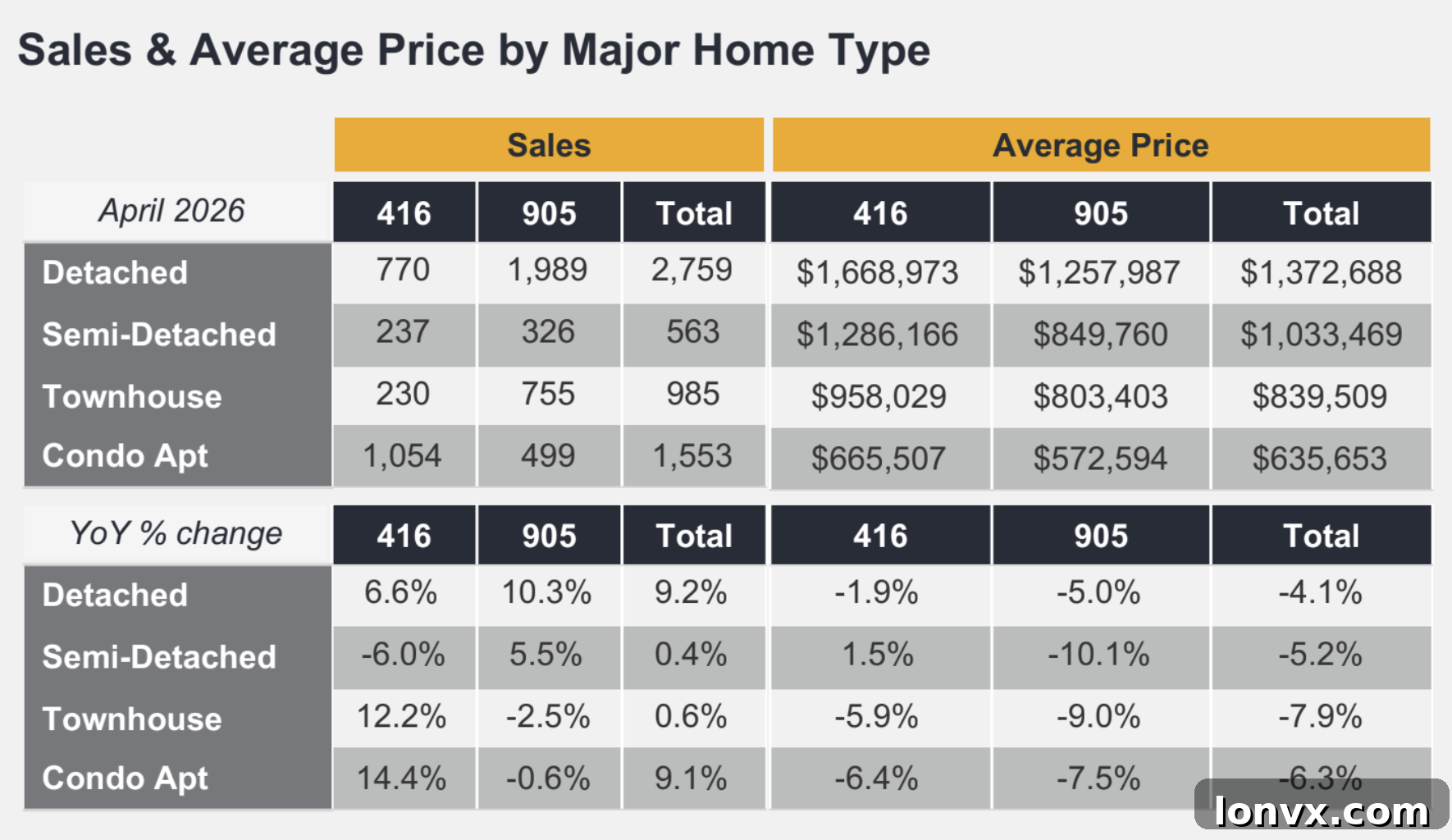
Consider the detached home segment: prices in the 905 fell by five per cent, more than double the 1.9 per cent decline seen in the 416. The gap was even more dramatic for semi-detached homes, with 905 prices plummeting 10.1 per cent while 416 semis surprisingly edged up by 1.5 per cent. The trend continued with townhouses, which were down nine per cent in the suburbs compared to 5.9 per cent in the city. The condo market, while weaker in both areas, still saw a larger drop in the 905 (7.5 per cent) than in the 416 (6.4 per cent).
This data clearly shows that the suburban market, particularly the family-oriented housing segment in the 905, is under significantly more pressure than Toronto’s urban core. Several factors are likely contributing to this trend. The post-pandemic return-to-office mandates have made commute times a major consideration again. Worsening traffic and the rising cost of transportation are chipping away at the value proposition of living further out. Some buyers who sought more space in the suburbs during the pandemic may now be re-evaluating the benefits of proximity to urban amenities and workplaces.
Could Government Incentives Reshape the Market?
A new factor to consider is the impact of government incentives on new construction, which could further influence the resale market, especially in the 905. The federal government’s GST/HST rebate aims to spur new home construction by offering relief on eligible new homes. Ontario has introduced its own expanded HST relief. The key question is where these rebates will be impactful enough to change a buyer’s purchasing decision.
In the high-priced 416 condo market, the relief might not be a game-changer. If a pre-construction unit is still substantially more expensive than a comparable resale condo and presents a challenging cash-flow scenario for investors, a tax rebate is helpful but may not be enough to sway buyers.
However, in the 905 low-rise market, the math becomes much more compelling. For detached homes, semis, and townhouses, the combination of builder incentives, tax relief, and new home warranties can create a powerful value proposition. A prospective buyer comparing an older resale home—which might need a new roof, windows, or a kitchen renovation—with a brand-new build that comes with financial perks and peace of mind may start to see the resale property in a less favourable light.
This is crucial because pre-construction doesn’t just create new housing; it can also divert demand away from the existing resale market. While it’s too early to definitively link the new HST relief to the current weakness in the 905 resale market, it’s a dynamic worth monitoring closely. The fact that semis and townhouses—the very product types most likely to see increased competition from new builds—are among the hardest-hit categories in the April data is certainly noteworthy.
A Seasonal Bounce, Not a Full-Blown Recovery
It’s vital for market watchers not to confuse normal spring seasonality with a genuine, sustainable market recovery. Yes, average prices have climbed steadily since the winter lows, moving from $969,972 in January to $1,051,969 in April. While this is a meaningful increase, it’s also a predictable pattern. The market almost always gains momentum as it moves from the cold of winter into the spring selling season.
Furthermore, the product mix changes in the spring, with a higher proportion of larger, more expensive family homes being sold as households aim to move before the next school year. This shift naturally pushes the average price up. A seasonal bounce does not negate the more significant year-over-year downtrend in prices.
Buyer psychology is also more nuanced than the headline sales figures suggest. Buyers aren’t suddenly feeling bullish; they are simply less paralyzed by uncertainty than they were months ago. Many remain cautious, keeping a close eye on job security, upcoming mortgage renewals, persistent inflation, and the direction of interest rates. They see properties lingering on the market, they see price reductions, and they know they have negotiating power.
However, life events wait for no market. People’s needs change—they get married, have children, relocate for work, or retire. After two years of waiting for economic clarity that never fully arrived, a sense of fatigue has set in for some. This is how pent-up demand is often released: not in a sudden, dramatic flood, but as a slow, steady trickle of individuals who have decided they can’t put their lives on hold any longer. This creates transactions, but it does not inherently create price growth. For that to happen, you need widespread competition among buyers, and in most GTA segments, buyers are still competing with inventory, not with each other.
Key Indicators Still Point to a Buyer’s Market
Despite the increase in sales, several key metrics confirm that the market remains slow and tilted in favour of buyers. The average listing days on market climbed to 29 days, up from 25 last year. The average property days on market, a broader measure, rose to 43 days from 37. These figures indicate that homes are taking longer to sell.
Perhaps most telling is the average sale-to-list price ratio, which stood at 98 per cent. This means the average property is still selling for below its asking price, a clear sign of a negotiating market, not an urgent one where bidding wars are the norm.
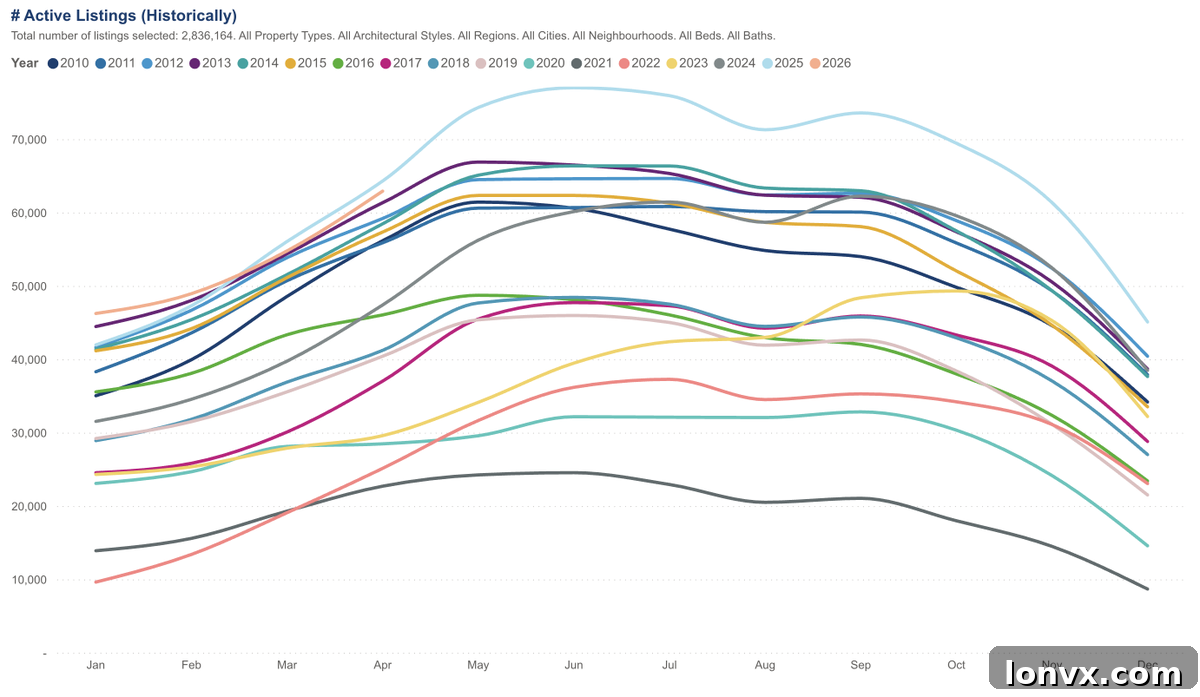
Finally, inventory levels remain elevated. TRREB reported 25,110 active listings at the end of April. While this is down slightly from last year, it remains one of the highest April inventory levels seen in the past 16 years. This abundance of choice reinforces buyer leverage and puts a natural cap on price appreciation. Until this supply is absorbed more quickly, the market will continue to face headwinds. The GTA housing market in April was a story of movement, not a story of recovery. It’s a market finding its footing at a lower price point, with significant variations based on location and property type, and where the buyer remains firmly in the driver’s seat.