
 Katie Steinfeld is candid about not having technical degrees, but she has become an informed and vocal advocate for transparency around data centre development in Ontario.
As broker of record and president of On The Block Realty, Inc., Steinfeld focuses on helping homebuyers understand how nearby developments — especially data centres — could affect their communities and property values.
She created Ontario Data Centres to close an information gap by collecting and centralizing publicly known data centre projects across the province, including approvals, infrastructure needs, regulatory context and industry trends.
“If people don’t know what’s coming into their communities, they can’t really have a say,” Steinfeld says. She brings experience from a five-year term on the Real Estate Council of Ontario (RECO) board, serving as chair from 2023 to November 2025.
What’s the issue?
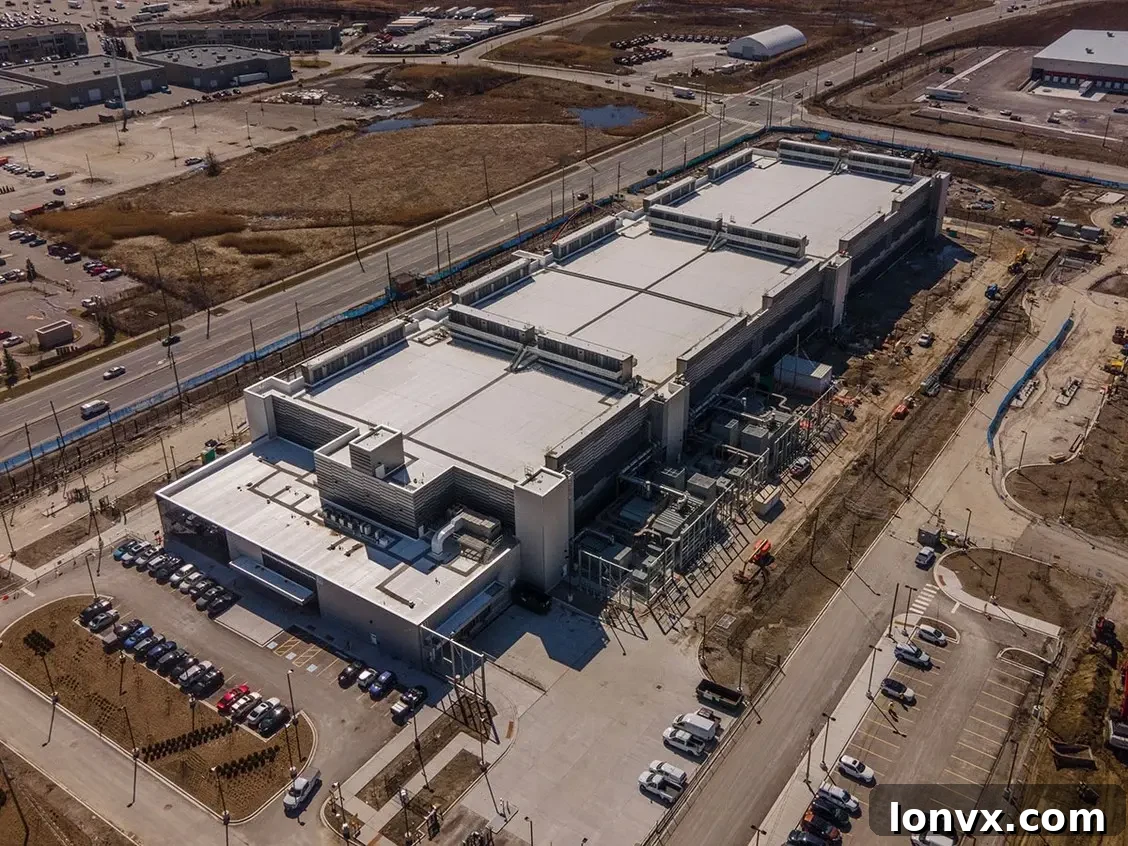
Microsoft’s data centre in Vaughan, Ont. (Microsoft)
From the street a data centre can resemble a warehouse, but inside are the servers and networking equipment that power cloud services, machine learning and other digital infrastructure. These facilities form the physical backbone of modern computing and are a rapidly growing part of Canada’s real estate and energy landscape.
The Canadian data centre market is expected to grow substantially between 2025 and 2031. Major tech companies, including Microsoft, have committed large capital investments in recent years. Toronto, Montreal and Vancouver are primary hubs, and Ontario already hosts more than 100 data centres, with more projects proposed or under development.
Governments at the federal and provincial levels are competing to attract large-scale computing infrastructure. The federal Canadian Sovereign AI Compute Strategy further incentivizes domestic, high-capacity compute facilities.
Local residents and communities have raised questions about the potential impacts of data centres, including energy and water consumption, effects on utility rates, environmental concerns and changes to neighbourhood character. These concerns have prompted protests and public debate, such as recent demonstrations in Vancouver focused on water and energy use by planned data centres.
Why real estate professionals need to pay attention
Real estate professionals have a duty to identify material facts about properties. Steinfeld argues that the lack of clear, accessible data about nearby data centre projects interferes with agents’ ability to advise clients and perform adequate due diligence.
When buyers ask about ongoing or upcoming developments in a neighbourhood, potential data centre proposals should be part of that conversation. Yet many agents do not ask, and even when they do, the information is often hard to find because it isn’t consistently centralized across municipal or provincial sources.
Steinfeld urges agents to bring the topic up early in the buying process and to ask clients what community features would be dealbreakers. She built Ontario Data Centres using Replit, an AI-assisted development tool, and then personally verified the data. Steinfeld emphasizes that her work is not anti-AI; rather, it advocates for responsible use of technology paired with transparency for communities.
Not all data centres are the same
Without clear information, people often assume all data centres are large, resource-intensive facilities like some high-profile U.S. campuses. In reality, data centres vary widely in scale, design and resource needs.
The distinctions matter: water use, electricity demand, site footprint and local integration differ from one facility to another. Educating residents and professionals about these differences helps communities weigh potential benefits and risks more accurately.
What’s next
Steinfeld’s immediate priority is expanding the Ontario Data Centres map to include more of the roughly 150 facilities she estimates are built across the province and to identify projects in planning or development. The regulatory landscape remains fragmented: Bill 40, which received royal assent in December, addresses ministerial authority for connecting certain data centre sites to the electricity grid, but implementing regulations have not yet been released.
Until those regulations are published, it is difficult to predict the scope of oversight or the level of transparency communities can expect. Steinfeld hopes forthcoming rules will offer clearer guidance and a central reference point for residents, real estate professionals and local governments.
Real estate professionals can play a critical role in making sure buyers are informed about nearby infrastructure projects. Centralized, verified information and stronger regulatory clarity would make that task far easier and ensure communities are engaged in decisions that affect them.