More Ontario homeowners are selling properties at a loss as housing market corrections continue to ripple through the province, according to new data from Teranet Inc., the private company that manages property title registrations in Ontario.
The trend is most pronounced among properties bought in 2022, when prices peaked. Teranet found that 36.6 per cent of properties purchased that year and resold in 2025 were sold at a loss, reflecting both price corrections and the higher cost of carrying a mortgage today.
Jasaman Singh of Century 21 Paramount Realty in Brampton says he is navigating these conditions with clients every day.
Recently, he saw a seller client incur a $950,000 loss on a four-bedroom, three-bathroom home in northwest Brampton. The client bought the home for $2.2 million in February 2022 and sold it last week for $1.25 million — a decline of about 43 per cent.
“The bigger the house, the bigger the problem,” Singh told Real Estate Magazine, noting that scenarios like this are becoming increasingly common.
‘It’s everywhere.’
According to Teranet, Toronto and most surrounding regions saw more than 20 per cent of properties purchased in 2022 and 2023 and subsequently resold register a loss.
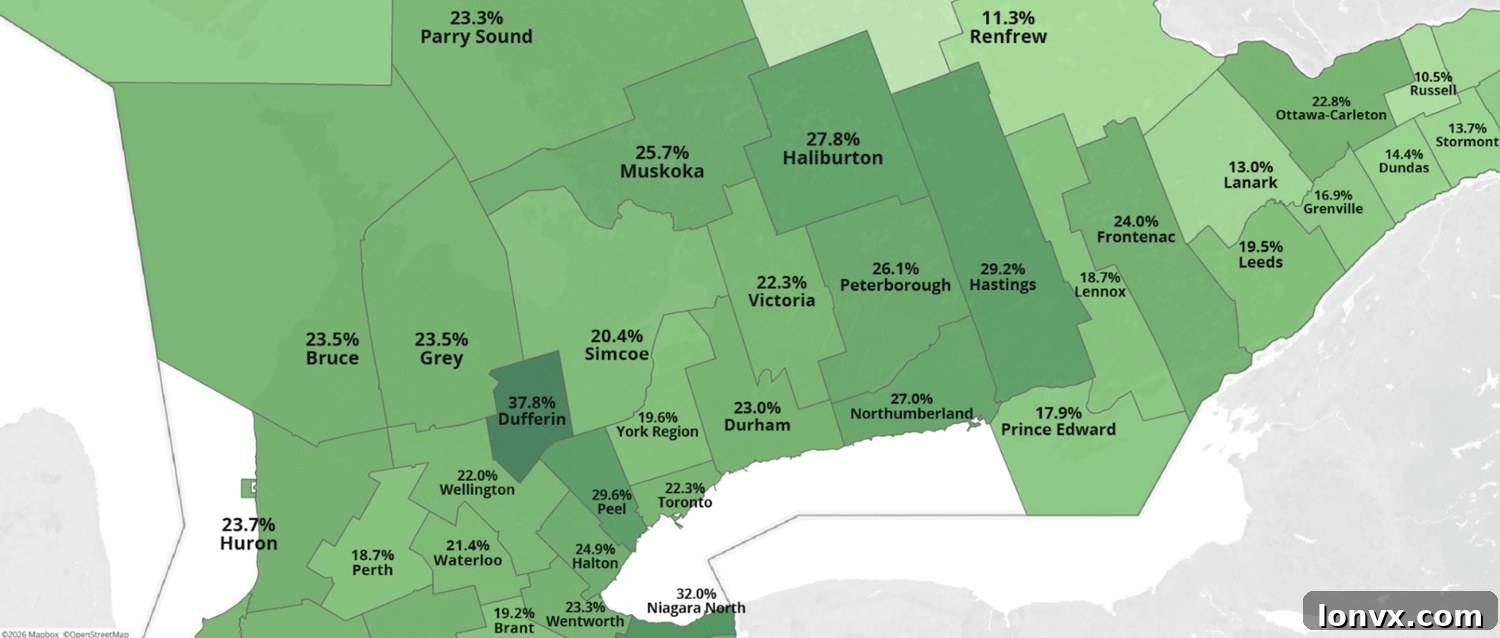
Percentage of properties sold at a loss, by purchase year (2022 and 2023) and sold year (2022 to 2025). Source: Teranet
Dufferin County and Peel reported the highest rates of loss, while many “cottage country” regions north of the GTA experienced loss rates in excess of 25 per cent. Singh says areas outside the Toronto downtown core — which saw the biggest price appreciation during the pandemic years — are being hit the hardest.
“It’s everywhere,” he said, adding that he suspects conditions may worsen before stabilizing.
“It has to get worse before it gets stable, and then better.”
Power of sales up 400 per cent
Ontario is also seeing a sharp rise in power of sale activity, another sign that higher borrowing costs are straining some homeowners. Teranet reports power of sale transfers rose to 2,979 in 2025, up from 2,123 a year earlier and fewer than 600 in 2022.
While power of sale transactions still make up a relatively small share of overall housing activity, the steady increase suggests a growing number of households are struggling to keep up with mortgage payments and living expenses. Teranet notes this trend may reflect challenges for homeowners renewing mortgages at significantly higher interest rates or carrying variable-rate debt.
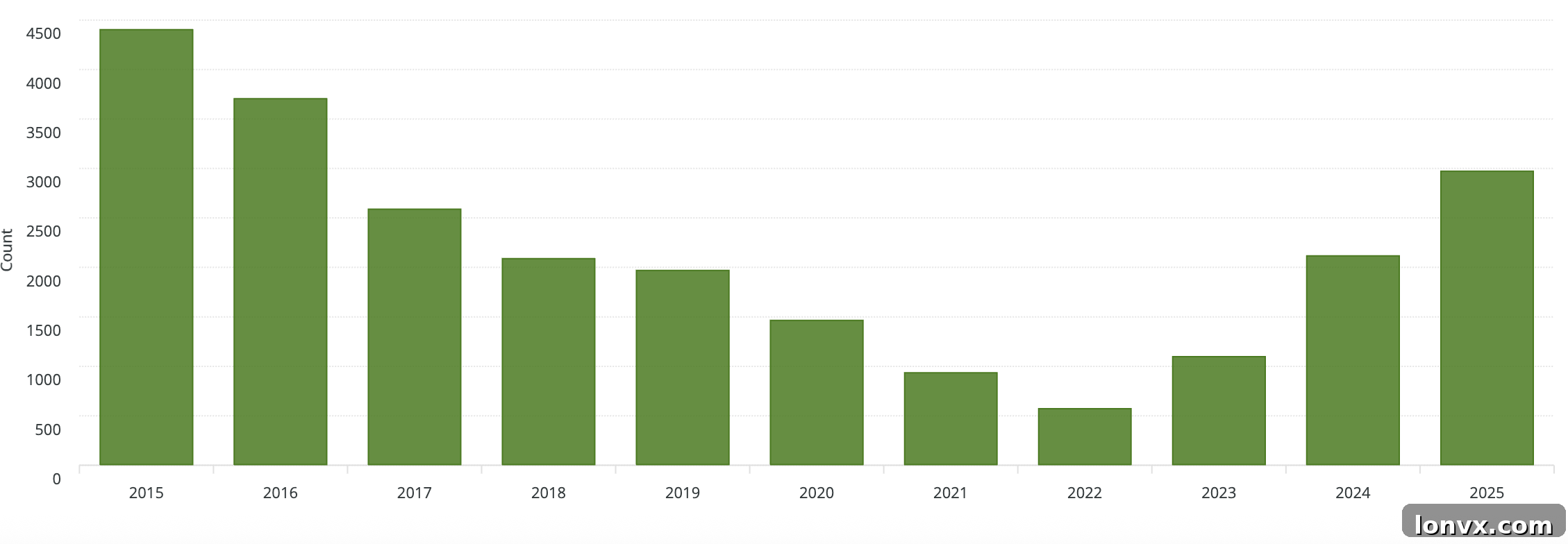
Ontario power of sale transfer volumes, 2015 to 2025. Source: Teranet
Jonathan Alphonso, a Toronto-based mortgage broker, real estate agent and private lender who works with distressed borrowers, says people are selling only when they absolutely must. He reports an increasing number of “dire situations” and expects the trend to continue.
“People who are calling me now and want to sell, they’re not in a good place. Divorce, other debts, or they have no money for living expenses and are already leveraged to the maximum,” he said.
An opening for first-time buyers?
Tracy Valko, founder and owner of Valko Financial Ltd., sees many mortgage applications and was surprised by Teranet’s finding that the average first-time homebuyer age has climbed to 40.
From her experience, people are still entering the market in their mid-30s, often with co-signers or down payment assistance from parents. She believes the softening in prices has opened opportunities for buyers who had been sidelined during the market boom.
“I feel like the Ontario housing market is increasingly becoming a first-time homebuyer market. It’s obviously not an investor market anymore,” Valko said. “It’s allowing people to take advantage of those windows, where there’s not as much competition, and they’re able to have more negotiating power.”