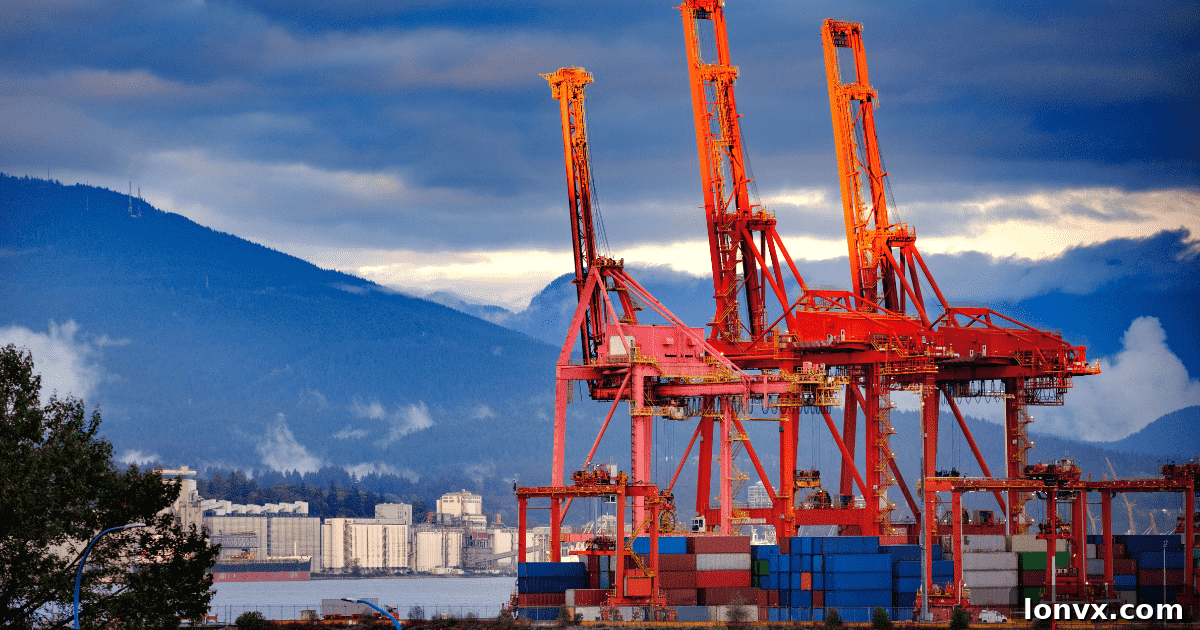
Port of Vancouver (Canva)
British Columbia’s Ambitious Vision: The 3% GDP Growth Challenge and Its Profound Real Estate Implications
The economic landscape of British Columbia is often characterized by its stunning natural beauty, vibrant cities, and a dynamic yet sometimes volatile market. Amidst this backdrop, the Greater Vancouver Board of Trade (GVBOT) has issued a bold declaration, challenging the B.C. government to pursue an ambitious 3 percent annual Gross Domestic Product (GDP) growth target over the next five years. This initiative, unveiled on January 30th and aptly named the “3% Challenge: Agenda for Economic Growth,” arrives at a pivotal moment as B.C. navigates a period of significant economic uncertainty. From the looming threat of U.S. tariffs, a concern that has resonated across various sectors, to the ever-present and growing anxieties surrounding housing affordability, the province faces a complex array of challenges.
The GVBOT’s powerful call to action isn’t merely an arbitrary target; it’s a response rooted in concrete data and widespread public sentiment. A comprehensive survey conducted among Metro Vancouver residents and businesses painted a clear picture: a striking 75 percent of respondents believe the province currently lacks a cohesive and well-defined economic strategy. Furthermore, the issue of affordability weighs heavily on the minds of British Columbians, with an overwhelming 80 percent of residents and an even higher 92 percent of businesses reporting that affordability has deteriorated significantly over the past four years. These statistics underscore a palpable desire for decisive action and a clear economic roadmap for the province’s future.
Bridgitte Anderson, president and CEO of the GVBOT, articulates the urgency of the situation, telling REM, “The threat of U.S. tariffs should serve as a catalyst for action in B.C. To build a future worthy of our aspirations and one we can be proud to pass on to the next generation, British Columbia must pursue policies that will boost our economic growth and raise our collective standard of living.” Her statement highlights not just an economic imperative but a social one, emphasizing the responsibility to secure a prosperous future for all residents.
The stakes associated with this ambitious target are undeniably high. The GVBOT’s projections suggest that successfully meeting this 3 percent annual GDP growth could unlock substantial benefits for the province. These include generating an estimated $4 billion in additional government revenue, creating tens of thousands of new jobs across various sectors, and, crucially, making tangible improvements to affordability province-wide. Such an outcome would represent a significant stride towards a more stable, equitable, and prosperous British Columbia.
However, as with any major economic push, critical questions emerge, particularly concerning one of B.C.’s most sensitive and economically vital sectors: the real estate market. Could this ambitious economic strategy serve as a much-needed catalyst for sustainable growth, driving innovation and expanding opportunities? Or, conversely, might it inadvertently exacerbate existing pressures, pushing housing prices even higher and further out of reach for many? The potential ramifications for British Columbia’s housing landscape are complex and demand careful consideration, forming a central theme in the broader discussion of the 3% Challenge.
A Boost of Additional Demand, But With a Potential Cost for British Columbia’s Housing Market
The relationship between robust economic growth and the health of the real estate sector is undeniable, and at the heart of the GVBOT’s “3% Challenge” lies a recognition of this intrinsic link. Bridgitte Anderson emphasizes that achieving the ambitious 3 percent GDP target necessitates a “robust and healthy real estate sector.” She elaborates that a stronger economy, characterized by higher incomes and an abundance of new jobs, will inevitably stimulate increased demand within the housing market. This is a fundamental economic principle: as people earn more and feel more secure in their employment, their capacity and desire to invest in housing, whether through purchasing or renting, naturally increases.
The GVBOT’s agenda offers a glimpse into the potential benefits of such growth. A consistent 3 percent GDP increase over five years is projected to lead to a significant jump in per capita GDP, adding approximately $9,000 more per person. This translates directly into enhanced purchasing power and, by extension, a higher quality of life for British Columbians. A more affluent populace, with greater disposable income and improved financial stability, is more likely to engage actively in the real estate market, seeking better housing, upgrading their residences, or entering homeownership for the first time. This surge in economic well-being is expected to energize both the ownership and rental segments of the market.
Steve Saretsky, a respected Vancouver Realtor with Oakwyn Realty, corroborates this perspective, noting that “If you have a 3 percent GDP growth, it will certainly be good for the economy.” He adds that such growth would “obviously… be beneficial for… the rental market, sort of stabilizing that asset class.” A vibrant economy typically means more people moving to the region for work, increasing demand for rental properties and potentially stabilizing rental rates through increased supply investments driven by investor confidence.
Brendon Ogmundson, chief economist with the B.C. Real Estate Association, approaches the question of the agenda’s market impact as a “multi-layered hypothetical,” acknowledging the complexity of predicting exact outcomes. However, he concurs that a surge in demand is a highly probable consequence. Ogmundson explains, “It’s interesting because there is the obvious demand side. You know, you have higher incomes, you can more easily afford homes. But that also means people… the more income they get, tend to buy more housing, the way it works in BC.” This observation highlights a critical aspect of B.C.’s real estate dynamics: increased affluence often translates directly into more aggressive participation in the housing market, fueling competition and price appreciation.
The other side of this demand coin, particularly in affluent provinces like British Columbia, is the concept of elasticity. As Ogmundson elucidates, this economic principle suggests that as residents’ income growth increases, the cost of home prices tends to rise in tandem, primarily due to heightened demand outpacing available supply. He cites crucial research from the Canada Mortgage and Housing Corporation (CMHC), which starkly illustrates this phenomenon in B.C.: for every 1 percent increase in residents’ income, house prices in British Columbia specifically have been observed to spike by 3 percent. This striking correlation reveals the inherent “double-edged sword” aspect of the GVBOT’s GDP growth agenda. While economic prosperity is universally desired, without careful management, it could inadvertently exacerbate the very affordability challenges it seeks to alleviate.
Therefore, Ogmundson underscores a profoundly important caveat: “So the really important thing in this context is if you’re going to increase growth, or… if incomes are going to be rising in order to sort of staunch the potential impact on prices, this needs to be done in an environment of much higher housing supply.” He warns that without a substantial and proactive increase in housing availability, the intended benefits of higher incomes could simply be absorbed by escalating property values. “It could just mean you get higher prices unless we have a lot more housing supply available for all those incomes to buy,” he concludes. This emphasizes that while boosting demand is achievable through economic growth, the critical challenge lies in ensuring that housing supply can adequately respond, preventing a further deepening of the affordability crisis.
Investors Might Come Back ‘Into the Pool’ – A Critical Element for Housing Supply
In the intricate ecosystem of real estate, investors play a pivotal role, particularly in funding new construction and expanding the rental housing stock. Steve Saretsky astutely observes that “When times are good, investors notice.” This sentiment holds especially true for large-scale developments, such as pre-sales, where investors commit capital years before a project’s completion, relying heavily on an optimistic outlook for the provincial economy. “You have to be fairly optimistic about the future of the economy of the province, right?” Saretsky posits. He explains that a sustained 3 percent GDP growth would foster a significant sense of economic confidence among the populace and, crucially, among potential investors. “So, I mean… if you’re having 3 percent GDP growth, people are gonna feel pretty good. So that would certainly… bring a lot of investors back into the pool,” he concludes, highlighting the magnetic effect of a robust and growing economy on investment capital.
However, both Saretsky and Ogmundson acknowledge that investors in British Columbia are currently navigating a complex landscape marked by significant headwinds, contributing to what Saretsky describes as a “gloomy” outlook. From an investor’s perspective, these challenges translate into increased risk and diminished potential returns. Saretsky points to the “threat of tariffs” as a deterrent, creating uncertainty in global trade and potentially impacting B.C.’s export-oriented industries. More critically, he notes a provincial government that he perceives as “not necessarily pro-growth,” suggesting that certain policies or regulatory environments have led to investors pulling their dollars back from the market. This perception, whether fully justified or not, can have a profound psychological impact on investment decisions.
Ogmundson echoes these concerns, further highlighting a pervasive issue in the public discourse: the “demonizing the financialization of real estate (investing).” This refers to the political and public narrative that often casts real estate investment, particularly by large entities or foreign buyers, in a negative light, sometimes attributing affordability issues solely to their actions. While addressing speculative behavior and ensuring fairness in the market are legitimate concerns, this broader “demonization” can lead to policies that unintentionally deter necessary investment in new housing supply. Ogmundson explains that this political rhetoric only exacerbates the already “dreary outlook” for investors, making them hesitant to commit capital to B.C.’s real estate market.
The implication is clear and urgent. “So something has to change if we want to hit the housing targets that we have,” Ogmundson states unequivocally. He emphasizes the critical need to shift this narrative and policy approach: “we need to have a focus on bringing investors in…” Without a stable and attractive environment for investors, who are essential for funding the development of both market-rate and rental housing, British Columbia’s ability to significantly increase its housing supply will remain severely hampered. This suggests that achieving the GVBOT’s ambitious economic growth target and simultaneously addressing the housing crisis requires a nuanced approach that balances regulatory oversight with policies designed to encourage responsible, long-term investment in the province’s housing infrastructure.
What Are the Chances Elected Officials Support the Agenda? Navigating Political Will and Public Good
The “3% Challenge” put forth by the Greater Vancouver Board of Trade, while economically sound in its aspirations, ultimately hinges on the crucial factor of political will. The success of this ambitious agenda rests squarely in the hands of elected officials across the province. If the B.C. government and other policymakers do not actively embrace and implement policies aligned with the GVBOT’s goals, then the projected 3 percent annual GDP growth target will likely remain an unfulfilled aspiration. This raises a pertinent question: what are the realistic chances that elected officials will fully endorse and commit to this economic strategy?
Admittedly, it is too early to definitively gauge the full extent of political support. Initial reactions and detailed policy considerations will unfold over time. However, Brendon Ogmundson offers an insightful perspective on the inherent appeal of the GVBOT’s proposal. He notes that while specific arguments might arise against increasing economic growth if it were perceived to benefit only a narrow segment of B.C. earners, it becomes significantly harder to argue against broad-based growth in principle. Economic growth, when designed to be inclusive and widespread, offers benefits that are difficult for any politician to dismiss outright.
“But, you know, growth in general is — as long as it’s kind of broad-based and creating a lot of opportunities for everybody — it’s kind of hard to argue against,” Ogmundson articulates. This highlights a key strategic element for the GVBOT: framing their agenda not as a boon for a select few, but as a comprehensive strategy that uplifts all British Columbians. By emphasizing job creation, increased provincial revenues for public services, and improvements in overall living standards, the GVBOT can build a compelling case that transcends partisan divides.
For elected officials, supporting an agenda focused on robust economic growth aligns with core mandates of improving constituents’ quality of life and fostering a prosperous future. The challenge, however, lies in translating this broad acceptance into specific policy actions, particularly those that address the inherent tension between economic growth and housing affordability. Implementing policies that streamline development, reduce regulatory burdens, incentivize diverse housing types, and attract necessary investment while also safeguarding against unchecked price escalation will require careful navigation and consensus-building.
Moreover, the GVBOT’s initiative offers an opportunity for the B.C. government to demonstrate leadership in economic planning, responding to the widespread sentiment that the province currently lacks a cohesive strategy. By adopting and championing a clear, measurable growth target, officials can provide much-needed clarity and direction for businesses and residents alike. The success of this agenda will ultimately depend on the political will to enact bold, sometimes challenging, reforms and to work collaboratively with stakeholders across the province to ensure that the benefits of growth are widely shared and contribute to a more resilient, equitable, and affordable British Columbia for generations to come.