
While mainstream headlines often sensationalize the “doom and gloom” narratives surrounding many major Canadian real estate markets, a closer examination reveals a far more dynamic and compelling story: one of strategic reinvention and robust adaptation. Far from a market in decline, the Canadian real estate sector is undergoing a profound transformation, driven by innovative approaches to development, shifting investment priorities, and an urgent response to evolving demographic and societal needs.
This optimistic yet grounded perspective is meticulously detailed in the recently released “Emerging Trends in Real Estate 2026 Canadian report,” a collaborative effort by PwC Canada and the Urban Land Institute (ULI). This comprehensive study is not based on speculation but on tangible data, compiled from over 200 in-depth interviews and extensive surveys with a diverse group of Canadian industry leaders, including investors, developers, asset managers, and other real estate professionals. The report paints a clear picture of a market in active transition, showcasing how leading companies are strategically leaning into new sources of growth.
Key areas of focus for this reinvention include the burgeoning segment of purpose-built rentals (PBRs), specialized housing solutions for students and seniors, and the increasing attractiveness of secondary markets across the nation. This pivot signifies a proactive response to persistent challenges such as elevated interest rates, strained affordability, and evolving consumer preferences. The report effectively debunks the pervasive pessimism, presenting a blueprint for how the industry is not just surviving, but thriving through adaptability, innovation, and a keen understanding of future demands.
Purpose-Built Rentals: Addressing Canada’s Family Housing Gap
The Canadian real estate sector continues to grapple with a complex array of challenges, most notably sustained high interest rates, which elevate borrowing costs for both developers and homebuyers. This, in turn, exacerbates an already strained affordability crisis, pushing homeownership further out of reach for many. Coupled with subdued consumer sentiment and the lingering uncertainty of international tariffs, the operational environment for developers and investors remains intricate.
One of the most significant segments impacted by these headwinds has been the traditional Canadian condominium market. Historically, condominiums served as a vital pipeline for future rental housing, with individual investors purchasing units as income-generating assets. However, as market conditions shifted, marked by rising costs and diminished returns, a noticeable exodus of investors from the condo market began. This pivotal reallocation of capital and development activity has led to a decisive and strategic shift towards purpose-built rentals (PBRs), as highlighted by the PwC/ULI report. This transition is not merely reactive; it represents a fundamental re-evaluation of long-term investment strategies within the housing sector.
A critical void in the current housing supply is the severe shortage of family-sized rental units. For many years, escalating land and construction costs incentivized developers to construct smaller, more cost-efficient units, often resulting in an oversupply of one-bedroom or studio apartments. While these units cater to a segment of the market, they inadvertently created a substantial gap for multi-bedroom rentals suitable for families. The demand for these larger rental units continues to intensify across the country, a trend that persists even amidst federal policies designed to moderate the number of non-permanent residents and international students, underscoring the deep-seated need from the resident population.
This growing imperative for family-friendly PBRs is particularly evident in key urban centers. In Quebec’s vibrant cities of Montreal and Quebec City, investor interest in the purpose-built rental market is exceptionally high. Developers are demonstrating remarkable innovation, often repurposing underutilized existing retail assets and leveraging adjacent excess land to create new residential communities. This adaptive reuse not only addresses housing shortages but also contributes to urban revitalization. Similarly, in Ottawa, the nation’s capital, developers are strategically prioritizing transit-oriented developments (TODs). These projects are meticulously planned around the city’s expanding light-rail network, offering residents unparalleled convenience and connectivity, thereby maximizing appeal for both tenants and investors.
The surge in purpose-built rental starts is already beginning to yield tangible benefits, particularly in moderating the meteoric rental price growth seen in several major Canadian cities in recent years. According to the Canada Mortgage and Housing Corporation’s (CMHC’s) 2025 Mid-Year Rental Market Update, the first quarter of 2025 brought welcome news for renters. Advertised rents in major metropolitan hubs like Toronto, Vancouver, Calgary, and Halifax experienced noticeable declines, ranging between two and eight percent compared to the same period a year earlier. This significant data point signals a much-needed easing of price pressures and highlights the crucial role that increased PBR supply is playing in fostering a more balanced and accessible rental market across Canada.
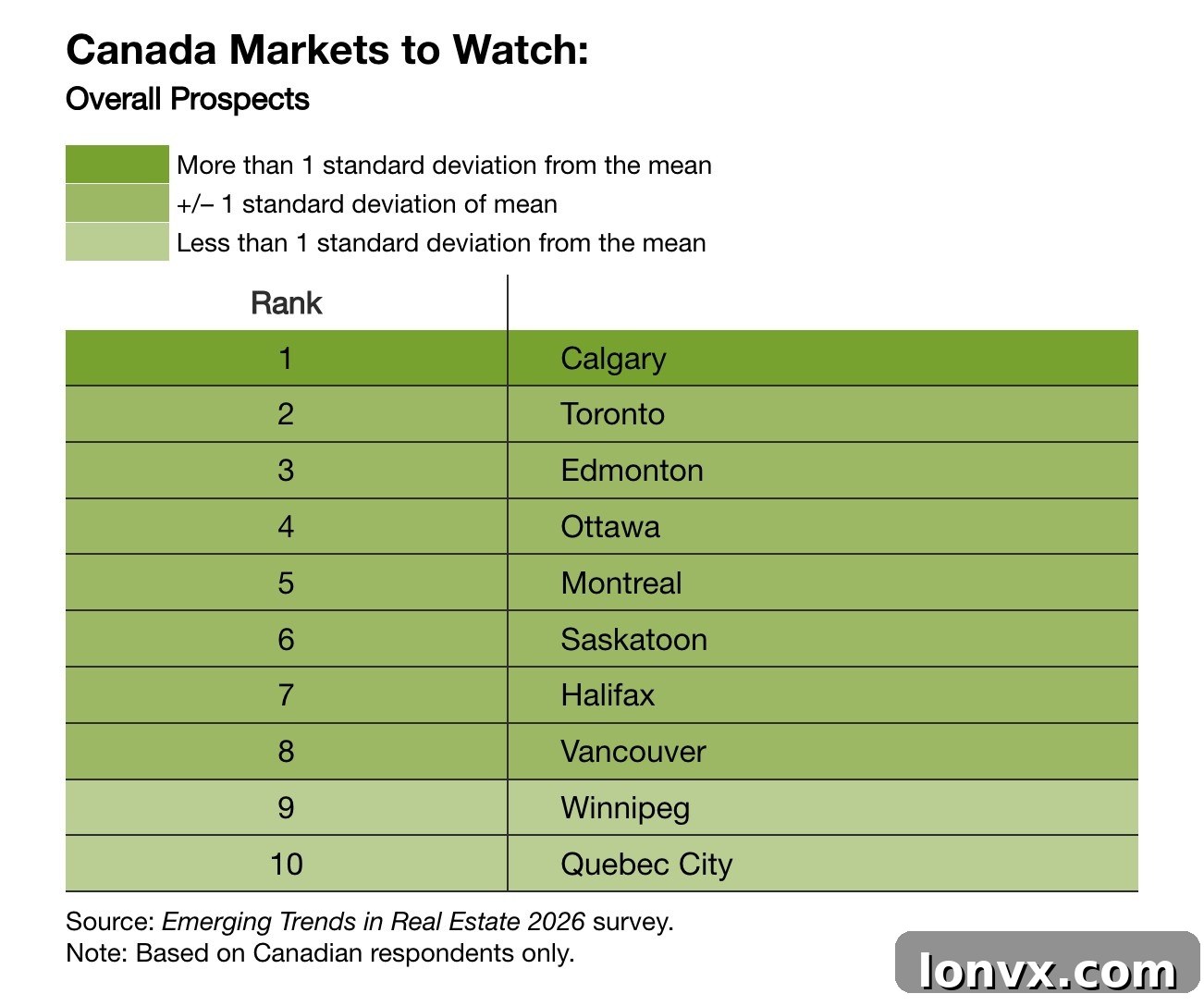
Calgary: Canada’s Top Investment Prospect for 2026
Amidst a shifting national real estate narrative, Calgary has unequivocally distinguished itself as a prime destination for investment, earning its top ranking for prospects in 2026. This impressive performance is rooted in the city’s deliberate and successful strategies to foster robust population growth and diversify its economy, moving beyond its historical reliance on the energy sector. Real estate investors, recognizing these fundamental strengths and future potential, are increasingly keen to align with Calgary’s upward trajectory.
The city’s economic vitality and attractiveness are clearly reflected in its booming construction sector. Data from the Canada Mortgage and Housing Corporation (CMHC) indicates that new home construction in Calgary reached an unprecedented high in 2024. This achievement marks the third consecutive year of record-breaking activity, underscoring a sustained period of expansion. Crucially, this elevated level of new construction is projected to remain strong, ensuring a steady influx of housing supply to meet the demands of its rapidly expanding populace. This consistent growth signals deep investor confidence in Calgary’s long-term housing market stability.
Calgary has also become a national leader in innovative urban revitalization through its ambitious program to convert underused downtown office spaces into residential units or hotels. This forward-thinking initiative addresses the dual challenges of revitalizing urban cores – often left with vacant office buildings post-pandemic – and simultaneously alleviating housing shortages. The program has expanded significantly, with 21 properties now actively undergoing conversion. These projects are transforming once-dormant commercial spaces into vibrant living and hospitality environments, breathing new life into the city center and demonstrating Calgary’s commitment to adaptable and sustainable urban development.
Looking further into the medium term, the Calgary real estate market is poised to receive an additional, substantial boost from the development of the Prairie Economic Gateway. This ambitious undertaking, envisioned as a sprawling inland port and industrial park, is designed to significantly enhance logistical capabilities and stimulate broader economic activity across the prairie provinces. Currently navigating the critical land-use approvals stage, the Gateway is projected to achieve commercial readiness between 2027 and 2030. Once operational, it will solidify Calgary’s strategic position as a vital economic hub, driving demand for industrial, commercial, and ancillary residential real estate, thereby creating wide-ranging positive ripple effects across the entire property market.
Calgary’s blend of strategic planning, successful economic diversification, innovative urban development policies, and major infrastructure projects positions it as an exceptionally attractive and resilient market for real estate investment. Its ability to continuously draw new residents and capital, coupled with its proactive approach to housing solutions, sets a compelling precedent for growth and stability in the Canadian context.
Innovating Seniors’ Housing: Addressing the Needs of an Aging Population
Canada’s demographic profile is undergoing a profound and irreversible shift, characterized by a rapidly aging population. This significant trend is creating an escalating demand for specialized housing solutions, fundamentally reshaping investor perceptions and elevating seniors’ housing to a “top-tier” asset class within the real estate portfolio. The sheer volume of the baby boomer generation transitioning into their senior years ensures a sustained and growing need for diverse living options, ranging from independent living communities to facilities offering comprehensive assisted care.
However, despite the clear market opportunity, the development and operation of seniors’ housing present distinct challenges that go beyond those of conventional residential properties. Industry professionals interviewed for the PwC/ULI report frequently highlighted these operational complexities as a significant hurdle. Unlike standard apartments, seniors’ residences often require the integration of specialized healthcare services, accessible amenities, and a highly trained, compassionate staff capable of providing varying levels of care and support. As one experienced developer succinctly put it, a “high level of expertise” is not merely beneficial but indispensable for successful navigation within this intricate sector.
In response to these unique challenges and the burgeoning market opportunities, the report identifies two primary strategic paths forward for the seniors’ housing sector, each tailored to different investment profiles and operational philosophies:
The first path emphasizes “scale and modernization.” This strategy is particularly attractive to large, well-capitalized institutional buyers who possess the financial strength and organizational infrastructure to acquire existing seniors’ living assets. By consolidating properties, these investors can implement advanced professional management and operations platforms. This approach allows for the standardization of care protocols, improved service delivery, and the realization of significant economies of scale. Ultimately, “scale and modernization” aims to optimize existing facilities, enhance the overall quality and consistency of services across a broader portfolio, and meet the growing demand for reliable, professionally managed seniors’ living options.
The second path centers on “innovation and reinvention,” focusing on the development of entirely new models designed to cater to the evolving preferences and higher expectations of a more active and engaged generation of seniors. Interviewees highlighted the emergence of creative solutions such as mixed-use retirement communities. These cutting-edge developments seamlessly integrate residential units with a range of amenities, including retail spaces, healthcare clinics, wellness centers, and recreational facilities. This integrated approach fosters vibrant, self-contained environments where seniors can live, shop, access services, and socialize without extensive travel, promoting a strong sense of community and independence. Another exciting trend involves the creation of dedicated “clubs” or amenity-rich hubs specifically designed for active adults within larger, multi-generational developments. These clubs offer a curated lifestyle, featuring state-of-the-art fitness centers, social lounges, educational programs, and organized activities, appealing to seniors who prioritize an active, socially connected lifestyle over more traditional retirement settings. These forward-thinking models are not only enhancing the quality of life for seniors but also creating highly attractive and sustainable investment opportunities.
The Dealmaker’s Evolving Playbook: Navigating New Capital Flows and Opportunities
The landscape for real estate dealmakers in Canada is undergoing a significant transformation, necessitating a fundamental shift in investment mindset and strategic execution. Historically, large institutional players, such as pension funds and public Real Estate Investment Trusts (REITs), have been the dominant forces driving acquisitions and development. However, the current economic climate, characterized by persistent higher interest rates, elevated inflation, and increased market volatility, has prompted many of these institutional entities to adopt a more cautious approach, pacing new acquisitions more slowly, conserving capital, and rigorously reassessing risk profiles.
Into this evolving environment steps private capital, which is increasingly filling the void left by more conservative institutional investors. This influx of private investment – from private equity firms, family offices, and high-net-worth individuals – is proving particularly vital as new, emerging asset classes gain significant traction and scale. Sectors such as purpose-built student housing, which addresses the growing needs of Canada’s robust international and domestic student population, and specialized medical offices, catering to an expanding and aging demographic, are experiencing considerable demand for flexible and responsive funding. Private capital, often less constrained by the stringent public reporting requirements or large-scale mandates of institutional funds, demonstrates greater agility and a willingness to engage in these specialized, high-growth segments.
Success in this dynamic and competitive investment environment hinges not solely on access to capital, but crucially on its intelligent and strategic deployment. This demands both impeccable timing and considerable creativity from dealmakers. Investors must cultivate a deep understanding of nuanced market cycles, identify underserved niches with significant growth potential, and be prepared to innovate in financing structures, partnership models, and development approaches. The ability to anticipate future demand shifts, adapt swiftly to evolving regulatory frameworks, and forge robust strategic collaborations will be paramount for securing and maximizing lucrative opportunities in this new era of Canadian real estate.
Fred Cassano, Partner and National Real Estate Leader at PwC Canada, aptly describes the current moment as a “pivotal moment” for the Canadian real estate industry. He emphasizes that a powerful combination of building policy momentum – reflecting governmental efforts to address housing shortages – and a growing openness within the sector towards collaborative ventures is creating unprecedented opportunities. “By embracing new approaches and partnerships, we have a tremendous opportunity to build the spaces our communities need and unlock growth throughout the market,” Cassano stated, underscoring the collective responsibility and potential for growth through innovative collaboration.
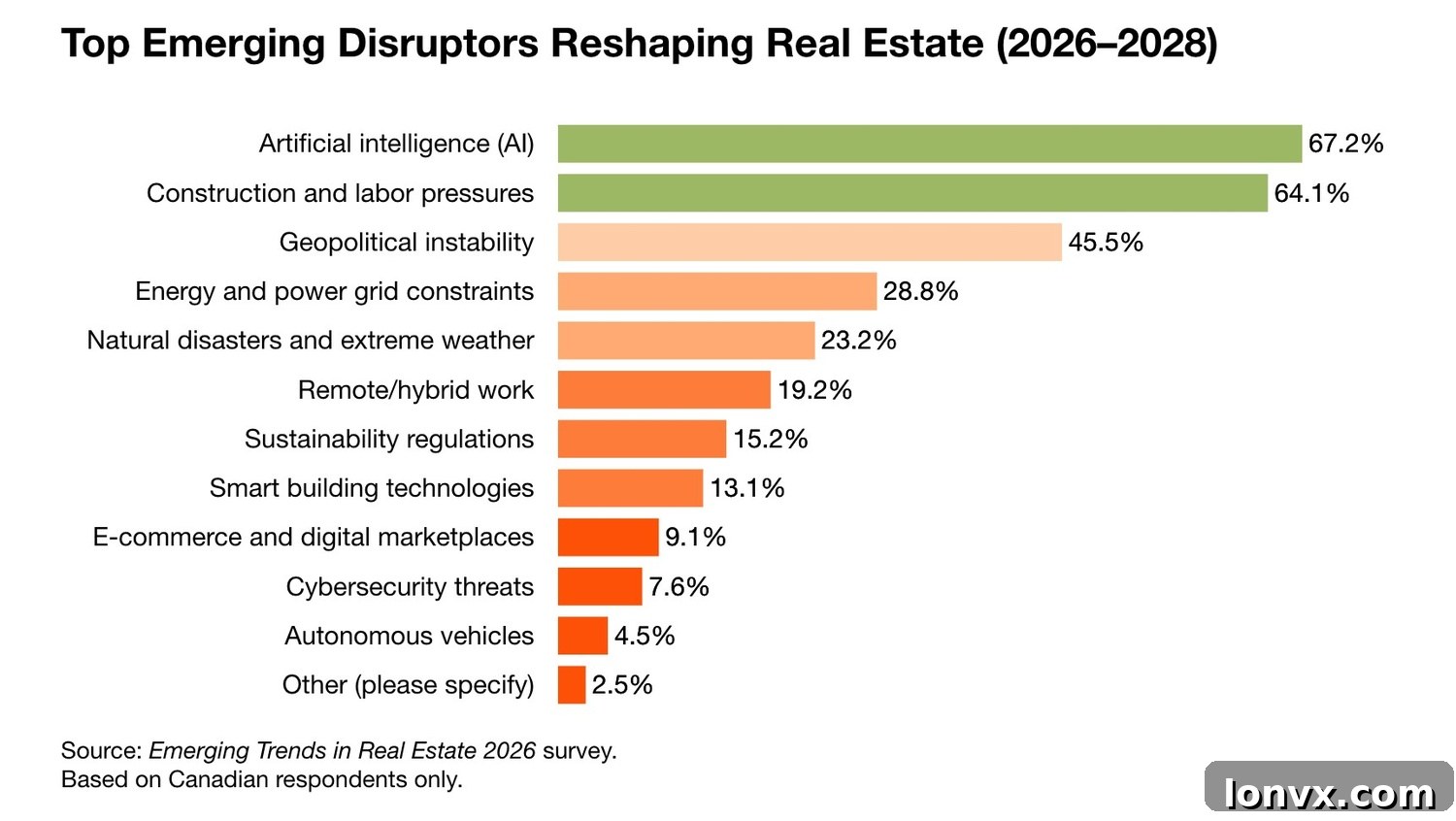
However, capitalizing on these burgeoning opportunities across the full spectrum of asset classes – from critical residential housing to resilient retail and high-demand industrial spaces – is heavily dependent on overcoming a critical underlying challenge: the persistent shortage of skilled construction labor. This scarcity of tradespeople can significantly inflate project costs, lead to substantial delays in completion timelines, and, in severe cases, even halt crucial development initiatives altogether. Cassano unequivocally noted that addressing and resolving this labor shortfall will be “paramount” to realizing the full potential of Canada’s reinventing real estate market. Strategic investments in vocational training programs, targeted immigration policies for skilled trades, and the adoption of advanced, efficient construction techniques will be essential to ensure that the vision of a dynamic, thriving, and adequately supplied Canadian real estate sector can become a tangible and sustainable reality.