The Greater Toronto Area (GTA) real estate market is undeniably experiencing a robust resurgence this spring, with a significant majority of its neighborhoods firmly entering overbidding territory. Data from the digital real estate platform Wahi reveals a dynamic shift, indicating that buyer confidence and competition are once again on the rise across Canada’s most populous region. This accelerating trend marks a compelling turnaround from the cooling market conditions observed in recent months.
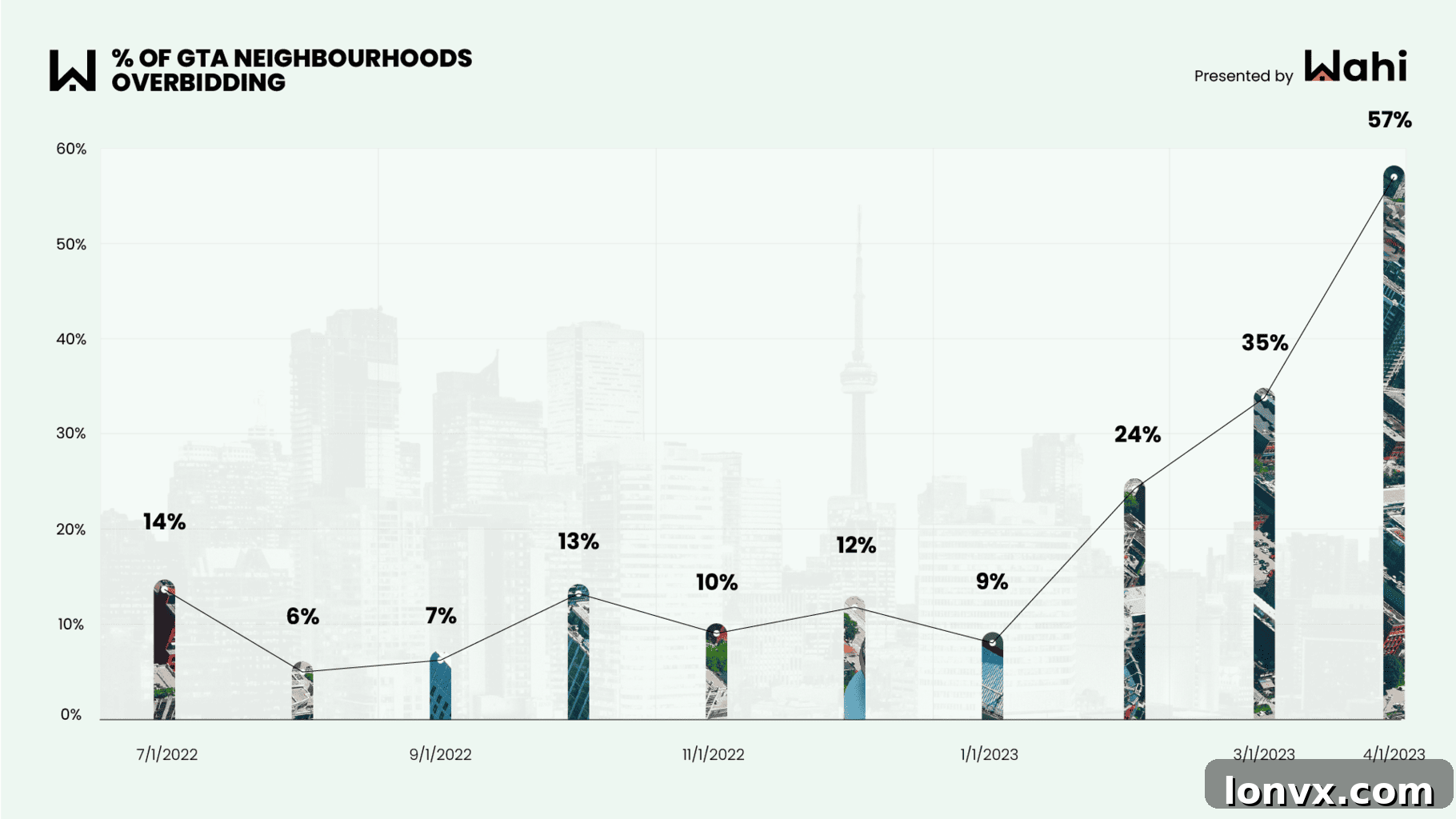
In April, a remarkable 57 percent of neighborhoods throughout the GTA were categorized as overbidding, according to Wahi’s comprehensive analysis. To accurately identify these market conditions each month, Wahi employs a rigorous methodology: they meticulously compare the median list prices against the median sold prices for all residential properties, encompassing both condominium units and various types of houses. A positive differential signifies an overbidding environment, where homes are consistently fetching prices above their initial asking. This percentage represents a substantial jump, signaling a heated market where buyers are increasingly willing to outbid one another to secure their desired properties.
GTA Real Estate Market Heats Up: Third Consecutive Month of Increased Overbidding
April’s figures are particularly noteworthy as they mark the third consecutive month that the share of overbidding neighborhoods in the GTA has seen a substantial month-over-month increase. This sustained upward trajectory paints a clear picture of a market gaining significant momentum.
Looking deeper into the numbers, a total of 168 neighborhoods out of 294 tracked by Wahi were in overbidding territory last month. While Wahi monitors approximately 400 GTA neighborhoods monthly, only those with five or more transactions are included in this specific analysis to ensure statistical relevance. This careful selection provides a reliable snapshot of active market segments.
The progression of this trend is quite striking when compared to previous months. In March, for instance, the number of overbidding neighborhoods stood at 110. The percentage of neighborhoods experiencing overbidding has steadily climbed: from a mere 9.0 percent in January, it rose to 24 percent in February, then to approximately 35 percent in March, culminating in the current 57 percent in April. This consistent growth underscores a fundamental shift in market dynamics, moving from a period of hesitancy to one of strong buyer demand and heightened competition. When a neighborhood enters overbidding territory, it signifies a healthy, active market where most homes listed within its boundaries are ultimately selling for more than their initial asking price.
Top Overbidding Neighborhoods: Where Competition is Fiercest
Understanding where this intense competition is playing out provides valuable insight into localized market pressures. The following table highlights the top five neighborhoods experiencing the highest median overbid percentages for all housing types in April, showcasing the areas where buyers faced the most aggressive bidding wars:
| Rank | Neighbourhood | Overbid % | Median overbid amount | Median sold price |
| 1 | Raymerville, Markham | 24% | $363,000 | $1,861,000 |
| 2 | The Danforth, Toronto | 24% | $224,001 | $1,118,056 |
| 3 | Berczy Village, Markham | 21% | $252,000 | $1,450,000 |
| 4 | Devonsleigh, Richmond Hill | 21% | $230,100 | $1,375,000 |
| 5 | Cachet, Markham | 13% | $250,000 | $2,100,000 |
This table offers a clear picture of where market demand is most concentrated. When the median sale price significantly exceeds the median list price, it creates a positive percentage difference, indicating a strong seller’s market. Realtors often interpret this phenomenon through several lenses. As Wahi CEO Benjy Katchen explains, these high-demand neighborhoods typically exhibit a confluence of factors: “These neighborhoods don’t have enough inventory, or plenty of buyers are shopping in that neighborhood, or sellers are listing homes below recent sales prices to attract bidding wars.” Each of these possibilities contributes to the upward pressure on prices, forcing buyers to offer more than the initial asking price to secure a deal. The substantial median overbid amounts, particularly in Raymerville ($363,000) and Cachet ($250,000), underscore the intense competition and buyers’ willingness to pay a premium.
Markham Leads the Pack in Overbidding Hotspots
A striking observation from the data is Markham’s prominent position, with three of the top five overbidding hotspots for all housing types located within its municipality. This mirrors the trend seen in March, highlighting Markham’s consistent appeal. Benjy Katchen further elaborates on Markham’s market dynamics: “Markham has fewer listings than recent years, and the listings coming to market are being priced below market value to attract multiple bids.” This strategic pricing by sellers, combined with persistently low inventory, fuels competitive bidding wars. Moreover, Markham’s reputation for high-ranking schools continues to be a significant draw for families, further enticing bidders to compete fiercely for a limited supply of available homes. The desirable amenities, strong community feel, and excellent educational opportunities solidify Markham’s status as a prime location for prospective homebuyers, contributing to its sustained overbidding environment.
Freehold Homes Dominate Overbidding, Condos Lag
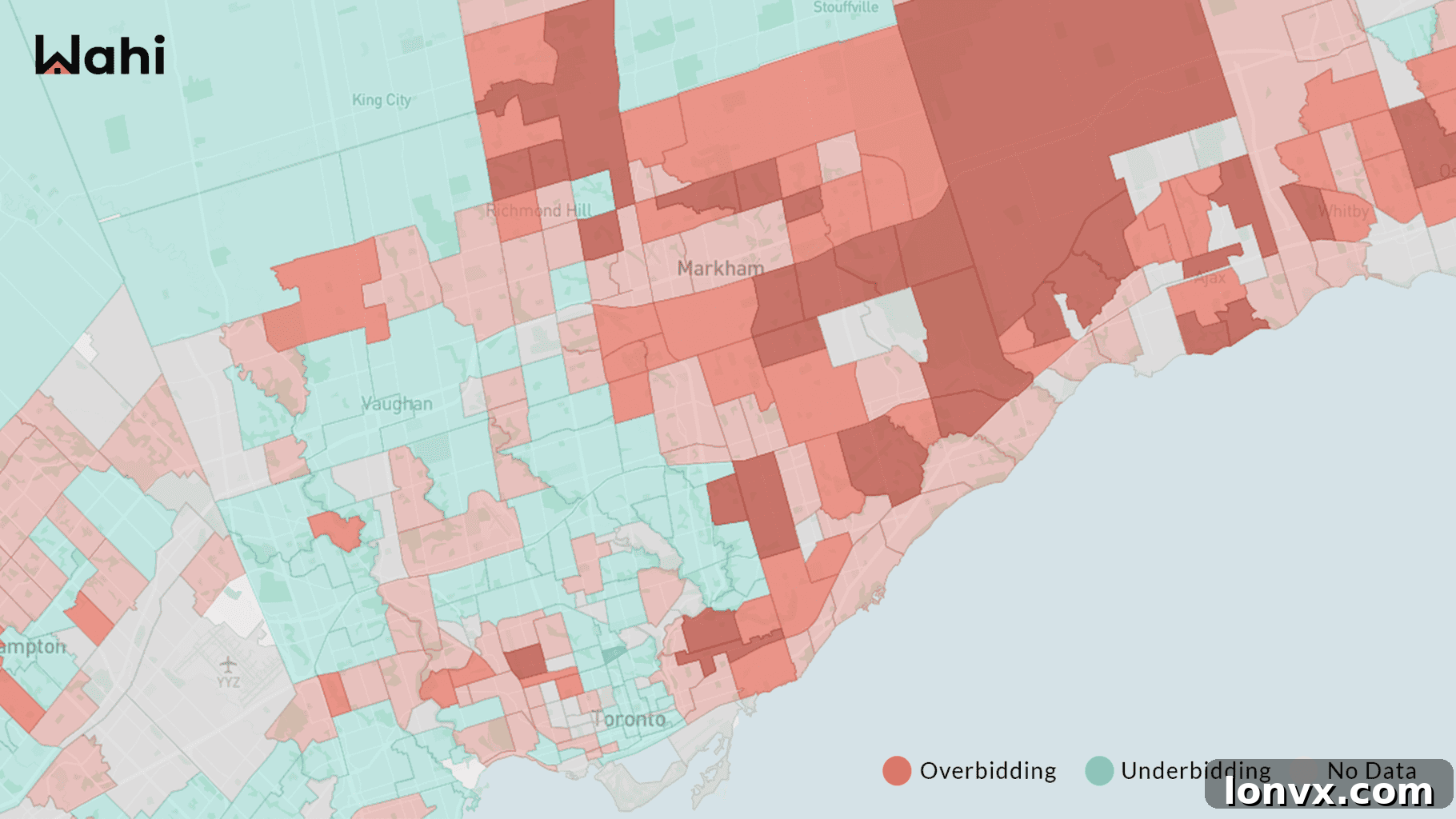
A granular look at different housing types reveals a notable disparity in overbidding activity. While 24 percent of neighborhoods saw overbidding specifically for condo units, a much larger proportion—76 percent—were in overbidding territory for non-condo, or freehold, homes. This considerable difference suggests that freehold properties, which typically offer more space, privacy, and land ownership, are currently experiencing significantly higher demand and competition compared to condominiums. This trend might be influenced by a variety of factors, including the perceived long-term value of land, the desire for more living space post-pandemic, or different buyer demographics and their financial capacities. Freehold homes often appeal to established families or those seeking to upgrade, who may be less sensitive to minor interest rate fluctuations compared to first-time homebuyers often targeting the condo market.
Source: Wahi
The Other Side of the Coin: Underbidding Neighborhoods
Conversely, not all areas are experiencing a seller’s market. Neighborhoods where the percentage difference between median listing and selling prices is negative are classified as being in “underbidding territory.” In these areas, homes are generally selling below their initial asking price, indicating that buyers have more leverage and less competition. Last month, the leading local markets for underbidding were primarily concentrated in Toronto proper and the Halton Region, notably including two prominent areas within the municipality of Oakville.
The situation in Oakville serves as a prime example of specific market pressures. Benjy Katchen elaborates on why this upscale area has seen sustained underbidding: “Oakville has seen underbidding for most of the past year. It’s not because it’s a bad area. It’s because the home prices were so high, to begin with, and interest rate hikes cut off a majority of the buyers from being able to afford a property in that area.” This explanation highlights that even desirable, high-value locations can experience market adjustments when affordability thresholds are pushed too far, especially in response to macroeconomic factors like rising interest rates. The combination of already elevated property values and increased borrowing costs effectively shrinks the pool of eligible buyers, leading to properties selling below their initial list prices.
Top Underbidding Neighborhoods: Where Buyers Found Deals
For buyers seeking potential value or less competitive environments, underbidding neighborhoods present unique opportunities. The following table showcases the top five areas where homes typically sold below asking in April:
| Rank | Neighbourhood | Underbid % | Median overbid amount | Median sold price |
| 1 | Parkdale, Toronto | -8% | -$101,500 | $1,227,500 |
| 2 | Brookville, Milton | -7% | -$115,000 | $1,542,500 |
| 3 | Southwest Oakville | -6% | -$159,500 | $2,637,500 |
| 4 | Chaplin Estates, Toronto | -4% | -$95,000 | $2,470,162 |
| 5 | Eastlake, Oakville | -3% | -$98,000 | $2,950,000 |
A crucial insight from this data is that, in general, the neighborhoods where homes were selling below asking were often more expensive than the highest-ranked overbidding neighborhoods. Notably, three of the top underbidding markets, including Southwest Oakville and Eastlake, had median sale prices exceeding $2 million. In stark contrast, only one of the top overbidding neighborhoods, Cachet, had a median sale price north of that mark. This trend suggests that the upper echelons of the market, particularly luxury properties, may be more susceptible to underbidding, as the buyer pool for such high-value homes is inherently smaller and potentially more sensitive to economic shifts and financing costs. Buyers in these segments might be exercising greater caution or simply facing fewer competing offers, allowing for more negotiation power and securing properties at a discount from the initial listing price.
The Broader Economic Context: Interest Rates and Market Confidence
The current state of the GTA housing market, with its emerging signs of recovery, cannot be fully understood without acknowledging the broader economic landscape and, specifically, the impact of the Bank of Canada’s (BoC) monetary policy. While the market appears to be showing early signs of regaining strength, it still has a considerable journey ahead before it can approach the dizzying heights and frenzied overbidding of past years, particularly the market peak observed just over a year ago. For context, in April of the previous year, an astonishing 86 percent of neighborhoods—281 out of 326 analyzed—were in overbidding territory. This stark comparison highlights the dramatic shift the market underwent.
The share of overbidding neighborhoods experienced a steady and significant decline throughout much of 2022 and into the new year, directly correlated with the Bank of Canada’s aggressive campaign of interest rate hikes. From March 2022 to January of this year, the central bank implemented eight consecutive increases to the overnight rate, which serves as a benchmark for borrowing costs across the economy, including variable mortgage rates. This rapid series of hikes pushed the overnight rate from a historically low 0.25 percent to its current standing at 4.5 percent. Each increase directly translated into higher mortgage payments and reduced purchasing power for prospective homebuyers, inevitably leading to a slowdown in market activity, dampened demand, and a decrease in competitive bidding.
However, a critical turning point appears to have arrived. For the past three months, the Bank of Canada has held the overnight rate steady, signaling a pause in its tightening cycle. This period of stability has had a profound psychological and practical impact on the housing market. Buyers and sellers, no longer facing the uncertainty of continuous rate hikes, have begun to regain a measure of confidence. The stabilization of borrowing costs allows potential homebuyers to better plan their finances and assess their affordability, leading to a renewed willingness to enter the market. This renewed confidence is a significant factor contributing to the observed uptick in overbidding activity and the overall heating of the GTA real estate market this spring. It suggests that while the market is not yet at its previous fever pitch, the worst of the rate-hike-induced chill may be behind us, paving the way for a more stable and gradually recovering environment.
Source: Wahi
Conclusion: A Cautious Optimism for the GTA Housing Market
The latest data from Wahi provides compelling evidence of a significant rebound in the Greater Toronto Area real estate market. The escalating percentage of overbidding neighborhoods, reaching 57 percent in April and marking three consecutive months of growth, clearly indicates a return of buyer confidence and competitive bidding. This resurgence is particularly evident in sought-after areas like Markham, where limited inventory and strategic pricing are fueling aggressive offers, especially for freehold homes. The stark contrast between the robust overbidding in freehold segments and the more moderate activity in the condo market highlights varying demand drivers and affordability considerations across property types. While some luxury segments in Toronto and Halton Region continue to experience underbidding, largely due to high entry prices compounded by previous interest rate hikes, these instances represent localized market adjustments rather than an overall market weakness.
The broader context of the Bank of Canada’s decision to hold interest rates steady for the past three months appears to be a crucial catalyst for this renewed market enthusiasm. This stability has provided much-needed predictability, encouraging buyers who had previously been on the sidelines to re-engage. While the GTA housing market is undeniably showing early and strong signs of recovery, it’s important to maintain a balanced perspective. It still has considerable ground to cover before reaching the unprecedented peaks and widespread bidding wars witnessed a year and a half ago. Nevertheless, the current trajectory suggests a healthy and competitive spring market, positioning the GTA for continued growth and offering a renewed sense of optimism for both sellers and prospective homebuyers navigating this dynamic landscape.