The Enduring Power of Local Expertise in a Global Real Estate Market
In today’s hyper-connected world, discussions about globalization are unavoidable. Technology has undeniably shrunk our world, fostering unprecedented levels of economic interdependence. The real estate sector, much like other industries, is deeply influenced by these global trends, leading to increased mobility and a broader reach for property markets. Yet, despite this overarching global narrative, a fundamental question persists: Does real estate truly operate on a global scale, or does its essence remain profoundly local?
For many seasoned professionals, the answer leans heavily towards the latter. Marian deWever, a prominent real estate broker of record in Stratford, Ontario, is a staunch proponent of this view. While recognizing the undeniable impact of a globalized economy, deWever firmly believes that the intricate nature of real estate transactions necessitates a localized approach. Her insights highlight a crucial distinction: the invaluable, nuanced knowledge that only a resident expert can genuinely provide.
The Irreplaceable Value of Local Real Estate Expertise
DeWever eloquently argues for the critical role of local understanding in successful real estate dealings. She states, “A variety of things contribute to value that Realtors cannot possibly know without being an area resident,” irrespective of how much online research they conduct. This isn’t merely about checking property listings; it encompasses a complex array of factors that are deeply rooted in the fabric of a community:
- Neighborhood Specifics and Desirability: Local agents possess an intimate knowledge of neighborhood reputations, their unique character, and the subtle factors that contribute to their desirability. They understand the pulse of each area, its typical demographics, and where specific community boundaries truly lie. This insight goes far beyond what can be gleaned from a map or statistical report.
- School District Nuances: For prospective buyers with families, school districts are a primary concern. A local agent not only knows the official boundaries but also understands the academic reputation of individual schools, their extracurricular offerings, and the quality of local educational support systems – crucial details that significantly impact property value and buyer decisions.
- Zoning and Licensing Regulations: Every municipality operates under its own intricate set of zoning bylaws and licensing requirements. These regulations can drastically affect a property’s permitted use, potential for expansion, or eligibility for commercial ventures like bed and breakfasts. Without this granular knowledge, buyers risk acquiring properties that cannot fulfill their intended purpose, leading to costly legal and financial repercussions.
- Access to Recreational Facilities and Amenities: Proximity to parks, sports complexes, cultural centers, shopping districts, and dining establishments plays a significant role in a property’s appeal. Local agents can provide genuine insights into the quality, accessibility, and future development plans for these amenities, enhancing a buyer’s lifestyle and property investment.
- Parking Requirements and Transportation: Seemingly minor details such as street parking restrictions, permit requirements, or the availability of public transport can be major considerations in certain areas. A local expert understands these daily practicalities that directly impact residents.
- Accurate Market Pricing and Trends: While data is ubiquitous, interpreting it accurately demands local context. An experienced local agent understands micro-market fluctuations, the true impact of comparable sales, and the ‘feel’ of the market that raw data often misses. They can discern if a property is genuinely priced correctly for its specific location, condition, and desirability within its immediate vicinity.
- Historical Context and Community Identity: The history of a neighborhood, its architectural heritage, conservation efforts, and significant community events all contribute to its unique character. This intangible knowledge allows agents to convey a richer, more authentic picture to potential buyers, helping them connect with a community.
- Safety Perceptions and Crime Rates: Local agents are often privy to the community’s perception of safety, specific crime trends, and how these factors influence buyer preferences – sensitive information best conveyed by someone deeply embedded in the local environment.
DeWever firmly believes that when real estate agents from distant municipalities, lacking any meaningful familiarity with an area, attempt to represent clients moving there, they inevitably do their clients a disservice. This deficiency in local insight can result in poor purchasing decisions, unfulfilled expectations, and profound frustration for all involved parties.
Marian deWever
The Rise of Inter-Board Listings and Associated Challenges
The phenomenon of buyers extending their property searches beyond their immediate geographical areas is undeniably accelerating. Marian deWever, who brings 26 years of real estate experience to Home & Company Real Estate, a boutique operation, has directly observed a notable “influx of people purchasing in Stratford from larger destinations, such as Toronto.” This migration is typically fueled by a quest for greater affordability, a desire for a change in lifestyle, or strategic investment opportunities in emerging markets.
Gwen Kirkpatrick, the Executive Officer of the Huron Perth Association of Realtors (HPAR), which covers Stratford and surrounding towns like St. Marys, confirms this escalating trend. She notes that, similar to many regions, their area has seen a significant increase in “inter-board listings” over the past few years. While this expansion is a natural byproduct of market evolution and advanced digital listing platforms, it also introduces a unique set of complexities for local real estate associations and raises important questions about the quality of client representation.
Administrative Burdens and Agent Liability Concerns
HPAR’s concerns extend beyond merely the increased volume of these cross-regional listings. Kirkpatrick openly questions the capacity of agents operating from outside the local area – sometimes even from different provinces – to adequately represent their buyers. For instance, transactions spanning provincial lines can introduce intricate complications related to insurance coverage and professional liability, potentially exposing both the agents and their clients to unforeseen legal and financial risks.
The administrative strain on local associations also intensifies dramatically. The process of managing an increased number of inter-board listings demands greater staff time and resources, diverting focus from other critical operations. To address this growing challenge, some regions in Ontario are exploring innovative collaborative solutions. Kirkpatrick mentions ongoing discussions and plans to pool data by “merging the databases of various nearby communities.” This strategic initiative could significantly streamline operations, enhance data accessibility, and improve the overall efficiency of the listing process. While HPAR has not yet fully adopted this approach, it remains an active consideration for future implementation.
Stratford, Ontario: A Microcosm of Local Market Nuances
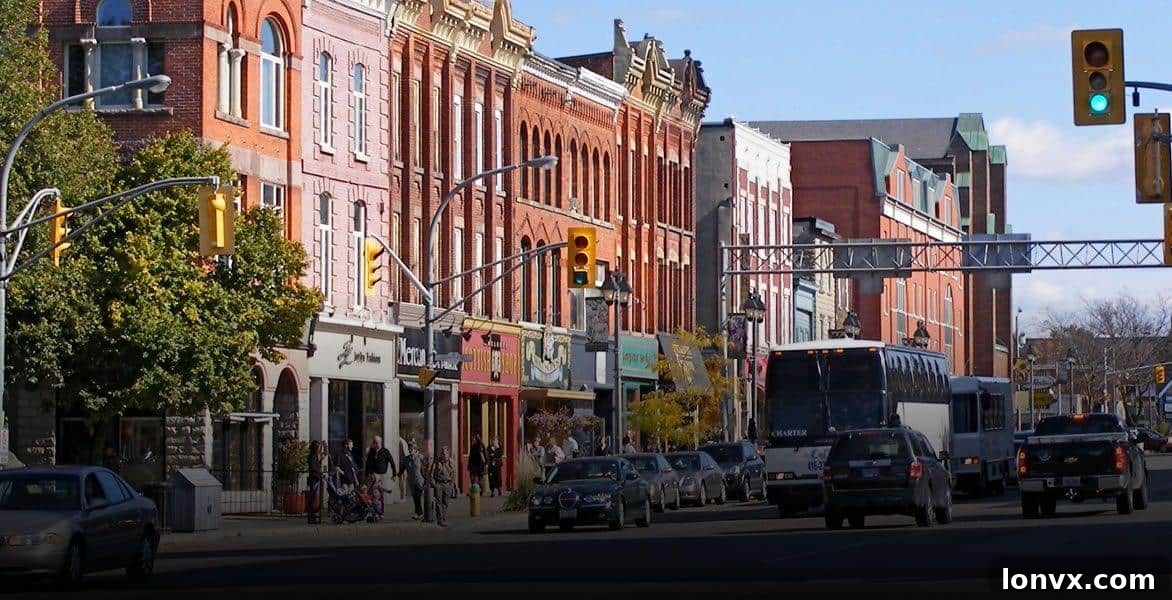
Stratford, Ontario, serves as an excellent illustration of a community that attracts external buyers for a myriad of reasons. While its association with teen heartthrob Justin Bieber is often noted (deWever confirms he “comes and chills” there, maintaining ties with high school friends), its appeal extends far beyond celebrity. Revered as one of Canada’s most picturesque cities and home to the world-renowned Stratford Festival, the city offers a rich cultural tapestry. Critically, as deWever points out, Stratford boasts significantly greater affordability compared to the bustling metropolis of Toronto and other nearby urban centers, making it an attractive prospect for a diverse range of buyers seeking value and quality of life.
Retirement Havens, Investment Properties, and Regulatory Blunders
“Stratford has become a retirement destination,” deWever explains, drawing in individuals seeking a tranquil yet culturally vibrant lifestyle. Furthermore, the city experiences robust activity in the second home and investment property markets, with a common trend being the conversion of properties into bed and breakfasts (B&Bs). However, this specific investment avenue frequently highlights the crucial knowledge gaps of out-of-area agents.
DeWever recounts a recurrent issue: agents unfamiliar with Stratford’s specific and often stringent zoning and licensing regulations inadvertently sell properties to aspiring B&B owners. Only after the purchase do these buyers discover that their new property does not meet the necessary local requirements, leading to expensive delays, potential legal disputes, and sometimes the complete abandonment of their original investment vision. This critical oversight stems directly from a lack of essential local information.
The ‘Comical’ Sunday Open House Dilemma
Another striking example of Stratford’s unique local market customs is its tradition regarding open houses. “We’re unique in Stratford in that all real estate offices are closed on Sundays, so open houses are on Saturdays instead,” deWever elaborates. This long-standing local practice is common knowledge among agents operating within the community. Yet, out-of-area Realtors, unaware of this custom, frequently schedule open houses on Sundays. “I’ll see the signs – it’s just comical,” deWever remarks with a shake of her head. “Everyone else was out the day before. How is that in the best interests of clients?” This seemingly minor cultural detail underscores a much larger point: a fundamental lack of local awareness can directly impair a seller’s property exposure and an agent’s overall effectiveness in marketing a listing.
Beyond Stratford: The Broader Implications of Outsider Representation
The challenges identified in Stratford are not isolated incidents; they resonate across numerous and diverse communities. Real estate agents representing clients in unfamiliar regions can often find themselves out of their depth when confronted with issues unique to those specific areas. These can range from complex environmental concerns like soil erosion in coastal or riverine communities to the highly nuanced legal landscape surrounding Aboriginal land claims, which demand specialized local legal, historical, and cultural understanding.
The same principle holds true for property appraisers. DeWever notes that “outside appraisers – they may not be able to decipher comparables properly since they don’t know the market.” Accurately assessing property value requires far more than just statistical data; it necessitates a deep understanding of local amenities, the unique character of specific neighborhoods, recent development projects, and even the subtle ‘vibe’ that influences buyer perception. All these components are easily missed by an appraiser without localized market insight, leading to potentially inaccurate valuations and problematic transactions.
The Referral Network: An Ethical and Professional Imperative
Recognizing the reality of clients exploring property options in distant locales, Marian deWever passionately advocates for a professional and ethical solution: the referral network. “We’ll see Toronto Realtors with their buyer clients (sellers too, but less often),” she observes. Instead of attempting to navigate unfamiliar territories with limited success, she proposes a more client-centric approach: “The practical solution is for outside Realtors to understand that it is not in their clients’ best interests. Instead they should set up a referral network.”
This strategy offers significant benefits to all parties involved. The client receives highly specialized service from an agent intimately familiar with their target area, ensuring their best interests are genuinely prioritized. The referring agent maintains client trust, avoids the risks and inefficiencies of operating outside their area of expertise, and earns a referral fee. The local agent, in turn, gains new business and the opportunity to showcase their specialized knowledge, fostering a cooperative and professional industry environment.
DeWever also suggests a collaborative model for those less comfortable with a full handover: “Or if they are not comfortable handing off the client, they can come with them and work with us on a referral basis – let us be involved.” This approach allows the originating agent to remain engaged while leveraging the indispensable local knowledge of a resident expert, ensuring the client receives comprehensive support.
Strategies for Cultivating a Robust Referral Network
For agents seeking to establish or expand their professional referral networks, deWever offers practical advice. She recommends seeking out trustworthy colleagues at industry conferences, actively participating in real estate-specific Facebook groups tailored to target areas, and utilizing established professional platforms like Realtor.ca. A powerful incentive for nurturing these connections, she adds, is the inherent principle of reciprocity: “referrals are often reciprocated,” leading to a mutually beneficial and continuous flow of business opportunities.
Regina Dutt of Keller Williams Black Diamond Realty in Burnaby, B.C., strongly echoes this philosophy. “Absolutely I have a referral network,” Dutt affirms, emphasizing her clear preference: “I would rather send a client to a specialist in an area than fake it.” Dutt further highlights that local sales representatives, deeply immersed in their area’s intricacies, can bring authentic passion and provide “a history that is not off the Internet,” offering clients a richer, more genuine understanding of their prospective new community.
Ron Stuart, a partner with Harbourside Realty in Halifax, delves into the financial aspects of referrals, noting they typically constitute “25 per cent” of the commission. However, like many facets of the real estate industry, referral fees can be subject to negotiation and competitive pressures. Stuart observes, “Some agents have a focus on incoming referrals and offer a premium to get the business,” underscoring the strategic value that agents place on these specialized professional connections.
The Perils of “Mere Postings” and Compromised Agency Duties
In the broader discussion about the importance of local expertise and comprehensive client representation, it is essential to address the contentious practice of “mere postings.” These listings, often viewed unfavorably by many within the real estate community, represent a significant departure from traditional agency duties and highlight the inherent risks associated with detached, minimalist representation.
Stuart elaborates on this practice, describing how some sales representatives “make a business of co-ordinating with an unlicensed online advertising company to obtain mere posting listings in many if not all jurisdictions across Canada.” The defining characteristic of mere postings is that agents deliberately bypass comprehensive agency duties. Consequently, “The homeowner receives little or no pricing guidance,” and often very limited advice on property condition, marketing strategy, or negotiation tactics. This minimalist approach can severely disadvantage sellers, as they are deprived of the professional insights and expert guidance necessary to navigate the complexities of the property market effectively.
In stark contrast, a sales representative operating under full agency duties assumes a fundamental and robust responsibility to their client. This typically includes a legal and ethical obligation to thoroughly examine the property, provide expert pricing guidance informed by local market conditions, and inform themselves firsthand of the property’s true condition. The Real Estate Council of Ontario (RECO) unequivocally mandates that sales representatives must possess “reasonable knowledge of what they are dealing with.” Marian deWever and other advocates for localized expertise argue compellingly that this fundamental requirement is frequently compromised when agents operate outside their familiar territories, thereby potentially undermining the integrity of client transactions and exposing all parties to unnecessary risks.
Regina Dutt
Conclusion: Prioritizing Local Acumen for Unparalleled Client Success
Despite the undeniable march of globalization and the increasing ease of cross-regional transactions, the real estate market fundamentally thrives on profound local acumen. The intricate details of neighborhood character, the specific nuances of zoning bylaws, the unique rhythm of community life, and the precise specifics of market pricing are best understood and articulated by those who reside and operate within that community. Marian deWever’s invaluable insights, powerfully reinforced by the experiences of industry peers like Gwen Kirkpatrick, Regina Dutt, and Ron Stuart, collectively underscore a critical message: prioritizing local expertise is not merely a preference; it is a professional imperative for safeguarding client interests, ensuring successful transactions, and upholding the integrity of the entire real estate industry.
The proliferation of inter-board listings and cross-regional transactions highlights the urgent need for adaptability within the real estate profession. However, this adaptation should manifest not in diluted or generalized representation, but in strategic collaboration. By embracing robust referral networks, agents can effectively broaden their service reach without ever compromising on the depth of knowledge that is absolutely essential for truly effective representation. By consistently championing local specialists and adhering to comprehensive agency duties, the real estate industry can adeptly navigate the complexities of a globalized world while steadfastly upholding its unwavering commitment to client protection and overall market integrity, ensuring unparalleled success for all.