
Calgary’s Office Market Defies Expectations: A Deep Dive into 2023 Trends and Future Growth
In a landscape where many industry experts predict a slowdown for the broader commercial real estate sector in 2023, Calgary’s office market stands out with a remarkable display of resilience and strategic positioning. According to a recent comprehensive report from Avison Young, the city is not merely bracing for the year ahead but is poised for a strong performance, underpinned by unique economic fundamentals and evolving tenant demands. This optimistic outlook offers a compelling narrative, setting Calgary apart from national trends and highlighting its dynamic commercial environment.
A Resilient Performance in 2022: Key Takeaways from Avison Young’s Q4 Report
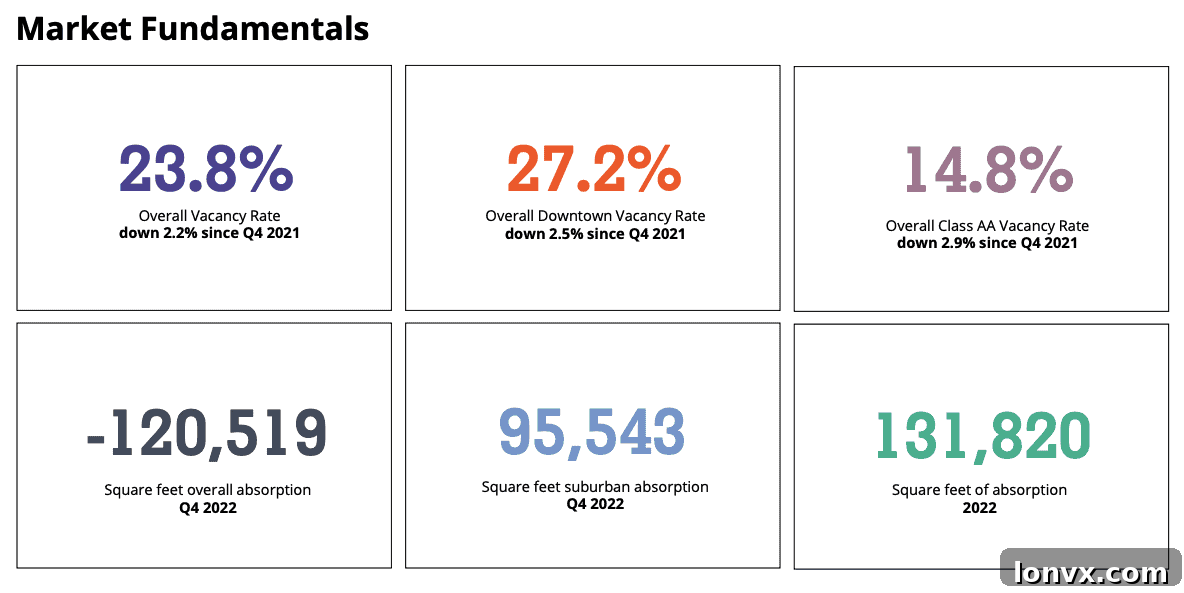
The foundation for Calgary’s anticipated 2023 strength was laid in 2022, a year that culminated in one of the most robust leasing environments the city’s office sector has witnessed in years. Avison Young’s report for the fourth quarter (Q4) of 2022 provides crucial insights into this performance. While the overall year concluded with a positive absorption of 131,820 square feet across the office market, Q4 itself saw a temporary dip, recording a negative absorption of 120,519 square feet. This specific quarterly shift, however, was not indicative of a weakening market but rather a result of strategic repositioning by major downtown tenants within the energy industry.
These significant downtown occupiers were actively finding spaces better suited to their evolving operations, often involving rightsizing or relocating to more modern, efficient facilities. This activity, while registering as negative absorption in the short term, signifies a market in flux rather than decline, as companies adapt to new work models and prioritize enhanced workspaces. Critically, this absorption activity was offset by sustained growth and positive momentum in the suburban markets, which recorded their seventh consecutive quarter of positive activity. This consistent strength outside the downtown core underscores a diversification in tenant preference and an expanding base of economic activity across the wider Calgary region.
Navigating 2023: Calgary’s Advantage in an Uncertain Commercial Real Estate Landscape
As the commercial real estate sector nationally anticipates a period of fiscal restraint and flux in investment levels, Calgary’s unique economic drivers are expected to provide a crucial buffer. Avison Young’s analysis highlights that despite broader industry headwinds, Calgary possesses the fundamental elements necessary not just to weather the storm but to perform exceptionally well compared to many other major Canadian markets. This resilience is attributed to several interconnected factors that bolster the city’s economic stability and attract ongoing investment.
Foremost among these is the sustained strength in commodity prices. The energy sector, a cornerstone of Calgary’s economy, continues to benefit from elevated prices, which are predicted to remain favourable for the foreseeable future. This creates a positive ripple effect throughout the local economy, stimulating investment, fostering job growth, and driving demand for commercial space. Beyond traditional energy, Calgary’s increasingly diversified economy, particularly the robust industrial, residential, and land sectors, acts as a powerful magnet for both capital and talent. These sectors not only contribute directly to the city’s economic vitality but also indirectly fuel demand for office spaces as ancillary businesses expand and new enterprises are established. The ongoing strength in these areas is instrumental in attracting inter-provincial migration and business relocations, further solidifying Calgary’s competitive edge in the national real estate landscape.
Source: Avison Young Canada
Unpacking Calgary’s Office Market Trends: Insights for Investors and Tenants
Avison Young has identified three pivotal trends that are shaping Calgary’s office market, offering critical insights for both investors and businesses looking to navigate the evolving commercial landscape.
1. The Evolving Landscape of Tenant Diversity: Inner City vs. Suburban Dynamics
The past year heralded a banner period for submarkets outside of Calgary’s downtown core, a success story largely attributable to an increasingly diverse tenant base. Sectors such as healthcare, engineering, and energy were the most active participants in 2022, demonstrating robust demand for suburban office space. This preference for suburban locations often stems from factors like greater accessibility, ample parking, and competitive rental rates, making them attractive options for businesses seeking operational efficiencies and a better work-life balance for their employees.
Calgary’s burgeoning tech sector, while still in its growth phase, continues its upward trajectory. Although its current activity hasn’t yet reached a scale to singularly drive market forces, its influence is undeniably expanding. Historically, the start-up and small-cap tech scene has gravitated towards inner-city and suburban submarkets, valuing their agile environments and community feel. However, a fascinating dynamic is emerging: downtown Calgary, with its larger floorplates, sophisticated infrastructure, and rich social scene, is increasingly appealing to larger, more established tech firms. This shift indicates a maturing tech ecosystem and an expanding array of options for companies of all sizes, further propelled by municipal and provincial government initiatives actively supporting the growth of Alberta’s tech industry. This diversification across sectors and geographies ensures a more stable and adaptable office market.
2. Rental Rate Pressures: The Cost of Quality and Economic Influences
For the past year, rental rates across Calgary’s office market have been on a consistent upward trajectory, with Class A and AA spaces leading the charge. This trend is expected to persist in the coming year, driven by a confluence of factors that are reshaping tenant demands and market economics. The primary contributors to this upward pressure are the ongoing “flight to quality” and the pervasive strain of high inflation.
The demand for premium office spaces, equipped with modern amenities, advanced technology, and sustainability features, is intensifying. Companies are recognizing the strategic value of high-quality environments in attracting and retaining top talent, fostering collaboration, and enhancing productivity. This heightened demand for superior spaces naturally pushes up their rental values. Simultaneously, the broader economic environment characterized by high inflation translates directly into increased operating costs for landlords, from property maintenance and utilities to insurance and labour. These elevated costs are often passed on to tenants through higher rental rates and common area expenses. Furthermore, ongoing construction cost increases and delivery delays for new office builds contribute significantly to the supply-side constraints, making new, high-quality inventory more expensive to develop and thus commanding higher rents. Avison Young anticipates that these interconnected trends will continue to exert a heavy influence on the market, shaping leasing costs and investment decisions.
3. The Unstoppable “Flight to Quality”: Redefining the Modern Workspace
Perhaps the most transformative trend in the contemporary office market is the unstoppable “flight to quality.” The Avison Young report unequivocally states that conversations around the necessity of modernizing and adapting office spaces are becoming not just prevalent, but a major, defining theme in the fierce competition for attracting and retaining skilled talent. In the post-pandemic era, the traditional office model has undergone a profound re-evaluation. Employees now expect more from their workplaces, demanding environments that prioritize well-being, flexibility, collaboration, and cutting-edge technology.
This paradigm shift means that the “old-fashioned office” – characterized by rigid layouts, outdated infrastructure, and limited amenities – has become unequivocally “out of fashion.” Companies are increasingly investing in spaces that offer vibrant social hubs, ergonomic designs, advanced air filtration systems, collaborative zones, quiet focus areas, and a strong emphasis on sustainability. The modern office is no longer just a place to work; it’s a strategic asset designed to foster company culture, enhance employee experience, and boost productivity. Landlords and developers are responding by significantly upgrading existing properties and incorporating these features into new constructions. This intense focus on quality is not merely a passing trend but a fundamental redefinition of what an office space needs to be to remain relevant and competitive in today’s dynamic business environment.
Beyond the Report: What This Means for Calgary’s Future
The insights from Avison Young’s latest report paint a clear picture: Calgary’s office market is not merely surviving but thriving amidst global economic uncertainties. Its unique blend of robust economic fundamentals, sector diversification, and a proactive response to evolving tenant demands positions it as a resilient and attractive hub for businesses and investors. The sustained strength in commodity prices, coupled with growth in industrial, residential, and land sectors, provides a solid economic bedrock. Meanwhile, the strategic focus on modern, high-quality office spaces, driven by the “flight to quality” trend and the growth of the tech sector, ensures that Calgary’s commercial real estate offerings remain competitive and relevant.
As 2023 unfolds, Calgary is set to demonstrate that strategic adaptability and a strong local economy can indeed defy broader commercial real estate slowdowns. The city’s ability to attract diverse tenants, manage rental rate pressures, and champion the transformation of the modern workspace underscores its long-term potential for sustained growth and innovation within the Canadian real estate landscape.
Read the full report here.