
The dynamic landscape of the Calgary housing market underwent a notable shift in September, signaling a clear transition towards conditions more favorable to buyers. A substantial increase in available inventory, coupled with a slowdown in sales activity, marked a significant departure from previous trends, according to the latest insights from the Calgary Real Estate Board (CREB).
Calgary’s Real Estate Market: A Definitive Shift in September
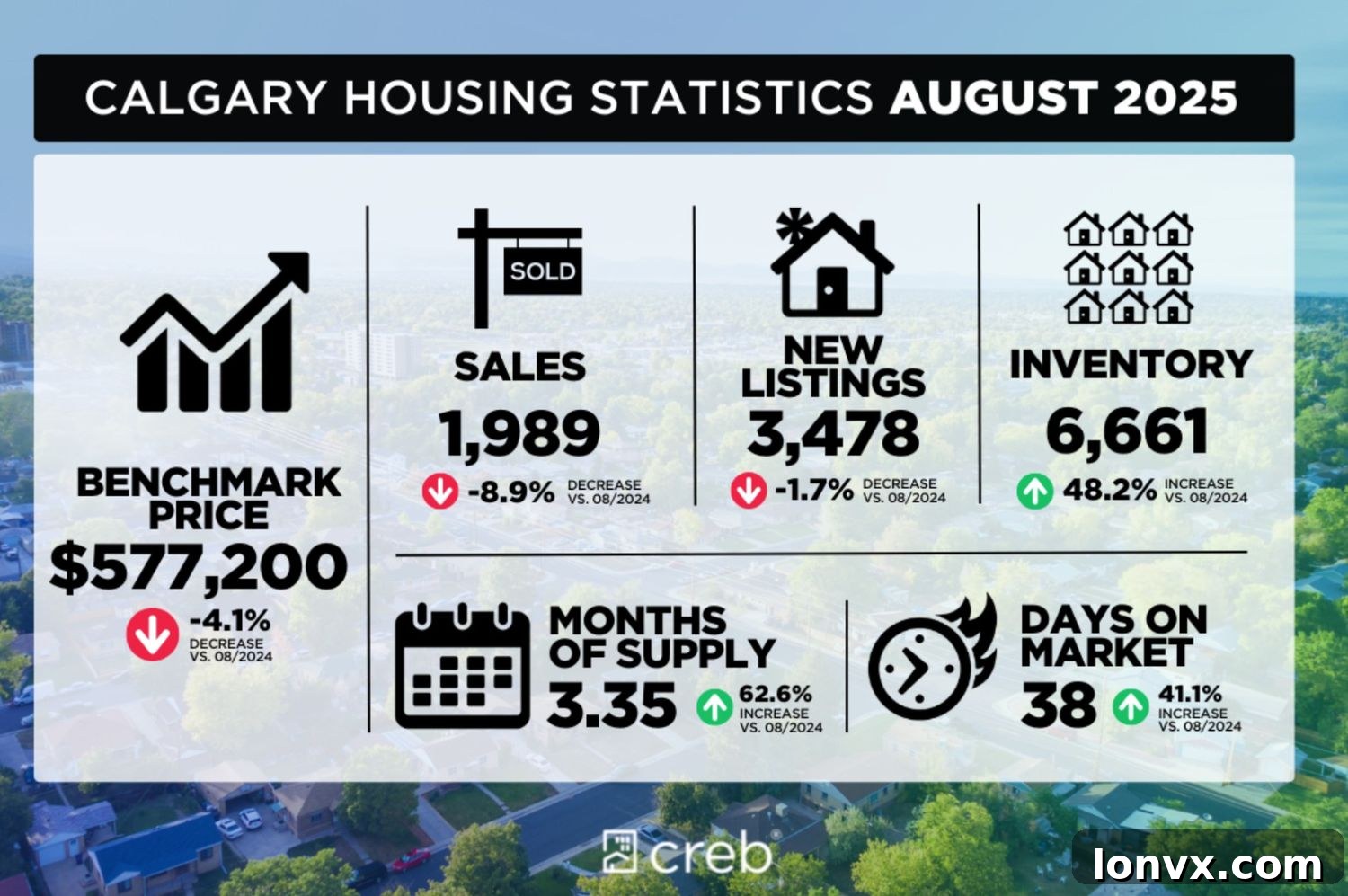
September 2024 witnessed a significant imbalance between new listings and actual home sales across Calgary. The city recorded 1,720 sales, which was considerably dwarfed by the 3,782 new listings that entered the market. This disparity had a profound impact on overall inventory levels, pushing them to 6,916 units. This figure represents a robust 36 percent increase compared to the same period last year and stands more than 17 percent above the typical inventory levels observed in September over recent years. Notably, row houses and apartment-style homes were the primary drivers behind this surge in available supply, significantly contributing to the broader market rebalancing.
Supply Growth Outpaces Softening Demand: What It Means for Calgary Homes
The core of Calgary’s evolving real estate narrative lies in the accelerated growth of supply, which has demonstrably outpaced the existing demand. Ann-Marie Lurie, CREB’s esteemed chief economist, highlighted that the upward trend in supply is not isolated to a single segment but is observable across resale properties, newly constructed homes, and even the rental market. This simultaneous increase in options for consumers coincides with a palpable deceleration in buyer demand, creating a potent cocktail for a market correction.
Deciphering the Decline in Buyer Urgency
Lurie points to a combination of factors contributing to the reduced urgency among potential purchasers. Slower population growth, which has historically been a robust driver of housing demand in Calgary, now plays a role in tempering the market. Furthermore, ongoing economic uncertainty, encompassing everything from fluctuating interest rates to broader inflationary pressures and a cautious job market outlook, is prompting buyers to adopt a more wait-and-see approach. This reluctance to commit quickly has given buyers greater leverage and reduced the intensity of bidding wars that characterized previous market cycles.
The increased competition from diverse housing options further compounds this lack of urgency. “Resale markets have more competition from new homes and additional supply in the rental market, reducing the sense of urgency amongst potential purchasers,” Lurie stated. This expanded choice empowers buyers, allowing them to take their time, explore more options, and negotiate more assertively. Ultimately, this heightened supply choice has a direct and measurable impact: “the additional supply choice is weighing on home prices,” she concluded.
The Impact on Home Prices and Market Metrics
The shift in market dynamics has directly influenced home valuations. Calgary’s benchmark price, a key indicator of market health, experienced a four percent dip from September 2024, settling at $572,800. This year-over-year decline underscores the pressure sellers are facing in an environment of abundant inventory and discerning buyers.
Further evidence of this market rebalancing can be seen in critical real estate metrics. The sales-to-new-listings ratio, which measures the number of homes sold against the number of new listings, slipped to 45 percent in September. A ratio below 60 percent generally indicates a buyer’s market, and 45 percent firmly places Calgary in this category. Concurrently, the months of supply, which calculates how long it would take to sell all current listings at the present sales pace, rose to four months. This is the highest level recorded since early 2020, offering a clear signal of increased inventory and a less frenzied market pace. Such an extended period of supply provides buyers with more time and choice, enhancing their negotiating position.
Sector-Specific Impacts: Apartment Market Sees the Biggest Transformation
While the broader Calgary housing market has softened, the impact has not been uniform across all housing types. The apartment sector has felt the shift most acutely, undergoing the most significant transformation.
Apartment-Style Homes: A Strong Buyer’s Market Emerges
Apartment-style homes have experienced the most pronounced effects of the rising supply. This segment now unequivocally operates under buyer’s market conditions, where supply significantly outstrips demand. Consequently, prices in the apartment category saw a substantial adjustment, falling more than six percent year-over-year. The benchmark price for an apartment in September settled at $322,900, reflecting the heightened competition among sellers and the expanded choices available to buyers.
For potential buyers, this presents a compelling opportunity to enter the Calgary market at a more accessible price point or to secure an investment property with potentially greater negotiation power. Sellers, however, must adjust their expectations and strategies, emphasizing property presentation, competitive pricing, and a willingness to negotiate to attract offers in a crowded market.
Detached Homes: Resilience Amidst Increasing Supply
Detached homes also faced an increase in supply, though the impact on prices was less dramatic than in the apartment sector. Despite a higher number of listings, the detached segment demonstrated greater resilience. At a benchmark price of $749,900, detached home prices were down by only one percent from last year. This relatively modest decline suggests a persistent underlying demand for standalone properties, particularly in certain areas.
However, even within the detached sector, price adjustments were not uniform across the city. Declines were more concentrated and noticeable in specific districts, particularly the North East and North areas of Calgary. This geographical variation highlights the importance of localized market analysis for both buyers and sellers in the detached home segment, as conditions can vary significantly from one neighborhood to another.
Navigating Calgary’s Evolving Real Estate Landscape
The September 2024 report paints a clear picture of a Calgary real estate market in transition. For prospective buyers, the current conditions offer an opportune moment. Increased inventory, reduced competition, and softening prices translate into more choices, greater negotiation leverage, and potentially less stressful purchasing experiences. It encourages thorough research, pre-approval, and strategic offers.
For sellers, understanding the shift towards a buyer’s market is crucial. Realistic pricing, exceptional property staging, and effective marketing become paramount. Working closely with an experienced real estate professional who can provide nuanced market insights and a tailored selling strategy is more important than ever. Flexibility in negotiations will also be a key factor in securing a sale.
Looking ahead, the Calgary housing market is expected to remain influenced by broader economic factors, including interest rate decisions, inflation trends, and employment growth. While the immediate outlook suggests continued adjustments, Calgary’s long-term appeal as a vibrant economic hub may provide a stabilizing influence. Market participants are advised to stay informed, seek expert advice, and adapt their strategies to successfully navigate this evolving real estate environment.