
Canada’s Immigration Shift: A New Era for the Housing Market?
Canada, a nation long celebrated for its open arms to immigrants, is embarking on a significant policy recalibration. The government’s recent decision to substantially reduce immigration targets over the coming years is poised to send ripples across various sectors, most notably Canada’s perennially hot housing market. Experts are now scrutinizing how this unprecedented shift could reshape demand dynamics, potentially offering a much-needed reprieve from soaring prices, yet simultaneously presenting new challenges in the complex landscape of Canadian real estate.
In a pivotal announcement made in October, the Canadian government detailed plans to scale back the projected intake of new permanent and non-permanent residents by more than 900,000 individuals over a two-year period. This ambitious target aims to temper Canada’s rapid population growth, which had been among the fastest in the G7. The policy adjustment is expected to result in a modest 0.4 percent decrease in the overall population by 2026, with a more subdued, “modest” growth trajectory anticipated to resume from 2027 onwards. This dramatic reduction signals a conscious effort to address critical infrastructure strains, including the persistent housing shortage, which has become a defining national concern.
Robert Hogue, the chief assistant economist at RBC, has been a leading voice in analyzing the potential ramifications of these policy changes. Hogue notes that while this substantial reduction in newcomer arrivals could undoubtedly help to narrow Canada’s pronounced housing supply gap, it is crucial to temper expectations. He emphasizes that while the policy may alleviate some immediate demand pressures and offer a temporary breather for the market, it is unlikely to serve as a silver bullet for the deep-rooted, long-standing affordability crisis that has plagued Canadian households for years. The problem, he suggests, is multi-faceted and extends beyond mere population growth.
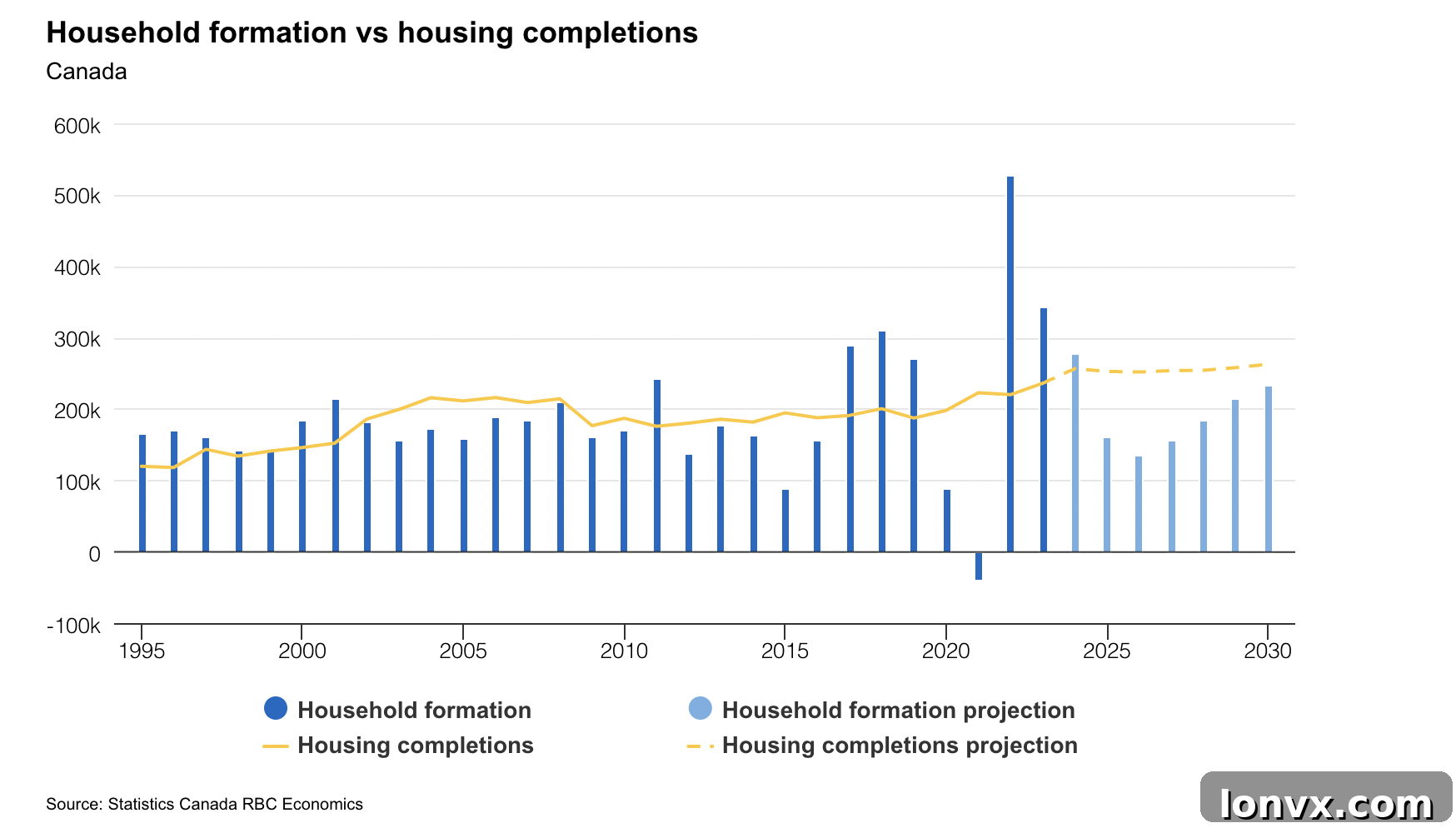
Hogue’s analysis, detailed in recent RBC thought leadership, explains how a reduction in the influx of non-permanent residents, in particular, will directly impact household formation. Household formation, the process by which individuals or groups establish new residences, is a primary driver of housing demand. Fewer new individuals arriving in the country inevitably translates to fewer new households seeking housing. According to Hogue’s updated forecast, nearly 400,000 fewer households—a substantial 46 percent drop—are now projected to form over the next three years compared to previous, higher immigration projections. This significant decrease in new household creation provides Canada with what Hogue terms a “golden opportunity” to begin addressing its severe housing shortage, provided that the current pace of homebuilding can be sustained or, ideally, accelerated. The effectiveness of this policy hinges on the construction sector’s ability to keep pace with, or even surpass, the adjusted demand curve.
Navigating the Canadian Rental Markets and Investor Sentiment
The immediate effects of altered immigration patterns are expected to be most acutely felt in Canada’s rental sector, particularly in its most populous and expensive urban centers. The RBC economist specifically highlights Toronto and Vancouver, metropolitan areas that have witnessed an unprecedented surge in rental demand over recent years. This spike was largely fueled by a burgeoning international student enrollment and a general increase in non-permanent residents. With fewer newcomers entering these markets, a natural cooling effect is anticipated.
The potential implications are considerable: fewer prospective tenants could lead to an increase in residential vacancy rates. Higher vacancy rates, in turn, typically translate to reduced pressure on rental prices, offering a glimmer of hope for renters who have been grappling with skyrocketing costs. While this shift won’t instantly make housing affordable for everyone, it could signal a more balanced market, allowing for a modest deceleration in the rapid pace of rental inflation observed in recent times.
Beyond the direct impact on renters, lower immigration levels are also poised to influence investor demand for residential properties. Property investors, often driven by the prospect of consistent rental income and capital appreciation, closely monitor demographic trends. Hogue anticipates that some investors, foreseeing less robust growth in rental income due to a reduced tenant pool, might reconsider their future investment strategies, particularly concerning condos and apartment buildings. A slowdown in investor activity, especially in speculative markets, could further contribute to a more stable, albeit less frenzied, real estate environment. This adjustment could also free up capital for other investment avenues or even lead to a slight increase in the supply of units available for purchase if some investors decide to exit the market.
Interest Rate Cuts and the Resurgence of Homeownership Demand
While the rental sector may experience a cooling trend, the outlook for homeownership presents a different dynamic. Despite any deceleration in rental market growth, Hogue foresees a robust and sustained demand for homeownership across Canada. A primary catalyst for this anticipated resurgence is the expectation of forthcoming interest rate cuts. The Bank of Canada, in response to evolving economic conditions and a projected uptick in unemployment, is widely expected to begin easing its monetary policy in the coming months.
This policy shift could significantly stimulate housing demand. Historically, lower interest rates translate directly into more affordable borrowing costs for consumers, thereby increasing purchasing power and making homeownership a more attainable goal for a broader segment of the population. Since interest rates began their aggressive upward trajectory in 2022, a substantial amount of pent-up demand has accumulated among prospective homebuyers. Many individuals and families have been on the sidelines, patiently waiting for more favorable borrowing conditions. Hogue’s analysis suggests that lower borrowing costs will act as a powerful incentive, encouraging these patient Canadians to finally enter or re-enter the housing market, triggering a fresh wave of buyer activity. This latent demand, once unleashed by rate cuts, could counteract some of the demand-side reductions from lower immigration, creating a nuanced and potentially volatile market.
Temporary Relief Versus Long-Term Affordability Solutions
While the reduction in immigration targets offers a glimmer of hope for easing Canada’s profound housing supply gap, Hogue issues a crucial warning: these changes will not “instantly rebalance the market.” The housing crisis is a culmination of years of under-supply, and reversing this trend requires more than just a reduction in new arrivals. RBC’s comprehensive estimates reveal that Canada’s housing supply has critically lagged behind household formation by an staggering 545,000 units between 2015 and 2023. This formidable gap, Hogue underscores, will undoubtedly take “years to undo,” even with a concerted effort and favorable demographic shifts.
The underlying structural challenges persist. High construction costs remain a formidable barrier to increasing the supply of affordable housing, particularly in Canada’s largest and most sought-after markets. Factors such as escalating material prices, labor shortages, stringent regulatory hurdles, and municipal zoning restrictions all contribute to the prohibitive cost of building new homes. Even with reduced demand pressure, these supply-side bottlenecks will continue to impede rapid market rebalancing.
Some tangible relief may indeed materialize in the rental sector. If vacancy rates rise as anticipated and a greater number of purpose-built rental apartments are completed and brought to market, renters could experience some reprieve. However, the improvement in ownership affordability in major Canadian cities is projected to be a much slower and more protracted process. The chasm between average household incomes and average home prices is simply too wide to be bridged quickly.
Hogue summarizes this complex outlook by stating, “Much of the affordability improvement we foresee in the period ahead will come from lower interest rates and growth in household income.” These economic factors are crucial for boosting purchasing power. However, he cautions, “But, both point to only a partial reversal of the massive loss in affordability during the pandemic.” The extraordinary market conditions experienced during and immediately after the pandemic led to an unprecedented erosion of housing affordability. While the current policy adjustments and economic shifts offer a path towards recovery, a full restoration of pre-pandemic affordability levels remains a distant and challenging goal, necessitating a multi-pronged approach that addresses both demand and, more critically, the persistent challenges on the supply side.