
Navigating Canada’s Resilient Recreational Property Market: Key Trends and Future Outlook from Re/Max 2024 Report
Canada’s recreational property market continues to demonstrate remarkable resilience and unique characteristics, often defying conventional real estate downturns. Despite a backdrop of rising interest rates, persistent affordability challenges across the country, and evolving economic landscapes, a recent comprehensive analysis from Re/Max Canada’s 2024 Cottage Trends Report reveals a market where property owners are steadfastly holding onto their coveted retreats. This unwavering commitment to recreational ownership stems from a profound appreciation for the unparalleled quality of life these properties offer, coupled with a strong belief in their long-term investment potential and their role as cherished family assets.
The report underscores a prevailing sentiment among Canadian cottage owners: a deep-seated reluctance to sell. A significant 64 percent of owners are choosing to retain their properties rather than divest, a trend that is expected to keep listing inventories constrained throughout the year. This stability in supply, juxtaposed with consistent and robust demand from a diverse pool of buyers, sets the stage for a dynamic and competitive market ahead. For many, a recreational property is more than just an investment; it’s a lifestyle choice, a place for rejuvenation, and a cornerstone of family traditions, making the decision to sell a weighty one.
Looking forward, Re/Max forecasts a notable increase in recreational property prices across the nation, projecting an average rise of 6.8 percent. This upward trajectory in values highlights the enduring appeal and intrinsic worth of these unique assets. Furthermore, the number of sales is anticipated to climb significantly in over 60 percent of the regions analyzed, with growth rates expected to range anywhere from a conservative three percent to an impressive 50 percent. These projections paint a compelling picture of a robust market characterized by appreciating assets and consistent buyer interest, even as the broader real estate landscape faces various headwinds, making recreational property a standout segment.
Christopher Alexander, president of Re/Max Canada, encapsulates this dominant market sentiment perfectly: “Years of research have shown that Canadians consistently see value in real estate ownership both as a necessity and an investment. Those who have already gained a foothold in the recreational property market are determined to hold on to this asset, despite mounting affordability concerns across the country.” This statement highlights the deep-rooted cultural value Canadians place on property, particularly those offering a sanctuary from urban life and a tangible asset for future generations. The desire to maintain a connection to nature, to have a personal escape, and to build lasting family memories proves to be a powerful motivator for holding onto these properties.
Capital Gains Tax Changes: A Muted Impact on Listings
A recent and significant development in Canadian tax policy – the adjustment to the capital gains tax inclusion rate, set to take effect on June 25, 2024 – had some observers predicting a potential rush of listings. The expectation was that owners might seek to sell their recreational properties before the new rules came into force, effectively “beating the deadline” to realize gains under the previous, more favourable tax conditions. However, Alexander confidently asserts that this change is unlikely to trigger a widespread surge in new listings and sales across the recreational market.
“Even the change to the capital gains tax, which will take effect on June 25, won’t spark a widespread flood of new listings and sales by cottage owners trying to get in under the wire given the narrow window,” he explains. The relatively short timeframe between the announcement of the tax change and its implementation date, combined with the typically long-term investment horizon and emotional attachment of many recreational property owners, significantly mitigates the potential for a panic-driven sell-off. For many, the decision to sell a cherished cottage is not made lightly or quickly; it involves family discussions, logistical planning, and an emotional readiness that a short deadline rarely accommodates.
Despite this general outlook of market stability, the report also acknowledges some localized effects. Re/Max brokers and agents in certain regions have indeed reported a recent uptick in listings that may be connected to the impending tax change. This suggests that while the broader market may remain largely unaffected due to the predominant long-term ownership mindset, specific pockets or individual owners with pre-existing plans to sell, or those with purely investment-driven properties, may have accelerated their timelines. This nuanced view reflects the diverse nature of Canada’s recreational market, where regional factors, local market conditions, and individual owner circumstances often play a significant role in market behaviour.
Understanding the Driving Forces: Key Insights from the Re/Max Report
The Re/Max Cottage Trends Report delves deeper into the fundamental dynamics shaping the recreational property market, revealing crucial insights into what buyers prioritize, how demographics are shifting, and the profound influence of evolving policy and regulation. These elements collectively paint a comprehensive and vivid picture of where the market stands today and where it is likely headed in the foreseeable future, offering valuable perspectives for both current owners and prospective buyers.
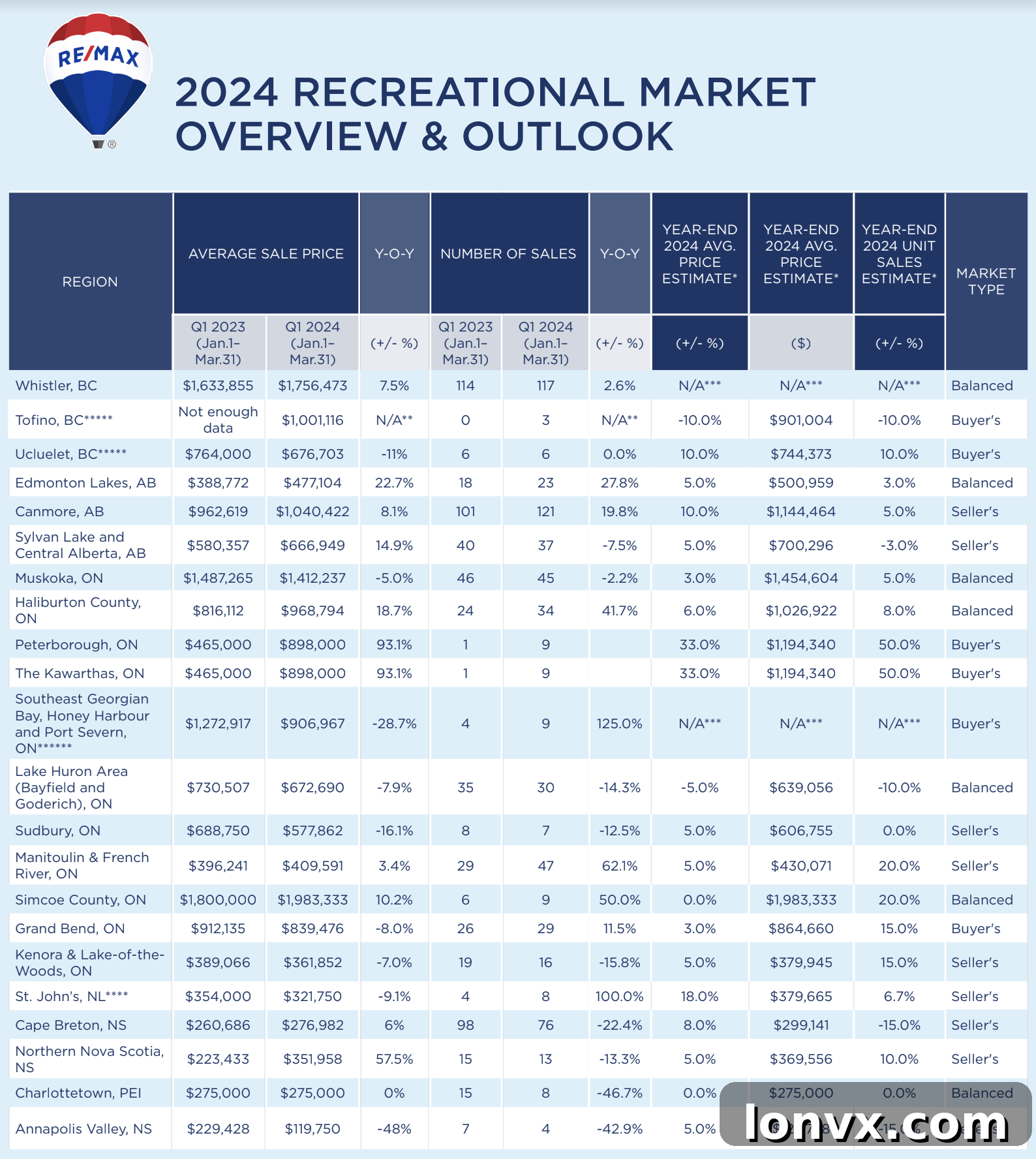
Buyer Priorities: A Trifecta of Affordability, Water Proximity, and Essential Amenities
When Canadians embark on the journey of purchasing a recreational property, their priorities are clear, pragmatic, and largely reflective of the broader economic environment and evolving lifestyle needs. The Re/Max report meticulously highlights affordability as the paramount concern for nearly half of all prospective buyers, specifically 46 percent. This overwhelming emphasis on cost-effectiveness signals that even in the pursuit of leisure and escape, financial prudence remains a guiding principle. Buyers are actively seeking properties that align with their budgets, often exploring options further afield from traditional hot spots, considering smaller or more rustic cottages, or even looking into co-ownership models to achieve their cherished ownership dreams without overextending themselves.
Following affordability, the timeless allure of proximity to water emerges as the second most significant priority, capturing the attention and desire of 35 percent of buyers. The dream of lakeside living, serene riverfront views, or convenient coastal access remains a powerful and enduring draw, embodying the quintessential Canadian cottage experience. Properties offering direct water access, private docks, or simply scenic water views often command a premium, reflecting this deep-seated desire for a connection to nature and a lifestyle enriched by water-based recreational activities such such as swimming, boating, fishing, and kayaking. This preference unequivocally underscores the profound lifestyle investment aspect inherent in recreational properties.
Finally, the availability and quality of necessary amenities is a critical factor for a significant 27 percent of buyers. This category extends far beyond just basic utilities to encompass reliable and high-speed internet access – a non-negotiable for the work-from-home generation – as well as proximity to essential services like grocery stores, medical facilities, hardware stores, and access to local recreational opportunities such as hiking trails, ski hills, or golf courses. With the rise of remote and hybrid work models and the increasing desire for multi-season usability, buyers increasingly seek properties that offer the conveniences of modern living without sacrificing the tranquility and natural beauty of a rustic setting. The ability to work remotely from a cottage, to comfortably host family and friends for extended periods, or to enjoy the property year-round necessitates a certain level of infrastructure and service availability, transforming the traditional rustic cabin into a more functional and livable retreat.
Demographic Shift: A Younger, Family-Focused Market Emerges
One of the most compelling and transformative insights from the Re/Max report is the significant demographic shift currently underway within the Canadian recreational property market. Historically, the scene was largely dominated by retirees and empty nesters, who comprised the primary demographic in a staggering 91 percent of markets analyzed as recently as 2018. However, the landscape has transformed dramatically in just a few short years. Today, families and young couples are rapidly becoming the primary drivers of activity, now accounting for the dominant demographic in a substantial 59 percent of recreational markets across Canada. This represents a fundamental and exciting change in market composition, buyer motivations, and property requirements.
This generational shift can be attributed to several converging factors. The increased flexibility offered by remote and hybrid work models, accelerated by global events, has empowered younger generations to envision a lifestyle where their “office” can be a cottage, blurring the lines between work and leisure. Furthermore, the desire to provide children with experiences closer to nature, to build lasting family legacies, and to secure a tangible asset for future enjoyment and intergenerational wealth transfer are powerful motivators. These younger buyers are often seeking properties that can serve multiple purposes: a cherished weekend retreat, a potential future primary residence, or an investment that can generate rental income to help offset costs. Their entry into the market brings new demands, often for properties that are more move-in ready, equipped with modern technological amenities, and offer ample space for family activities and guest accommodations.
Policy and Regulation Influences: Navigating Short-Term Rental Bans
In an ongoing effort to address broader housing supply concerns, particularly in densely populated urban and popular tourist areas, several provinces and municipalities across Canada have either implemented or are actively exploring bans and significant limitations on short-term rentals. These policies are primarily aimed at converting short-term rental units back into long-term housing stock, thereby increasing affordability and availability for permanent residents. The potential impact of such stringent regulations on recreational property owners, many of whom have come to rely on rental income to offset ownership costs and mortgages, has been a significant point of discussion and concern within the real estate community.
Despite these widespread restrictions and the considerable debate surrounding them, the Re/Max report reveals a surprisingly resilient response from property owners: these measures have not triggered a widespread sell-off among recreational property owners. A relatively low percentage, only 29 percent of owners, indicated that they are actively considering selling their properties specifically due to the inability to generate anticipated rental income. This remarkably low percentage suggests that for a significant majority of owners, the intrinsic and multifaceted value of owning a recreational property – be it for personal use, cherished family enjoyment, a long-term investment for appreciation, or a legacy asset – profoundly outweighs the potential lost income from short-term rentals. Many owners purchased their cottages primarily for personal enjoyment, a sanctuary from daily life, and for long-term investment appreciation, viewing rental income as an ancillary benefit rather than the sole or primary purpose of ownership.
This finding powerfully highlights the deep personal attachment, long-term investment perspective, and emotional equity that uniquely characterize Canadian recreational property ownership. While a portion of the market, particularly those with purely investment-driven properties or those heavily reliant on rental income, may be impacted by these rental restrictions, the vast majority are holding firm, underscoring the enduring appeal and perceived irreplaceable value of these unique and special assets within the Canadian landscape.
Conclusion: A Resilient, Evolving, and Highly Desirable Market
The 2024 Re/Max Cottage Trends Report paints a compelling and optimistic picture of Canada’s recreational property market as one of profound resilience, dynamic evolution, and sustained demand. Despite a challenging economic climate characterized by interest rate fluctuations and affordability pressures, property owners are largely committed to their retreats, viewing them as invaluable assets that enrich their lifestyle and represent sound long-term investments. The market is demonstrably adapting to new buyer demographics, with families and young couples increasingly stepping into the forefront and shaping demand, while also skillfully navigating complex regulatory shifts concerning short-term rentals.
As prices are expected to rise and sales volumes increase in many regions across the country, the Canadian recreational property market continues to offer unique opportunities for both buyers and sellers, alongside its inherent challenges. Its remarkable ability to withstand external economic pressures and adapt gracefully to changing demographic preferences and policy environments speaks volumes about the enduring appeal of Canada’s cottage country and the intrinsic, irreplaceable value Canadians place on these special places that offer solace, adventure, and cherished memories for generations.
For a deeper dive into these fascinating trends, more granular regional breakdowns, and additional expert insights, we encourage you to review the full Re/Max report directly via the provided link below.
Access the Full Re/Max 2024 Cottage Trends Report Here
Enjoying This Insightful Article?
Get the latest REM articles delivered straight to your inbox 3 times a week, ensuring you stay completely up-to-date on all the critical developments and trends within the dynamic Canadian real estate industry.
Join our thriving community of real estate professionals and enthusiasts, and never miss an essential update or expert analysis!