
For the first time in over a year, the comprehensive measure of Canadian house prices has halted its prolonged decline, signaling a potential shift in the nation’s real estate landscape. This significant development comes after a period of intense volatility and adjustment across the Canadian housing market.
According to the aggregate composite House Price Index (HPI), the average Canadian house price now stands at $686,371. While this figure remains 13.7 percent below the peak observed in March of last year, it marks a notable rebound since the beginning of the current year. This stabilization, though modest, provides a glimmer of hope for buyers, sellers, and industry stakeholders who have been closely monitoring the market’s performance.
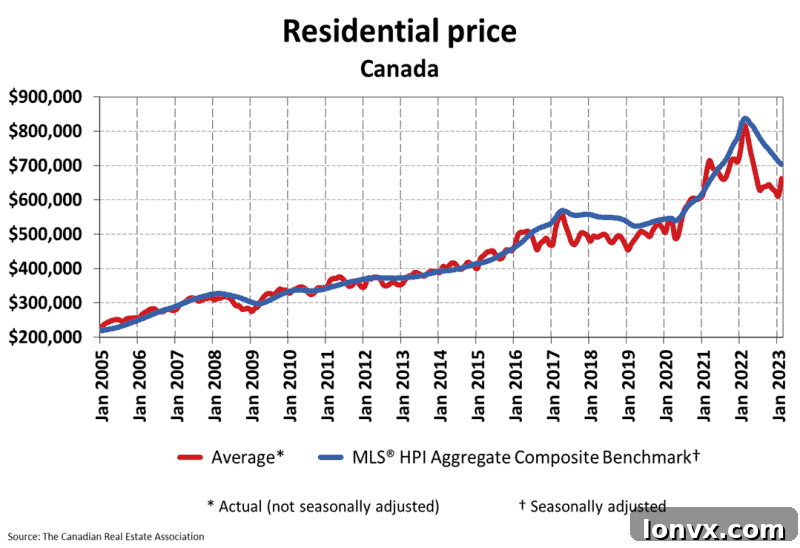
Despite this national aggregate trend, a nuanced picture emerges upon closer examination of individual markets. Monthly declines are still prevalent in numerous regions across the country, indicating that the national average is significantly bolstered by the robust performance of Canada’s largest real estate market: Toronto. The Greater Toronto Area (GTA) has experienced exceptionally strong seasonal price growth leading into the spring market, with its HPI rising by an impressive 1.6 percent month-over-month. This strong showing from Toronto underscores its considerable influence on the overall Canadian housing statistics.
WE’RE BACK BABY!
How do we all feel about this? pic.twitter.com/QUY7STvyFS
— Ben Rabidoux (@BenRabidoux) April 14, 2023
Beyond Toronto, several other Canadian markets demonstrated strong performance, even outperforming the nation’s largest urban centre in monthly growth:
- Quebec CMA: +3.6 percent
- Sudbury: +3.1 percent
- Oakville-Milton: +2.1 percent
- Estrie: +1.8 percent
This localized strength highlights the diverse underlying economic and demand drivers influencing different regions. Factors such as relative affordability, localized employment growth, and unique supply dynamics often play a crucial role in these areas, allowing them to buck broader trends.
It is vital to acknowledge the significant role of seasonal pricing patterns, particularly within the Toronto spring market, which this year’s growth strikingly exemplifies. As observed in my most recent Toronto market update, understanding these seasonal cycles is key to interpreting short-term fluctuations.
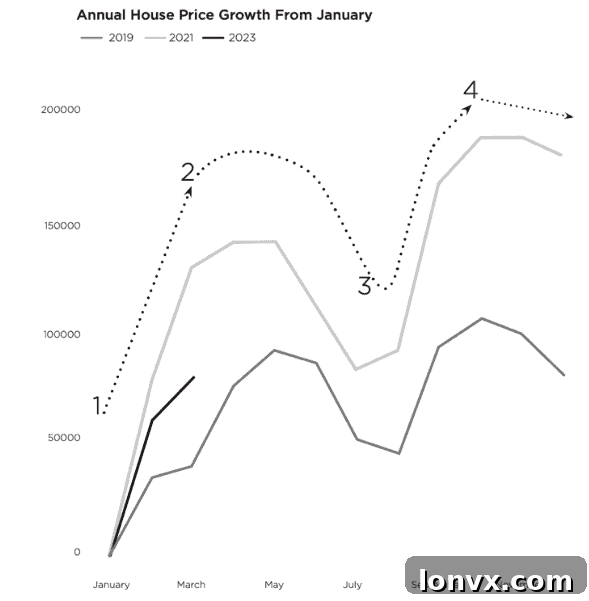
Annual house price growth in Toronto from January, source: Daniel Foch
Understanding the Seasonal Rhythm of Canadian Real Estate
In a typical year, Canadian house prices generally follow a predictable seasonal pattern: prices tend to rise during the spring, stabilize in the summer, experience another uptick in the fall, and then settle during the winter months. This inherent seasonality, combined with the Canadian Real Estate Association’s (CREA) acknowledgment that Greater Toronto’s market activity can significantly skew the national data set, suggests that the coming year will likely see continued volatility in house prices. Investors and homebuyers alike should brace for potential fluctuations, recognizing that short-term movements may not always reflect long-term trends.
While Toronto and a few other markets experienced growth, the majority of Canadian cities saw their monthly HPI growth fall below that of the Greater Toronto Area. The most pronounced price drops were recorded in smaller Canadian cities and Ontario markets situated outside the dynamic Greater Golden Horseshoe region. This regional divergence paints a picture of a multi-speed housing market, where local conditions and resilience to economic headwinds vary significantly.
- Simcoe & District: -3.2 percent
- Bancroft and Area: -2.4 percent
- Regina: -2.1 percent
- Windsor Essex: -2.6 percent
- Victoria: -1.7 percent
- Peterborough & the Kawarthas: -1.7 percent
- St. John’s: -1.4 percent
- Guelph & District: -1.3 percent
- Kingston and Area: -1.2 percent
- Prince Edward Island: -1.1 percent
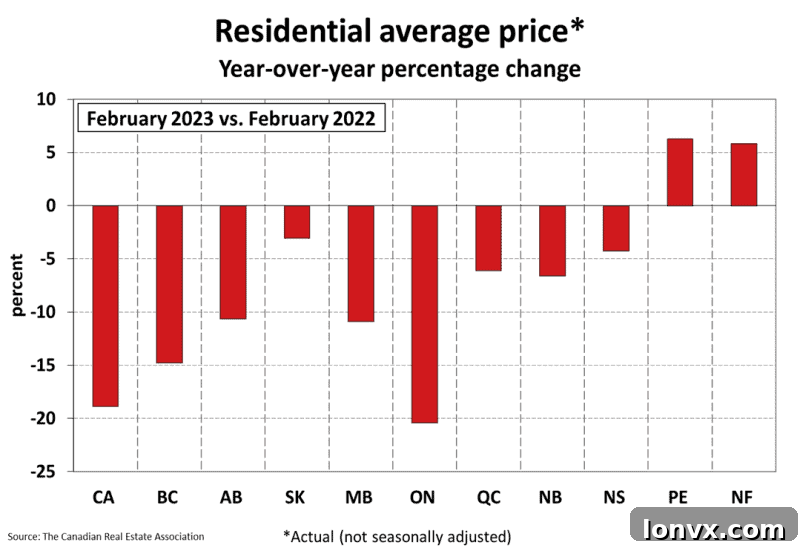
Interestingly, Prince Edward Island (PEI) and Newfoundland & Labrador currently stand as the only two provinces where house prices are still up year-over-year. However, their recent monthly downtrend raises questions about whether they will eventually join the rest of Canada in experiencing year-over-year declines. Their resilience highlights unique regional economic factors, but the broader market forces could eventually catch up.
The Crucial Role of Interest Rates and Affordability
The past year’s downturn in the Canadian housing market was largely a direct consequence of aggressive interest rate hikes by the Bank of Canada, aimed at taming persistent inflation. These rate increases significantly impacted borrowing costs, eroding purchasing power and cooling demand across the board. The current stabilization, therefore, might be linked to the market’s absorption of these higher rates and expectations regarding future monetary policy. A perception that interest rates might stabilize or even decrease later in the year could be contributing to renewed buyer confidence, particularly in robust markets like Toronto where demand remains strong.
Affordability continues to be a central theme in the Canadian housing narrative. Even with price adjustments, many regions remain unaffordable for average-income Canadians, especially first-time buyers. The interplay between interest rates, housing supply, and income levels will dictate the long-term sustainability of any market recovery. Policy decisions at all levels of government aimed at increasing housing supply and supporting affordability measures will be critical in shaping the future trajectory of the Canadian real estate market.
Sales Volume Rebounds: A Glimmer of Hope for Market Activity
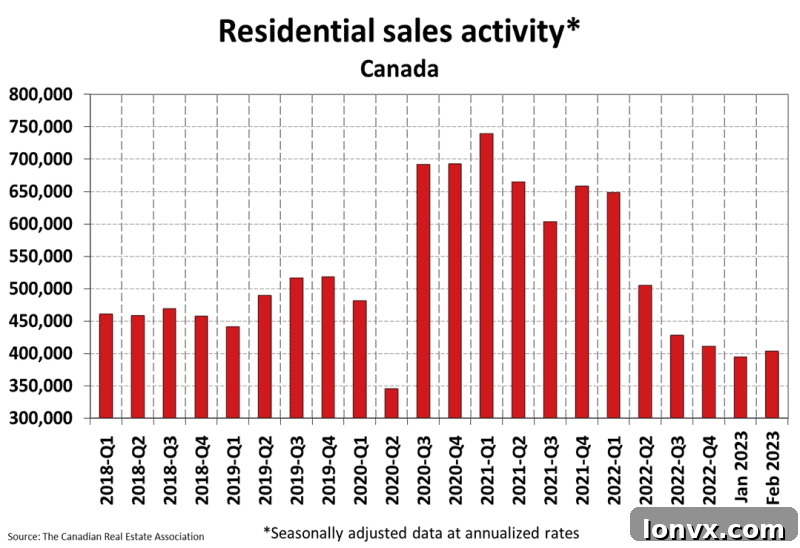
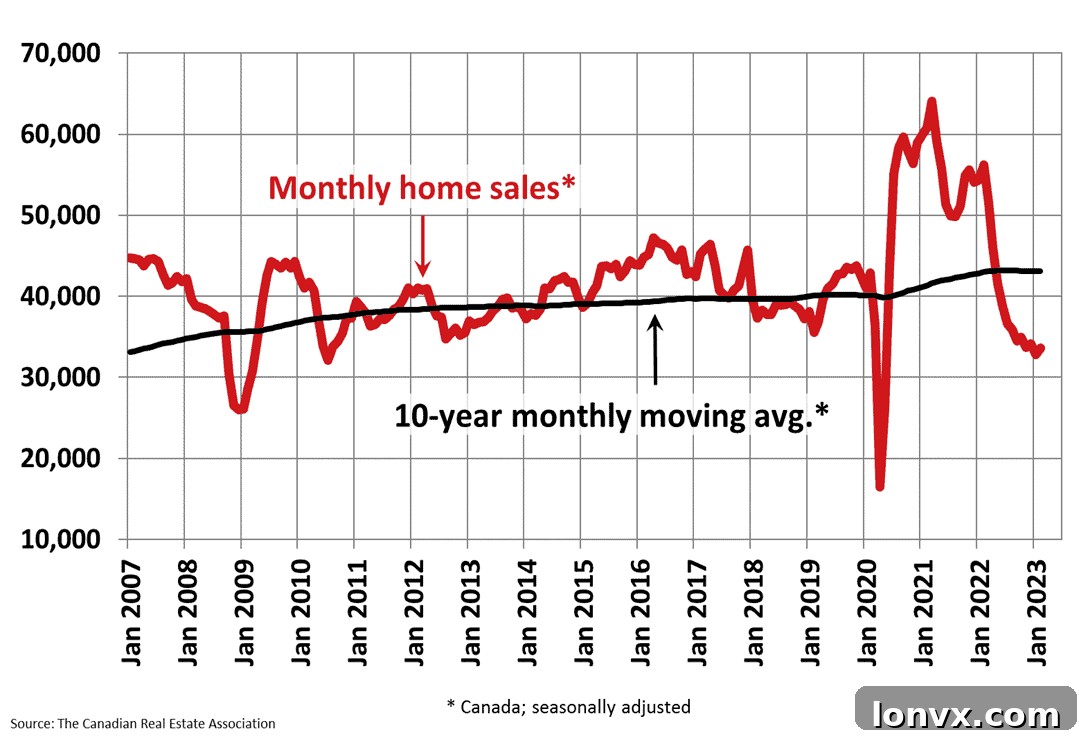
Another crucial metric that finally appears to be breaking its negative trend is sales volume, which measures the number of homes sold. After many months of declines or only meagre increases, home sales across Canada rose by 1.4 percent from the previous month. This marks the largest gain in sales volume since the downturn began, offering a significant psychological boost to the industry and potential buyers.
The Canadian real estate industry is undoubtedly breathing a collective sigh of relief. A sustained period of record-low sales volume directly translates to reduced income from sales commissions, impacting agents, brokers, and ancillary services. The recent uptick suggests a potential return of confidence among both buyers and sellers, encouraging more transactions.
The industry is also hopeful that this marks the beginning of an upward trend, propelling sales volume back toward the 10-year monthly moving average of home sales. Historically, such uptrends in volume often appear as robust rebounds following significant market drops, similar to those observed in 2009, 2010, 2019, and 2020. These historical patterns provide a hopeful template for the current market, suggesting that a period of sustained low activity can eventually give way to renewed momentum.
While history may not repeat itself precisely, it frequently offers echoes and rhymes. Only time will truly tell if the current increase in volume will evolve into a meaningful, sustained surge that can pull the real estate industry out of its prolonged period of low activity. As it stands, current sales volume remains 34.4 percent below the exceptionally high numbers recorded at the same time last year. The Canadian housing market experienced an unprecedented boom from the onset of the pandemic-induced lockdowns, trading significantly above its 10-year monthly moving average until February 2022. The journey back to those levels, or a healthy normalized average, will likely be gradual.
Inventory Levels and Market Dynamics
Beyond prices and sales volume, active listings – or inventory levels – play a critical role in shaping market dynamics. A lack of available homes for sale can exert upward pressure on prices, even if overall demand has cooled. Conversely, an influx of new listings without a corresponding increase in buyers can lead to downward price adjustments. Currently, many Canadian markets are experiencing relatively tight inventory, which could be a factor in supporting prices despite higher interest rates. Monitoring the balance between supply and demand in the coming months will be crucial for understanding the market’s trajectory.
Canadian Real Estate Outlook: Navigating Volatility and Emerging Opportunities
The latest data indicates a complex and evolving Canadian housing market. While the halt in price declines is a welcome development, the underlying dynamics suggest a period of continued regional disparity and potential volatility. Toronto’s strong performance, driven by seasonal demand and its economic gravity, is currently masking weaker trends in other areas. The rebound in sales volume, though modest, signals a potential return of buyer and seller confidence, a critical ingredient for market health.
As we move further into the year, the Canadian real estate market will remain sensitive to various factors, including the Bank of Canada’s interest rate decisions, inflation trends, employment figures, and broader economic stability. For homebuyers, this environment presents both challenges and opportunities. While affordability remains a hurdle in many high-demand areas, the current stabilization might offer a window for those who have been on the sidelines. For sellers, understanding local market nuances and aligning expectations with current conditions will be paramount. Ultimately, the Canadian housing market appears to be in a transitional phase, moving from a rapid correction towards a more balanced, albeit volatile, landscape.