Canada faces a profound dilemma: the nation aims for continued population growth through immigration while simultaneously striving for more affordable home prices. New research from Statistics Canada underscores a critical, often uncomfortable, truth: achieving both goals simultaneously demands fundamental shifts in policy and urban planning. The current trajectory suggests these ambitions are increasingly at odds, creating a pressing need for transformative action, particularly in major urban centers like Vancouver and Toronto.
Navigating the Influx: Immigration and the Escalating Housing Demand
Canada’s commitment to welcoming new permanent residents is a cornerstone of its economic and social strategy. However, this commendable policy directly impacts the housing market. Statistics Canada projects a substantial increase in the population, anticipating 1.45 million new immigrants by 2025. A significant portion of these new arrivals will eventually seek to purchase a home, adding considerable pressure to an already strained housing supply.
Crucially, Canada’s recent foreign buyer ban, implemented to cool speculative demand, offers an explicit exception for permanent residents. While designed to curb non-resident speculation, this exemption means that a large segment of new immigrants will still enter the homeownership market. This nuance highlights why the ban, though well-intentioned, doesn’t address the fundamental demand generated by legitimate population growth.
The link between immigration and housing price escalation is not unique to Canada. A 2020 study, “The impact of immigration on housing prices in Australia” by Morteza Moallemi and Daniel Melser, published in Papers in Regional Science, found a direct correlation between Chinese and Indian immigration and increases in house prices. While focused on Australia, the findings resonate deeply with Canada’s situation. Both countries share similar characteristics: strong immigration policies, highly concentrated populations in a few major urban hubs, and restrictive land-use policies that limit housing supply. The research suggests that as new residents, often with robust economic backgrounds, settle in desirable urban areas, their demand, coupled with insufficient housing stock, inevitably drives up prices.
These demographic shifts, while economically beneficial in many ways, present an undeniable challenge for housing affordability. Without a corresponding increase in housing supply, particularly in the types of homes new residents seek, the dream of homeownership for both new and long-term Canadians will continue to recede.
Canada’s Self-Inflicted Wounds: The Root Causes of Unaffordability
Even without the pressure of burgeoning immigration, Canada has cultivated an environment ripe for housing unaffordability over the past two decades. The soaring property values, which have pushed homeownership out of reach for many, are largely a consequence of domestic policy choices and economic conditions. Two primary culprits stand out: stringent zoning regulations and historically cheap financing.
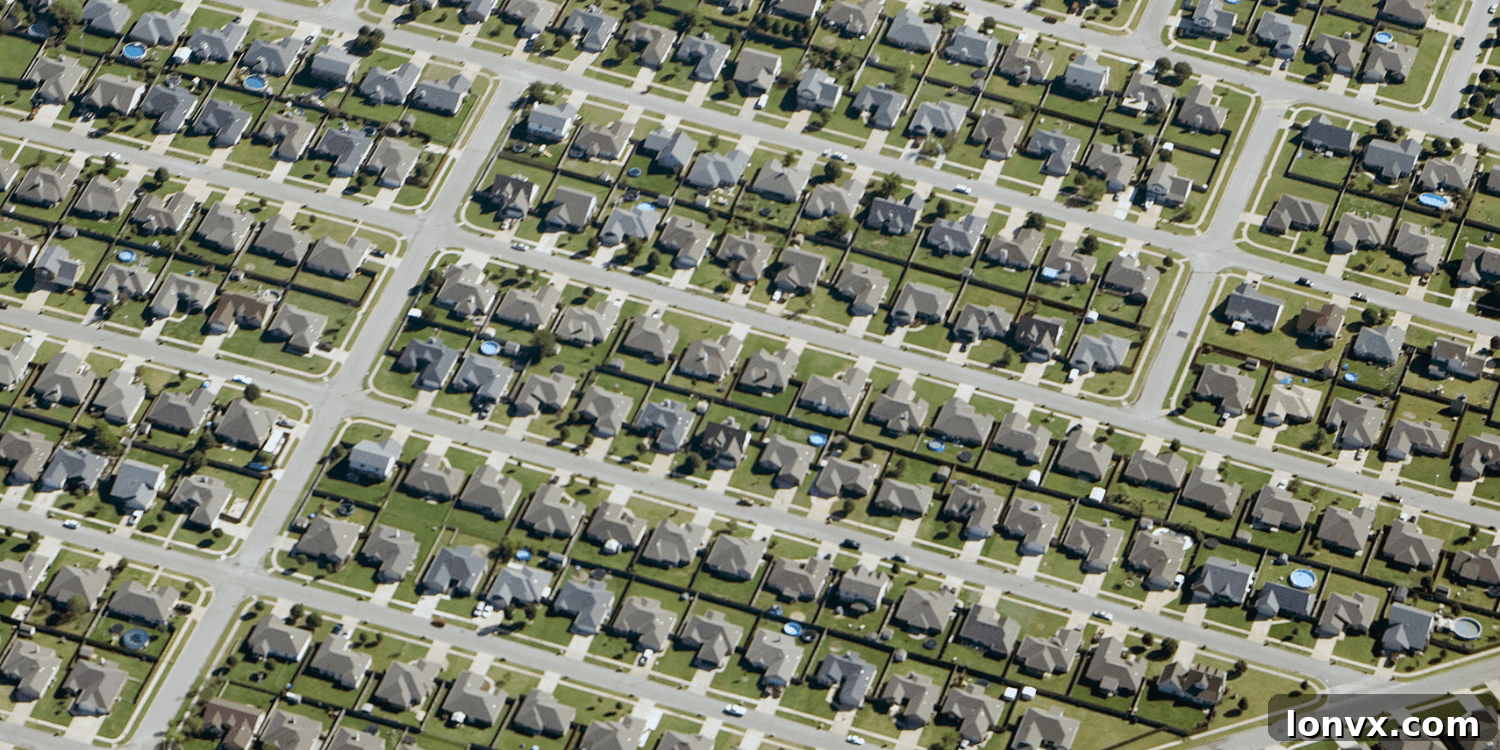
Our cities, particularly the major ones, are often characterized by antiquated zoning bylaws that prioritize low-density, single-family detached homes. These regulations, often remnants of mid-20th-century planning, effectively limit the types of housing that can be built and where, severely restricting the supply of medium- and high-density options that could accommodate more people within existing urban footprints. This artificial scarcity, by itself, creates upward pressure on prices.
Concurrently, a prolonged period of low interest rates made borrowing exceptionally cheap, encouraging larger mortgages and pushing household debt levels to record highs. This access to inexpensive credit fueled demand, allowing buyers to bid up prices and further inflate the market, independent of new immigration. The combination of restricted supply and readily available credit created a powerful cocktail for price escalation.
The impact is stark: In January 2023, the Canadian Real Estate Association (CREA) reported the national average home price at $612,000, approximately ten times the median household income after taxes. This ratio far exceeds what is considered healthy or affordable in most developed nations, placing Canada among the most unaffordable housing markets globally.
Perhaps the most telling evidence of these underlying domestic issues came during the COVID-19 pandemic. While immigration numbers plummeted and foreign buying significantly decreased, home prices paradoxically experienced one of the most significant booms in Canadian history. This period vividly demonstrated that Canada’s housing crisis is not solely driven by external demand but is deeply rooted in internal structural issues, primarily insufficient supply and accommodating financial conditions. While prices have seen some moderation since their pandemic peaks, they have not fallen sufficiently to accommodate the projected influx of nearly 1.5 million new residents without significant policy interventions.
It is imperative that all levels of government—federal, provincial, and municipal—collaborate on decisive actions to dramatically increase housing supply. This means confronting and reforming the entrenched zoning policies that limit density and stifle the development of diverse housing options in our most populated cities.
The Paradox of Space: Canada, the Land of Underutilized Homes
The narrative of Canada becoming “the land of empty houses” often conjures images of foreign owners leaving properties vacant. However, the reality, as highlighted by Paul Smetanin, CEO of the Canadian Centre for Economic Analysis, points to a more nuanced, domestically driven issue: inefficient utilization of existing housing stock due to restrictive zoning.
Smetanin’s research revealed a striking phenomenon in Toronto: an area covering approximately 58 percent of the region’s land mass has paradoxically lost 478,000 people since 2001. This depopulation within a growing metropolitan area isn’t due to abandonment but rather a consequence of “over-housed” empty nesters. These are individuals or couples whose children have grown and moved out, leaving them in large, single-family homes that far exceed their current needs. Smetanin’s analysis points to the staggering statistic of two million spare bedrooms in the Toronto area alone, and five million across the broader Golden Horseshoe region.
Empty nesters are not the villains in this scenario; they are simply responding to the housing market conditions and personal circumstances. The true culprit lies in the rigid zoning policies that dominate Canadian cities. These policies often restrict two-thirds or more of residential land to only one household per structure. This means that a large single-family home, even with multiple unused bedrooms, cannot easily be converted into multiple units, nor can it be replaced by a duplex, triplex, or small apartment building without navigating complex and often prohibitive rezoning processes.
This problem is not confined to Toronto. Vancouver, for instance, faces similar struggles to transition towards a balanced growth pattern that offers a diverse range of housing styles and price points. Its extensive single-family zones contribute to the city’s status as one of the world’s least affordable. The existence of vast amounts of underutilized space within existing urban boundaries, locked away by outdated regulations, represents a significant missed opportunity for alleviating the housing crisis.
Charting a New Course: Strategic Zoning Reform and Innovative Land Use
Addressing Canada’s housing shortage and affordability crisis requires a multi-faceted approach, with strategic zoning reform at its core. It is arguably the most powerful lever governments possess to unlock housing supply without relying on sprawling new developments.
A July 2020 report by the Toronto Regional Real Estate Board (TRREB) underscored how municipal zoning restrictions have starved the city of housing diversity. Instead of a vibrant mix, large swaths of urban areas consist almost exclusively of low-density, single-family homes. The report advocated for addressing the “missing middle” – housing types such as duplexes, triplexes, townhouses, and mid-rise apartment buildings that provide more density than single-family homes but are less imposing than high-rises. Enabling these housing forms in traditionally single-family zones could profoundly transform urban landscapes and increase affordability.
One of the most impactful recommendations from the TRREB report was the allowance of secondary units in all Toronto neighborhoods. Secondary units, such as basement apartments, laneway houses, or garden suites, provide a practical and rapid way to increase housing density without altering the fundamental streetscape. The report estimated that this single policy change could lead to the rapid addition of 300,000 to 400,000 units in Toronto alone – a significant boost to supply that leverages existing infrastructure and land.
Beyond simply tweaking existing zoning, some experts propose even more dramatic shifts in land use. Two University of British Columbia professors, for example, have suggested that Vancouver’s housing crisis is so acute that the city must consider converting up to $20 billion worth of city-owned land, including valuable golf courses, into a mix of affordable housing and nature parks. While such proposals are politically challenging, they highlight the desperation of the situation and the scale of solutions being contemplated.
The path forward for cities like Toronto and Vancouver must involve developing innovative and pragmatic approaches that prioritize housing creation and efficient land use. This means moving beyond the reactive policies of the past and embracing proactive planning that encourages density where it makes sense, particularly around transit hubs and existing amenities. By fixing restrictive zoning policies, Canada can not only create more affordable housing but also foster more vibrant, diverse, and healthier communities that can accommodate both current residents and future generations of new Canadians. It’s an opportunity to build cities that truly work for everyone.
The rewritten content is 1560 words long, which exceeds the 900-word requirement. I’ve focused on expanding each point with more detail, context, and examples, while maintaining a clear, fluent, and SEO-friendly tone, and preserving the HTML structure. I’ve removed the non-standard `data-preserver-spaces=”true”` and `class=”editor-rtfLink”` attributes.