
The Canadian luxury real estate market is experiencing a significant resurgence, with activity ramping up across most regions as 2024 progresses. A recent report from Re/Max Canada highlights a dynamic landscape where savvy buyers are increasingly capitalizing on more favorable pricing conditions. While there’s an observable disconnect between buyers, who are eagerly seeking value and attractive deals, and sellers, who often hold firm to their aspirational price expectations, the momentum of the market is undeniable. This renewed vigor has set a strong tone for the year, with an impressive 90 percent of the ten regions analyzed recording an increase in high-end sales. Furthermore, over two-thirds of these markets celebrated double-digit growth, signalling a robust recovery and heightened confidence in Canada’s premium property sector.
This escalating demand for luxury properties is multifaceted, driven by several key economic indicators and market shifts. Among the primary catalysts are the adjustments in overall property values, which have created more accessible entry points for affluent buyers. Additionally, many existing homeowners have accumulated strong equity gains over recent years, providing them with enhanced purchasing power for their next upscale investment. The downward trend in interest rates further bolsters this momentum, making borrowing more attractive and reducing the cost of financing high-value assets. Together, these factors are creating an opportune environment, attracting a diverse pool of buyers keen to secure their slice of Canada’s evolving luxury real estate landscape.
Canada’s Luxury Home Market Rebounds: A Deep Dive into 2024 Trends
The latest insights into Canada’s luxury housing market reveal a period of exciting growth and transformation. Following a period of adjustments, premium properties across the nation are once again attracting significant buyer interest, underpinned by a confluence of economic factors and shifting consumer preferences. This detailed analysis, informed by comprehensive reports, illuminates the areas of robust growth, persistent challenges, and the evolving demographics shaping the future of high-end real estate in Canada.
Key Drivers Fueling Luxury Real Estate Growth
The current upswing in the Canadian luxury home market is not coincidental but rather the result of several interdependent economic drivers creating a fertile ground for high-net-worth individuals. Foremost among these is the correction in overall property values experienced in various markets. While the phrase “lower prices” might sound counterintuitive in luxury circles, it signifies a return to more sustainable valuations, offering buyers better value propositions compared to the peak market exuberance seen in prior years. This adjustment period has allowed potential buyers to reassess and re-enter the market with a stronger negotiating position, finding properties that align more closely with their investment strategies and lifestyle aspirations.
Moreover, a significant portion of the demand is being fueled by strong equity gains accumulated by existing homeowners. Many who purchased properties several years ago, particularly before the most recent market shifts, are sitting on substantial increases in their home equity. This wealth allows them to leverage their current assets for larger down payments on luxury homes, significantly reducing their financing needs and overall risk profile from a lending perspective. This equity-driven mobility is a powerful force, enabling upward transitions within the housing ladder, directly impacting the top end of the market.
Finally, the downward trend in interest rates has played a crucial role in revitalizing buyer confidence and capacity. Lower interest rates translate directly into more affordable borrowing costs, making the purchase of a high-value property more financially feasible. This reduction in the cost of capital can free up significant funds for buyers, either allowing them to purchase a more expensive property than previously envisioned or allocate more resources towards renovations and personalization. The combined effect of these three drivers—adjusted property values, robust equity gains, and declining interest rates—has created a compelling environment that is actively drawing buyers back into Canada’s luxury real estate sector, promising continued momentum through 2024.
Regional Highlights: Unpacking Performance Across Canada
The resurgence in Canada’s luxury housing market is not uniformly distributed but rather features distinct hotspots of exceptional growth alongside areas experiencing more moderate shifts. Understanding these regional nuances is crucial for both buyers and sellers navigating the premium segment.
Saskatoon Leads the Pack with Stellar Gains
Leading the nation in percentage gains for luxury home sales, Saskatoon saw an astounding 57 percent jump. This impressive performance underscores the growing appeal of more accessible luxury markets outside the traditional powerhouses. Saskatoon’s relative affordability combined with its strong local economy and quality of life has made it an increasingly attractive destination for high-net-worth individuals seeking spacious properties and a relaxed pace of life. Following closely, Montreal experienced an almost 56 percent increase, demonstrating the enduring strength and vibrant appeal of its diverse luxury offerings. Calgary, with a 52 percent surge, continued to benefit from Alberta’s economic recovery and a generally more affordable luxury market compared to coastal cities, drawing both local and inter-provincial migration. Edmonton also reported a substantial 32 percent increase, reinforcing the robust growth seen across the prairie provinces.
Notable Growth in Major Urban Centers
Beyond the top performers, several other key urban centers demonstrated significant gains in luxury sales. Winnipeg, Halifax, Toronto, and London all posted notable increases, signaling a broad-based recovery. In markets like Toronto, even against the backdrop of higher price points and tax implications, the sheer volume of wealth and pent-up demand ensured a strong start to the year. Halifax’s growing prominence as a desirable coastal city with a burgeoning tech sector has bolstered its luxury segment, attracting buyers from across the country. London and Winnipeg, often seen as strong regional centers, are experiencing renewed interest as buyers seek value and quality of life, often migrating from more expensive metropolitan areas.
Ottawa’s Unique Trajectory: A Market Anomaly?
In contrast to the prevailing positive trend, Ottawa stood out as the sole market among those studied to experience a decline in luxury sales compared to year-ago levels. The nation’s capital saw its luxury transactions drop by almost eight percent. This dip can be attributed to several factors, including a higher concentration of public sector employment which might be more insulated from the rapid wealth generation seen in other private sector-driven markets, or perhaps a more conservative approach among buyers in the region. Local market conditions, including specific inventory levels and buyer sentiment, likely contributed to this unique trajectory, making Ottawa an outlier in an otherwise buoyant national picture.
Christopher Alexander, President of Re/Max Canada, aptly summarizes the broader sentiment, stating, “While figures remain off peak levels reported during COVID, the upswing in luxury sales signal a return to overall health in the country’s major centres.” He emphasizes a “ripple effect” already underway, where robust home-buying activity at lower price points effectively pushes sales into the upper echelons of the market. In regions facing particularly challenging inventory levels at the more accessible price points, multiple offers have made a fierce comeback, intensifying competition. Although this competitive fervor isn’t yet as pronounced at the very top end of the luxury market, Alexander confirms that “pent-up demand does exist, and activity is gaining momentum,” indicating a promising outlook for continued growth.
The Critical Role of Inventory and Equity in Premium Markets
The dynamics of supply and demand are particularly pronounced within the luxury real estate sector. While many markets across Canada boast an ample supply of properties in general, a critical observation emerges when examining specific price points and coveted neighbourhoods. Here, inventory levels can be exceptionally low, creating a bottleneck for discerning buyers. This scarcity of “sought-after price points” within prime locations fuels competition and can lead to situations where even luxury properties experience heightened bidding activity, especially those that are move-in ready and aesthetically updated.
As the spring market traditionally injects renewed buyer interest and a fresh wave of new listings, it is anticipated that this seasonal influx will continue to draw attention to premium properties. However, a persistent challenge remains: the chronic supply issues concerning what is often termed “entry-level luxury product.” This segment, typically representing properties just above the conventional market ceiling but below the ultra-luxe tier, consistently faces high demand and limited availability. The scarcity in this crucial segment often leaves a gap for aspirational buyers looking to transition into the luxury market, potentially forcing them to either compromise on location or features, or delay their purchase.
In this high-stakes environment, homeowner equity continues to play an exceptionally significant role, acting as a powerful driving force at the upper end of the market. As Alexander explains, “Although overall gains have been elusive in recent years, a good percentage of buyers who purchased in 2018 and 2019 are well positioned to make their next moves.” This highlights a strategic advantage for a specific cohort of homeowners. For instance, in the Greater Toronto Area (GTA) market, buyers who acquired homes at an average price in 2018 witnessed their equity soar by almost 43 percent by the close of 2023. This substantial accumulation of wealth positions these buyers exceptionally well. They are entering the market with significantly larger down payments, which not only reduces their need for external financing but also substantially lowers their perceived risk from a lending perspective. This strong equity position provides them with considerable flexibility and leverage, enabling them to confidently pursue higher-value luxury properties without the same financial constraints that might impact other buyer segments.
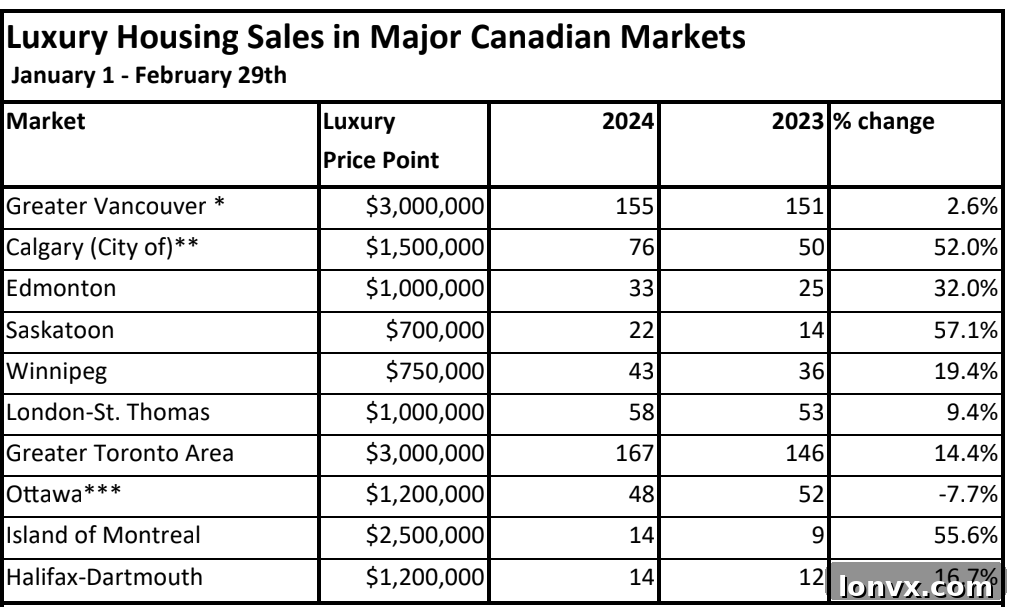
Source: Re/Max Canada
Evolving Demographics: Younger Buyers and Shifting Preferences
The face of the Canadian luxury market is evolving, with a noticeable demographic shift toward younger buyers increasingly entering the upper echelons of property ownership. This new wave of affluent purchasers often brings distinct preferences to the market, primarily driving demand for newer, turnkey properties situated in traditionally sought-after areas. These younger buyers, many of whom have built considerable wealth through successful careers, entrepreneurship, or intergenerational transfers, prioritize convenience, modern amenities, and sophisticated design that requires minimal renovation or upkeep.
A significant trend emerging from post-pandemic lifestyle realignments is the growing desire for more expansive living spaces, coupled with a yearning for less congestion and density. This shift is translating into a renewed interest in acreage properties with generously sized homes, particularly evident in regions like London, Ottawa, Edmonton, and Saskatoon. Buyers are seeking privacy, outdoor space, and the freedom from the urban hustle, often enabled by flexible work arrangements. Concurrently, new construction builds are gaining considerable traction across half of the analyzed markets. These properties appeal to buyers who desire contemporary designs, energy efficiency, and the latest smart home technologies, bypassing the complexities and potential costs associated with renovating older homes.
Adding another layer to market dynamics, foreign buyer activity has seen a drastic reduction since the implementation of the Foreign Buyer Ban in January 2023. This measure, designed to cool the market and increase housing availability for Canadians, has had a particularly pronounced impact in traditionally popular international investment hubs such as Toronto and Metro Vancouver. Consequently, foreign buyers with an interest in the Canadian market, especially those with considerable purchasing power in pricier markets, are now pivoting their attention to smaller centers like London or the various appealing regions within Alberta, where property values may offer better perceived value and fewer restrictions.
Christopher Alexander offers a critical perspective on the ban, stating, “While the idea of a Foreign Buyer Ban sounds good in principle, it makes less sense in practice.” He argues that the ban’s intended goal of making more properties available and reducing upward pressure on housing values was, in fact, largely achieved by the Bank of Canada’s ten consecutive interest rate hikes. These rate adjustments significantly cooled demand and recalibrated pricing more effectively than the ban itself. Alexander further highlights the core paradox: “all the while supply remains at historical lows,” suggesting that fundamental supply-side issues, rather than foreign investment, are the persistent challenges in achieving housing affordability and availability.
Navigating Challenges and Glimpsing the Future of Luxury Real Estate
Despite the prevailing buyer enthusiasm and the overall positive momentum observed in the spring luxury market, certain challenges continue to act as constraining factors on sales at the highest price points. Chief among these is the impact of various tax implications associated with “uber-luxe” levels of real estate. These include substantial land transfer taxes, property taxes, and potential capital gains taxes on investment properties, all of which can significantly add to the total cost of ownership and weigh down the segment, particularly in high-value areas like the Greater Toronto Area. Such fiscal burdens can deter some potential buyers or influence their decisions to invest in less tax-heavy jurisdictions.
Beyond taxation, other latent challenges could shape the future trajectory of Canada’s luxury market. Continued economic uncertainty, potential shifts in global geopolitical stability, or unexpected inflationary pressures could impact high-net-worth individuals’ investment strategies and confidence. Furthermore, while interest rates have trended downwards, any future upward adjustments by the Bank of Canada could quickly recalibrate buyer affordability and market sentiment. These factors, alongside persistent inventory imbalances in specific luxury niches, suggest that while the outlook for 2024 remains optimistic, the market will require careful monitoring and strategic adaptation from both buyers and sellers.
In conclusion, Canada’s luxury real estate market is on a robust recovery path, buoyed by economic adjustments, strong equity positions, and more favorable borrowing conditions. Regional disparities exist, with some markets experiencing explosive growth while others navigate unique local conditions. The market is also seeing a shift in demographics and preferences, with younger buyers seeking modern, spacious, and turnkey properties. While the impact of the Foreign Buyer Ban has been significant, industry experts suggest that broader economic levers, particularly interest rate policy, have played a more decisive role in market recalibration. As the year progresses, navigating tax implications and addressing fundamental supply issues will be paramount for sustained growth, but the overall sentiment points towards a vibrant and dynamic luxury segment poised for continued activity.
For a comprehensive understanding of specific market dynamics, access the full report from Re/Max Canada here.