
The Resilient Surge: Unpacking Canada’s Housing Market Performance in June 2023
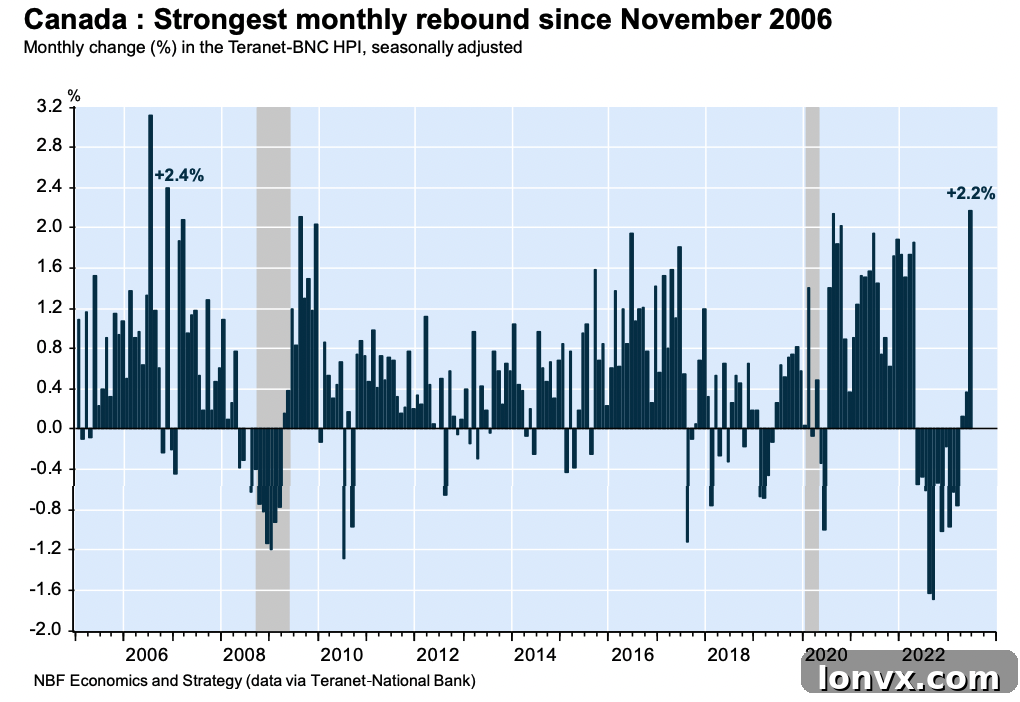
Canada’s housing market delivered a powerful statement in June 2023, as the Teranet-National Bank Composite House Price Index (HPI) recorded its most significant monthly increase since November 2006. This remarkable 2.2 percent jump not only marked the third consecutive monthly rise but also signaled a potential turning point for a market that had faced considerable headwinds. This comprehensive analysis delves into the nuances of this rebound, exploring the widespread growth, city-specific performance, year-over-year trends, and the crucial factors that will shape the market’s trajectory in the coming months.
A Remarkable Rebound: June Sees Most Significant Price Jump Since 2006
The 2.2 percent surge in the Teranet-National Bank HPI in June 2023 is more than just a statistic; it represents a notable shift in momentum. Following a period of correction that began in April 2022, the recent gains have begun to chip away at previous declines, instilling renewed confidence among market participants. This robust monthly growth, unparalleled in over a decade and a half, underscores a dynamic interplay of market forces, from shifting buyer sentiment to evolving supply-demand dynamics. Experts are scrutinizing whether this represents a sustainable recovery or a temporary surge driven by specific market conditions, making a detailed examination of the underlying data imperative for anyone interested in the Canadian real estate landscape.
Widespread Growth: 81% of Canadian Cities Experience Housing Price Increases
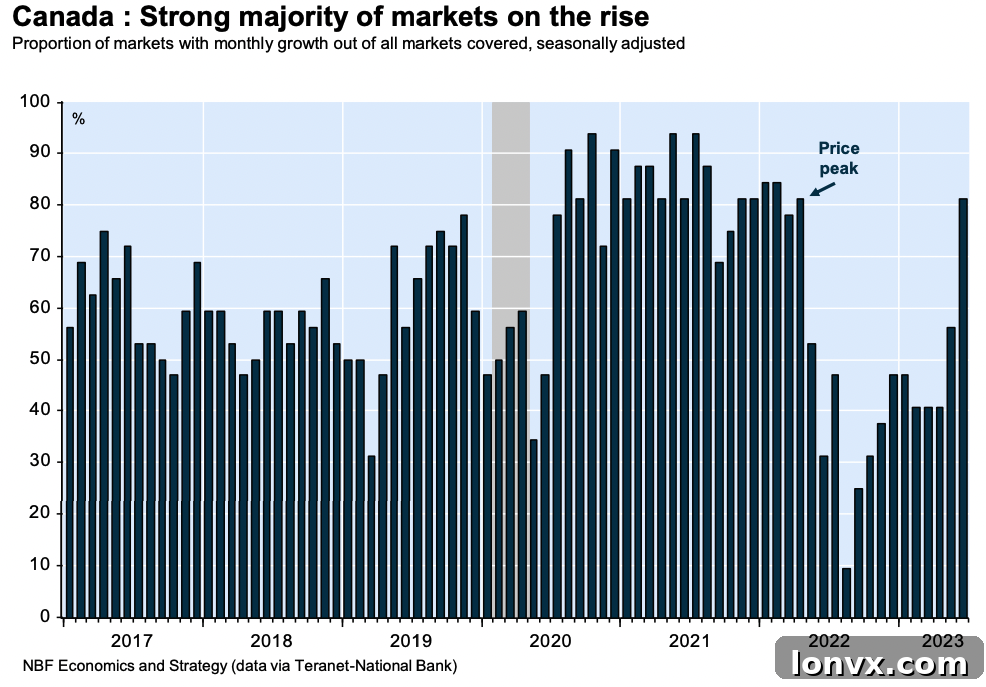
A key indicator of the market’s strength in June was the broad-based nature of the rebound. A significant 81 percent of the cities tracked by the Teranet-National Bank HPI experienced price increases, demonstrating that the recovery was not isolated to a few hot spots but rather a national phenomenon. This widespread growth suggests a more fundamental shift in market conditions across diverse regional economies, from major metropolitan hubs to more localized markets. Such widespread positive movement is often a sign of underlying demand and improving economic sentiment, contributing to a sense of optimism about the market’s near-term prospects. However, it’s crucial to acknowledge the varied magnitudes of these increases, as regional disparities continue to be a defining characteristic of Canada’s complex housing mosaic.
Expert Insights: Understanding the Market Correction and Recovery
Darren King, an investment advisor with National Bank, described the June spike as “spectacular” in his July memo, offering valuable context to the recent market movements. He noted that after a cumulative decline of 8.7 percent since its peak in April 2022, the recent rises in the composite index have successfully erased a significant portion of this correction. As a result, the overall decline now stands at a more manageable 6.2 percent. This expert perspective highlights the resilience of the market and its capacity for rapid adjustment. The speed at which these declines have been pared back suggests a strong underlying demand, possibly fueled by demographic factors, limited housing supply, and perhaps a perception among buyers that the market bottom had been reached. Understanding these dynamics is critical for gauging the sustainability of the current upward trend.
Dissecting the Data: Seasonal Adjustments and City-Specific Performance
Before any seasonal adjustments, the Teranet-National Bank HPI saw a 2.6 percent increase from May to June, marking the fourth consecutive monthly rise. However, it is the seasonally adjusted figure of 2.2 percent that truly captures the market’s underlying strength, demonstrating a consistent upward trajectory even when accounting for typical seasonal fluctuations. Seasonal adjustments are vital in real estate analysis, as they strip away predictable patterns (like increased activity in spring) to reveal true market momentum. The fact that the adjusted index showed such robust growth further emphasizes the strength of the recovery, indicating that the market’s positive performance is not merely a seasonal anomaly but a deeper trend.
Leading the Charge: Toronto, Vancouver, and Other Major Markets
An in-depth look at specific urban centers reveals varied but predominantly positive outcomes. Toronto and Vancouver, Canada’s two largest and most influential housing markets, led the charge with notable increases of 2.9 percent and 2.6 percent, respectively. These figures reflect the strong demand and limited supply that often characterize these bustling metropolitan areas, where population growth and economic activity remain robust. Beyond these major hubs, other significant cities also demonstrated healthy price appreciation. Quebec City, Halifax, and Calgary all reported solid price rises, falling within the range of 2.1 percent to 2.6 percent. Calgary’s performance is particularly noteworthy, often influenced by the energy sector and inter-provincial migration. Halifax continues to experience sustained interest, while Quebec City maintains its steady growth, each driven by unique regional economic factors and lifestyle attractions. These widespread increases underscore a national pattern of renewed buyer interest and market activity.
Regional Nuances: Winnipeg and Hamilton’s Unique Trajectories
While the majority of Canadian cities experienced an upswing, some markets presented a more nuanced picture. Winnipeg, for instance, recorded a slight decrease of 0.2 percent in June. This modest contraction could be attributed to a variety of local factors, including higher inventory levels, slower economic growth in the immediate region, or a more price-sensitive buyer base. In contrast, Hamilton, a key market within the Greater Toronto Area, saw its prices remain stable, exhibiting neither significant growth nor decline. Hamilton’s stability suggests a market that might be recalibrating after previous fluctuations, perhaps indicating a period of equilibrium as buyers and sellers adjust to current economic conditions and interest rates. These variations highlight the importance of understanding local market dynamics, as the national average often masks considerable regional differences and specific economic drivers unique to each urban center.
Year-Over-Year Analysis: Navigating Contraction and Growth Across Canada
Shifting the perspective to a year-over-year comparison provides critical insights into the long-term trends and the pace of market recovery. From June 2022 to June 2023, the Teranet-National Bank Composite House Price Index experienced an overall contraction of 5.1 percent. While this still represents a decline, its significance lies in the fact that it is a smaller contraction compared to the previous month’s year-over-year figures, signaling a slowing pace of decline and a potential move towards stabilization or even positive growth in the coming months. This trend indicates that the market is steadily working its way back from the significant price corrections observed throughout 2022, offering a cautiously optimistic outlook for stakeholders.
Outperforming Markets: Calgary, Quebec City, and Edmonton Shine
Within the composite index, certain cities defied the general trend of contraction, showcasing remarkable resilience and growth over the past year. Calgary emerged as the undisputed leader, exhibiting the most significant year-over-year price increase with a robust 6.5 percent gain. This strong performance is often linked to Alberta’s dynamic energy sector, a comparatively affordable market, and a surge in inter-provincial migration, attracting residents from more expensive provinces. Quebec City also registered positive year-on-year growth, with an increase of 5.2 percent, demonstrating the stability and desirability of its local market. Edmonton, another key market in Alberta, likewise saw positive movement, with an increase of 1.3 percent. These cities represent pockets of strength within the broader Canadian market, driven by specific economic conditions, demographic shifts, and relative affordability, setting them apart from areas that experienced sharper declines.
Facing Headwinds: Hamilton, Ottawa-Gatineau, and Toronto’s Declines
In contrast to the strong performers, several major markets faced more substantial year-over-year declines. Hamilton experienced the steepest fall, with prices contracting by a significant 13.4 percent over the 12-month period. Ottawa-Gatineau followed with an 8.4 percent decline, and Toronto, despite its strong monthly performance in June, still registered a 6.7 percent year-over-year decrease. These figures reflect the substantial corrections these markets underwent after reaching peak prices during the frenzied buying period of early 2022. Areas that saw the most rapid appreciation during the pandemic boom often experienced the sharpest pullbacks as interest rates began to rise and affordability became a major concern. The magnitude of these year-over-year declines underscores the impact of the Bank of Canada’s aggressive rate hike cycle on highly sensitive markets, even as they show signs of monthly recovery.
Beyond the Index: A Look at Other Canadian Markets
Outside of the primary cities included in the composite index, the Canadian housing market presented a mixed bag of results. Some smaller or regional markets exhibited strong annual gains, demonstrating their unique resilience and appeal. For instance, Trois-Rivières, Lethbridge, and Sherbrooke all recorded positive annual gains, suggesting healthy local economies, specific demographic trends, or increased interest in more affordable alternatives. Conversely, other markets experienced price declines, reflecting a more challenging environment. St. Catharines, Brantford, Abbotsford-Mission, and Peterborough all saw prices contract over the past year. These diverse outcomes highlight the deeply localized nature of real estate in Canada, where macroeconomic trends interact with specific regional factors—such as employment rates, industrial activity, and population changes—to produce a highly varied landscape of property values.
The Road Ahead: Navigating Potential Challenges and Future Headwinds
While the June data offers a glimmer of optimism, it’s crucial for market observers and participants to maintain a balanced perspective. The Teranet-National Bank Composite HPI, by its very nature, is based on closed transactions, meaning it inherently lags behind real-time market activity. This lag implies that the recent positive movements reflect deals that were finalized weeks or even months prior, potentially not capturing the most immediate shifts in buyer sentiment or economic conditions. Experts are therefore quick to caution that potential challenges may still lie ahead, even as the market shows signs of recovery. Understanding these forward-looking risks is essential for making informed decisions in the evolving real estate landscape.
Interest Rate Hikes: The Bank of Canada’s Influence
Darren King’s memo articulates a key concern for the future: “While prices could continue to be supported by strong demographic growth and the lack of supply of properties on the market, and continue to rise in the third quarter, the Bank of Canada’s recent rate hikes and the economic weakness expected in subsequent quarters will represent a headwind for house prices thereafter.” This statement underscores the profound impact of monetary policy on housing affordability and demand. The Bank of Canada’s aggressive interest rate hikes, implemented to combat inflation, directly translate to higher borrowing costs for prospective homeowners. This reduces purchasing power, restricts access to credit, and can cool buyer enthusiasm, especially in markets that are highly sensitive to interest rate fluctuations. Future rate decisions will undoubtedly be a primary determinant of market direction, potentially tempering the current upward momentum.
Economic Weakness: Broader Factors Affecting the Market
Beyond interest rates, the broader economic outlook presents another significant headwind. Expected economic weakness in subsequent quarters, encompassing factors such as slower GDP growth, potential job losses, and persistent inflationary pressures, could dampen consumer confidence and reduce disposable income. A weaker economy generally leads to reduced buyer activity, as households become more cautious about making large financial commitments like purchasing a home. Furthermore, a slowdown in the global economy could also indirectly impact Canada’s real estate market by affecting trade, investment, and immigration patterns. The interplay between these macroeconomic forces and housing demand will be a critical area to monitor, as they could either reinforce or counteract the market’s current resilience.
Balancing Act: Demographics, Supply, and Market Resilience
Despite the looming challenges, King also points to factors that could continue to support house prices: “strong demographic growth and the lack of supply of properties on the market.” Canada continues to experience robust population growth, driven by immigration, which inherently creates demand for housing across all sectors. This sustained demographic expansion provides a strong underlying floor for property values, preventing a drastic or prolonged downturn. Simultaneously, the persistent lack of housing supply, particularly in major urban centers, means that demand continues to outstrip the available inventory. This fundamental imbalance acts as a powerful upward pressure on prices, even in the face of higher interest rates and economic uncertainty. The future trajectory of the Canadian housing market will largely depend on the delicate balance between these supportive forces and the headwinds posed by monetary policy and economic performance.
Conclusion: A Cautiously Optimistic Outlook for Canadian Real Estate
June 2023 marked a pivotal month for the Canadian housing market, with the Teranet-National Bank HPI recording a historic surge that signaled a strong rebound after a period of correction. The widespread nature of this growth across 81 percent of cities, coupled with expert commentary highlighting the recovery from previous declines, injects a renewed sense of optimism. While the year-over-year figures still show a contraction for the composite index, the slowing pace of this decline and the robust performance of markets like Calgary, Quebec City, and Edmonton point towards a market finding its footing. However, stakeholders must remain vigilant. The lagging nature of the HPI, combined with the anticipated impact of ongoing interest rate hikes and broader economic weakness, suggests that significant challenges lie ahead. The market’s resilience will ultimately hinge on the delicate balance between strong demographic growth and persistent supply shortages, which continue to underpin demand, versus the tightening financial conditions. As Canada navigates these complex economic currents, the housing market will undoubtedly remain a key barometer of national financial health, requiring careful monitoring and nuanced interpretation in the months to come.
Stay Informed on Canadian Real Estate!
Get the latest articles and market insights delivered to your inbox 3x a week so you stay up to date on the latest in the Canadian real estate industry.