
Canadian Housing Market 2025: Navigating Optimism and Uncertainty
As the Canadian Real Estate Association (CREA) unveiled its December statistics, an overarching sense of optimism for the 2025 market permeated the industry. This annual tradition of positive forecasting raises a critical question for many: Is this optimism truly warranted, or are there deeper currents beneath the surface that could steer the market in unexpected directions? CREA projects a welcome resurrection of sales volume for 2025, anticipating an increase in the number of homes sold without triggering an unsustainable surge in prices that would erode affordability. This delicate balance is crucial for a healthy market, and there’s a compelling argument to be made that they might just be right.
The underlying premise is simple yet powerful: people are re-entering the housing market because they can afford to. If this fundamental condition holds, 2025 could indeed be a robust year for real estate professionals. However, for homeowners primarily focused on rapid property value appreciation, the outlook might be more tempered. A stable market, while beneficial for transactions and broader economic health, doesn’t always translate into the dramatic price hikes seen in previous boom cycles. The emphasis is shifting towards sustainable activity rather than speculative gains.
Against this backdrop, the resale market desperately needs a jolt of life. Recent data paints a stark picture for new construction: 2024 witnessed the lowest new condo sales in the Greater Toronto Area (GTA) since 1996, according to a report from Urbanation. This prolonged drought in new sales underscores the broader challenges in the housing supply chain and highlights the potential for pent-up demand to eventually flood the resale market once conditions align.
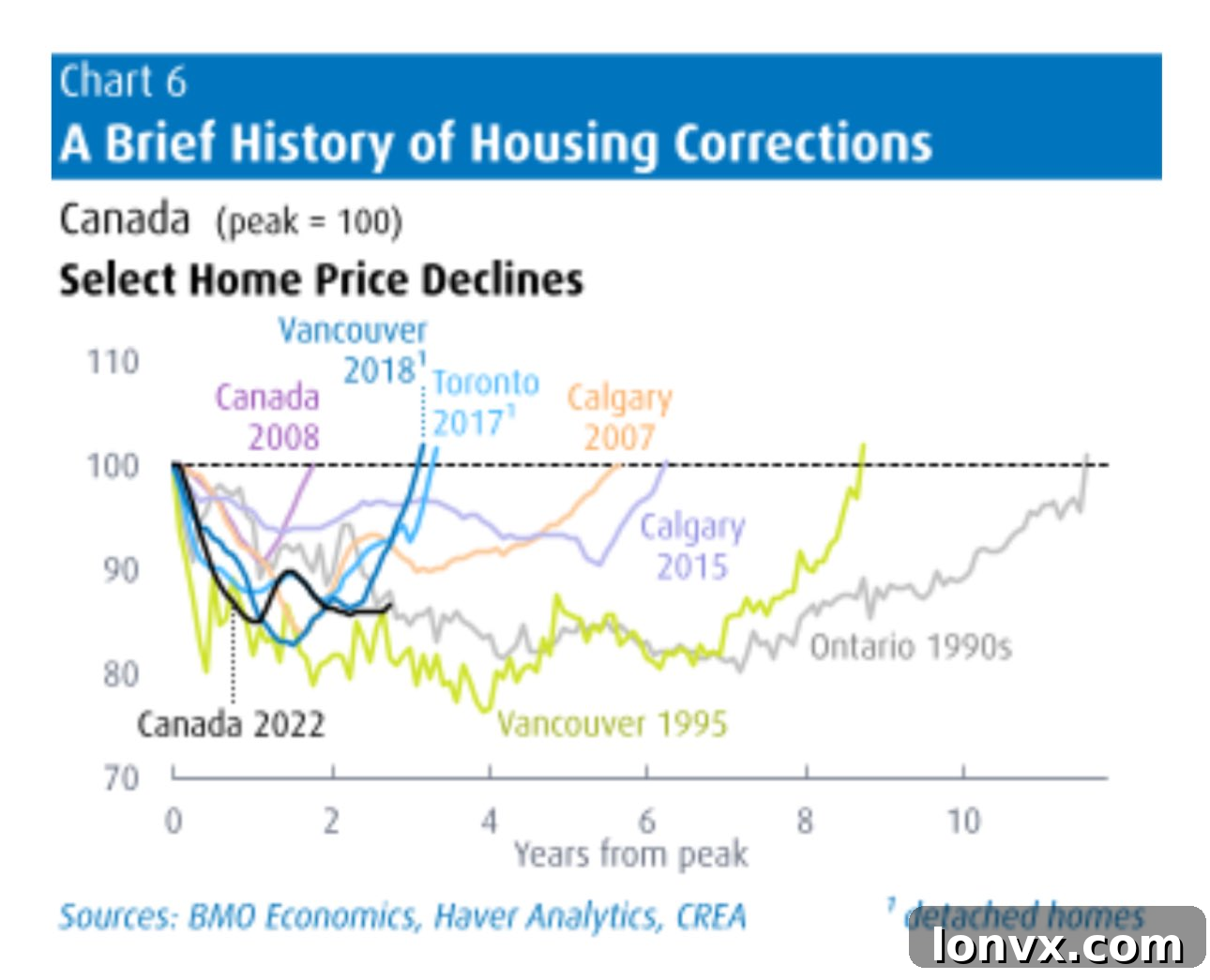
Should the current housing correction persist, it appears we are still in the early to middle stages of this economic cycle. A significant and sustained upward trend in house prices may still be some time away. BMO recently illustrated this journey in a compelling chart, suggesting that the path to full recovery is gradual rather than sudden, requiring patience and a keen eye on economic indicators.
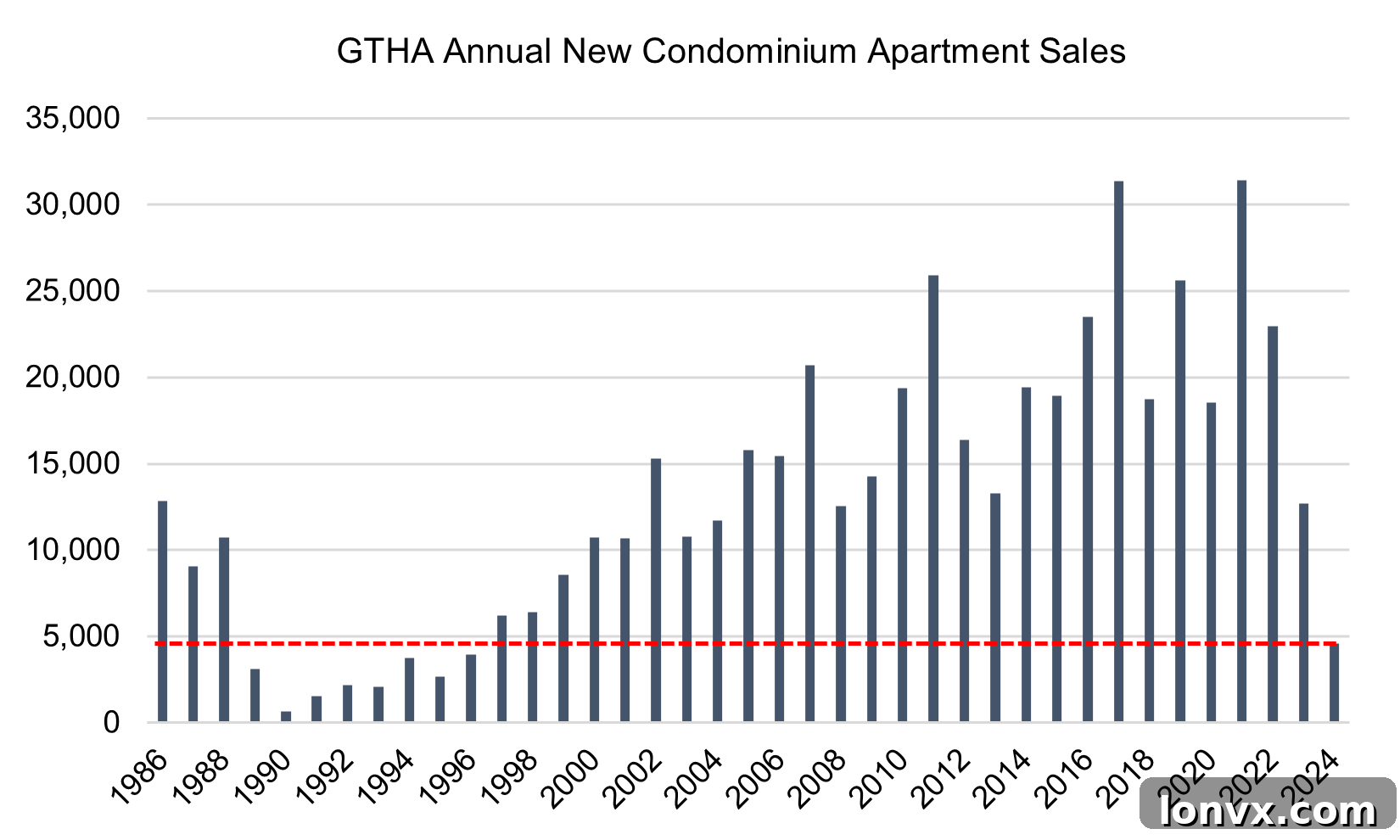
Source: Urbanation
Reflecting on December 2024: A Strategic Pause
As we officially close the books on 2024, it’s essential to critically assess the Canadian housing market’s performance, particularly during the typically quieter December period. Following a remarkable rebound in the fall, December saw a modest dip in sales activity, declining by 5.8 per cent compared to November. While a superficial glance might suggest a market retreat, a deeper analysis reveals a more nuanced picture – one that strongly indicates a market gearing up for a potentially significant shift, especially as we approach the spring season of 2025.
Much like an intermission in a sporting event, December’s slowdown felt more like a strategic pause than a definitive end. Despite the monthly dip, sales figures remained impressively 13 per cent above the levels recorded in May 2024, just before the Bank of Canada initiated its first interest rate cut in June. In fact, the fourth quarter of 2024 distinguished itself as one of the strongest in the past two decades (excluding the unique circumstances of the pandemic years). This performance is a testament to the Canadian housing market’s inherent resilience, even when confronted with persistent affordability challenges and broader economic uncertainties.
Supply Dynamics: The True Market Driver
The primary narrative behind December’s cooling wasn’t a diminishing pool of eager buyers; rather, it was a persistent scarcity of available homes for sale. Nationally, new listings saw a 1.7 per cent month-over-month decrease, marking the third consecutive decline after a brief surge in September. This trend resulted in a market where prospective buyers, despite improving affordability, were often met with limited options. Many chose to defer their purchase decisions to the spring of 2025, thereby fueling CREA’s optimistic projection of a “pent-up demand” scenario in the first quarter of the new year.
However, an equally compelling, if not stronger, argument can be made for a “pent-up supply” scenario. The market is currently grappling with several critical factors that could compel more homeowners to list their properties:
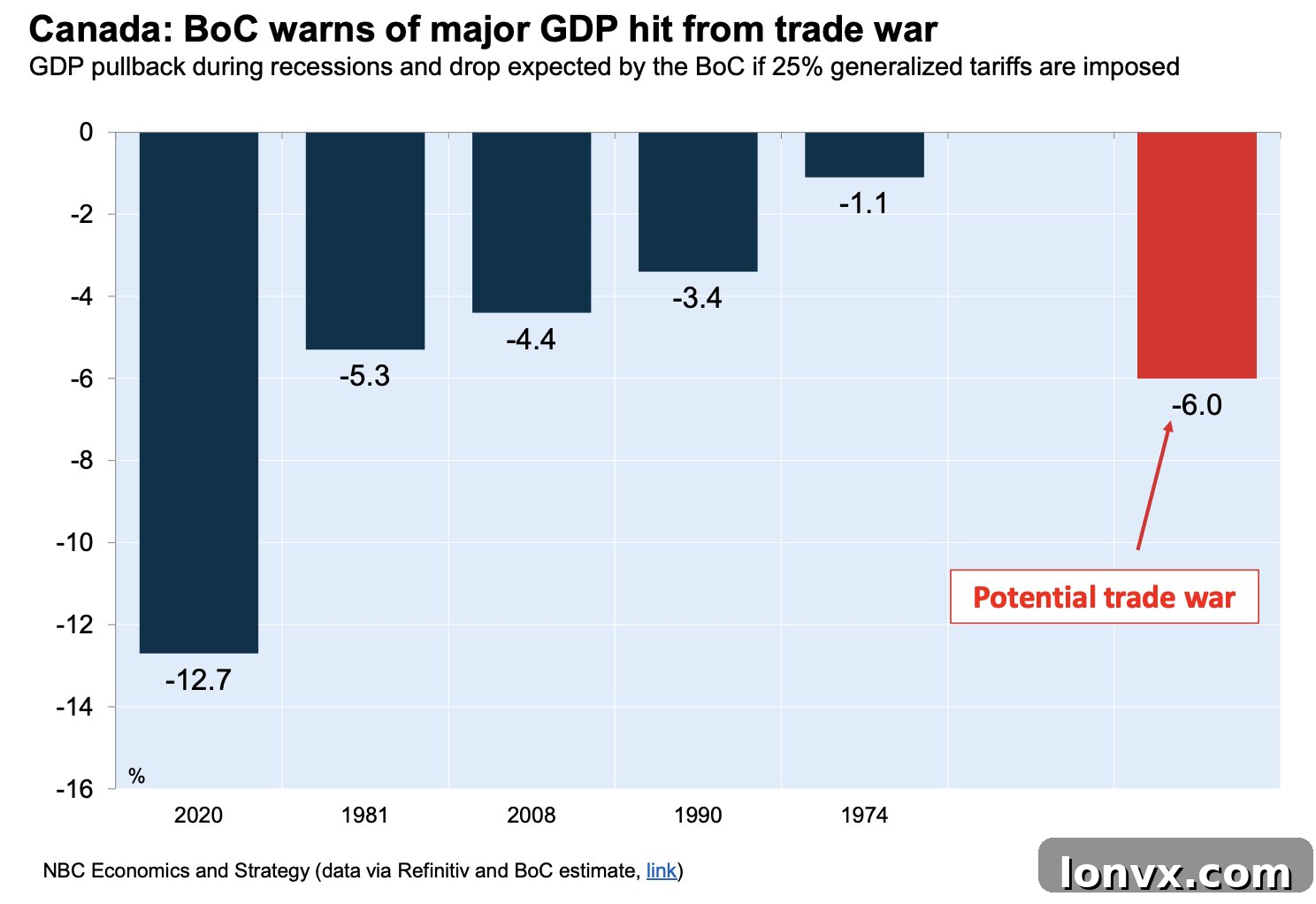
- Impact of a Trade War: The Bank of Canada has warned of potential negative economic impacts, projecting as much as a -6 per cent hit from trade disputes. Such economic headwinds can trigger cautious spending and investment, potentially pushing some homeowners to sell assets like real estate.
- Rising Unemployment: While December’s unemployment figures were surprisingly strong, the broader economic outlook suggests a potential increase in joblessness. Higher unemployment can force homeowners to downsize or relocate for new opportunities, adding to market supply.
- Government Policy Shifts: A potential change in government could lead to policies advocating for reduced government jobs and spending. Such shifts can influence economic stability and employment, indirectly impacting housing decisions.
- Increasing Purpose-Built Rental Supply: The surge in new purpose-built rental units is intensifying competition for individual investors who historically purchased properties for rental income. This increased competition could make investment properties less attractive, prompting some investors to sell.
- Historically High Completions: Both 2024 and 2025 are projected to see a record number of housing completions. While many of these are pre-sold, a portion will enter the market, and the sheer volume can create downward pressure on prices or increase inventory.
- Mortgage Renewals at Higher Rates: A record number of mortgages are set to renew at significantly higher interest rates. Many homeowners, particularly those who took out mortgages during periods of lower rates, will face substantially increased monthly payments. This financial strain could force a wave of sales, significantly boosting market supply.
Considering these powerful economic and financial pressures, the argument for a significant influx of “pent-up supply” onto the market in 2025 appears to be as strong, if not stronger, than the predictions for pent-up demand. The interplay of these forces will be a defining characteristic of the coming year.
Market Absorption: A Return to Normalcy, Not Explosive Growth
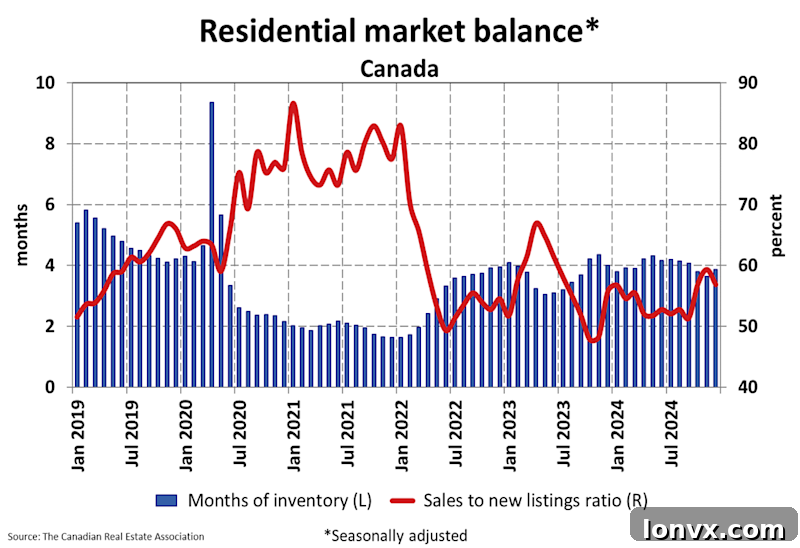
The national sales-to-new listings ratio, a crucial barometer for gauging market balance, gently receded to 56.9 per cent in December, down from a 17-month peak of 59.3 per cent in November. This figure hovers remarkably close to the long-term average of 55 per cent, reinforcing the notion that the Canadian housing market is currently operating within a relatively balanced state. This balance suggests neither an extreme seller’s market nor a deep buyer’s market, but rather a more equitable playing field.
However, this apparent equilibrium is not without its nuances. Current inventory levels remain notably below historical norms, with approximately 128,000 properties listed nationally compared to a long-term average of 150,000. This persistent shortage of available homes means that buyers, despite improving conditions, still face a slight disadvantage. While the market isn’t wildly competitive, the limited choices can prolong search times and make securing desired properties more challenging. Thus, while absorption rates suggest normality, the underlying inventory deficit continues to shape buyer experience and market dynamics.
Affordability: A Precarious Path to Improvement
One of the more encouraging revelations from CREA’s December data is the subtle yet significant indication of improving housing affordability. The Mortgage Payment as a Percentage of Income (MPPI) has begun to show a downward trend, partly attributed to the Bank of Canada’s earlier interest rate adjustments. This easing of financial pressure has provided a much-needed window of opportunity for more prospective buyers to consider entering the market, particularly in regions where property values have demonstrated greater stability.
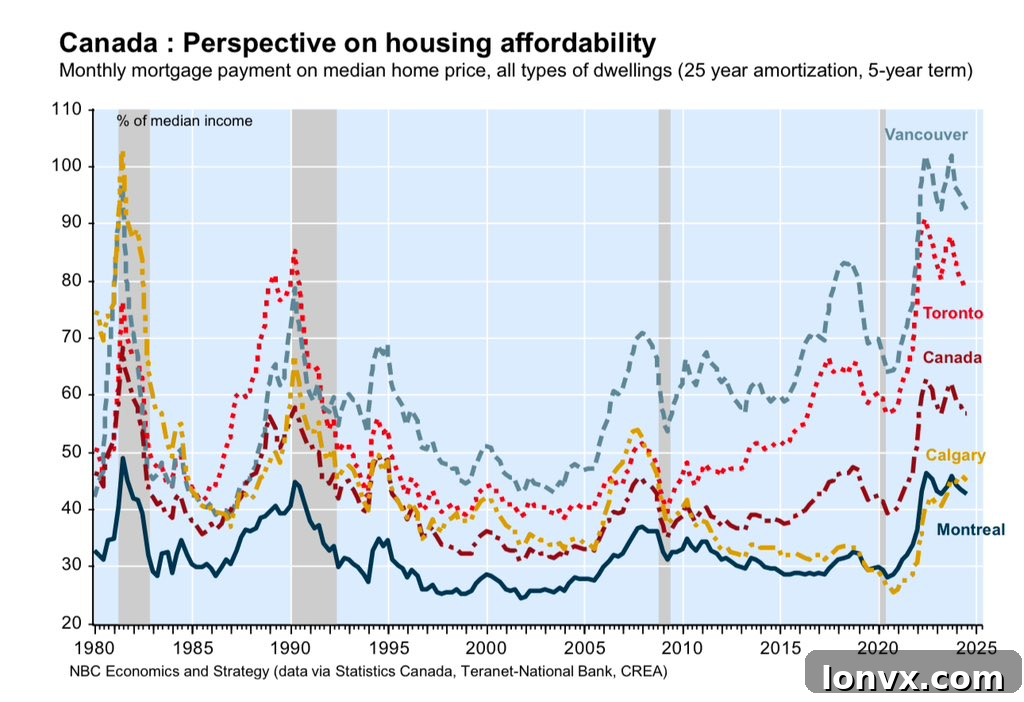
Nevertheless, this “silver lining” comes with crucial caveats. The national average sale price recorded a 2.5 per cent year-over-year increase, reaching $676,640, while the MLS® Home Price Index (HPI) edged up by 0.3 per cent month-over-month. Although these price escalations are considerably more modest than those observed during the market’s overheated periods, they still pose a risk. If household incomes fail to keep pace with even these moderate increases, any hard-won affordability gains could quickly erode, pushing homeownership out of reach for many. In essence, the current improvements in affordability remain fragile and highly dependent on a delicate balance of economic factors.
Adding to this uncertainty are broader macroeconomic pressures. The looming threat of rising unemployment, coupled with potential government hiring cuts, represents significant risks that could dampen affordability throughout 2025. These factors have the potential to nullify the positive effects of declining mortgage payment costs, especially if anticipated interest rate cuts are delayed, slowed, or even stalled. The forecast for affordability remains a tightrope walk: will sustained rate reductions and stable home prices create a solid foundation for improved access, or will overarching economic headwinds push it further out of reach for many Canadians? The coming months will be instrumental in determining whether this glimmer of hope for affordability is sustainable or merely fleeting.
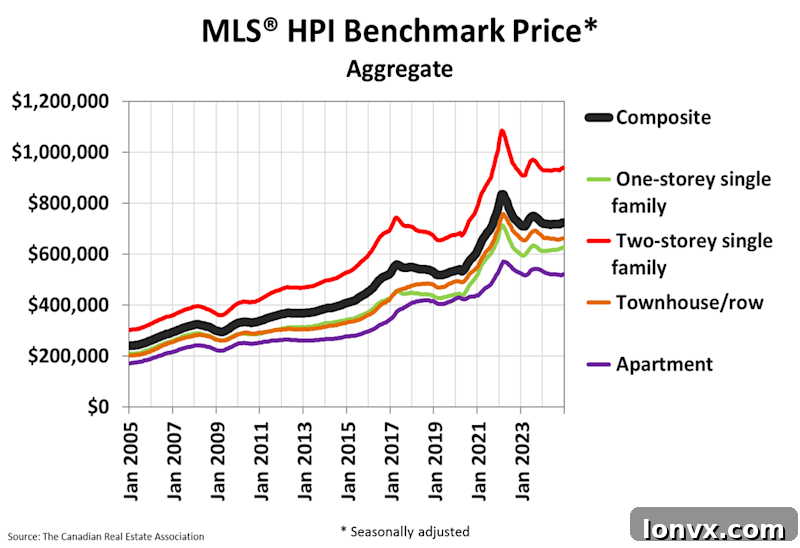
The Pivotal Role of Inventory in 2024’s Market Narrative
A meticulous examination of inventory trends provides profound insights into why the 2024 market defied expectations in certain months while experiencing a noticeable tapering off in December. After reaching its peak in September, new listings steadily declined throughout the fall season, inadvertently creating a significant bottleneck. This scarcity of available properties proved immensely frustrating for buyers who were eager to capitalize on the nascent improvements in affordability. By December, the market was operating with just 3.9 months of inventory – a slight increase from November’s 3.6 months, but still substantially below the long-term average of five months. This prolonged period of tight inventory has been a defining characteristic of the Canadian real estate landscape.
This constrained inventory played a critical role in maintaining relative price stability, even as overall sales activity began to slow. Many sellers, exhibiting caution and a reluctance to accept lower offers, chose either to hold firm on their asking prices or to delay listing their properties altogether. This collective behavior contributed to a palpable stalemate in various segments of the market. This dynamic was particularly evident in densely populated urban centers such as Metro Vancouver, which displayed modest stability with a 0.7 per cent month-over-month price increase and consistent demand. The limited flexibility observed in prices on both the buyer and seller sides underscores the cautious sentiment prevalent in the market, highlighting the ongoing challenges of navigating a real estate environment fundamentally shaped by persistently tight inventory levels.
Spring 2025: Anticipating a Demand Surge
Looking ahead, spring 2025 is widely anticipated to mark a significant turning point for the Canadian housing market. As the winter chill gives way to warmer weather, and as more sellers feel emboldened to bring new properties to market, an unleashing of pent-up demand is expected to occur in a substantial way. Historical patterns consistently demonstrate that real estate activity tends to spring to life earlier than many anticipate, and this year is poised to follow that trend. The combination of seasonal uplift and market fundamentals suggests a busy period ahead.
CREA itself anticipates a notable uptick in activity for 2025, projecting an estimated 532,704 residential properties to change hands across Canadian MLS® systems. This represents a substantial 8.6 per cent jump over the transactional volume seen in 2024, signaling renewed vigor in the market. Shaun Cathcart, CREA’s senior economist, is optimistic that the anticipated bottoming out of interest rates will serve as a crucial catalyst, encouraging a greater number of sellers to list their homes. This increased supply, coupled with latent demand, is expected to further fuel the surge in overall market activity. The confluence of improving affordability, potentially stable or declining interest rates, and an influx of new listings could create market opportunities not witnessed in several years.
How Interest Rates Will Shape the 2025 Outlook
Interest rates continue to be the primary “wild card” in the Canadian housing market’s forecast. The Bank of Canada’s decision to implement interest rate cuts in June 2024 provided a much-needed impetus to housing affordability, offering a glimmer of relief to many potential buyers. However, the continuation and magnitude of further reductions will be absolutely critical in sustaining any market momentum throughout 2025. Lower interest rates possess a dual power: they not only make borrowing more attractive, drawing more buyers into the market, but also encourage sellers to list properties that may have been held back due to previously unfavorable market conditions or higher financing costs.
Crucially, the precise timing and scale of these rate adjustments will play a pivotal role in shaping the market’s trajectory. A significant delay in anticipated cuts could effectively dampen the projected spring surge, leading to prolonged market stagnation and buyer frustration. Conversely, overly aggressive reductions, while initially stimulating, could reignite lingering fears of another unsustainable housing bubble, prompting policymakers to reconsider their stance. Therefore, monetary policymakers face a delicate balancing act: they must support market stability and foster a healthy transactional environment without overcorrecting and inadvertently creating new risks. Their decisions in the coming months will profoundly influence the pace and direction of the Canadian housing market.
The Long Road to Balanced Housing: Beyond 2025
Despite the promise of greener pastures and short-term market improvements, fundamental structural challenges within the Canadian housing market remain largely unresolved. Chronic inventory deficits persist, with available properties still falling below historical averages. Furthermore, the persistent gap between buyer expectations (often driven by affordability needs) and seller realities (influenced by mortgage costs and desired returns) shows no signs of closing quickly. These deep-seated issues indicate that the journey towards a truly balanced and sustainable housing market will be a long and complex one, extending well beyond the immediate outlook for 2025.
Adding another layer of complexity to these challenges are the recent announcements regarding reductions in immigration targets. Canada has historically relied heavily on robust immigration to drive its population growth, which, in turn, has been a significant engine for housing market activity and demand. With future immigration levels curtailed, the anticipated surge in housing demand may soften, potentially easing some of the intense pressure on housing supply that has characterized recent years. While this could offer a degree of relief to buyers and lead to more tempered price growth in some regions, it simultaneously introduces uncertainty for developers, potentially stalling crucial construction projects and reducing the overall economic momentum traditionally tied to the arrival of new Canadians. The long-term implications of these policy changes on housing demand and supply dynamics are profound and will require careful monitoring.
The chart below vividly illustrates the municipalities that experienced the highest population changes between 2023 and 2024. This trend was heavily influenced by a significant surge in international students, a demographic that has substantially contributed to both local rental and housing demand. With shifts in immigration policy, such pronounced growth patterns driven by specific groups may not be as evident in the years to come, further altering the landscape of regional housing markets.
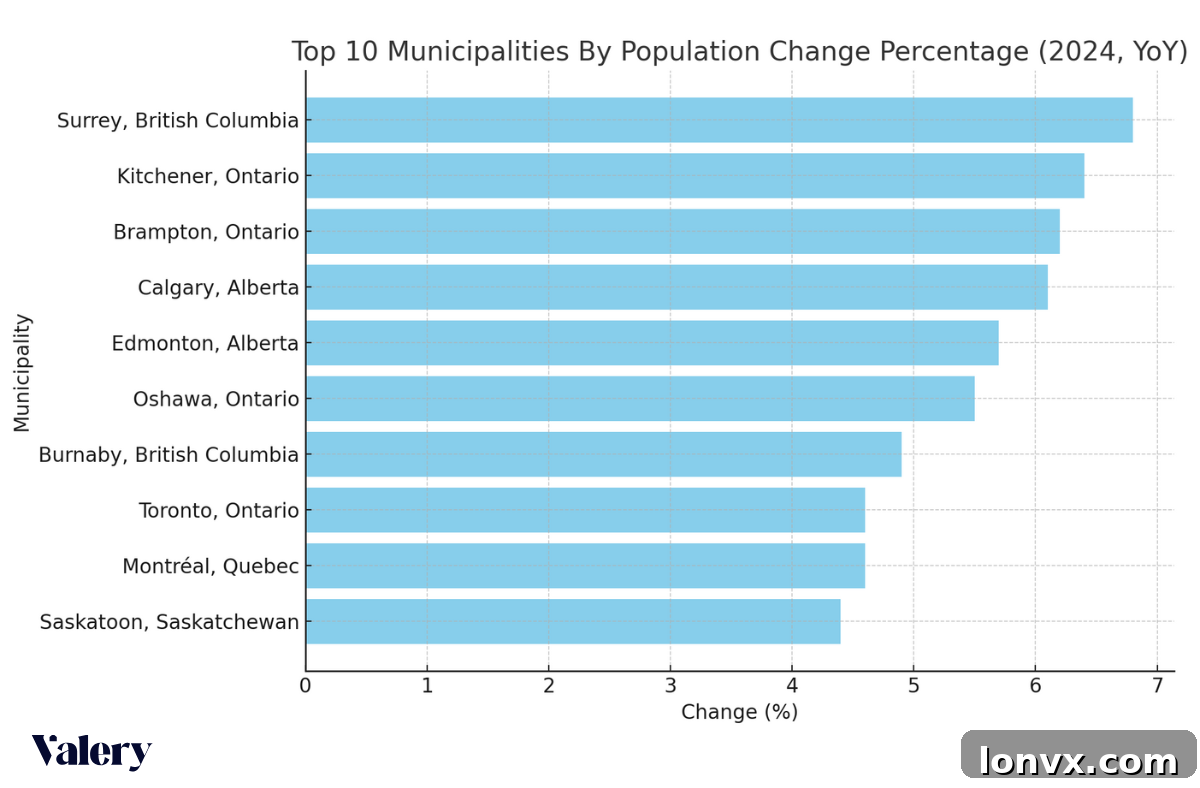
Source: valery.ca
Key Takeaways from December’s Market Insights
While December 2024 may not have delivered the blockbuster, year-end surge some in the industry might have hoped for, it nonetheless offers invaluable insights into the Canadian housing market’s current state and its potential trajectory moving forward. The data confirms that inventory levels, while still tight by historical standards, are showing gradual signs of improvement. Property prices are demonstrating a welcome period of stabilization, moving away from the volatile swings of previous years. Crucially, the delicate balance between buyers and sellers appears to be holding steady, indicating a market that is neither overwhelmingly dominant by one side nor experiencing a complete gridlock.
The lingering question remains: will the spring market of 2025 finally deliver the long-awaited relief and increased opportunities that buyers crave, or will it usher in another cycle of rising prices, reigniting affordability concerns? One thing is abundantly clear: 2024 stands as a transitional year for Canadian real estate. It was neither a period of full recovery, characterized by rapid growth, nor a complete market correction, marked by widespread declines. Instead, it offered intriguing glimpses of stability and resilience but left plenty of critical questions unanswered for the year ahead. Perhaps it was the calm before a storm, or perhaps it signifies the beginning of a new, more measured era. In the dynamic world of Canadian real estate, the only constant is change, and 2025 promises to be another chapter filled with evolving trends and strategic challenges.
Enjoying this article?
Get the latest real estate articles in your inbox 3x a week so you stay up to date on the latest in the Canadian real estate industry.