
Canada’s Shifting Real Estate Landscape: The Rise of the Million-Dollar Condo
The Canadian real estate market is on the cusp of a significant transformation, with a groundbreaking forecast suggesting that the average price of condominiums in several of the nation’s largest urban centers is poised to cross the $1-million threshold within the next decade. This includes prominent cities such as Toronto, Vancouver, and Halifax, marking a pivotal moment for housing affordability and investment across the country.
For decades, condominiums have been heralded as the quintessential entry point into homeownership, offering a more accessible alternative to detached homes. However, recent data analysis from leading real estate firm Zoocasa indicates that this long-standing affordability advantage is rapidly eroding. As property values continue their upward trajectory, the dream of owning a condo in Canada’s vibrant cities is becoming increasingly financially challenging for many.
This comprehensive analysis delves into Zoocasa’s projections, exploring the methodology behind these forecasts, identifying the key markets driving this trend, and examining the broader implications for buyers, sellers, and the future of Canadian housing. Understanding these shifts is crucial for anyone navigating the complex and ever-evolving real estate landscape.
Ontario Dominates the Million-Dollar Condo Forecast
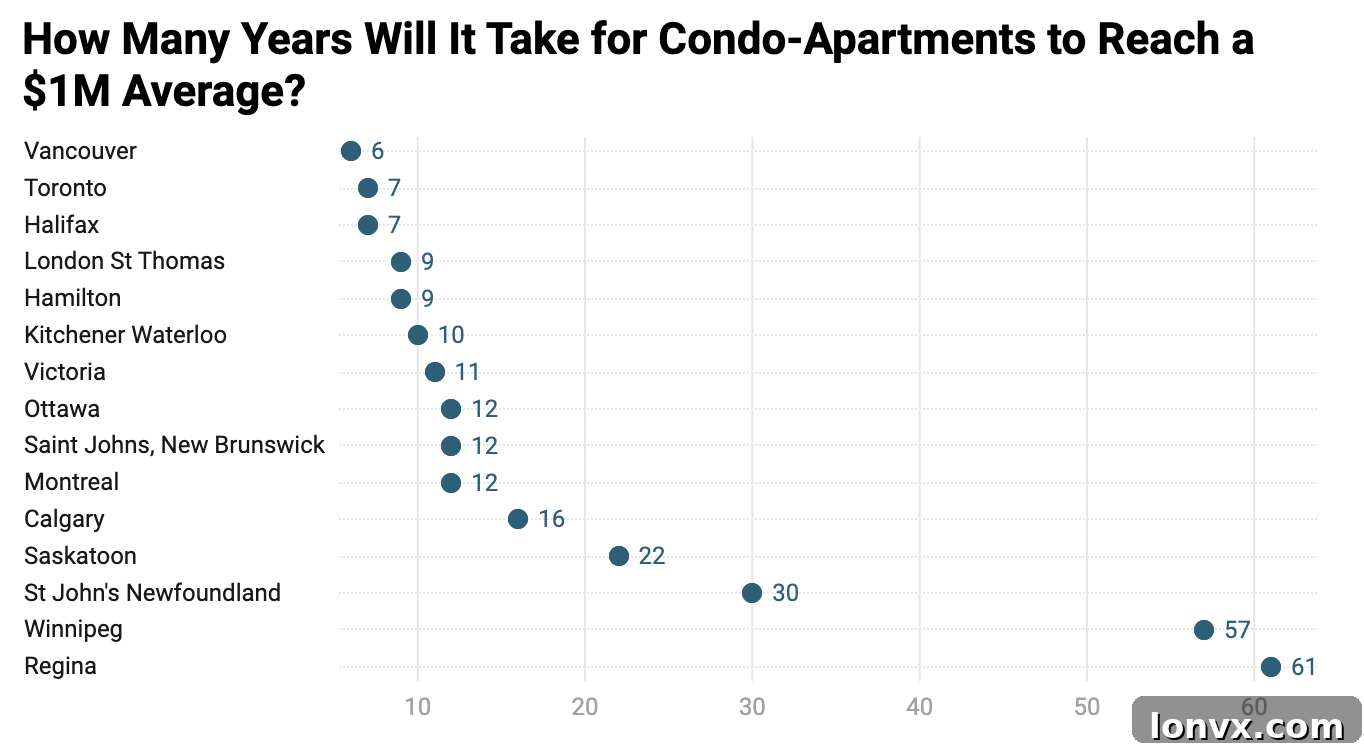
According to the detailed projections released by Zoocasa, the province of Ontario is expected to lead the charge, accounting for the vast majority of these high-priced markets. Major cities within Ontario, including the economic powerhouse of Toronto, the rapidly growing London, and the bustling industrial hub of Hamilton, are all anticipated to see their average condo prices surpass the $1-million mark. This dominance is a reflection of Ontario’s robust economy, continuous population growth, and persistent housing supply challenges.
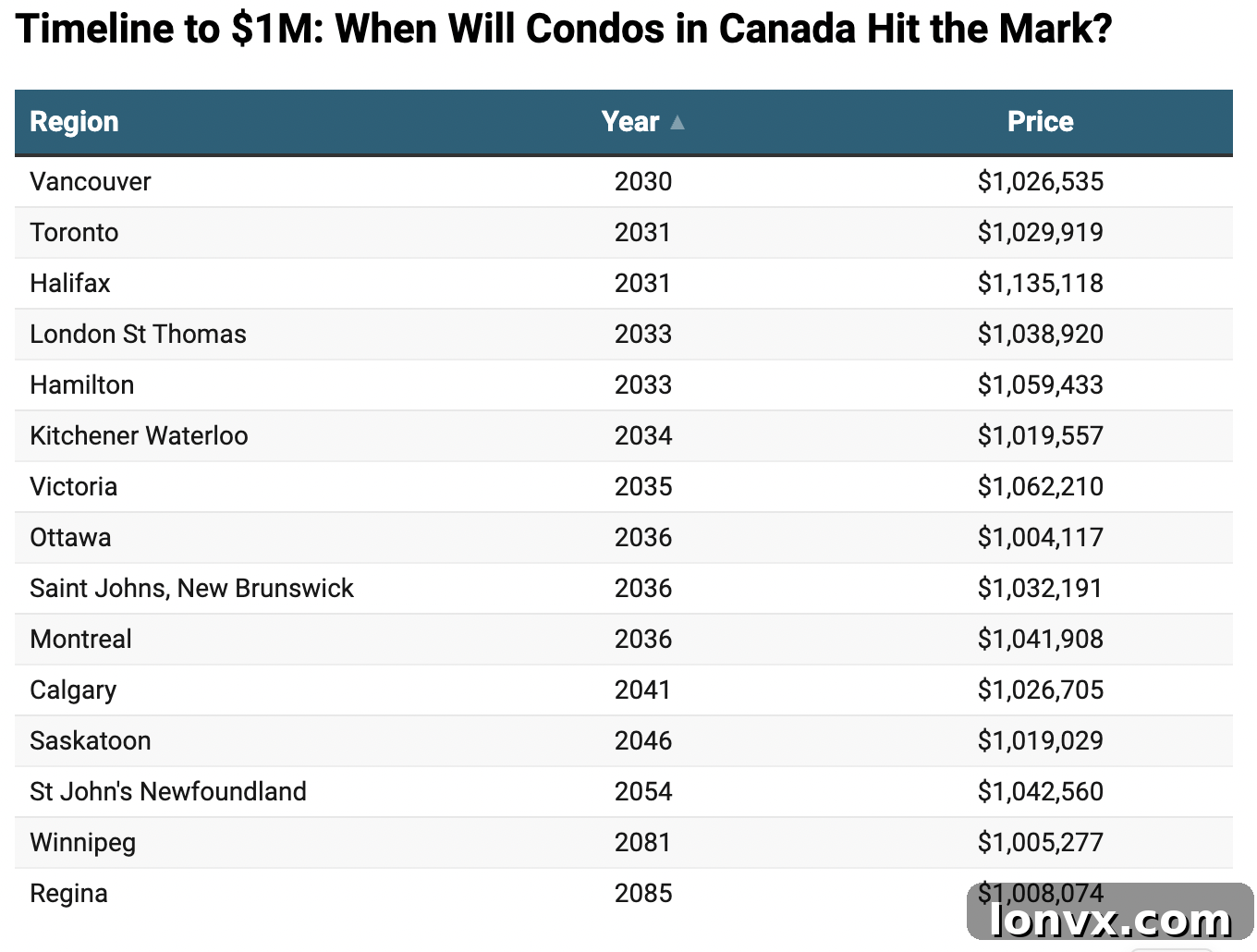
Beyond Ontario, the Atlantic region is also demonstrating remarkable growth, with Halifax, Nova Scotia, positioned as a surprise contender. Traditionally considered more affordable than the high-cost markets of Ontario or British Columbia, Halifax is now forecasted to join the exclusive ranks of million-dollar condo markets by 2031. This accelerated appreciation in Halifax reflects a confluence of factors: heightened demand driven by inter-provincial migration and remote work trends, a severely limited inventory of available homes, and a rapidly expanding population eager for urban living options. The city’s burgeoning tech sector and vibrant cultural scene further contribute to its escalating appeal and property values.
The implications of this trend for Ontario and Halifax are profound, signaling a significant shift in housing affordability across these key regions. For prospective buyers, the pathway to homeownership becomes steeper, while for current homeowners and investors, it underscores the appreciating value of their assets. These projections highlight the urgent need for comprehensive strategies to address housing supply and demand imbalances in Canada’s most sought-after urban areas.
Source: Zoocasa
Understanding the Methodology Behind the Forecast
Zoocasa’s forward-looking projections are meticulously crafted, relying on robust data provided by the Canadian Real Estate Association (CREA). The core of their methodology involves analyzing the average annual growth rate in median condo prices from 2019 to 2024. This historical growth rate serves as the fundamental basis for extrapolating future price trends.
The forecasting model applies this calculated growth rate year over year to the most recent price figures. Each subsequent year’s projected price then becomes the new base for the following year’s calculation, creating a continuous trajectory. This method implicitly assumes that the prevailing economic conditions, market demand, interest rate environment, and other influential factors will continue to evolve at a relatively steady pace, consistent with recent trends. While no forecast can predict the future with absolute certainty, this approach provides a statistically informed outlook based on demonstrable market behavior.
To illustrate, consider the case of Halifax, where condo prices experienced a remarkable surge of 68.4 percent over a five-year period. This translates to an increase from an average of $247,608 in 2019 to $462,650 by October 2024. When annualized, this represents an average growth rate of 13.68 percent per year. By consistently applying this robust annual growth rate, Zoocasa forecasts that the average condo price in Halifax will confidently exceed the $1-million mark by 2031. This example underscores the significant compounding effect of sustained high growth rates on property values, ultimately reshaping the affordability landscape for aspiring homeowners.
The strength of this methodology lies in its reliance on recent, verifiable market data, offering a clear and consistent framework for understanding potential future price movements. However, it’s also important for consumers and investors to recognize that unforeseen economic shifts, policy changes, or global events could influence these trajectories, highlighting the dynamic nature of real estate markets.
Urban Centers Lead the Charge: Toronto and Vancouver’s Rapid Ascent
Unsurprisingly, Canada’s perennial housing market leaders, Toronto and Vancouver, are anticipated to reach the $1-million average condo price milestone even sooner than other urban areas. These two metropolitan giants, known for their vibrant economies, diverse populations, and status as global cities, consistently set benchmarks in the national real estate landscape.
Vancouver, with its constrained land supply and high demand for urban living, is projected to achieve this significant milestone by 2030. Following closely, Toronto, the bustling capital of Ontario, is expected to see its average condo prices cross the $1-million mark by 2031. These forecasts underscore the enduring appeal and investment magnetism of these two major hubs, where strong economic fundamentals and limited supply continue to exert upward pressure on property values.
Between 2019 and 2024, Toronto’s average condo price witnessed a substantial increase, rising from $504,758 to $671,980. This represents an impressive 33 percent appreciation in value over the five-year period. During the same timeframe, Vancouver’s condo market also experienced significant growth, with average prices climbing by 27 percent, from $605,950 to $768,780. These figures not only highlight the rapid escalation of property values in these cities but also illustrate the challenges faced by first-time buyers attempting to enter these highly competitive markets. The sustained growth in Toronto and Vancouver is driven by a complex interplay of factors, including robust job creation, high levels of immigration, cultural attractiveness, and a consistent shortfall in new housing supply relative to demand.
Longer Timelines: The Evolving Landscape Across Other Canadian Markets
While some of Canada’s most prominent urban centers are on a fast track to million-dollar condo prices within the next decade, the journey is not uniform across the nation. Many other regions face a considerably longer road ahead to reach this significant financial milestone, reflecting the diverse economic and demographic landscapes that characterize Canada’s provinces.
The projections highlight notable differences in growth trajectories:
- Calgary: Alberta’s economic hub, bolstered by a strong job market, diversification beyond its traditional oil and gas industry, and continued population growth, is forecasted to reach the $1-million average condo price by 2041. The city’s relative affordability compared to Toronto and Vancouver, combined with its burgeoning tech sector and lifestyle appeal, makes it an attractive destination for inter-provincial migrants, driving steady appreciation.
- Saskatoon: This vibrant prairie city in Saskatchewan is expected to achieve the million-dollar milestone by 2046. Saskatoon’s growth trajectory is characterized as steady but slower, reflecting a more balanced supply-demand dynamic and a less intense market pressure compared to the major metropolitan areas. Its economy, rooted in agriculture, mining, and technology, provides a stable foundation for long-term property value appreciation.
- Regina and Winnipeg: These two provincial capitals, Regina in Saskatchewan and Winnipeg in Manitoba, exhibit the longest timelines for average condo prices to reach the $1-million mark. Projections extend to 2085 for Regina and 2081 for Winnipeg, respectively. These extended timelines underscore the greater relative affordability in these markets, where ample land, steady but less explosive population growth, and a different economic profile contribute to a more gradual increase in property values. While still appreciating, these cities offer a different pace of investment and homeownership opportunity compared to their coastal and central Canadian counterparts.
These varying timelines underscore the profound regional disparities within the Canadian housing market. Factors such as local economic performance, population migration patterns, provincial housing policies, and the availability of developable land play critical roles in shaping future property values. Understanding these differences is essential for anyone looking to invest or settle in Canada, as the experience of homeownership and wealth accumulation through real estate can differ significantly from one city to another.
Source: Zoocasa
Implications and the Future of Canadian Housing Affordability
The impending rise of the million-dollar condo in Canada’s key urban centers carries significant implications for the nation’s housing landscape and socio-economic fabric. For many Canadians, particularly younger generations and first-time buyers, the dream of homeownership, even in a condominium, is becoming increasingly elusive. This trend exacerbates the affordability crisis, potentially leading to greater wealth disparity and placing immense pressure on households to secure stable, long-term housing solutions.
The shift also prompts a critical re-evaluation of urban planning and housing policy. As property values soar, there’s an intensified need for governments at all levels to implement effective strategies that address supply shortages, streamline development processes, and potentially explore innovative housing models. Policies aimed at increasing housing density, investing in affordable housing initiatives, and managing demand are likely to become central to mitigating the effects of rising prices.
For investors, the forecast of million-dollar condos signifies robust market confidence and continued appreciation in prime locations. However, it also raises questions about market sustainability and the potential for a widening gap between property owners and those unable to enter the market. The dynamic between rental markets and ownership also becomes more pronounced, with higher purchase prices often correlating with increased rental demand and rental rates.
Looking ahead, the Canadian real estate market will likely remain a topic of intense discussion and analysis. While the projections by Zoocasa offer a clear trajectory based on current trends, the future is always subject to change. Economic headwinds, shifts in interest rates, evolving immigration policies, and major infrastructure developments could all impact these forecasts. What remains certain is that the landscape of Canadian homeownership is evolving rapidly, demanding adaptability and strategic planning from all stakeholders.
Conclusion: A New Era for Canadian Condos
The Zoocasa forecast paints a clear picture of a Canadian housing market undergoing a profound transformation. The expectation that average condo prices in major cities like Toronto, Vancouver, and Halifax will soon surpass the $1-million mark signals a new era for urban living and homeownership in Canada. This trend, driven by strong demand, limited supply, and robust economic growth, fundamentally alters the traditional role of condos as an affordable entry point into the market.
While some cities are on a rapid path to this milestone, others face longer timelines, highlighting the diverse regional dynamics that characterize Canada’s vast geography. Understanding these projections, the underlying methodologies, and the broader implications is crucial for anyone navigating the complex world of Canadian real estate, whether as a buyer, seller, or policymaker. The challenges to affordability are significant, but they also underscore the enduring value and investment appeal of property in Canada’s most desirable urban centers.
As the market continues to evolve, ongoing analysis and proactive solutions will be essential to ensure a balanced and accessible housing environment for all Canadians in the decades to come.