For almost two years now, the rhythm of life has felt remarkably consistent, yet perpetually unsettling. Each month, as I’ve sat down to pen a new column – or perhaps sought fresh angles to update older pieces, desperately fending off the cabin fever-induced specter of writer’s block – a pervasive sense of global uncertainty has been a constant companion. While we might, thankfully, be nearing the “political will” phase that could signal an end to the most acute global pandemic, the practical truth remains that the virus may not be entirely done with society. This intricate scenario, I fully appreciate, is one that harbors a multitude of varied and deeply felt opinions.
However, the global stage is dynamic, and as one set of challenges begins to show signs of receding, even more profound and onerous issues have unequivocally taken prominence. From geopolitical tensions to humanitarian crises, the world continues to present a complex tapestry of concerns that demand our collective attention and a renewed sense of purpose. It is in this context of shifting global priorities that the timeless messages of peace and individual contribution resonate with even greater urgency.
Rediscovering a Timeless Message: Crafting Your Legacy for a Better World
As this month’s column deadline approached, a vivid memory resurfaced, pulling me back to an article I wrote for my online space in The Calgary Herald in 2015. Titled Create YOUR Legacy For A Better World, that piece had a serendipitous publication date: it appeared on what would have been John Lennon’s 75th birthday. Considering the gravity of the current headlines dominating our news cycles, it struck me as profoundly timely to revisit that theme. I felt compelled to share its essence once again, naturally in an altered, paraphrased form to respectfully avoid any copyright infringement, while ensuring its powerful core message could inspire anew.
The inspiration for that original column stemmed from an extraordinary journey my wife and I undertook to New York City in 2009. What began as a vacation unexpectedly blossomed into an immersive, unplanned “Lennon & McCartney experience” that unfolded organically throughout our entire trip. It was a remarkable series of coincidences and opportunities that brought us face-to-face with the enduring spirit and profound influence of these two musical titans, whose calls for peace, love, and understanding continue to echo powerfully across generations.
An Unforgettable Day: Paul McCartney’s Return to Historic Ground
One of the pinnacle moments of that NYC adventure was a truly once-in-a-lifetime opportunity: securing seats for a live taping of The Late Show with David Letterman. The episode was particularly iconic as its sole guest was none other than Sir Paul McCartney. What made this appearance historically significant was McCartney’s poignant return, for the first time since 1964, to the very Ed Sullivan Theater studio. This hallowed ground was where The Beatles had famously made their explosive North American debut on The Ed Sullivan Show, irrevocably changing the landscape of popular music and culture. The atmosphere within the studio was utterly electric, charged with a palpable sense of history and anticipation. To be present as a living legend revisited such a pivotal moment in his career and in music history was an awe-inspiring privilege, a testament to the enduring power of artistic legacy.
The magic of the day didn’t conclude with the studio taping. Following the show, the entire audience was escorted outside and directed onto the vibrant, pulsating streets of Times Square. Amidst the iconic neon glow and the bustling energy of one of the world’s most famous intersections, we found ourselves guided into a specially cordoned-off prime viewing area. From this extraordinary vantage point, we were treated to an impromptu, absolutely breathtaking concert performed from a balcony situated directly above the theater’s entrance by McCartney and his incredibly talented band. The roar of the appreciative crowd, the timeless melodies reverberating through the concrete canyons of New York, and the sheer joy radiating from McCartney himself created an indelible memory. It was more than just a concert; it was a communal celebration of music, history, and the collective spirit, an experience that underscored the universal connection fostered by artistry and shared moments of joy, particularly in such an iconic urban setting.
John Lennon’s Poignant NYC Legacy: A Call for Change
As fate would have it, our explorations continued to intertwine with the legacy of The Beatles. On another day, while meandering through the vibrant streets of Soho, we serendipitously stumbled upon the temporary Rock & Roll Hall Of Fame Annex NYC, which had opened its doors earlier that year. This innovative pop-up venue served as a dynamic celebration of music history, but its undeniable centerpiece was a deeply moving and profoundly personal special exhibit. Curated by Yoko Ono, the exhibition, titled John Lennon: The New York City Years, offered an intimate and expansive compendium of their life together in the city that Lennon had come to call home. It was a meticulously assembled collection of personal artifacts: candid photographs capturing moments of their private and public lives, iconic clothing that had once adorned Lennon, meticulously preserved hand-written song lyrics revealing the raw genesis of timeless anthems, and even the very pianos upon which he composed the final, poignant recordings of his life. Each item offered a tangible connection to the man behind the legend, providing an unparalleled glimpse into his creative process and personal journey.
Walking through the exhibit, and encountering so many of these iconic and deeply personal items up close, was an undeniably overwhelming experience. The sheer weight of history, the personal narrative woven into each piece, and the profound emotional resonance they carried made it a truly impactful visit. From the casual sweaters Lennon wore to the intimate scribbles that formed the foundation of his greatest works, every artifact spoke volumes about his life and enduring influence. However, the most intensely emotional and viscerally impactful part of the entire experience awaited guests at the very end, just before exiting the exhibit hall. There, behind a protective pane of glass, sat a simple, yet horrifically powerful, bloody paper bag. This bag contained the clothes John Lennon was wearing on that tragic night when his life was senselessly taken outside his apartment building. It was a stark, unvarnished, and profoundly disturbing presentation of an unimaginable loss.
Yoko Ono’s deliberate decision to include this item was far more than an act of remembrance; it was a graphic, visceral, and unyielding plea for meaningful changes to gun laws. An accompanying plaque amplified her heartbreaking message, articulating it with raw honesty: “John was ‘the King Of The World.’ He had everything any person could want, but at the end of his life, he came back to me in a paper bag.” This statement transcended all pretenses, stripping away the myth of celebrity and reducing a global icon’s life to the horrifying, tangible consequence of gun violence. It served as a stark, unforgettable reminder of the fragility of life, even for those who seem to possess everything, and the devastating, irreparable impact of gun violence on individuals, families, and the collective human spirit. It was a powerful, unforgettable testament to a life cut short and a fervent call for a world free from such preventable tragedies.
Yoko Ono’s Challenge: Reclaiming Our Capacity to Think
A few years after that profoundly moving NYC visit, still grappling with the lingering impact of the exhibit and the raw honesty of Yoko Ono’s message, I decided to pose a question. I reached out on Imagine Peace, a dedicated Facebook and Twitter site that hosted a weekly Yoko Q & A session on Fridays. I wondered aloud if that powerful exhibit, with its potent message and historical significance, might ever resurface again somewhere else in the world. Imagine (and yes, the pun is fully intended, given the context) my sheer astonishment and genuine delight when Yoko Ono herself responded directly to my query. Her response, however, was not just an answer to my specific question; it was a profound, thought-provoking observation on the state of modern society, a poignant call to introspection that resonated deeply with me:
“Things which were good will definitely appear again. We are in an age where all of us are dying for more entertainment. Entertainment, entertainment, entertainment. We are just relying on things other people create. We just pay the admission fee and walk in. Are we forgetting to think for ourselves?”
This powerful statement, delivered directly from the artist and activist who lived at the heart of the “New York City Years,” served as a potent, undeniable challenge. It brilliantly highlighted a growing societal trend where the passive consumption of endless entertainment often overshadows and perhaps even supplants active engagement with the world and critical self-reflection. Yoko Ono wasn’t merely commenting on the potential return of an exhibition; she was incisively questioning our collective priorities, urging us to look beyond superficial distractions and reclaim our inherent capacity for independent thought, critical analysis, and genuine creative contribution. In an age saturated with an overwhelming abundance of readily available content, her words urged us to pause, to breathe, and to deeply consider if we are indeed, consciously or unconsciously, losing our ability to actively shape our own narratives, to innovate, and to contribute meaningfully to the world around us, rather than simply consuming what is perpetually presented to us. It was a clarion call for intellectual autonomy and active participation.
Building a Better World: A Personal Invitation to Action
There is no question that the past few years have been an exceptionally rough period for virtually everyone, marked by unprecedented global challenges, anxieties, and profound societal shifts. Yet, with collective effort, unwavering resilience, and a renewed sense of shared purpose, there is a tangible hope that we are slowly but surely emerging on the other side. My earnest hope is that the biggest global crises, particularly the devastating conflict in Ukraine, can be averted and resolved through diplomatic means, allowing for a return to lasting peace and stability for its courageous people. And beyond these grand geopolitical aspirations, I deeply wish for every individual to discover the inner patience, profound contemplation, and quiet strength necessary to recover their own lives, to find true freedom from worry, whatever those unique worries may be for each person in their specific circumstances. This journey of personal recovery is as vital as any global endeavor.
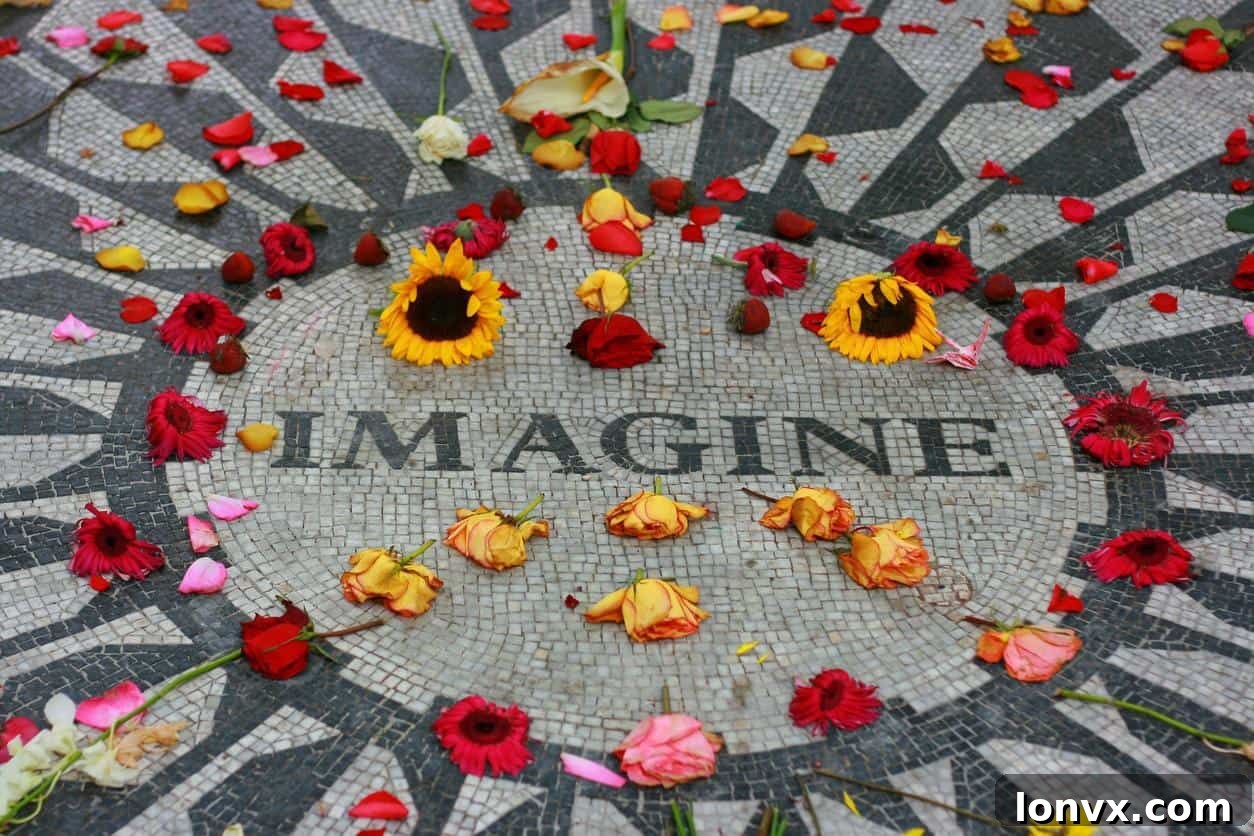
John Lennon’s lyrical maxims — “Imagine there’s no hunger,” “Give peace a chance” — are far more than mere catchy slogans or nostalgic anthems. They are, at their core, provocative calls to profound thought, yes, inspiring us to envision a truly better world. But more importantly, they are an urgent, timeless, and universal invitation to decisive action. These aren’t passive hopes to be quietly contemplated; they are vivid blueprints for active, personal participation in the shaping of our collective future. They challenge each of us not just to dream of a better world, but to actively engage in its creation. Each of us, in our own unique way, possesses the inherent capacity to contribute to this grand endeavor. This could manifest in myriad forms: small, consistent acts of kindness that ripple outwards, engaging in thoughtful and respectful dialogue across divides, supporting initiatives that actively promote peace, social justice, and environmental stewardship, or simply making conscious, ethical choices that align with a more compassionate and sustainable future for all.
Consider this, then, your personal invitation, echoing directly from the spirit of John Lennon, to make your own indelible contributions to a better, safer, and more harmonious world. Your legacy isn’t something that begins only after you are gone; it is a living entity, forged in the actions you take today, in the choices you make every moment, and in the impact you have on those around you. It is about how you choose to live, how you treat others, how you engage with the challenges of your time, and the compassion you extend. By truly embracing the spirit of “Imagine” and “Give Peace a Chance,” we move beyond being mere spectators in the unfolding drama of humanity and become active, conscious architects of the future we wish to inhabit. Let us never forget Yoko Ono’s poignant reminder to think for ourselves, to actively participate, and to not just consume passively, but to boldly create. It is through this active engagement, this conscious, deliberate effort to build and foster peace, understanding, and empathy in our local communities and across global boundaries, that we truly honor the profound legacy of those who dared to dream of a better world and passionately called upon us all to help make it a vibrant, living reality. Every individual choice, every moment of thoughtful contemplation, and every act of genuine compassion, no matter how small, contributes meaningfully to the grand tapestry of humanity’s ongoing quest for a more peaceful, just, and harmonious existence for generations to come. Let us ensure our collective legacy is one of proactive hope, impactful change, and enduring peace.