A Humorous Chronicle of Unfortunate Used Car Purchases: Navigating the Lemon Minefield
I possess a remarkably unique, albeit somewhat inconvenient, skill. It’s not the sort of talent that would make me invaluable to a real estate agent, reliably ferrying clients to pristine open houses. No, my particular aptitude lies squarely in the realm of automotive mobility, or rather, the lack thereof. For years, I’ve honed an uncanny ability to survey an extensive fleet of varied pre-owned vehicles and, with unsettling precision, unerringly identify the single, undisputed lemon among the entire lot. This unfortunate knack has been consistently successful since my very first car purchase, a magnificent beast I affectionately christened “Big Red.”
My journey into the often-treacherous world of used car ownership began with Big Red, a gleaming, cherry-red station wagon that exuded a certain nostalgic charm. It promised freedom, adventure, and perhaps even a touch of romance. However, its grand debut in the realm of romantic escapades proved to be anything but smooth. En route to a movie with a young lady I was rather keen to impress, Big Red decided to shed a crucial component: a “tie rod.” For those unfamiliar with the mechanics of a vehicle, a tie rod is quite vital. It connects your steering to your wheels, allowing you to, well, steer. Its sudden departure, along with the wheel it was inexplicably attached to, introduced a novel and terrifying form of unscheduled off-roading. One might argue that four wheels are generally considered the optimal number for a safe and stable journey, a concept Big Red seemed to vehemently disagree with.
Sadly, that precariously attached tie rod was merely the first in a series of parts that seemed to harbor a deep-seated desire for independence from Big Red’s chassis. The subsequent assessment by a mechanic delivered a gut-wrenching verdict: restoring my $300 vehicle to road-worthiness would require an investment of approximately $1,200. This stark financial reality quickly guided Big Red towards a less glamorous, albeit more permanent, destination – the automotive equivalent of a glue factory. My first foray into car ownership had taught me a valuable lesson, though perhaps not the one I initially sought: some deals are too good to be true, and a low price tag often masks a multitude of sins.
The Green Machine: A Rusty Revelation and the “Feel of the Road”
Determined not to repeat past mistakes, my next automotive acquisition, affectionately dubbed “The Green Machine,” underwent a far more rigorous inspection. My buddy and I meticulously scrutinized every visible bolt and rod, ensuring each had its corresponding nut firmly in place – not just the nuts behind the steering wheel. Initially, The Green Machine seemed a triumph of cautious purchasing. Nothing ever fell off while I was driving, a significant improvement over Big Red. However, my inspection, it turned out, hadn’t been quite comprehensive enough. While every visible fastener was certainly bolted, I had neglected to properly assess the vehicle’s undercarriage.
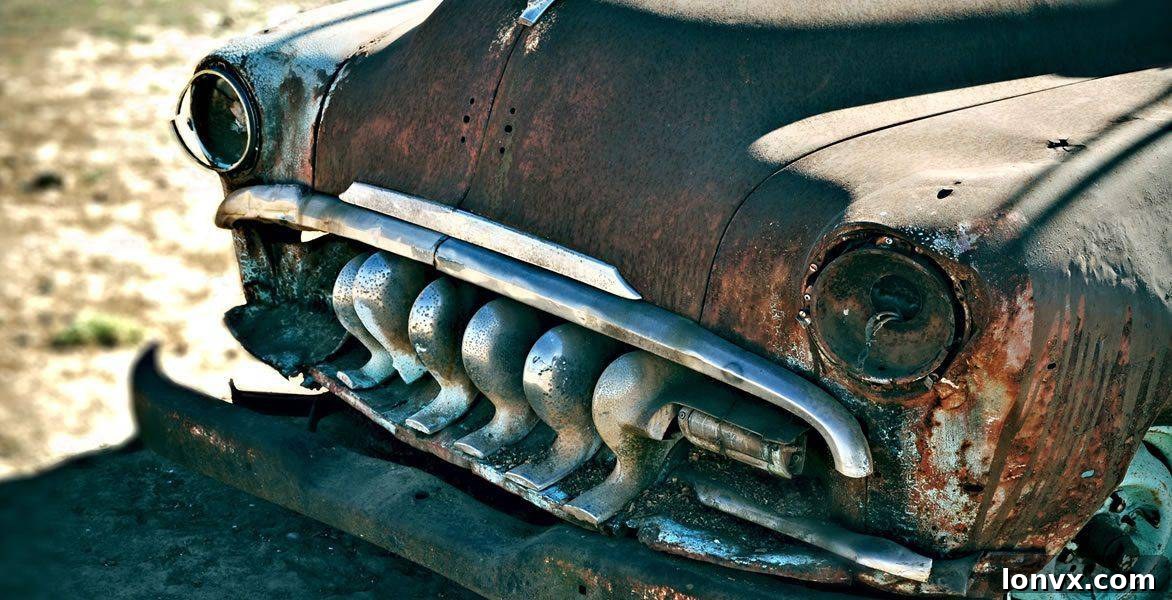
The true character of The Green Machine revealed itself in a slow, insidious manner. Rust, that silent destroyer of metal, had systematically compromised the major structural portions of the body. One day, a rather alarming revelation occurred: you could literally push your foot right through the floorboards. The old adage about “the feel of the road” beneath the vehicle took on a disturbingly literal meaning. I wasn’t just feeling the bumps and vibrations; I was practically dragging my feet on the asphalt. The Green Machine became a poignant reminder that while external appearances can be deceiving, structural integrity is non-negotiable. It also highlighted a crucial aspect of used car buying: what lies beneath the surface is just as important, if not more so, than what’s immediately visible.
A Symphony of Malfunctions: My Current Vehicle’s Antics
The car that succeeded The Green Machine arrived with a promise of modernity and reliability. It boasted plenty of “bells and whistles,” though these often manifested themselves in unexpected and rather dramatic fashion, usually after the vehicle surpassed 60 km/h. My latest vehicle, however, has truly embraced this glorious, consistent tradition of automotive eccentricity. One particular item decided, without any prompting, to keep me thoroughly entertained recently, culminating in an incident I won’t soon forget.
Just the other day, while navigating a perfectly ordinary stretch of road, the horn spontaneously decided to engage. Loudly and repeatedly. Without any input from me whatsoever. A wave of panic washed over me. I frantically slapped the steering wheel, pounded the dashboard, fiddled with every knob and button within reach. Miraculously, and for reasons entirely beyond my comprehension, adjusting the volume controls for the radio seemed to appease the rogue horn, settling it into silence. The silence, however, felt less like a solution and more like a temporary truce.
I was on my way to pick up my wife from her workplace, with just a short drive left before we could return home. My mind raced with grim scenarios for this mechanical beast: where exactly could one take a car to “shoot it” without attracting undue attention? The thought was only half-joking. The anxiety of an unpredictable vehicle had already begun to gnaw at my patience. Little did I know, the car had one last, truly spectacular performance planned.
A mere block away from her office building, I found myself idling behind a gravel truck at a traffic light, both of us waiting to turn left. As I contemplated passing the truck once the light changed, my honky horn decided to stage its grand finale, aiming for maximum comedic, and painful, effect. The horn blasted repeatedly, a relentless, deafening cacophony. In a desperate, futile attempt to silence it, I flailed at every single knob on the dashboard. It was then that a looming shadow fell across my driver’s side window. The gravel truck driver, a man of imposing stature and clearly less than amused by my vehicle’s impromptu concert, stood there, his face a mask of irritation, ready to impart his displeasure. The details of what transpired next are somewhat hazy, but involve a forceful, unexpected encounter between my face and the driver’s window frame. Let’s just say, the honking stopped rather abruptly.
The drive back home from the emergency room was, thankfully, uneventful. My nose, now meticulously straightened and braced with gauze and medical tape, throbbed in rhythm with my exasperation. My first order of business upon arriving home was to definitively disconnect the horn, a task I accomplished with the assistance of a trusty hammer. The decision was made: first thing tomorrow, I would scour the classifieds. My “skill” had delivered yet another masterpiece of vehicular misfortune.
The Perils of Pre-Owned: Navigating the Used Car Market
My string of automotive misadventures, while undeniably frustrating, has also provided a wealth of hard-earned, albeit painfully acquired, knowledge about the used car market. For many, a pre-owned vehicle represents an excellent value proposition, offering affordability and often a wider range of options than a new car. However, it’s a landscape fraught with potential pitfalls, where a seemingly good deal can quickly transform into a money pit. The inherent risks are considerable, and separating a reliable ride from a certified lemon often feels like a lottery.
Through my trials, I’ve learned that a buyer’s enthusiasm can easily override common sense. The allure of a low price or a particular model can blind one to obvious red flags. These experiences have taught me the critical importance of a thorough inspection, far beyond merely checking if the wheels are still attached. What I should have looked for, and what every prospective used car buyer absolutely must scrutinize, includes:
- Rust and Body Damage: Beyond superficial scratches, look for extensive rust on the frame, undercarriage, wheel wells, and near structural components. This often indicates poor maintenance or underlying issues.
- Fluid Leaks: Check for puddles under the car or residue around the engine bay. Oil, coolant, transmission fluid, or brake fluid leaks are serious warning signs.
- Tire Condition: Uneven tire wear can signal alignment problems, suspension issues, or poor maintenance.
- Engine and Transmission Performance: Listen for unusual noises during a test drive – knocking, grinding, or whining. Pay attention to how the car shifts gears; rough or delayed shifts can indicate transmission trouble.
- Electrical Systems: Test all lights, wipers, power windows, radio, air conditioning, and heating. A malfunctioning electrical system can be a nightmare to diagnose and repair.
- Brakes: Listen for squealing or grinding noises and feel for pulsation or a spongy pedal during the test drive.
- Suspension: Push down on each corner of the car; it should bounce once or twice and then settle. Excessive bouncing indicates worn shocks or struts.
Beyond the Test Drive: What Every Used Car Buyer Needs to Know
Even with a comprehensive personal checklist, the single most critical step in buying a used car is investing in a professional pre-purchase inspection (PPI). A trusted, independent mechanic will meticulously examine the vehicle from top to bottom, often identifying hidden issues that even an experienced buyer might miss. My “skill” in picking lemons would have been significantly mitigated had I consistently followed this advice. A PPI is a small investment that can save you thousands in future repairs and countless headaches.
Equally important are vehicle history reports, such as CarFax or AutoCheck. These reports can reveal a car’s past accidents, salvage titles, odometer rollbacks, flood damage, and service records. They provide a vital layer of transparency, helping you understand the vehicle’s true journey before it came into your possession. Never let the excitement of a potential deal blind you to due diligence. The financial impact of a seemingly minor repair on a “bargain” car can quickly erase any initial savings, turning your dream car into a financial burden.
My Quest for a Reliable Ride: A New Beginning (Hopefully!)
As I embark on yet another quest for a new-to-me vehicle, my approach is markedly different. My goal isn’t just to find a car, but to find a truly reliable one, armed with the lessons learned from Big Red, The Green Machine, and my recent horn-induced facial trauma. While my “skill” for identifying lemons remains disturbingly potent, I’m determined to break the cycle. This time, I’m committed to thorough research, diligent inspections, and perhaps, a slightly more pragmatic approach to what constitutes a “good deal.” Here’s hoping my next car journey is less of a comedy of errors and more of a smooth, uneventful ride. Wish me luck – I’m going to need it!