
The digital revolution is not just knocking on the door of the Canadian real estate industry; it has already reshaped its very foundation. In an era where technological advancement dictates market leadership, even the most agile small and medium-sized real estate firms are leveraging sophisticated online tools and platforms to gain a competitive edge. This paradigm shift underscores the critical importance of being digitally ready, especially as we approach 2025.
Navigating the Digital Frontier: Proptech Strategies for Canadian Real Estate Teams in 2025
The landscape of real estate is evolving at an unprecedented pace, driven by innovation and an increasing demand for efficiency and enhanced client experiences. At the heart of this evolution is “proptech” – a portmanteau for property technology. Proptech encompasses a wide array of technological solutions designed to optimize how we buy, sell, manage, and interact with real estate.
From independent real estate agents to established landlords and property management companies across Canada, integrating proptech is no longer an option but a strategic imperative. These digital tools and platforms promise not only to streamline internal operations but also to elevate the quality of service delivered to clients, fostering stronger relationships and driving business growth.
The global proptech market’s projected growth from $25.15 billion in 2021 to a staggering $94.20 billion by 2030 is a testament to its transformative power. This remarkable expansion is fueled by cutting-edge technologies such as Artificial Intelligence (AI), Machine Learning (ML), the Internet of Things (IoT), and Extended Reality (XR), all of which are continuously pushing the boundaries of what’s possible in real estate. For Canadian real estate professionals, understanding and harnessing these technologies is paramount to securing a prosperous future.
This comprehensive guide will walk you through the essential steps to prepare your Canadian real estate team for the digital demands of 2025 and beyond, ensuring you not only keep pace but lead the way in this exciting new era.
Understanding the Proptech Revolution in Canada
Proptech is more than just buzzwords; it’s a practical suite of tools that address real-world challenges in the real estate sector. For Canadian firms, its adoption means improved lead generation, more efficient transaction processing, superior client communication, and data-driven decision-making. The unique regulatory and market conditions in Canada necessitate a localized approach to proptech implementation, favoring solutions that are tailored to the national context.
Step-by-Step Guide to Digital Readiness for Your Canadian Real Estate Team
Achieving digital readiness is a journey, not a destination. It requires thoughtful planning, strategic investment, and a commitment to continuous improvement. Here’s a structured approach for your team:
1. Assess Your Current Digital Landscape and Future Needs
Before making any significant technological investments, it’s crucial to understand your current operational strengths and weaknesses. A thorough assessment will illuminate where technology can provide the most impactful solutions.
Conducting a Comprehensive Tech Audit
- Begin by mapping out all the digital tools your team currently uses. This includes everything from email platforms to spreadsheet software, and any existing real estate-specific applications.
- Evaluate the effectiveness of each tool: Is it truly enhancing productivity, or is it creating bottlenecks? Identify outdated systems or processes that are slowing down your team, consuming excessive time, or leading to inefficiencies.
- Gather feedback from your team members. Those on the front lines often have invaluable insights into what works well and where improvements are desperately needed.
Distinguishing Essential Needs from Desired Wants
- Focus on core functionalities first. For most small real estate teams, a robust Customer Relationship Management (CRM) system, secure cloud-based file storage, and reliable communication platforms are foundational. These tools directly support client management, document security, and internal collaboration.
- Resist the temptation of feature overload. While advanced functionalities can be appealing, prioritize tools that solve immediate, critical problems. Unnecessary extras can complicate workflows and lead to underutilization.
- Consider the “return on investment” (ROI) for each potential tool. Will it genuinely improve efficiency, reduce costs, or enhance client satisfaction in a measurable way?
Key Pre-Investment Questions for the Canadian Context
- What is your realistic budget for initial investment and ongoing subscriptions? Factor in not just the software cost but also potential implementation, training, and support expenses.
- Who will be responsible for setting up new systems and providing ongoing training and support to the team? Designate a “tech champion” if possible.
- Crucially, does the technology meet Canadian compliance standards, particularly concerning data privacy and storage? Tools developed by Canadian companies or those with dedicated Canadian service models, such as Nobul, Padder, and The Metaverse Group, often have an inherent advantage due to their understanding of local regulations and workflows.
2. Building a Robust Digital Foundation with Core Proptech Tools
Once your needs are clearly defined, the next step is to implement the essential tools that will form the backbone of your digital operations.
The Indispensable Role of a CRM System
A well-chosen CRM system is the central nervous system of your digital real estate setup. It manages client interactions, tracks leads, streamlines communication, and automates various administrative tasks. For Canadian real estate professionals, options like IXACT Contact and Followup Boss are highly regarded, offering features specifically tailored to the nuances of the Canadian market, including integration with local MLS systems and compliance considerations.
Secure and Accessible Cloud Document Management
Gone are the days of overflowing filing cabinets. Cloud-based document storage solutions ensure your critical files are secure, easily accessible from anywhere, and facilitate seamless collaboration. Platforms such as Microsoft OneDrive, Google Workspace (formerly G Suite), and Dropbox Business provide robust security features, version control, and convenient sharing capabilities, allowing your team to work efficiently whether in the office, at home, or on the go.
Streamlining Internal Communications
Effective internal communication is vital for any high-performing team. Dedicated business communication tools help reduce email clutter, centralize discussions, and keep everyone informed and aligned. Solutions like Slack and Microsoft Teams offer instant messaging, file sharing, video conferencing, and integration with other business applications, fostering a more collaborative and responsive work environment.
3. Smart Scaling: Affordable Proptech Upgrades for Growth
With a solid foundation in place, you can strategically introduce additional proptech tools that offer significant returns without requiring a massive budget. These upgrades are designed to enhance specific aspects of your real estate operations and client engagement.
Elevating Property Showings with Virtual Tours
Virtual open house platforms have become indispensable, especially for extending reach beyond geographical limitations. Tools like iGUIDE and Matterport provide immersive 3D tours and floor plans, allowing prospective buyers to explore properties remotely. Many of these platforms offer Canadian pricing models and have become increasingly affordable, making high-quality virtual showings accessible to even small teams.
Optimizing Client and Team Scheduling
The constant back-and-forth of scheduling appointments can be a significant time sink. Scheduling integrations automate this process, allowing clients to book showings, consultations, or meetings directly through your website or email. Look for platforms such as Calendly or Acuity Scheduling that seamlessly integrate with your existing CRM and online calendar, freeing up valuable time for your agents.
Automating Marketing for Enhanced Reach and Engagement
Staying in touch with clients and nurturing leads efficiently is key to long-term success. Automated marketing tools enable personalized communication at scale. Consider platforms like BombBomb for engaging video emails that build rapport, or ManyChat for instant, automated follow-ups via chat, ensuring no lead goes unnoticed and clients feel consistently valued.
4. Empowering Your Team Through Effective Training and Adoption
The most sophisticated technology is only as good as its adoption. Ensuring your team embraces and proficiently uses new tools is crucial for realizing their full potential.
Phased Implementation: One Tool at a Time
- Avoid overwhelming your team by introducing multiple new tools simultaneously. Roll out one new platform, allow your team to become comfortable and proficient with it, and then move on to the next. This incremental approach reduces resistance and improves learning retention.
- Designate a tech-savvy team member as an internal expert or “champion” for each new tool. This individual can provide peer support, answer questions, and serve as a direct liaison with software vendors for advanced issues.
Creating Practical, User-Friendly Resources
- Develop simple, concise how-to guides, checklists, or short video tutorials tailored to your team’s specific workflows. These resources should be easily accessible and provide step-by-step instructions for common tasks.
- Ensure these materials are updated regularly and available to new hires, accelerating their onboarding process and ensuring consistent usage across the team.
Highlighting Tangible Benefits and ROI
- When introducing new technology, focus on the “what’s in it for me?” for your team members. Instead of just listing features, emphasize how the tool will make their jobs easier, save them time, improve their client interactions, or increase their commission opportunities.
- For example, instead of merely stating that a CRM can send automated emails, explain how it ensures every lead receives a prompt, personalized response, even on the busiest days, thereby boosting conversion rates and client satisfaction.
5. Navigating the Regulatory Landscape: Ensuring Canadian Compliance
In the digital age, handling client data comes with significant responsibility. Canadian privacy laws are stringent and differ considerably from those in other jurisdictions, notably the U.S. Compliance is not optional; it’s a cornerstone of trustworthy real estate practice.
Understanding Canadian Privacy Legislation (PIPEDA and Provincial Acts)
The Personal Information Protection and Electronic Documents Act (PIPEDA) is the federal law governing how private-sector organizations collect, use, and disclose personal information in the course of commercial activities. Additionally, several provinces have their own privacy legislation (e.g., Alberta, British Columbia, Quebec) that may apply and often supersede PIPEDA. When selecting proptech, critically evaluate whether vendors store data in Canada or explicitly adhere to Canadian regulatory standards. Understanding these nuances is vital to avoid legal repercussions and maintain client trust.
Implementing Robust Data Security Measures
Beyond legal compliance, proactive data security measures are paramount:
- Strong Password Protection: Enforce the use of complex, unique passwords across all platforms. Implement and encourage the use of a reputable password manager for your team.
- Two-Factor Authentication (2FA): Mandate 2FA for all critical accounts. This adds an essential layer of security by requiring a second form of verification beyond just a password.
- Data Encryption: Ensure that sensitive client information, especially during transmission (e.g., contracts, financial details), is encrypted. Many cloud storage and communication tools offer built-in encryption features.
- Clear Data Handling Guidelines: Establish clear internal policies regarding data retention, access, and deletion. Train your team on best practices for handling confidential information, including recognizing phishing attempts and secure file sharing protocols.
Staying Updated with Regulatory Changes
Privacy laws and real estate regulations are dynamic. Regularly consult resources from your provincial real estate board, the Canadian Real Estate Association (CREA), and the Office of the Privacy Commissioner of Canada to stay abreast of the latest updates and ensure ongoing compliance.
6. Strategic Budgeting for Sustainable Proptech Investment
Embarking on a digital transformation doesn’t necessitate an exorbitant budget. Instead, it calls for a well-thought-out financial strategy that views proptech as an investment rather than an expense. Planning ahead, spending wisely, and diligently tracking returns are fundamental principles.
Planning Ahead: The Wise Investment Approach
Define your short-term and long-term digital goals. This clarity will help you prioritize investments and avoid impulse purchases. Consider the cumulative costs over a year for subscription services and factor in potential training and integration expenses.
Deconstructing the Budget for Small Teams
For a small team of three to five agents, here’s a rough idea of how proptech expenses might break down, recognizing that these are illustrative figures and can vary widely based on specific choices and market conditions:
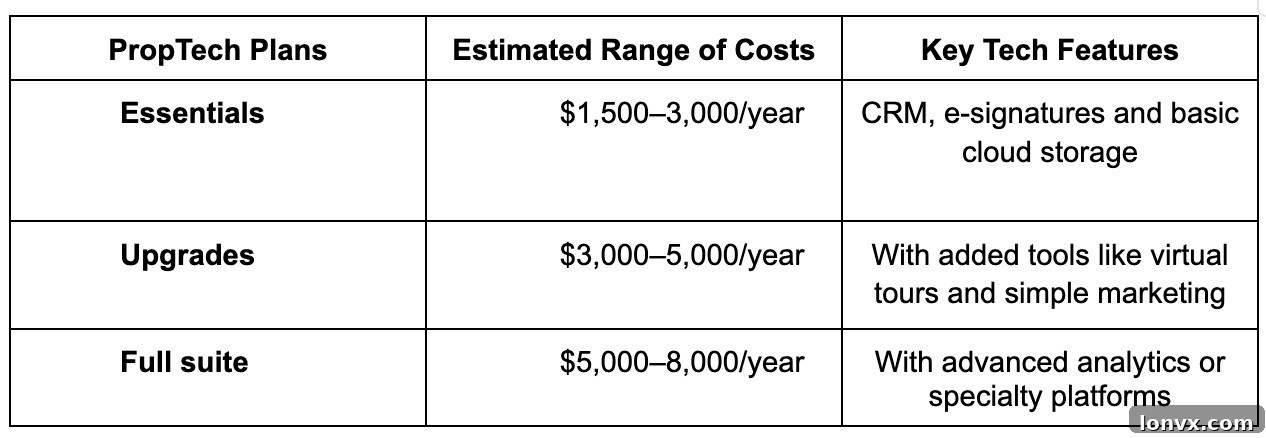
This table suggests a monthly investment that is manageable, demonstrating that powerful proptech solutions are within reach for small operations.
Maximizing Value: Tips for Cost Optimization
- Annual Billing Discounts: Many software providers offer significant discounts for annual subscriptions compared to monthly payments.
- Team Bundles and Tiered Pricing: Look for packages designed for small teams, which often provide better per-user rates. Assess if a higher tier offers more value for additional features that align with your growth plans.
- Flexible Pricing Models: Some platforms offer usage-based pricing or modules you can add as needed, allowing you to scale your costs with your business growth.
- Free Trials and Demos: Always take advantage of free trials and product demonstrations to ensure a tool meets your team’s specific requirements before committing financially.
The Unique Advantage of Small Canadian Real Estate Teams in the Proptech Era
While large brokerages may have vast resources, small Canadian real estate teams possess inherent advantages in the proptech adoption journey. Their agility allows them to pivot faster, adapt new systems more readily, and align technology solutions precisely to their unique needs and client base. This flexibility fosters a more client-centric approach, where technology serves to enhance personalized service rather than standardize it.
Embracing proptech empowers small teams to punch above their weight, compete effectively with larger players, and offer a bespoke experience that builds strong, lasting client relationships. It allows them to automate mundane tasks, freeing up valuable time for strategic thinking, client engagement, and professional development.
Final Thoughts: Embracing the Digital Future of Canadian Real Estate
The journey to digital readiness for Canadian real estate teams is an ongoing process of innovation, adaptation, and strategic investment. It doesn’t demand an unlimited budget or an army of tech experts. Instead, it requires a clear vision, a willingness to learn, and the right suite of tools to empower your team.
By thoughtfully assessing your needs, building a solid technological foundation, strategically scaling with affordable upgrades, prioritizing team training, ensuring unwavering compliance with Canadian regulations, and managing your budget wisely, your small real estate team can thrive in the digital landscape of 2025 and beyond. Your size is, in fact, your superpower – enabling quicker pivots and a more personalized integration of systems tailored to your specific market and client relationships.
Leveraging proptech effectively means optimizing processes, enhancing efficiency, and ultimately, delivering unparalleled client-centric service. Equip your team with these valuable insights and tools, and position yourselves not just to adapt to the future of Canadian real estate, but to actively shape it.